Lu Haibin, Zhang Xueyang, Khan Shakeel Ahmad, Li Wenqiang, Wan Lei
Shunde Hospital, Southern Medical University (The First People's Hospital of Shunde), Foshan, China.
Stomatological Hospital, Southern Medical University, Guangzhou, China.
Front Microbiol. 2021 Nov 1;12:761084. doi: 10.3389/fmicb.2021.761084. eCollection 2021.
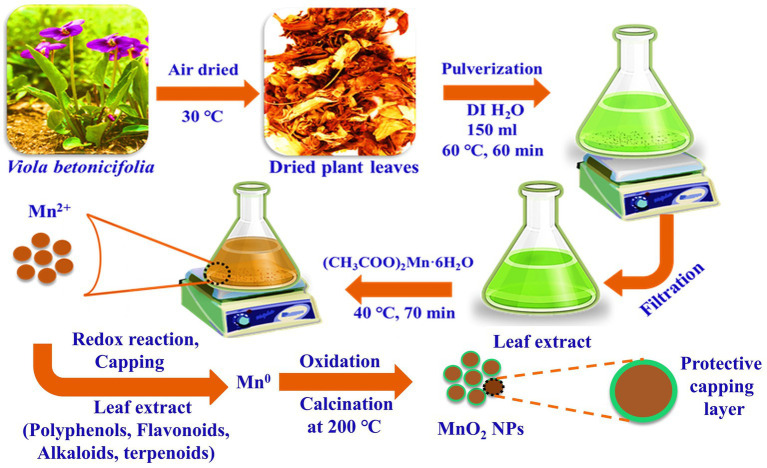
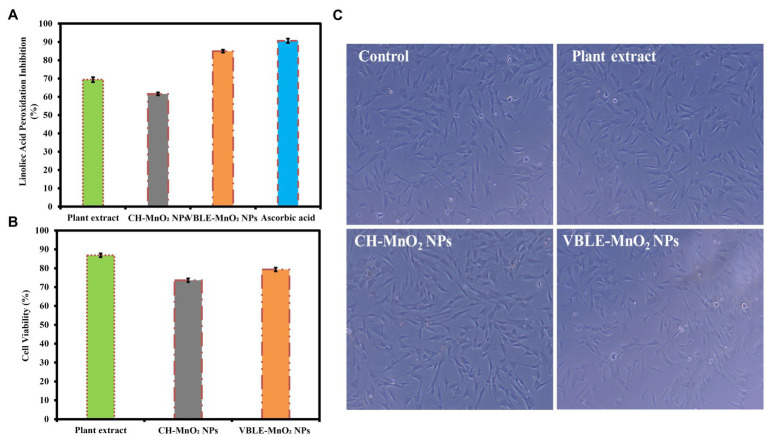
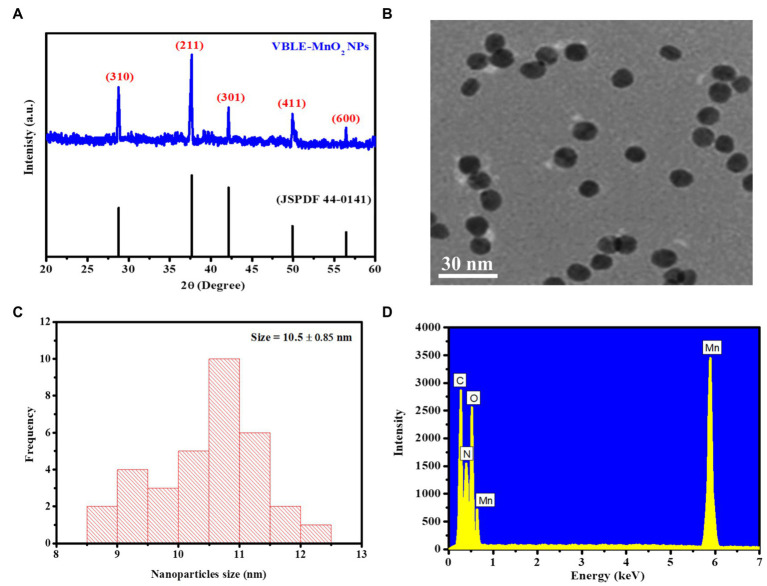
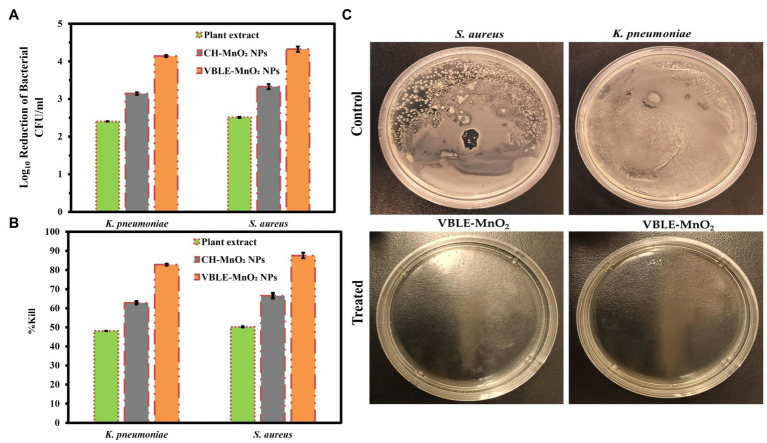
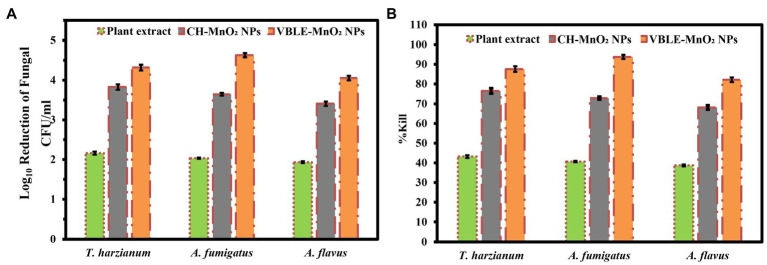
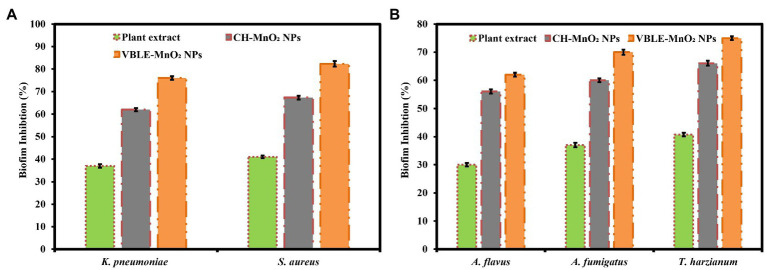
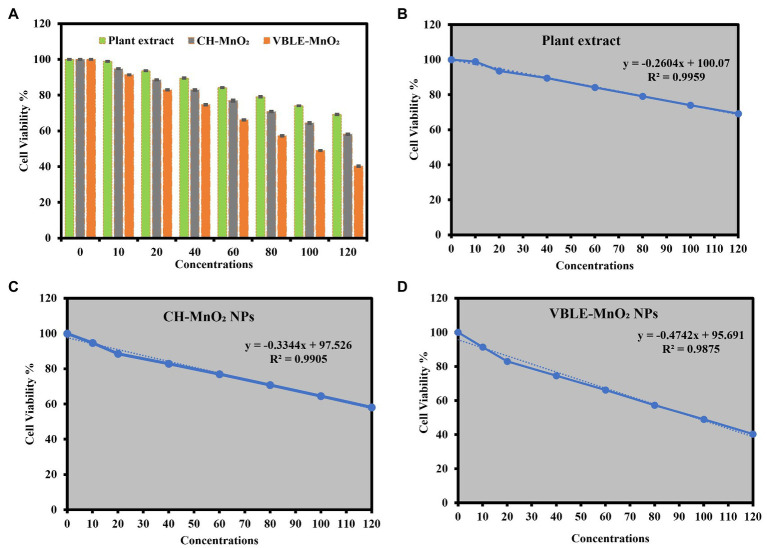
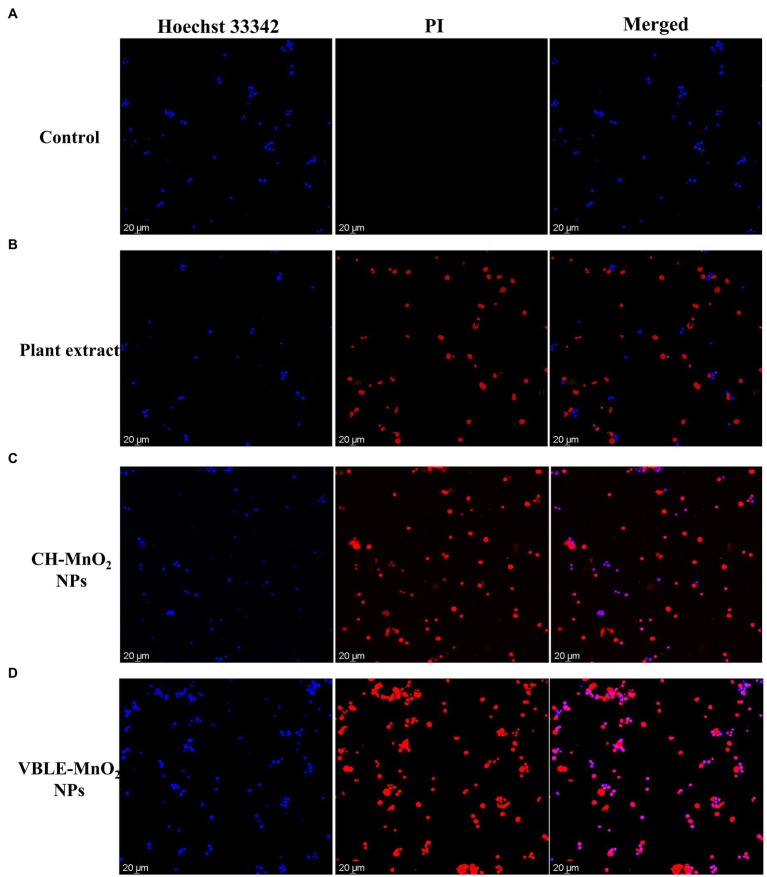
In this study, we propose to synthesize NPs using plant extract containing active biomedical components, with the goal of obtaining NPs that inherit the biomedical activities of the plant. Herein, we report the synthesis of manganese dioxide nanoparticles (VBLE-MnO NPs) using the leaves extract of , in which the biological active plant's secondary metabolites function as both reducing and capping agents. The synthesized NPs were successfully characterized with different spectroscopic techniques. The antibacterial, antifungal, and biofilm inhibition properties of the synthesized VBLE-MnO NPs were further explored against a variety of bacteria (Gram-positive and Gram-negative) and mycological species. Additionally, their antioxidant ability against linoleic acid peroxidation inhibition, cytobiocompatibility with hMSC cells, and cytotoxicity against MCF-7 cells were investigated compared to leaves extract and chemically synthesized manganese dioxide NPs (CH-MnO NPs). The results were demonstrated that the synthesized VBLE-MnO NPs presented excellent antibacterial, antifungal, and biofilm inhibition performance against all the tested microbial species compared to plant leaves extract and CH-MnO NPs. Moreover, they also exhibited significant antioxidant potential, which was comparable to the external standard (ascorbic acid); however, it was higher than plant leaves extract and CH-MnO NPs. Furthermore, the synthesized CH-MnO NPs displayed good cytobiocompatibility with hMSC cells compared to CH-MnO NPs. The enhanced antioxidant, antibacterial, antifungal, and biofilm inhibition efficacy as compared to CH-MnO NPs might be attributed to the synergistic effect of the VBLE-MnO NPs' physical properties and the adsorbed biologically active phytomolecules from the leaves extract of on their surface. Thus, our study establishes a novel ecologically acceptable route for nanomaterials' fabrication with increased and/or extra medicinal functions derived from their herbal origins.
在本研究中,我们提议使用含有活性生物医学成分的植物提取物来合成纳米颗粒,目的是获得继承植物生物医学活性的纳米颗粒。在此,我们报告了使用[植物名称]叶提取物合成二氧化锰纳米颗粒(VBLE-MnO NPs),其中生物活性植物的次生代谢产物同时充当还原剂和封端剂。通过不同的光谱技术成功地表征了合成的纳米颗粒。进一步探究了合成的VBLE-MnO NPs对多种细菌(革兰氏阳性和革兰氏阴性)和真菌物种的抗菌、抗真菌和生物膜抑制特性。此外,与叶提取物和化学合成的二氧化锰纳米颗粒(CH-MnO NPs)相比,研究了它们对亚油酸过氧化抑制的抗氧化能力、与hMSC细胞的细胞生物相容性以及对MCF-7细胞的细胞毒性。结果表明,与植物叶提取物和CH-MnO NPs相比,合成的VBLE-MnO NPs对所有测试的微生物物种均表现出优异的抗菌、抗真菌和生物膜抑制性能。此外,它们还表现出显著的抗氧化潜力,与外标(抗坏血酸)相当;然而,它高于植物叶提取物和CH-MnO NPs。此外,与CH-MnO NPs相比,合成的VBLE-MnO NPs与hMSC细胞显示出良好的细胞生物相容性。与CH-MnO NPs相比,抗氧化、抗菌、抗真菌和生物膜抑制功效的增强可能归因于VBLE-MnO NPs的物理性质与从[植物名称]叶提取物吸附在其表面的生物活性植物分子的协同作用。因此,我们的研究建立了一种新颖的生态可接受的途径,用于制造具有源自草药的增强和/或额外药用功能的纳米材料。