Laboratoire des Systèmes Perceptifs, Département d'Études Cognitives, École Normale Supérieure PSL Research University, CNRS, Paris, France.
University College London, London, United Kingdom.
Elife. 2021 Nov 18;10:e65566. doi: 10.7554/eLife.65566.
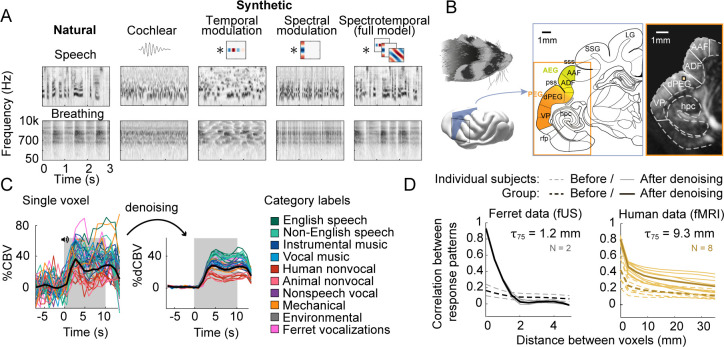
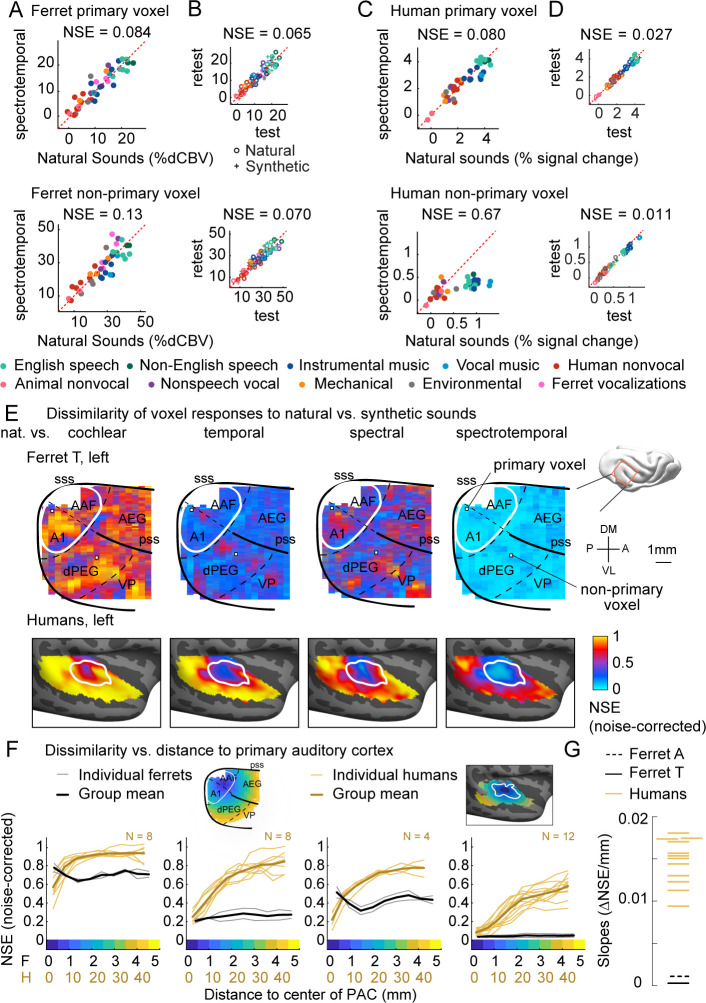
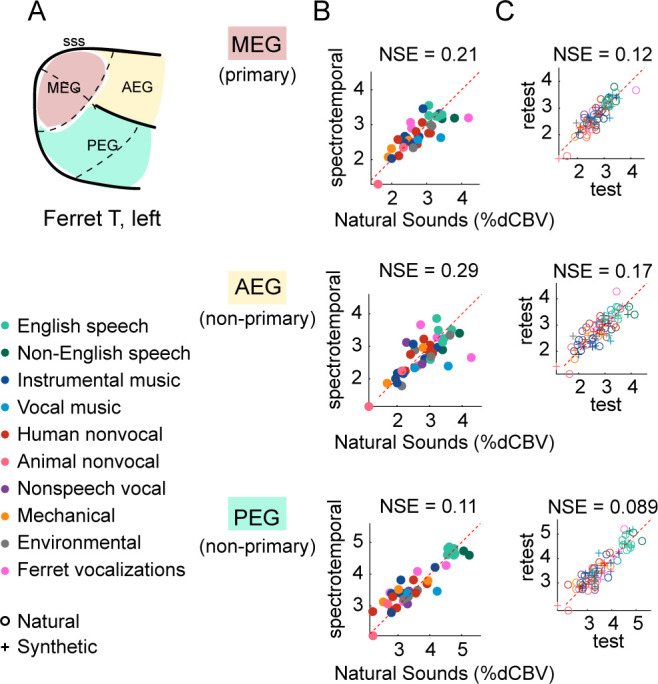
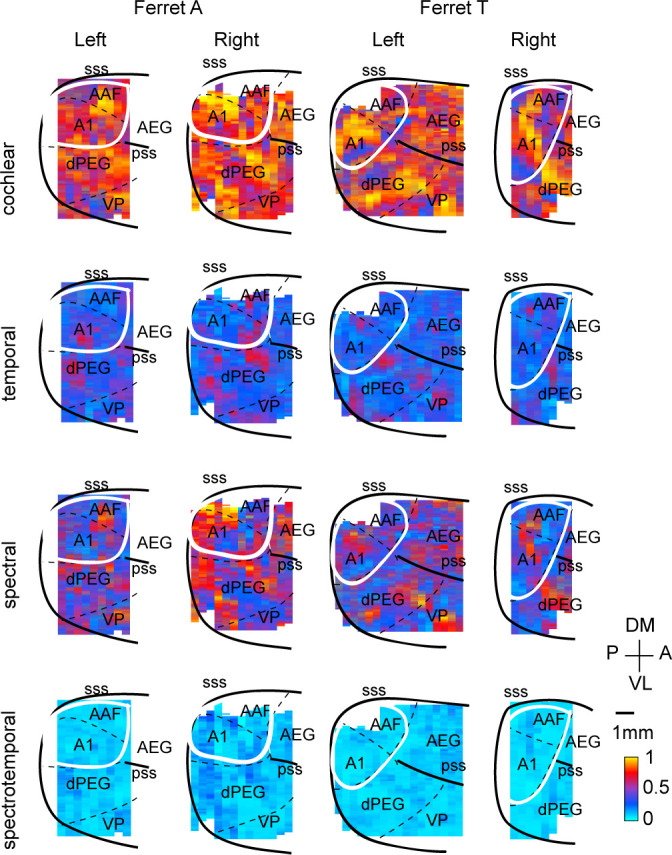
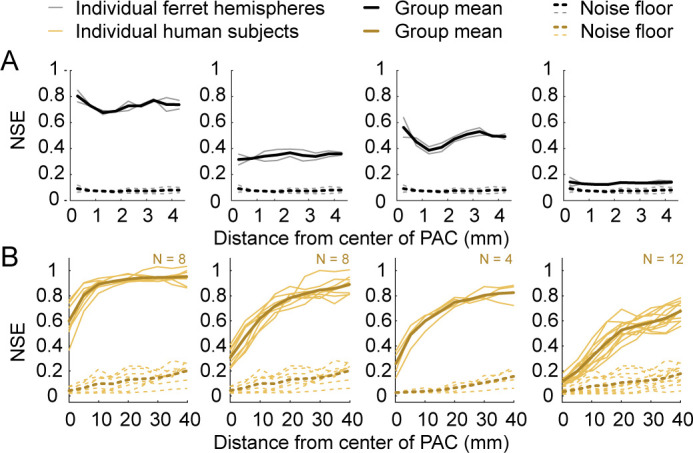
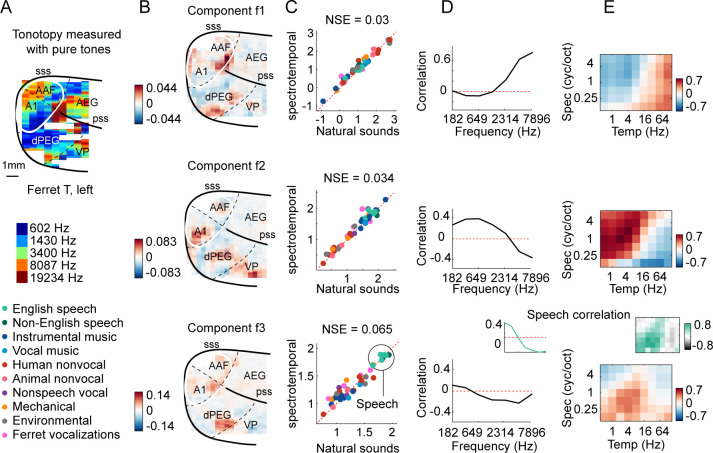
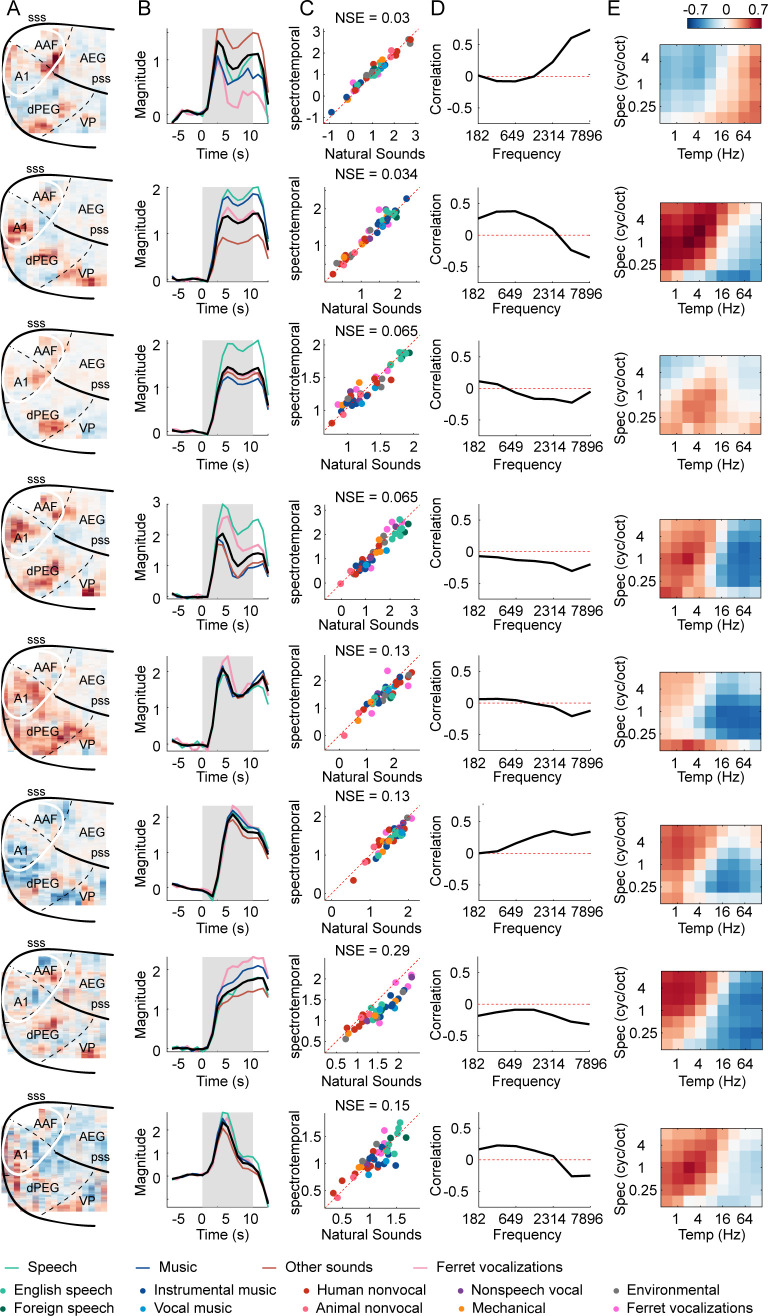
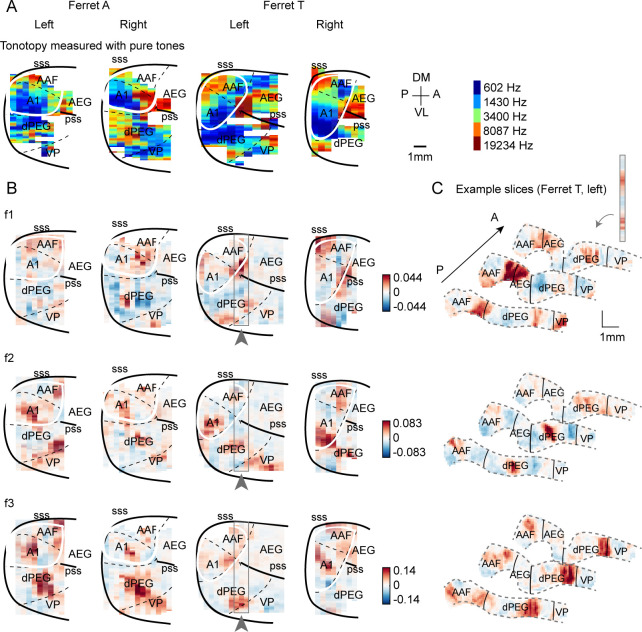
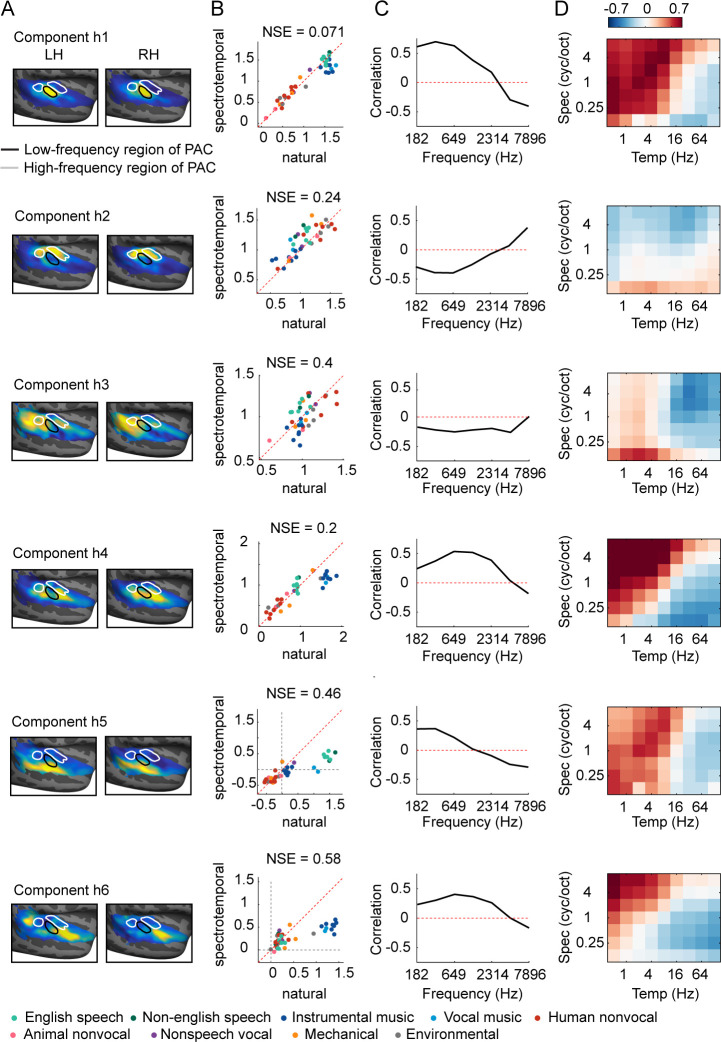
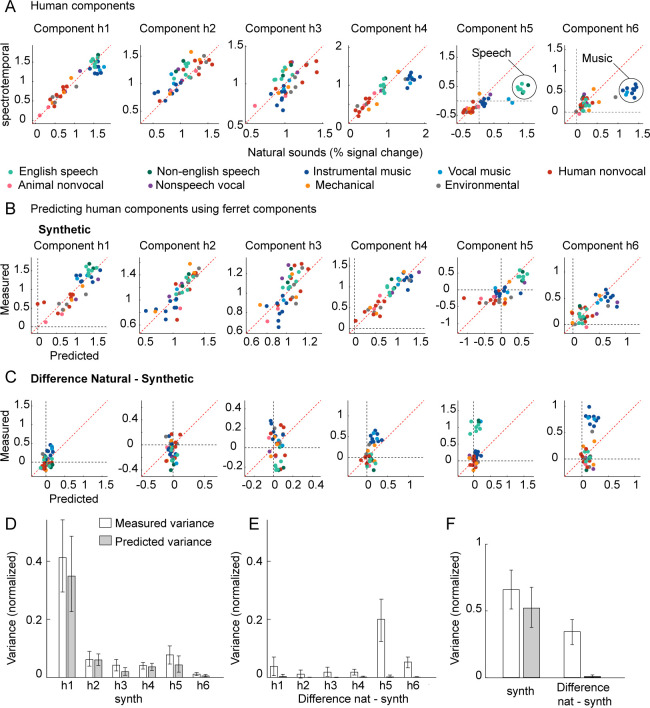
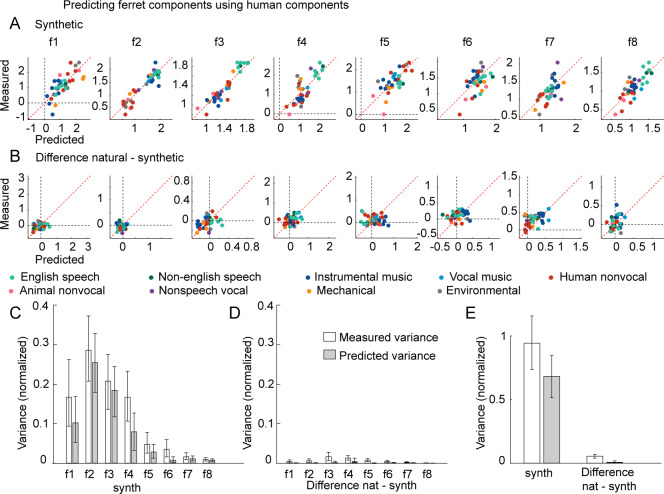
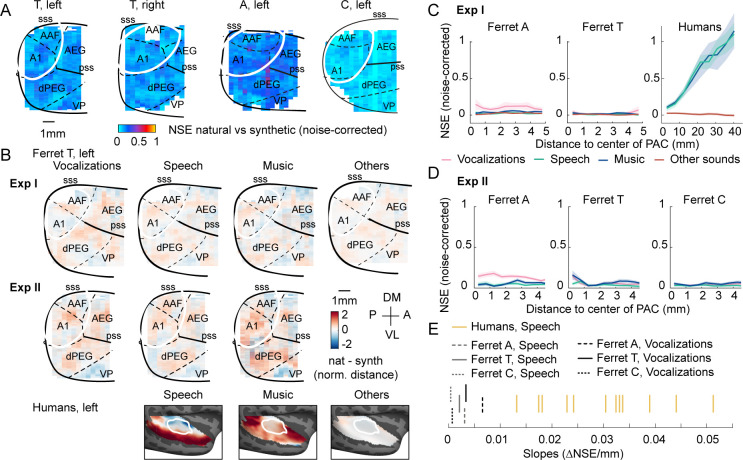
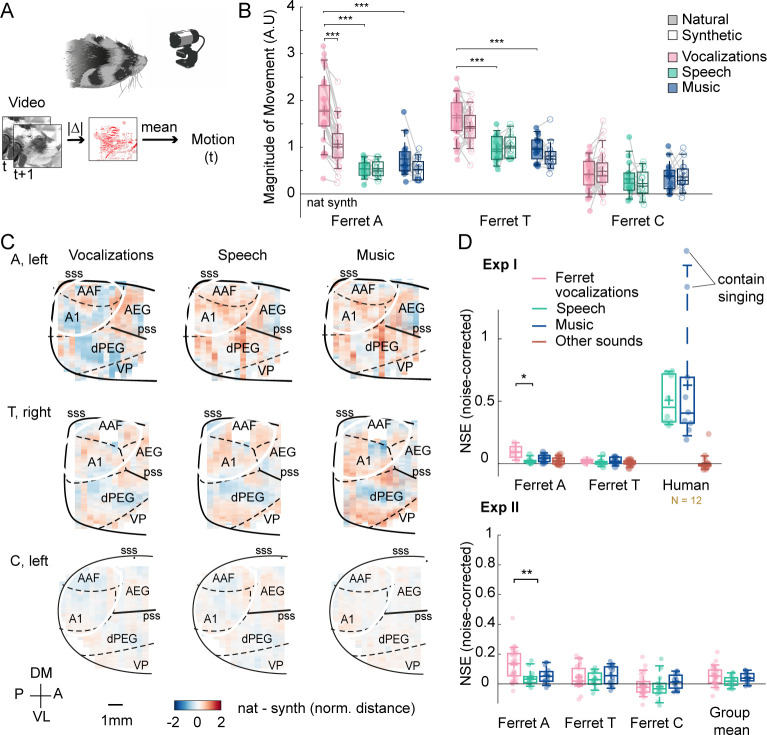
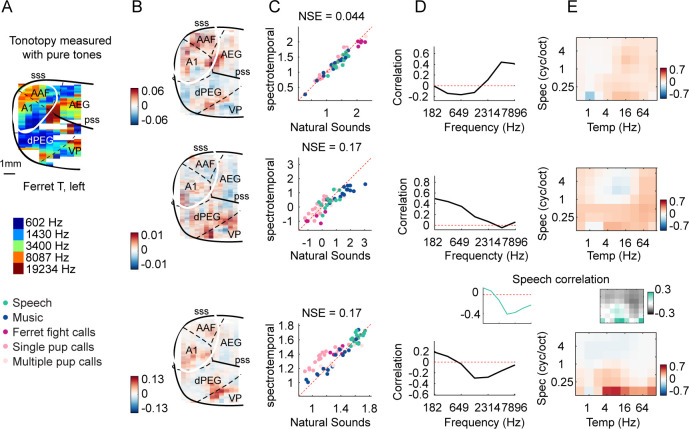
Little is known about how neural representations of natural sounds differ across species. For example, speech and music play a unique role in human hearing, yet it is unclear how auditory representations of speech and music differ between humans and other animals. Using functional ultrasound imaging, we measured responses in ferrets to a set of natural and spectrotemporally matched synthetic sounds previously tested in humans. Ferrets showed similar lower-level frequency and modulation tuning to that observed in humans. But while humans showed substantially larger responses to natural vs. synthetic speech and music in non-primary regions, ferret responses to natural and synthetic sounds were closely matched throughout primary and non-primary auditory cortex, even when tested with ferret vocalizations. This finding reveals that auditory representations in humans and ferrets diverge sharply at late stages of cortical processing, potentially driven by higher-order processing demands in speech and music.
关于不同物种的自然声音的神经表示方式有何不同,人们知之甚少。例如,言语和音乐在人类听觉中发挥着独特的作用,但尚不清楚言语和音乐在人类和其他动物之间的听觉表示方式有何不同。使用功能超声成像,我们测量了雪貂对一组先前在人类中测试过的自然和频谱时间匹配的合成声音的反应。雪貂表现出与人类相似的较低水平的频率和调制调谐。但是,虽然人类在非主要区域对自然与合成言语和音乐的反应明显大于合成声音,但在初级和非初级听觉皮层中,雪貂对自然和合成声音的反应非常匹配,即使使用雪貂的发声进行测试也是如此。这一发现表明,人类和雪貂的听觉表示在皮质处理的后期阶段明显不同,这可能是言语和音乐中更高阶处理需求的驱动。