Sharma Ajay, Waddell John N, Li Kai C, A Sharma Lavanya, Prior David J, Duncan Warwick J
School of Dentistry and Oral Health, Griffith University, Gold Coast, Australia.
Department of Oral Rehabilitation, Faculty of Dentistry, University of Otago, Dunedin, New Zealand.
Saudi Dent J. 2021 Nov;33(7):546-553. doi: 10.1016/j.sdentj.2020.08.009. Epub 2020 Aug 29.
Titanium (Ti) is widely accepted as a biomaterial for orthopaedic and dental implants, primarily due to its capacity to integrate directly into the bone and its superior corrosion resistance. It has been suggested that titanium-zirconium alloy (TiZr), with 13-17% of zirconium, has better mechanical properties than pure Ti, but there are very few published studies assessing the suitability of TiZr for high-load- bearing implants. This study aimed to compare the mechanical properties and microstructures of TiZr and commercially pure titanium (Ti).
Pure Ti and TiZr alloy discs were prepared and subjected to characterisation by nanoindentation, electron dispersive spectroscopy (EDS), X-ray diffraction (XRD), and electron backscatter diffraction (EBSD).
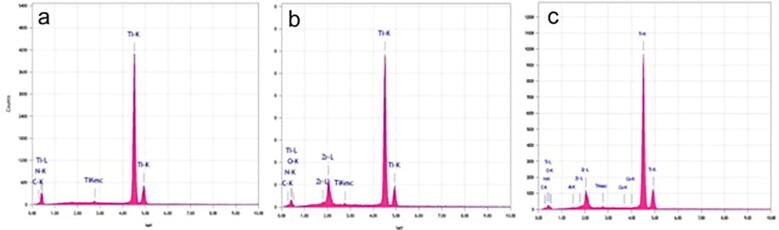
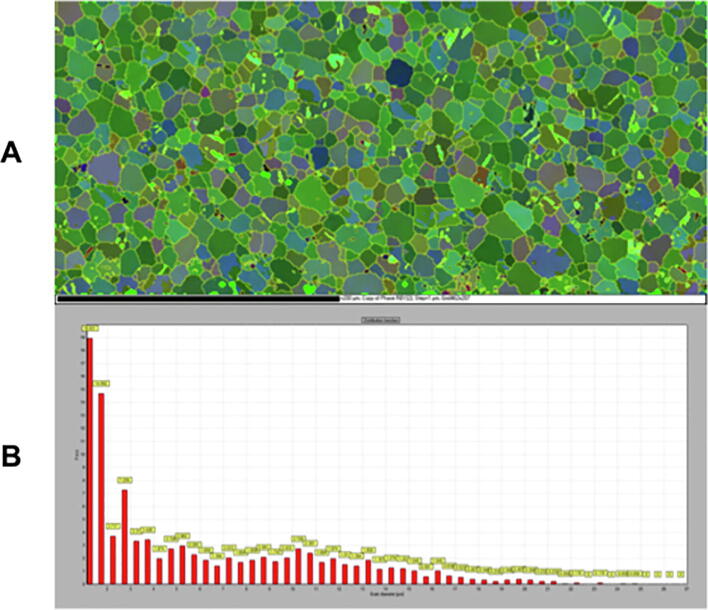
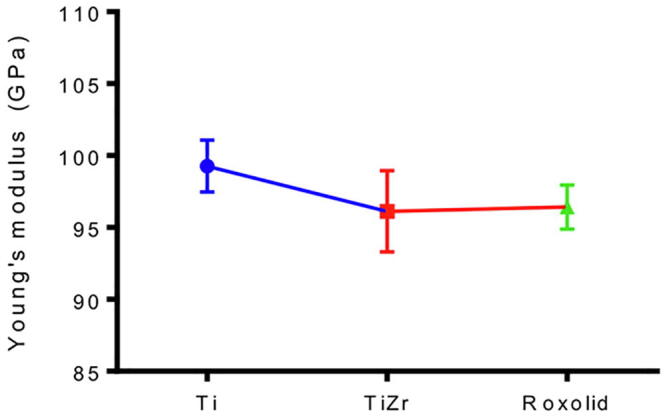
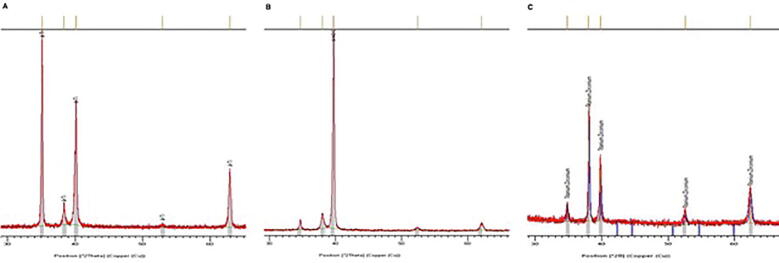
The TiZr alloy was found to have significantly lower elastic modulus value (p < 0.0001) and greater hardness than Ti (p < 0.05). The EDS results confirmed the presence of Zr (13-17%) in the TiZr alloy, with XRD and EBSD images showing microstructure with the alpha phase similar to commercially available Ti.
The lower elastic modulus, higher hardness, presence of alpha phase, and the finer grain size of the TiZr alloy make it more suitable for high-load-bearing implants compared to commercially available Ti and is likely to encourage a positive biological response.
钛(Ti)作为骨科和牙科植入物的生物材料已被广泛接受,主要是因为它能够直接与骨结合以及具有出色的耐腐蚀性。有人提出,含13 - 17%锆的钛锆合金(TiZr)比纯钛具有更好的机械性能,但评估TiZr用于高承载植入物适用性的已发表研究非常少。本研究旨在比较TiZr和商业纯钛(Ti)的机械性能和微观结构。
制备了纯钛和TiZr合金圆盘,并通过纳米压痕、电子能谱(EDS)、X射线衍射(XRD)和电子背散射衍射(EBSD)进行表征。
发现TiZr合金的弹性模量值显著更低(p < 0.0001),且硬度高于钛(p < 0.05)。EDS结果证实TiZr合金中存在锆(13 - 17%),XRD和EBSD图像显示其微观结构的α相与市售钛相似。
与市售钛相比,TiZr合金较低的弹性模量、较高的硬度、α相的存在以及更细的晶粒尺寸使其更适合用于高承载植入物,并且可能会引发积极的生物学反应。