Chemical Biology Program, Memorial Sloan Kettering Cancer Center, New York, NY, 10065, USA.
Department of Pathology, Memorial Sloan Kettering Cancer Center, New York, NY, 10065, USA.
Commun Biol. 2021 Nov 25;4(1):1333. doi: 10.1038/s42003-021-02842-3.
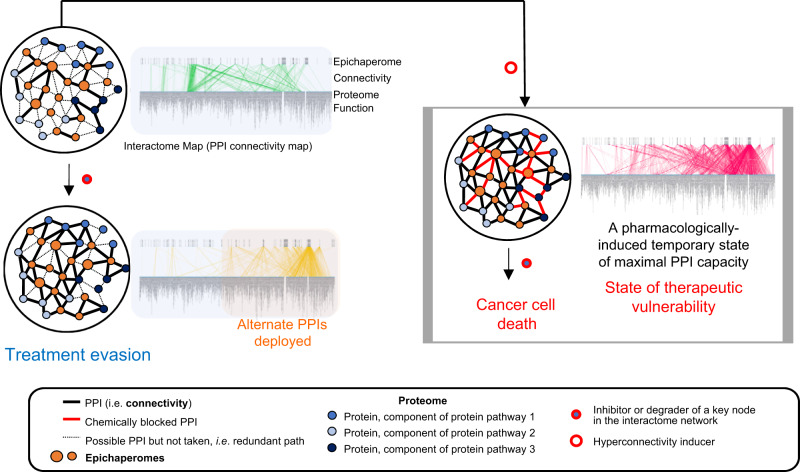
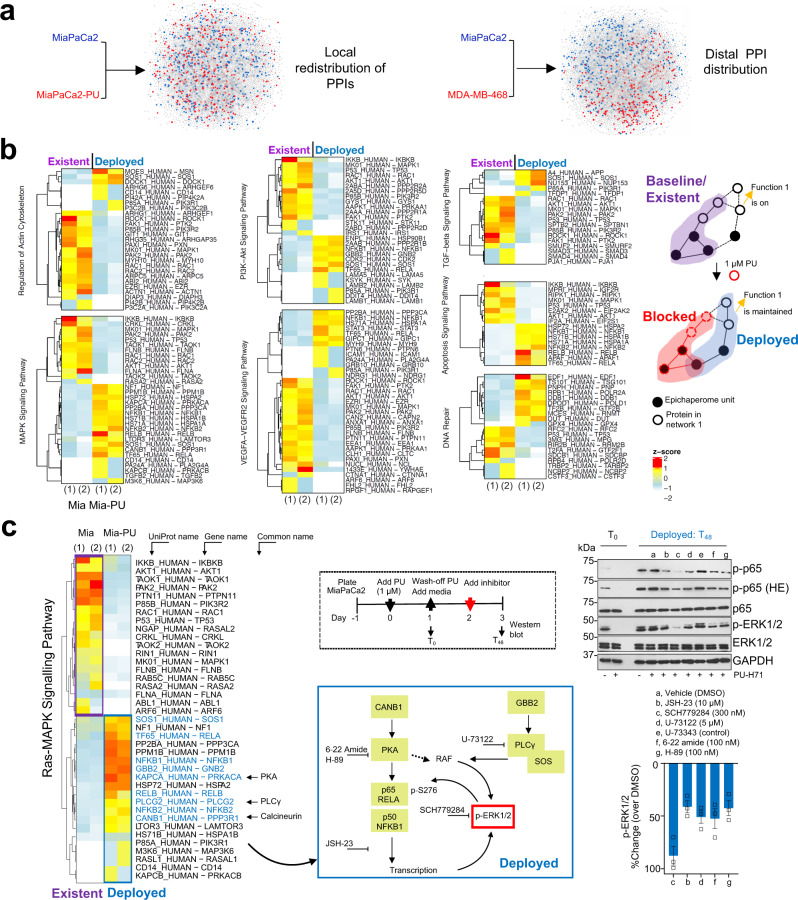
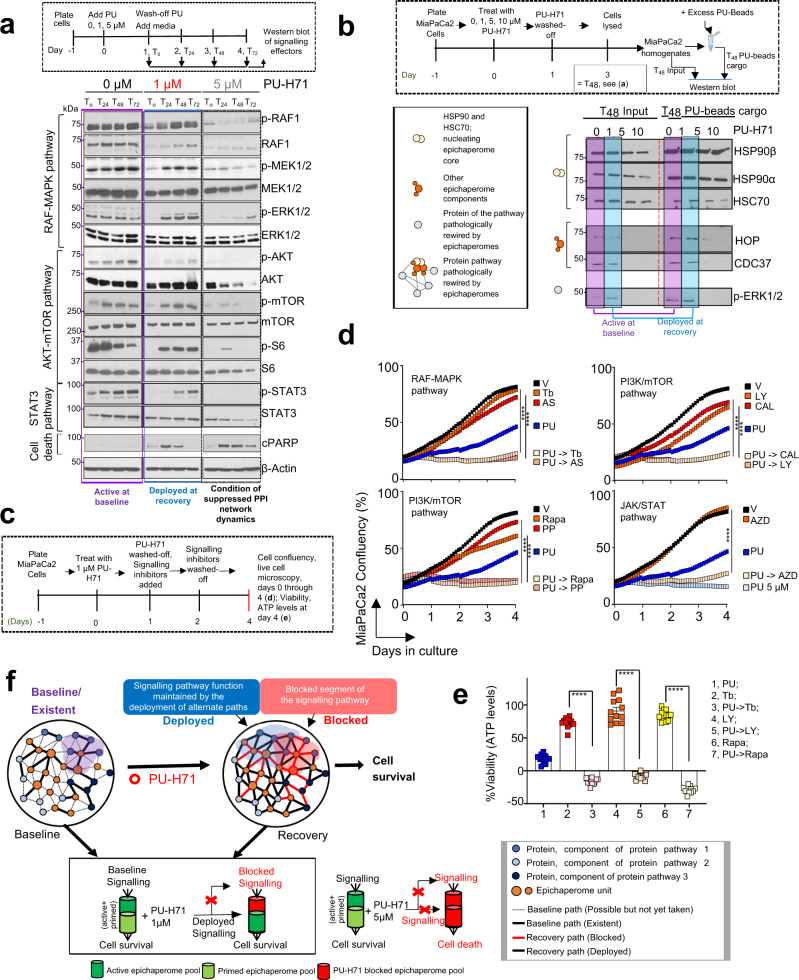
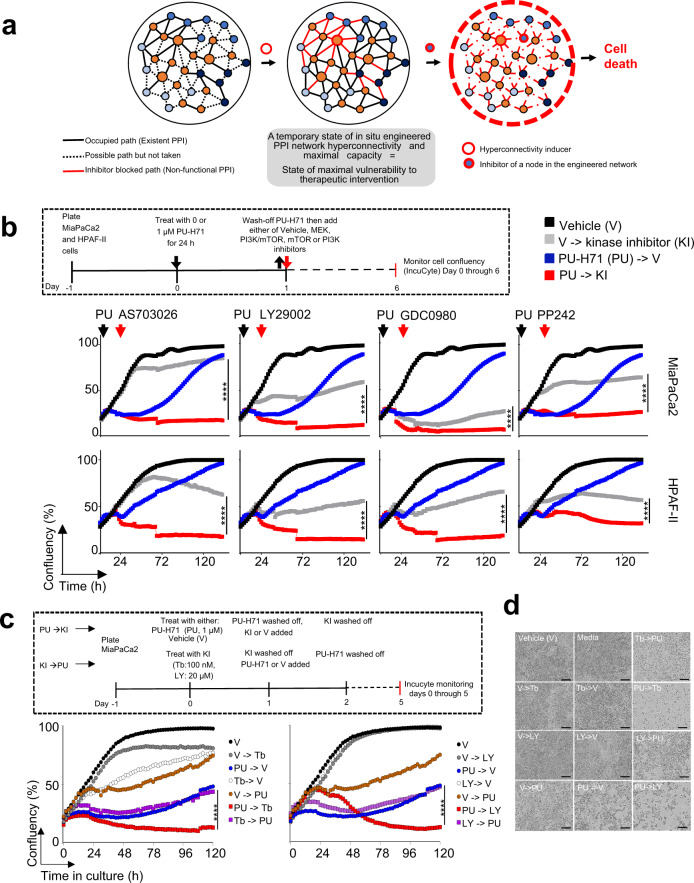
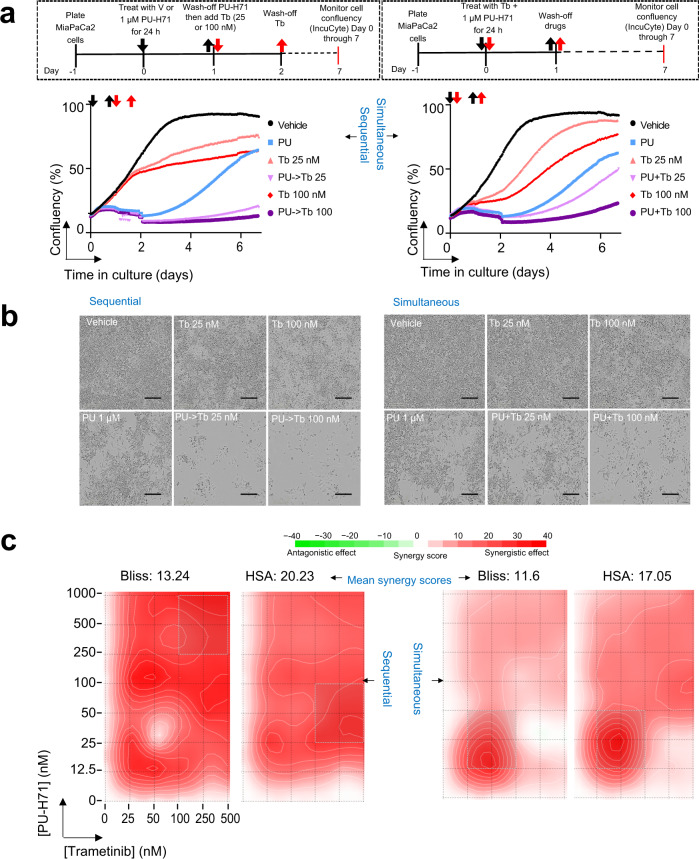
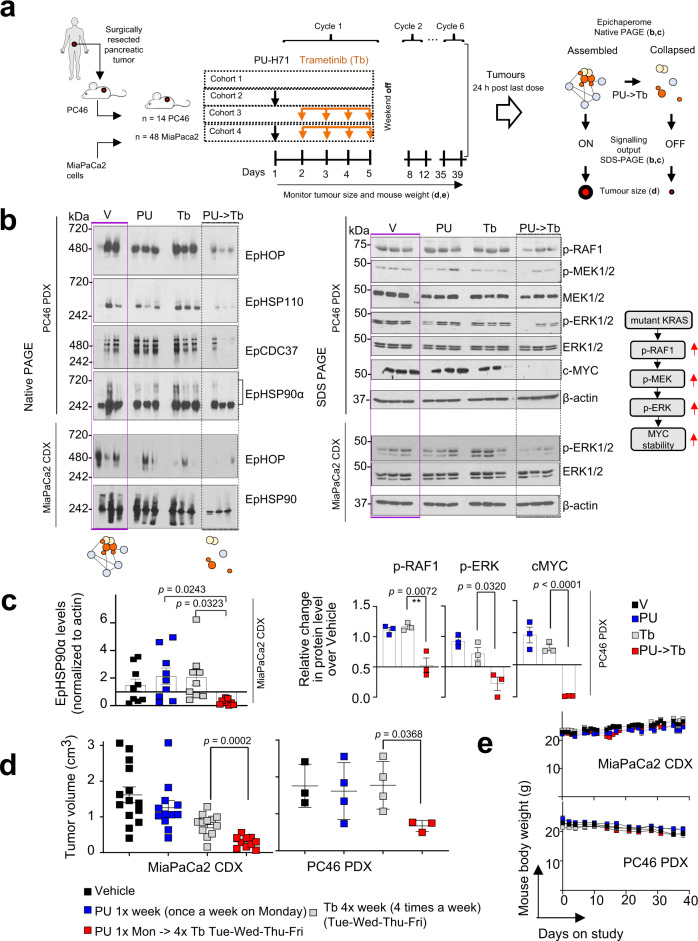
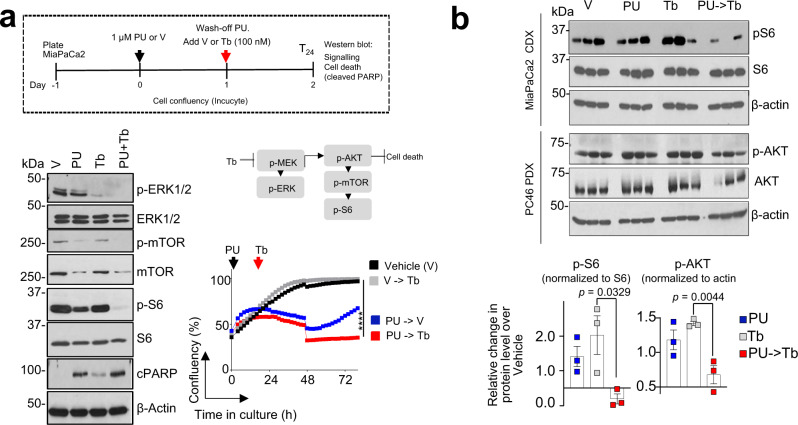
Cancer cell plasticity due to the dynamic architecture of interactome networks provides a vexing outlet for therapy evasion. Here, through chemical biology approaches for systems level exploration of protein connectivity changes applied to pancreatic cancer cell lines, patient biospecimens, and cell- and patient-derived xenografts in mice, we demonstrate interactomes can be re-engineered for vulnerability. By manipulating epichaperomes pharmacologically, we control and anticipate how thousands of proteins interact in real-time within tumours. Further, we can essentially force tumours into interactome hyperconnectivity and maximal protein-protein interaction capacity, a state whereby no rebound pathways can be deployed and where alternative signalling is supressed. This approach therefore primes interactomes to enhance vulnerability and improve treatment efficacy, enabling therapeutics with traditionally poor performance to become highly efficacious. These findings provide proof-of-principle for a paradigm to overcome drug resistance through pharmacologic manipulation of proteome-wide protein-protein interaction networks.
由于互作网络的动态结构,癌细胞的可塑性为治疗逃逸提供了一个令人烦恼的出路。在这里,我们通过应用于胰腺癌细胞系、患者生物样本以及在小鼠中进行的细胞和患者衍生的异种移植物的系统水平探索蛋白质连接变化的化学生物学方法,证明了互作组可以被重新设计以变得脆弱。通过药理学手段操纵表观基因组,我们可以实时控制和预测数千种蛋白质在肿瘤内的相互作用方式。此外,我们还可以强迫肿瘤进入互作组超连接状态和最大的蛋白质-蛋白质相互作用能力,在这种状态下,没有反弹途径可以部署,替代信号被抑制。因此,这种方法使互作组能够增强脆弱性并提高治疗效果,使传统疗效不佳的治疗方法变得非常有效。这些发现为通过药理学手段操纵蛋白质组范围的蛋白质-蛋白质相互作用网络来克服药物耐药性提供了原理证明。