Guiné Raquel de Pinho Ferreira, Pato Maria Lúcia de Jesus, Costa Cristina Amaro da, Costa Daniela de Vasconcelos Teixeira Aguiar da, Silva Paulo Barracosa Correia da, Martinho Vítor João Pereira Domingues
Agricultural School (ESAV) and CERNAS-IPV Research Centre, Polytechnic Institute of Viseu (IPV), 3504-510 Viseu, Portugal.
Foods. 2021 Nov 8;10(11):2732. doi: 10.3390/foods10112732.
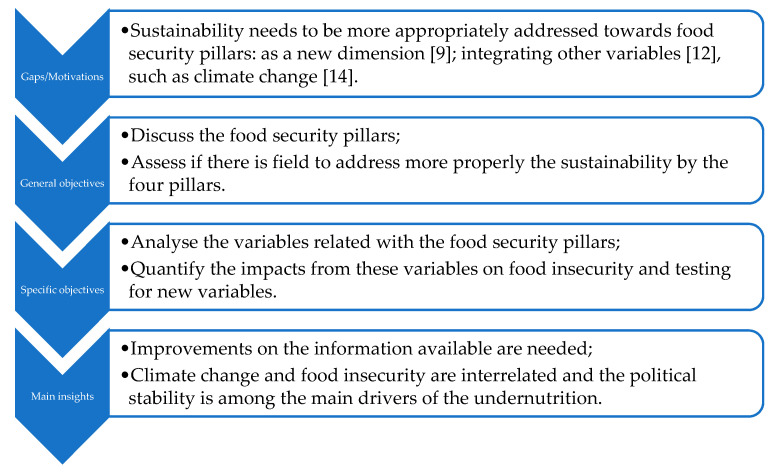
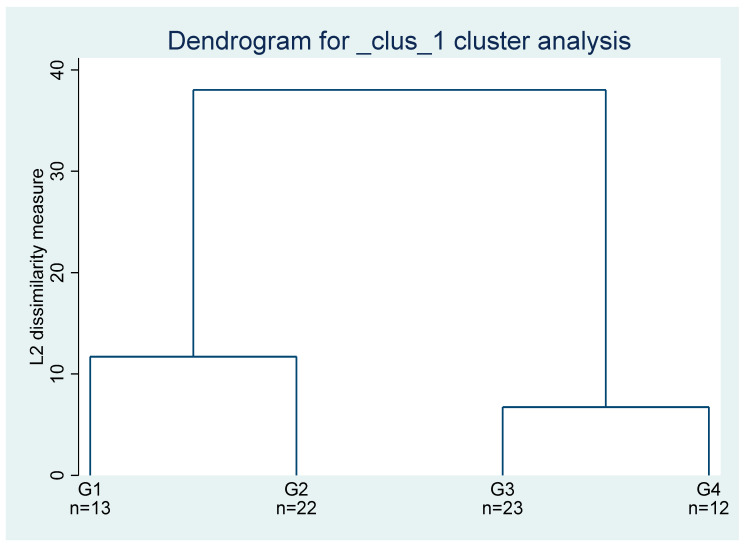
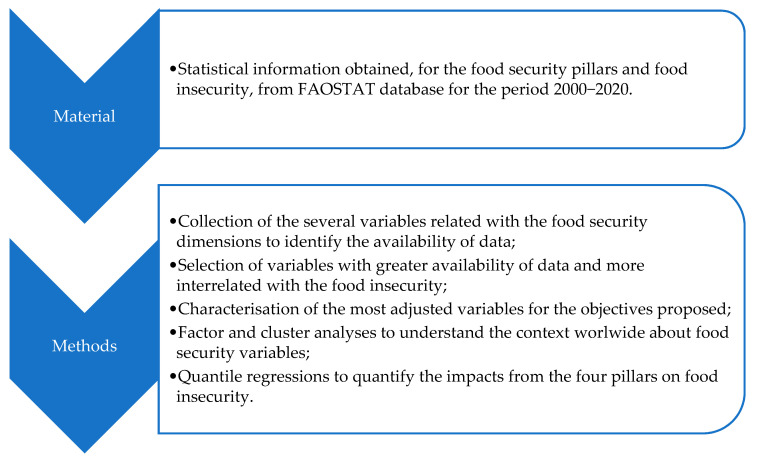
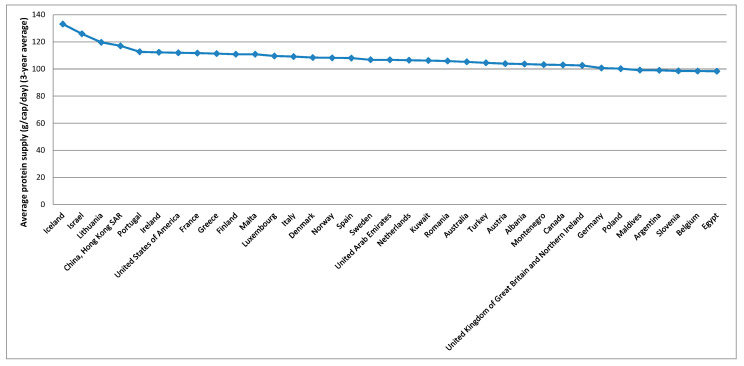
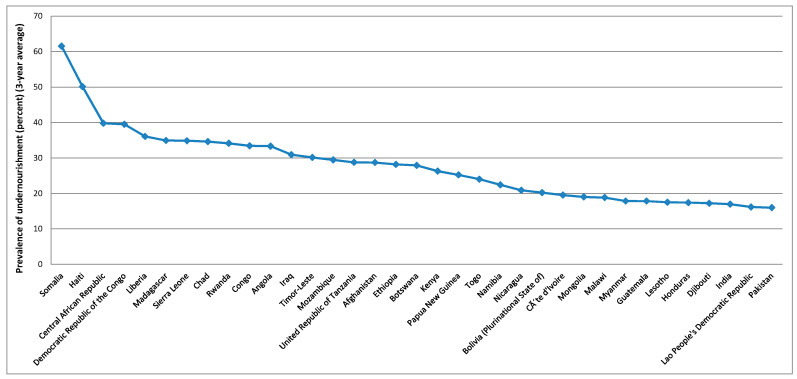
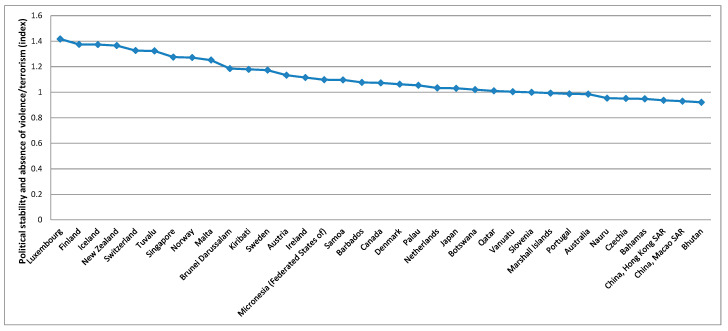
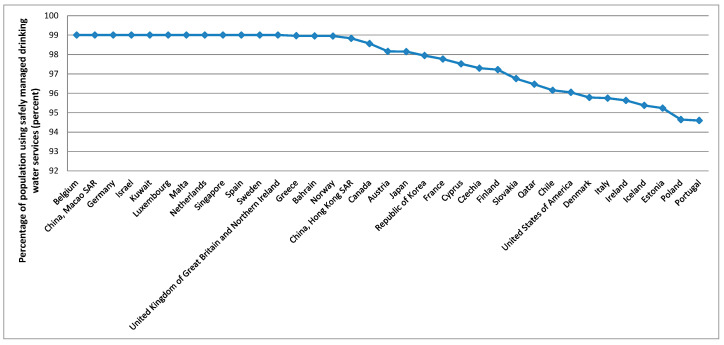
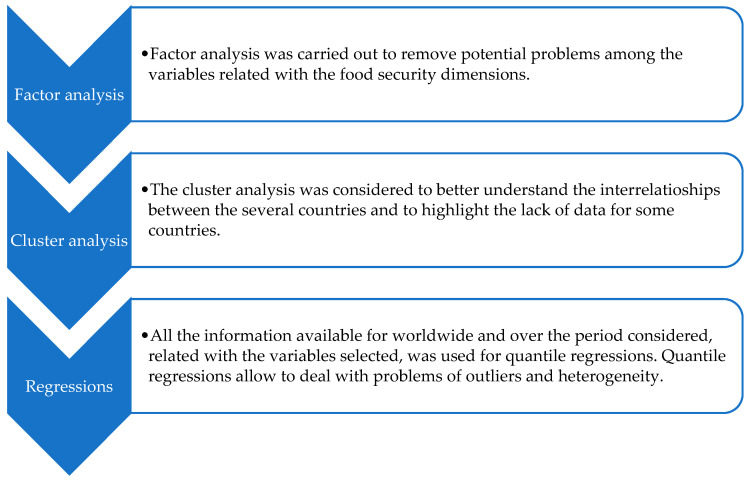
The unadjusted intake of food constitutes a real challenge for the several sustainability dimensions. In this perspective, the main objectives of this research are to characterise the current contexts of food security, its relationship with sustainability, and identify proposals and actions that may support the design of more adjusted policies in the future. In addition, it is intended to assess if the food security pillars properly address the sustainability goals and if the evolution of undernutrition is accompanied by sustainable frameworks. In this way, statistical information from the FAOSTAT database was considered for the several dimensions of food security over the period 2000-2020. These data were analysed through factor-cluster approaches and panel data methodologies, namely those related to quantile regressions. As main insights, we may refer that undernutrition is more impacted by the availability of food and nutrients and political stability than by the level of GDP-Gross Domestic Product (except for the extreme cases). This means that the level of development is not the primary explanation for the problems of nutrition. The main focus of the national and international policies must be to improve the agrifood supply chains and to support political stability, in order to mitigate undernutrition worldwide and ensure a global access to sustainable and healthy diets. In addition, it is suggested to rethink the four pillars of food security (availability, access, utilisation and stability), in order to encompass other dimensions, such as climate change.
未经调整的食物摄入量对多个可持续发展维度构成了真正的挑战。从这个角度来看,本研究的主要目标是描述当前粮食安全的背景、其与可持续性的关系,并确定可能支持未来制定更具针对性政策的建议和行动。此外,旨在评估粮食安全支柱是否恰当地解决了可持续发展目标,以及营养不良的演变是否伴随着可持续框架。通过这种方式,考虑了粮农组织统计数据库2000 - 2020年期间粮食安全多个维度的统计信息。这些数据通过因子聚类方法和面板数据方法进行分析,即与分位数回归相关的方法。作为主要见解,我们可以指出,除极端情况外,营养不良受食物和营养的可获得性以及政治稳定的影响大于受国内生产总值水平的影响。这意味着发展水平不是营养问题的主要解释因素。国家和国际政策的主要重点必须是改善农业食品供应链并支持政治稳定,以减轻全球范围内的营养不良并确保全球能够获取可持续和健康的饮食。此外,建议重新思考粮食安全的四个支柱(可获得性、可及性、利用和稳定性),以便纳入其他维度,如气候变化。