Kolawole Oluwatobi, De Ruyck Karl, Greer Brett, Meneely Julie, Doohan Fiona, Danaher Martin, Elliott Christopher
Institute for Global Food Security, Queen's University Belfast, Belfast BT9 5DL, UK.
Teagasc Food Research Centre, Ashtown, D15 KN3K Dublin, Ireland.
J Fungi (Basel). 2021 Nov 12;7(11):965. doi: 10.3390/jof7110965.
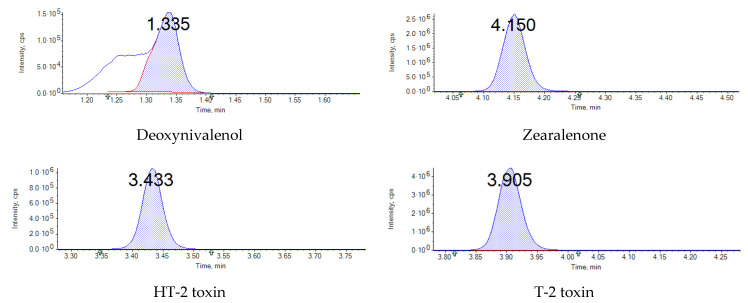
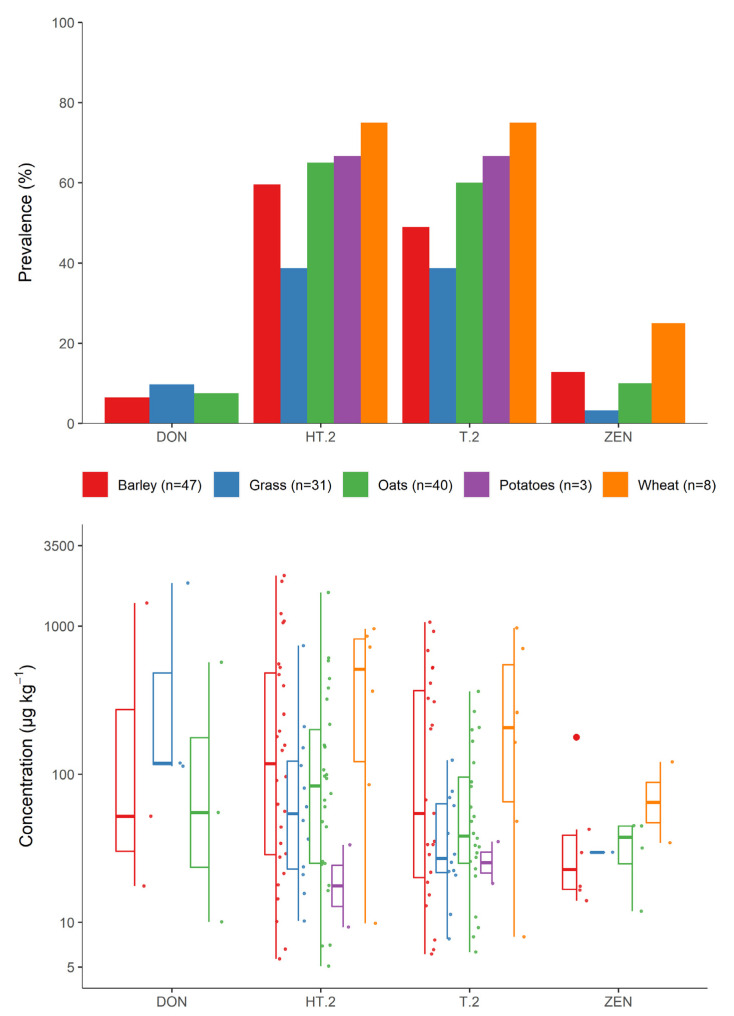
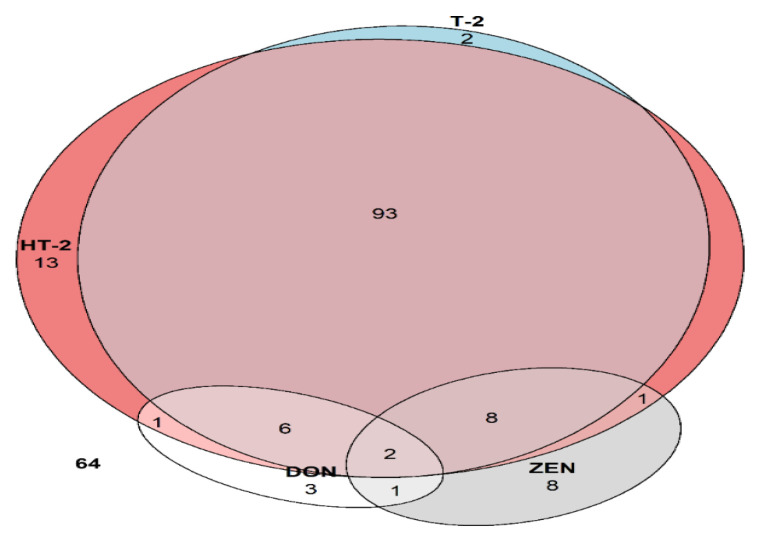
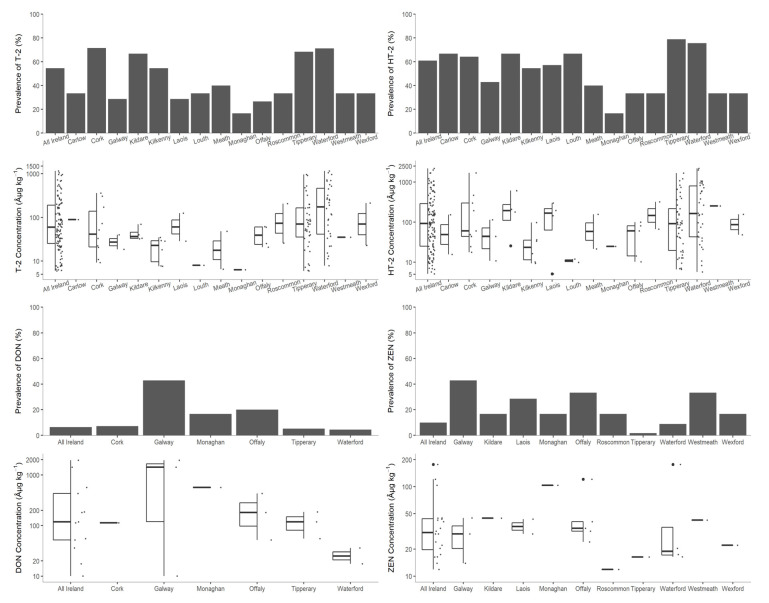
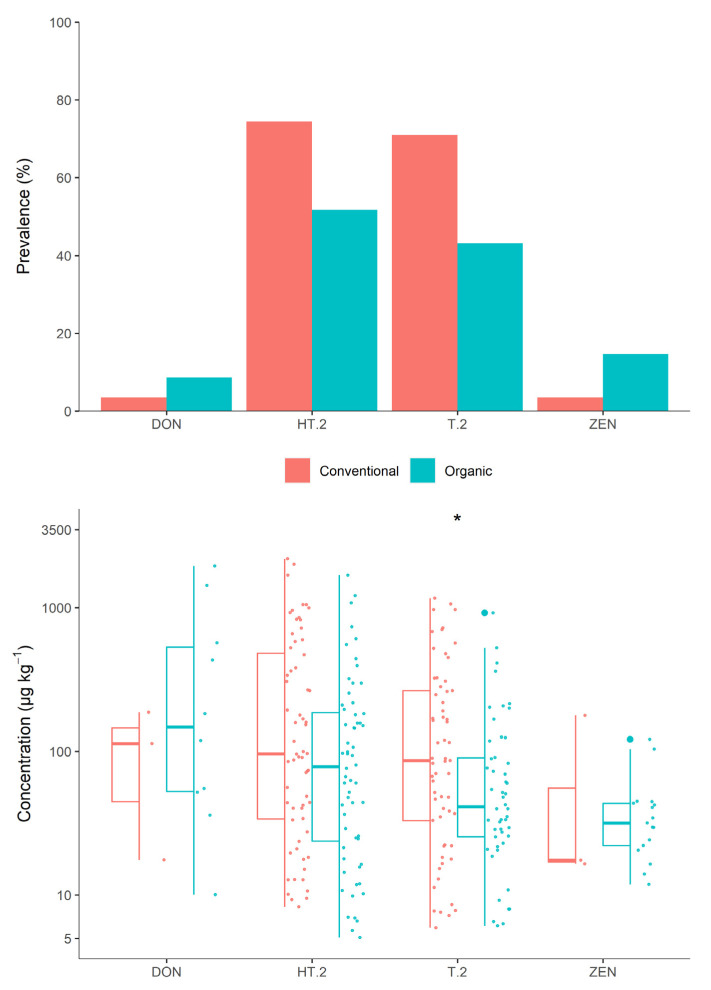
Seven agronomic factors (crop season, farming system, harvest date, moisture, county, oat variety, and previous crop) were recorded for 202 oat crops grown across Ireland, and samples were analysed by LC-MS/MS for four major mycotoxins: deoxynivalenol (DON), zearalenone (ZEN), T-2 toxin and HT-2 toxin. Type A trichothecenes were present in 62% of crops, with 7.4% exceeding European regulatory limits. DON (6.4%) and ZEN (9.9%) occurrences were relatively infrequent, though one and three samples were measured over their set limits, respectively. Overall, the type of farming system and the previous crop were the main factors identified as significantly influencing mycotoxin prevalence or concentration. Particularly, the adherence to an organic farming system and growing oats after a previous crop of grass were found to decrease contamination by type A trichothecenes. These are important findings and may provide valuable insights for many other types of cereal crops as Europe moves towards a much greater organic-based food system.
记录了爱尔兰各地种植的202种燕麦作物的七个农艺因素(作物季节、种植制度、收获日期、湿度、县、燕麦品种和前茬作物),并通过LC-MS/MS分析了样品中的四种主要霉菌毒素:脱氧雪腐镰刀菌烯醇(DON)、玉米赤霉烯酮(ZEN)、T-2毒素和HT-2毒素。62%的作物中存在A型单端孢霉烯族毒素,7.4%的作物超过了欧洲监管限值。DON(6.4%)和ZEN(9.9%)的检出率相对较低,尽管分别有一个和三个样品超过了设定限值。总体而言,种植制度类型和前茬作物是被确定为显著影响霉菌毒素流行率或浓度的主要因素。特别是,坚持有机种植制度以及在前茬作物为草之后种植燕麦被发现可减少A型单端孢霉烯族毒素的污染。随着欧洲朝着更加基于有机的食品体系发展,这些重要发现可能会为许多其他类型的谷类作物提供有价值的见解。