Ali Sawan, Corbi Graziamaria, Maes Michael, Scapagnini Giovanni, Davinelli Sergio
Department of Medicine and Health Sciences "V. Tiberio", University of Molise, 86100 Campobasso, Italy.
Department of Psychiatry, Faculty of Medicine, Chulalongkorn University, Bangkok 10330, Thailand.
Antioxidants (Basel). 2021 Oct 20;10(11):1644. doi: 10.3390/antiox10111644.
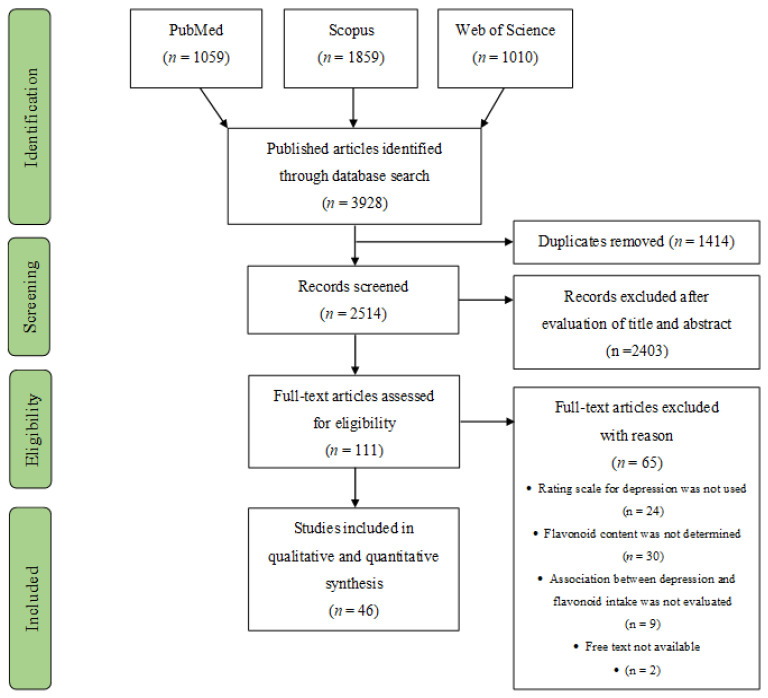
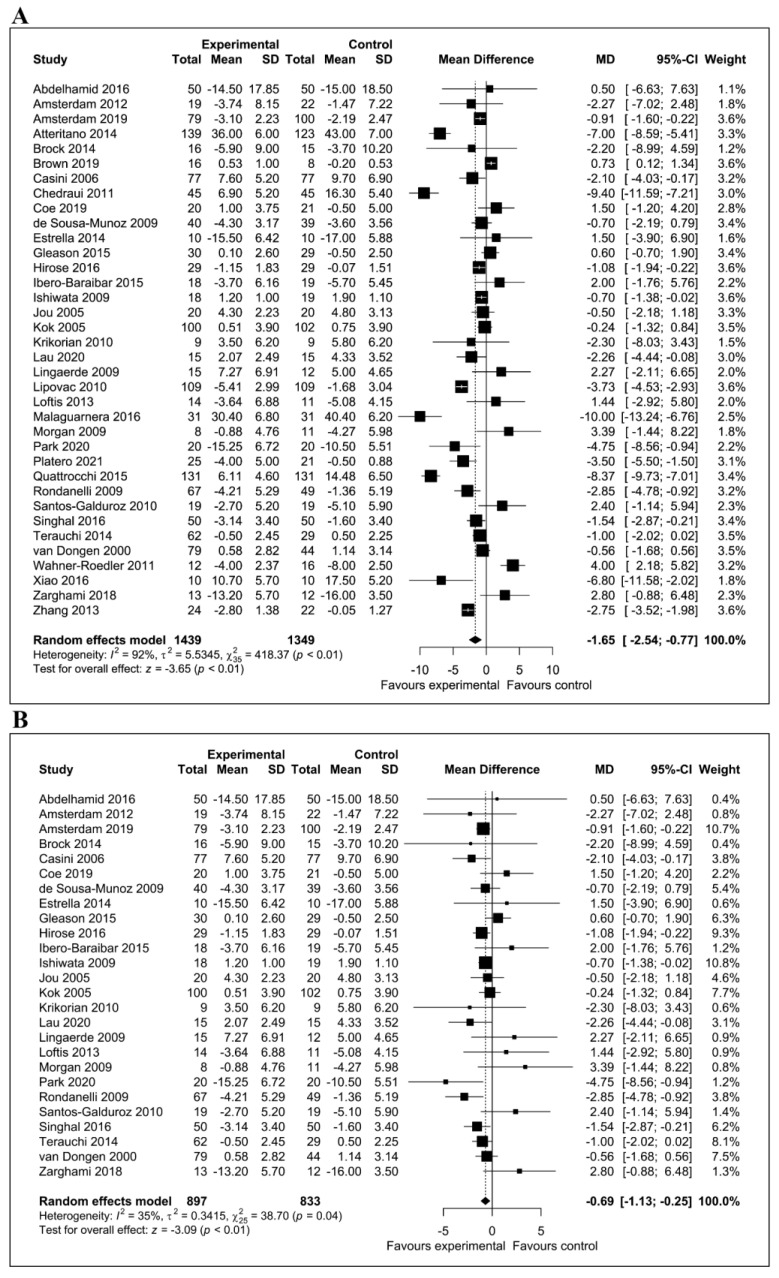
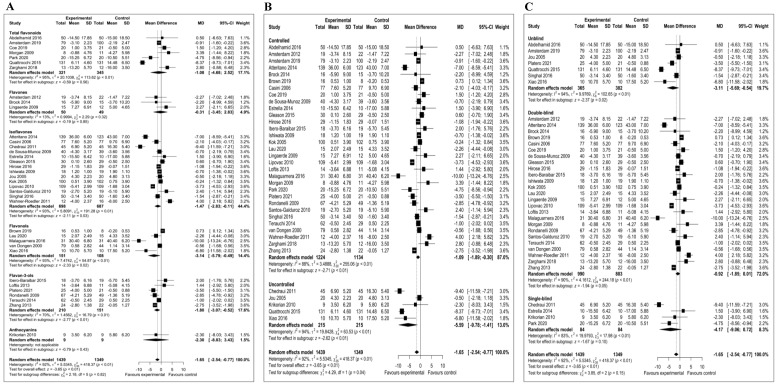
Recent evidence suggests that diet modifies key biological factors associated with the development of depression. It has been suggested that this could be due to the high flavonoid content commonly found in many plant foods, beverages and dietary supplements. Our aim was to conduct a systematic review to evaluate the effects of dietary flavonoids on the symptoms of depression. A total of 46 studies met the eligibility criteria. Of these, 36 were intervention trials and 10 were observational studies. A meta-analysis of 36 clinical trials involving a total of 2788 participants was performed. The results showed a statistically significant effect of flavonoids on depressive symptoms (mean difference = -1.65; 95% C.I., -2.54, -0.77; < 0.01). Five of the 10 observational studies included in the systematic review reported significant results, suggesting that a higher flavonoid intake may improve symptoms of depression. Further studies are urgently required to elucidate whether causal and mechanistic links exist, along with substantiation of functional brain changes associated with flavonoid consumption.
近期证据表明,饮食会改变与抑郁症发展相关的关键生物学因素。有人认为,这可能是由于许多植物性食物、饮料和膳食补充剂中普遍含有高含量的类黄酮。我们的目的是进行一项系统评价,以评估膳食类黄酮对抑郁症状的影响。共有46项研究符合纳入标准。其中,36项为干预试验,10项为观察性研究。对总共涉及2788名参与者的36项临床试验进行了荟萃分析。结果显示,类黄酮对抑郁症状有统计学上的显著影响(平均差异=-1.65;95%置信区间,-2.54,-0.77;P<0.01)。纳入该系统评价的10项观察性研究中有5项报告了显著结果,表明较高的类黄酮摄入量可能改善抑郁症状。迫切需要进一步研究以阐明是否存在因果和机制联系,以及证实与类黄酮摄入相关的大脑功能变化。