Ma Qian, Su Chunxue, Dong Chun-Hai
Shandong Province Key Laboratory of Applied Mycology College of Life Science, Qingdao Agricultural University, Qingdao 266109, China.
Plants (Basel). 2021 Oct 25;10(11):2281. doi: 10.3390/plants10112281.
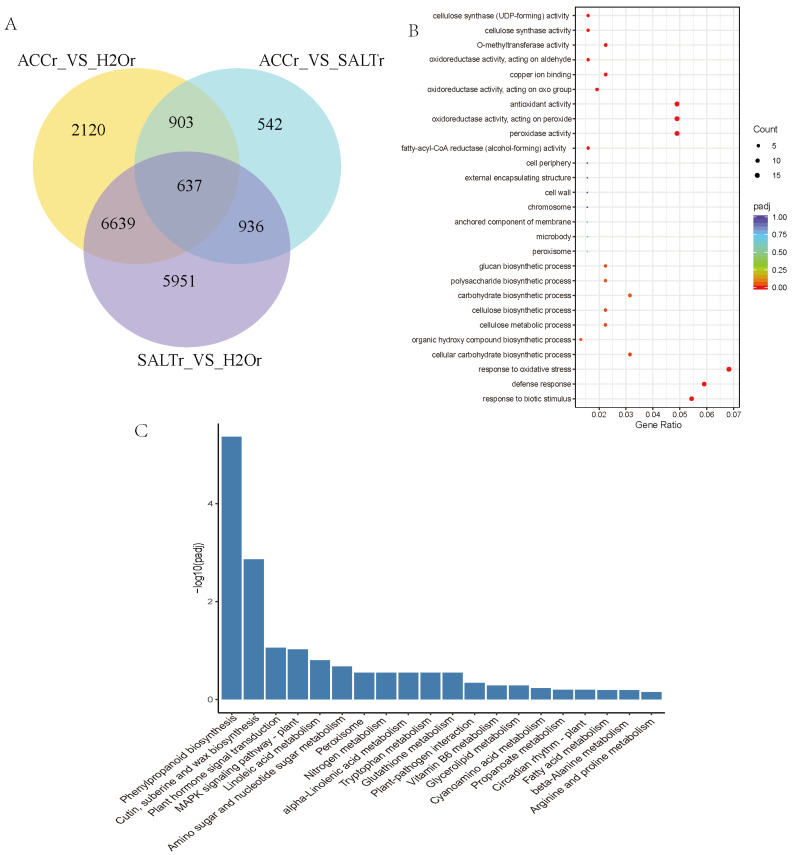
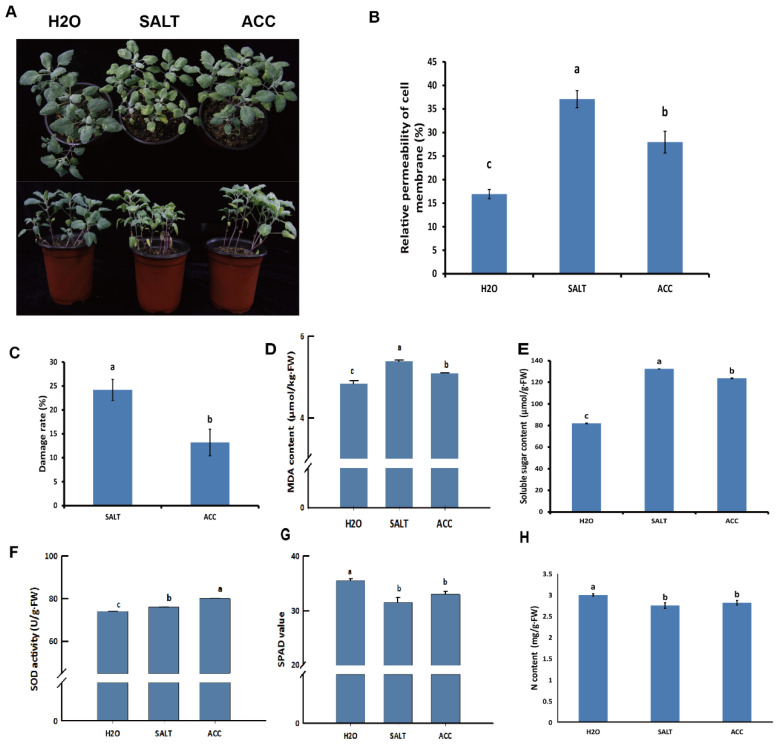
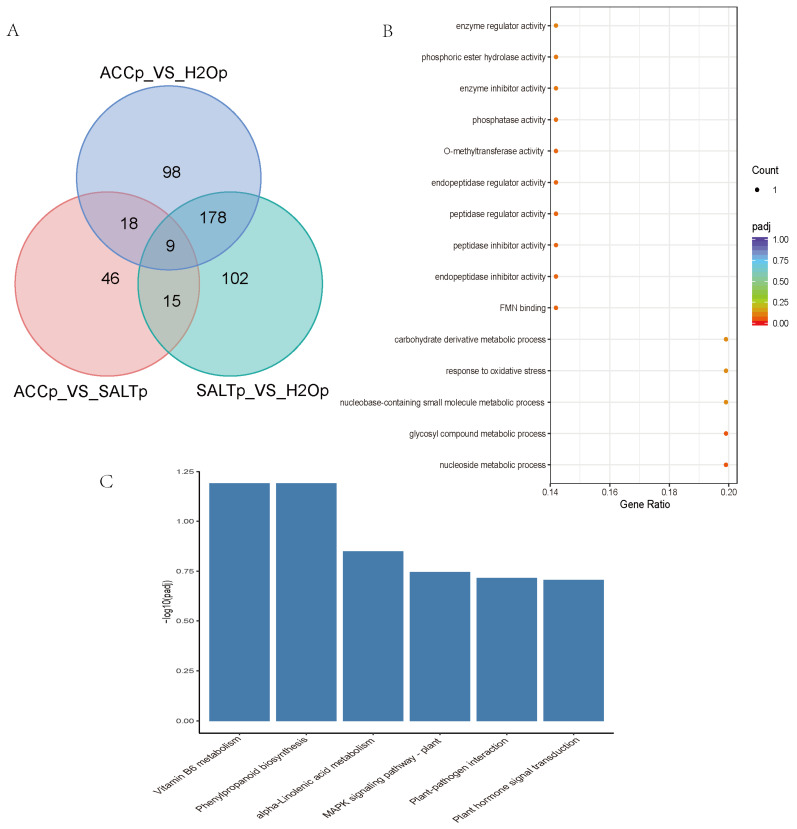
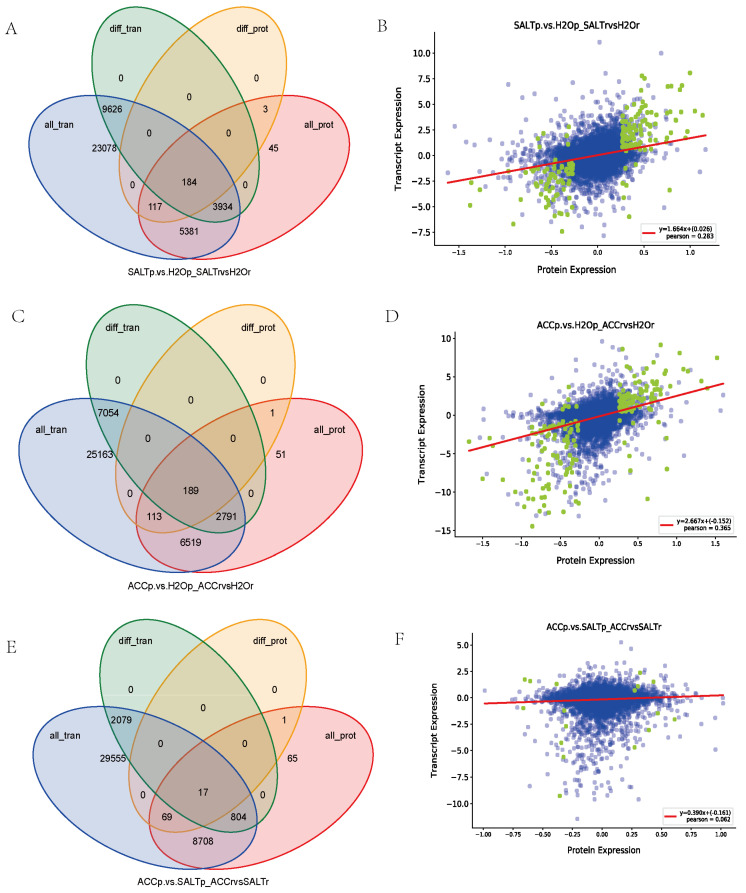
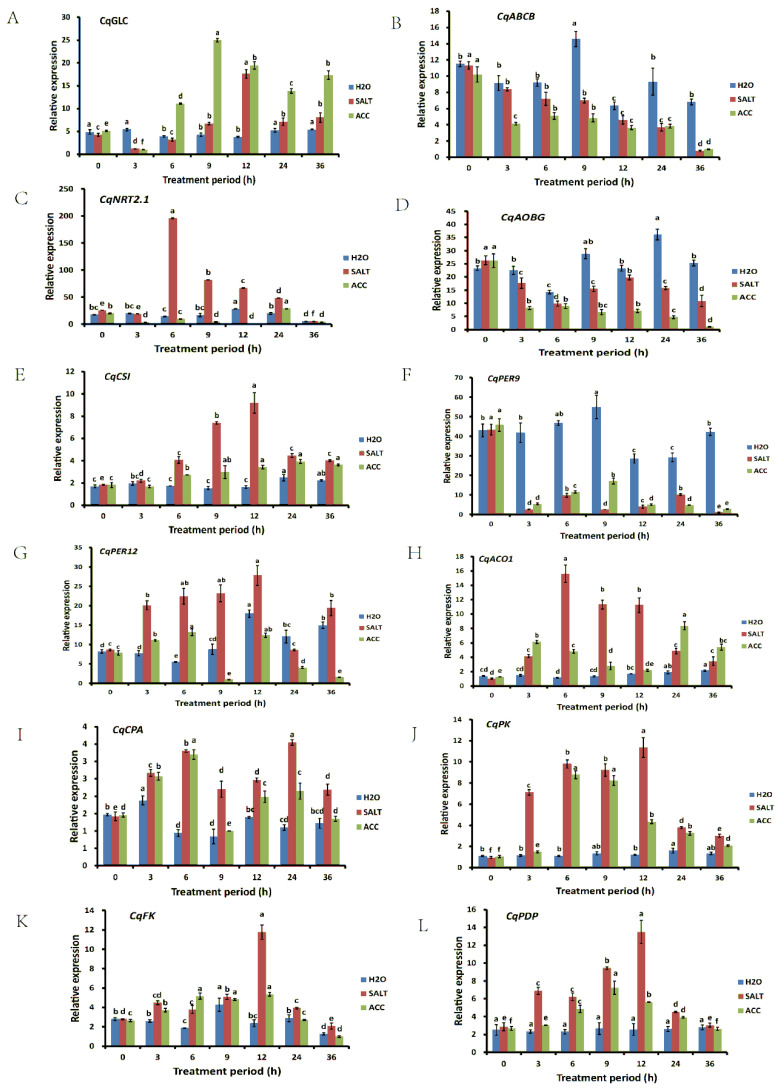
Quinoa ( Willd.), originated from the Andean region of South America, shows more significant salt tolerance than other crops. To reveal how the plant hormone ethylene is involved in the quinoa responses to salt stress, 4-week-old quinoa seedlings of 'NL-6' treated with water, sodium chloride (NaCl), and NaCl with ethylene precursor 1-aminocyclopropane-1-carboxylic acid (ACC) were collected and analyzed by transcriptional sequencing and tandem mass tag-based (TMT) quantitative proteomics. A total of 9672 proteins and 60,602 genes was identified. Among them, the genes encoding glutathione S-transferase (GST), peroxidase (POD), phosphate transporter (PT), glucan endonuclease (GLU), beta-galactosidase (BGAL), cellulose synthase (CES), trichome birefringence-like protein (TBL), glycine-rich cell wall structural protein (GRP), glucosyltransferase (GT), GDSL esterase/lipase (GELP), cytochrome P450 (CYP), and jasmonate-induced protein (JIP) were significantly differentially expressed. Further analysis suggested that the genes may mediate through osmotic adjustment, cell wall organization, reactive oxygen species (ROS) scavenging, and plant hormone signaling to take a part in the regulation of quinoa responses to ethylene and salt stress. Our results provide a strong foundation for exploration of the molecular mechanisms of quinoa responses to ethylene and salt stress.
藜麦(Chenopodium quinoa Willd.)原产于南美洲安第斯地区,其耐盐性比其他作物更为显著。为揭示植物激素乙烯如何参与藜麦对盐胁迫的响应,收集了用水、氯化钠(NaCl)以及添加乙烯前体1-氨基环丙烷-1-羧酸(ACC)的NaCl处理的4周龄‘NL-6’藜麦幼苗,并通过转录测序和基于串联质量标签(TMT)的定量蛋白质组学进行分析。共鉴定出9672种蛋白质和60602个基因。其中,编码谷胱甘肽S-转移酶(GST)、过氧化物酶(POD)、磷酸盐转运蛋白(PT)、葡聚糖内切酶(GLU)、β-半乳糖苷酶(BGAL)、纤维素合酶(CES)、毛状体双折射样蛋白(TBL)、富含甘氨酸的细胞壁结构蛋白(GRP)、糖基转移酶(GT)、GDSL酯酶/脂肪酶(GELP)、细胞色素P450(CYP)和茉莉酸诱导蛋白(JIP)的基因有显著差异表达。进一步分析表明,这些基因可能通过渗透调节、细胞壁组织、活性氧(ROS)清除和植物激素信号传导来参与藜麦对乙烯和盐胁迫响应的调控。我们的研究结果为探索藜麦对乙烯和盐胁迫响应的分子机制提供了有力的基础。