Department of Plant Biology, Faculty of Science and Informatics, University of Szeged, Közép fasor 52, H-6726 Szeged, Hungary.
Doctoral School in Biology, Faculty of Science and Informatics, University of Szeged, H-6720 Szeged, Hungary.
Biomolecules. 2020 Jun 25;10(6):959. doi: 10.3390/biom10060959.
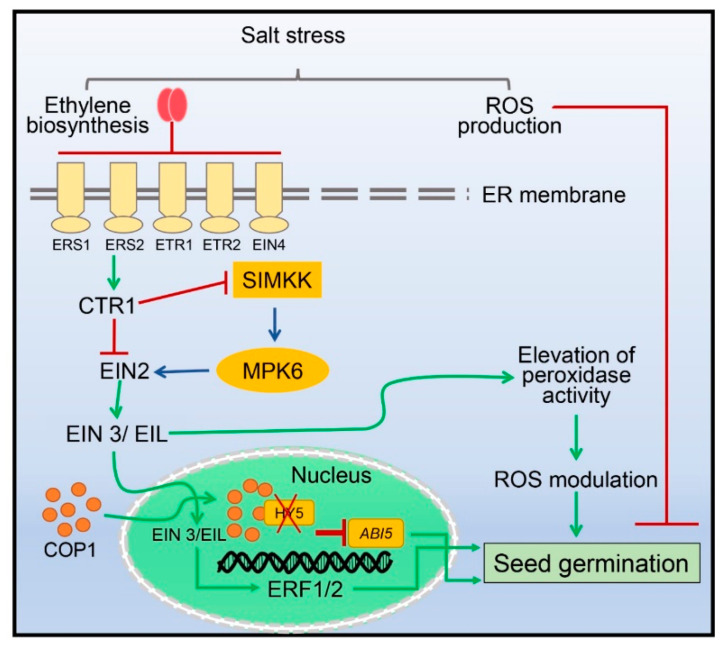
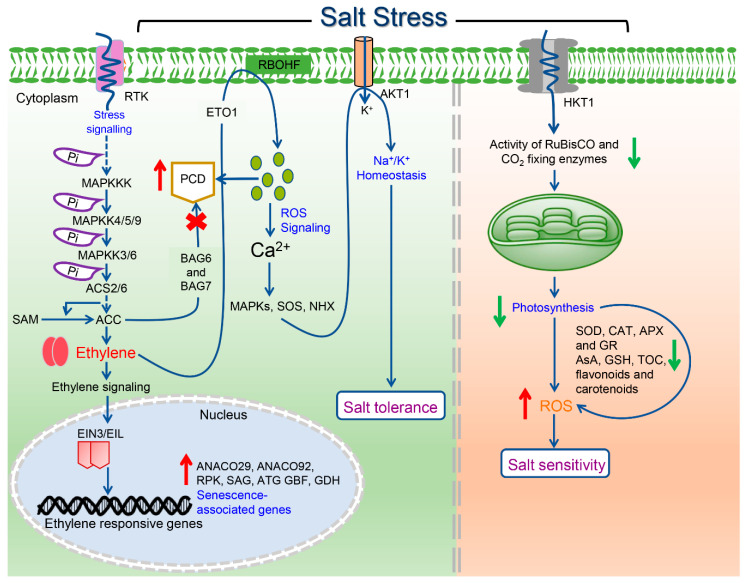
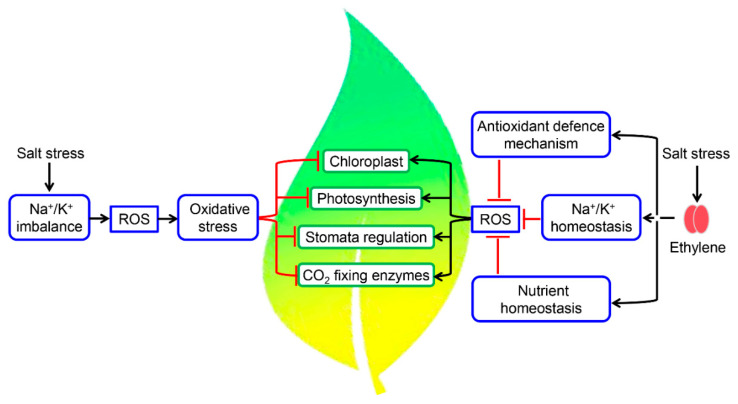
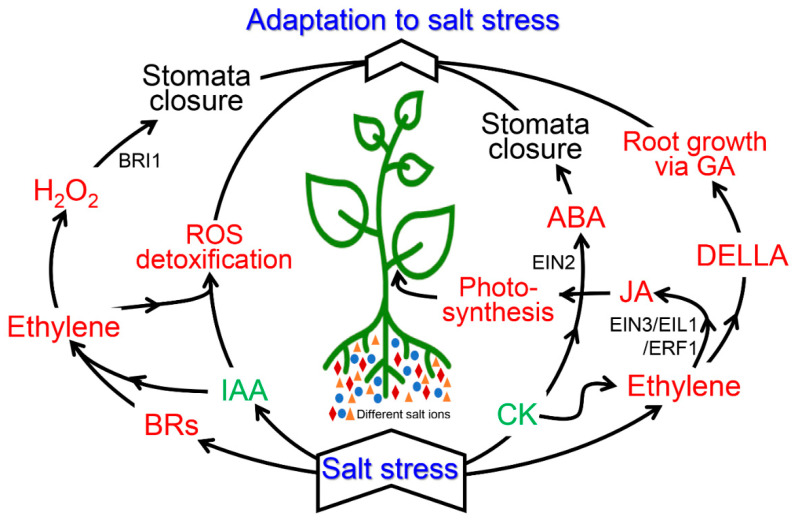
Salinity stress is one of the major threats to agricultural productivity across the globe. Research in the past three decades, therefore, has focused on analyzing the effects of salinity stress on the plants. Evidence gathered over the years supports the role of ethylene as a key regulator of salinity stress tolerance in plants. This gaseous plant hormone regulates many vital cellular processes starting from seed germination to photosynthesis for maintaining the plants' growth and yield under salinity stress. Ethylene modulates salinity stress responses largely via maintaining the homeostasis of Na/K, nutrients, and reactive oxygen species (ROS) by inducing antioxidant defense in addition to elevating the assimilation of nitrates and sulfates. Moreover, a cross-talk of ethylene signaling with other phytohormones has also been observed, which collectively regulate the salinity stress responses in plants. The present review provides a comprehensive update on the prospects of ethylene signaling and its cross-talk with other phytohormones to regulate salinity stress tolerance in plants.
盐胁迫是全球农业生产力的主要威胁之一。因此,过去三十年来的研究重点分析了盐胁迫对植物的影响。多年来收集的证据支持乙烯作为植物耐盐胁迫的关键调节剂的作用。这种气态植物激素调节许多重要的细胞过程,从种子萌发到光合作用,以维持植物在盐胁迫下的生长和产量。乙烯通过诱导抗氧化防御来维持 Na/K、养分和活性氧 (ROS) 的内稳态,以及提高硝酸盐和硫酸盐的同化作用,从而在很大程度上调节盐胁迫反应。此外,还观察到乙烯信号与其他植物激素之间的串扰,它们共同调节植物的盐胁迫反应。本综述提供了乙烯信号及其与其他植物激素相互作用调节植物耐盐胁迫的最新全面信息。