Golubkina Nadezhda, Moldovan Anastasia, Fedotov Mikhail, Kekina Helene, Kharchenko Viktor, Folmanis Gundar, Alpatov Andrey, Caruso Gianluca
Federal Scientific Vegetable Center, Moscow 143072, Russia.
A. Baikov Institute of Metallurgy and Material Science, Leninsky Pr. 49, Moscow 119334, Russia.
Plants (Basel). 2021 Nov 20;10(11):2528. doi: 10.3390/plants10112528.
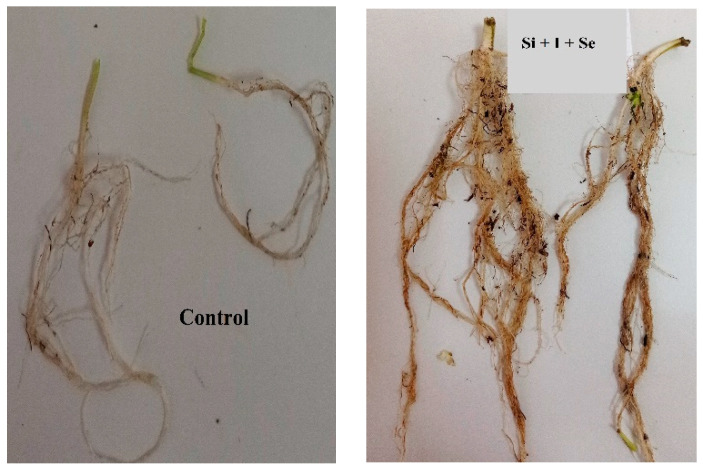
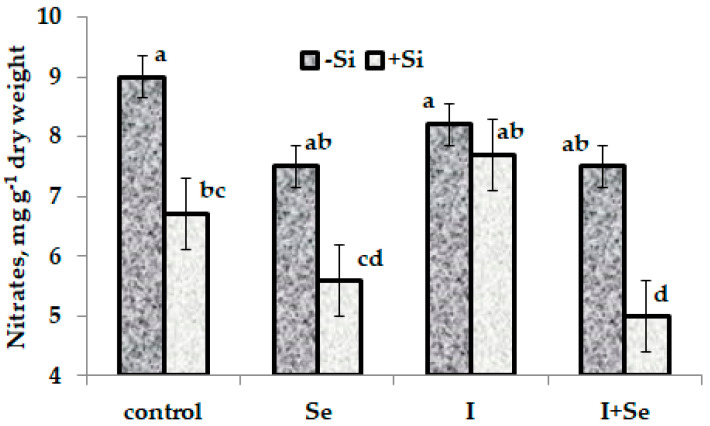
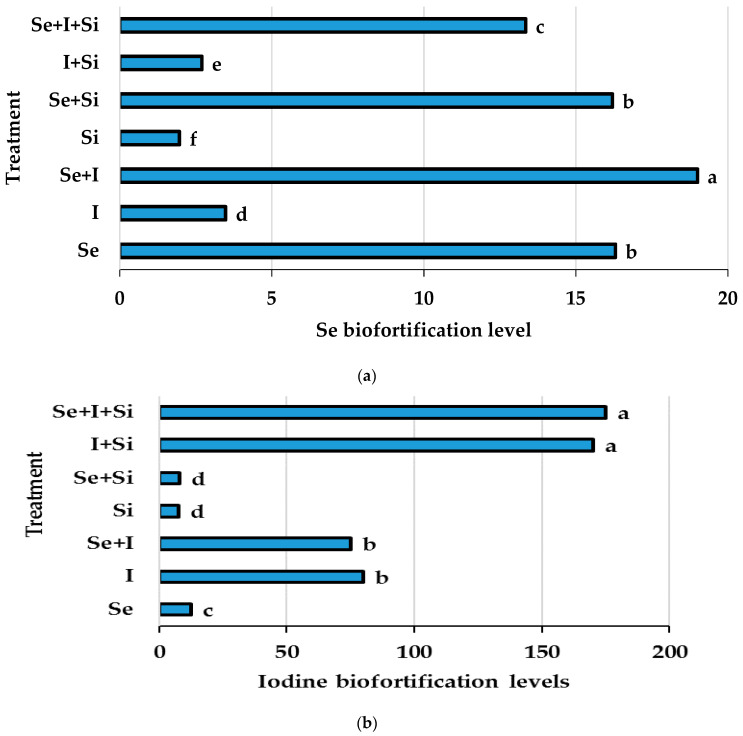
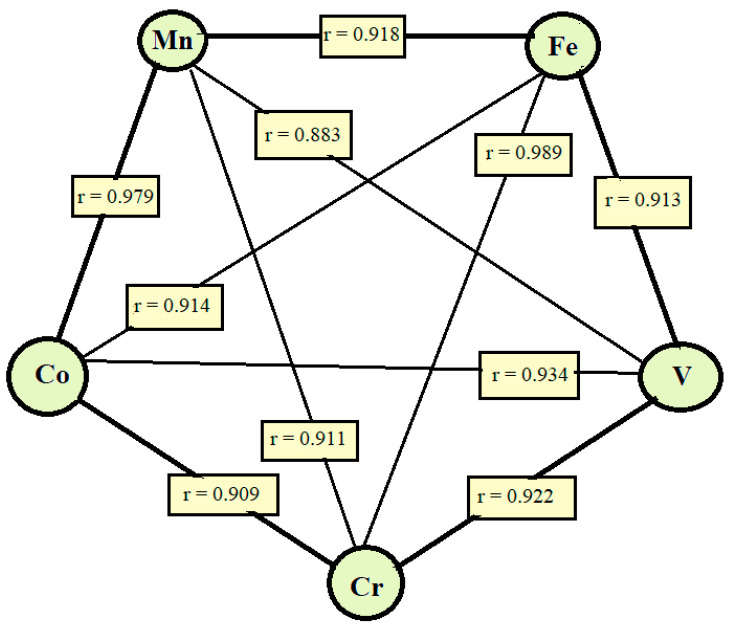
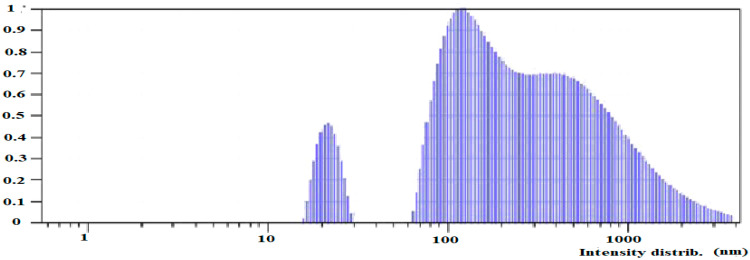
Production of functional food with high levels of selenium (Se) and iodine (I) obtained via plant biofortification shows significant difficulties due to the complex interaction between the two elements. Taking into account the known beneficial effect of silicon (Si) on plant growth and development, single and joint foliar biofortification of chervil plants with potassium iodide (150 mg L) and sodium selenate (10 mg L) was carried out in a pot experiment with and without Si nanoparticles foliar supplementation. Compared to control plants, nano-Si (14 mg L) increased shoot biomass in all treatments: by 4.8 times with Si; by 2.8 times with I + Si; by 5.6 times with Se + Si; by 4.0 times with I + Se + Si. The correspondent increases in root biomass were 4.5, 8.7, 13.3 and 10.0 times, respectively. The growth stimulation effect of Se, I and I + Se treatments resulted in a 2.7, 3.5 and 3.6 times increase for chervil shoots and 1.6, 3.1 and 8.6 times for roots, respectively. Nano-Si improved I biofortification levels by twice, while I and Se enhanced the plant content of each other. All treatments decreased nitrate levels, compared to control, and increased the photopigment accumulation. Improvement of total antioxidant activity and phenolic content was recorded only under the joint application of Se + I + Si. Foliar nano-Si treatment affected other element content in plants: decreased Na accumulation in single and joint supplementation with Se and I, restored Fe, Mn and Cr amount compared to the decreased levels recorded in separately Se and I fortified plants and promoted Al accumulation both with or without Se and I biofortification. The results of this research suggest high prospects of foliar nano-Si supply for enhancing both growth and joint I/Se biofortification of chervil.
通过植物生物强化生产富含高水平硒(Se)和碘(I)的功能性食品存在显著困难,因为这两种元素之间存在复杂的相互作用。考虑到硅(Si)对植物生长发育的已知有益作用,在盆栽试验中,对细叶芹植株进行了碘化钾(150毫克/升)和亚硒酸钠(10毫克/升)的单叶和联合叶面生物强化,试验分为添加和不添加硅纳米颗粒叶面补充剂两种情况。与对照植株相比,纳米硅(14毫克/升)在所有处理中均增加了地上部生物量:添加硅时增加了4.8倍;添加碘+硅时增加了2.8倍;添加硒+硅时增加了5.6倍;添加碘+硒+硅时增加了4.0倍。相应的根部生物量增加分别为4.5倍、8.7倍、13.3倍和10.0倍。硒、碘和碘+硒处理的生长刺激效应导致细叶芹地上部分别增加了2.7倍、3.5倍和3.6倍,根部分别增加了1.6倍、3.1倍和8.6倍。纳米硅使碘的生物强化水平提高了两倍,而碘和硒则相互提高了植物中的含量。与对照相比,所有处理均降低了硝酸盐水平,并增加了光合色素积累。仅在硒+碘+硅联合施用时,总抗氧化活性和酚类含量有所改善。叶面纳米硅处理影响了植物中其他元素的含量:在单独和联合添加硒和碘时,降低了钠的积累,与单独添加硒和碘强化的植株中记录的降低水平相比,恢复了铁、锰和铬的含量,并且无论是否进行硒和碘生物强化,均促进了铝的积累。本研究结果表明,叶面供应纳米硅在促进细叶芹生长和联合碘/硒生物强化方面具有很高的前景。