Physical Education and Sports Science, National Institute of Education, Nanyang Technological University, 1 Nanyang Walk, Singapore 637616, Singapore.
Nutrients. 2021 Oct 20;13(11):3674. doi: 10.3390/nu13113674.
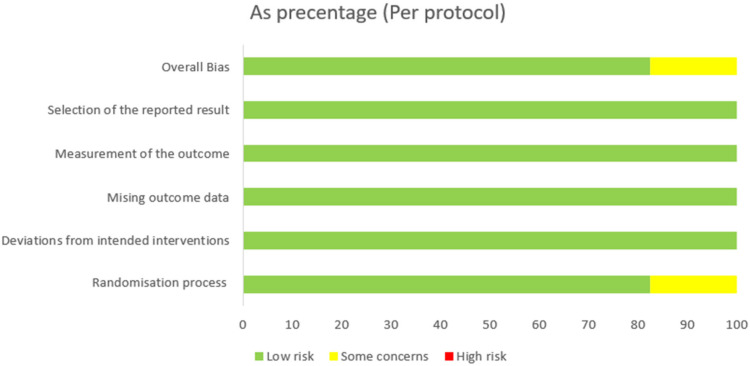
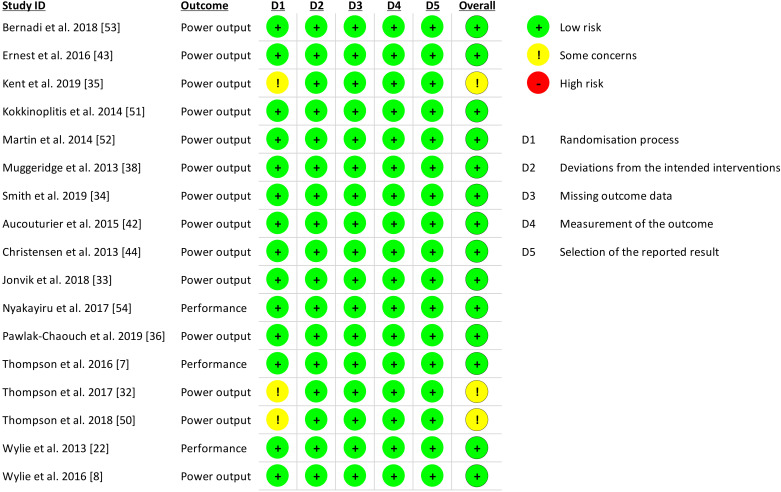
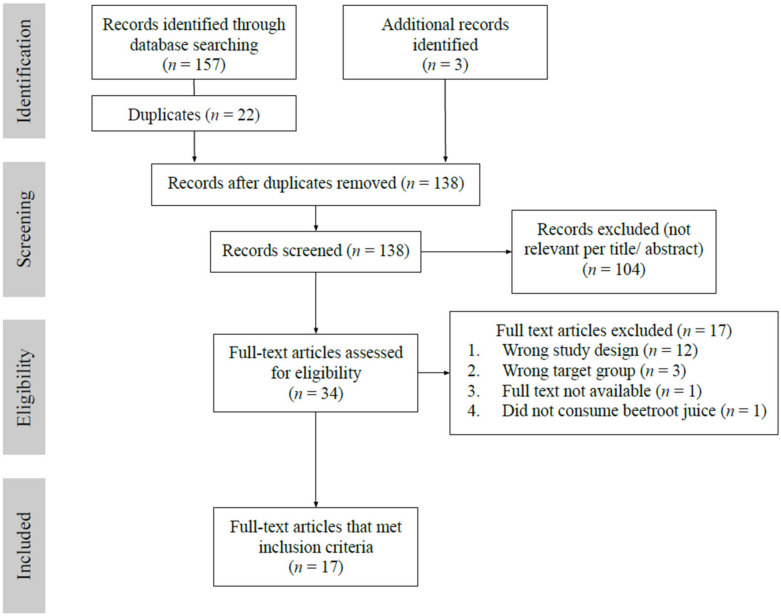
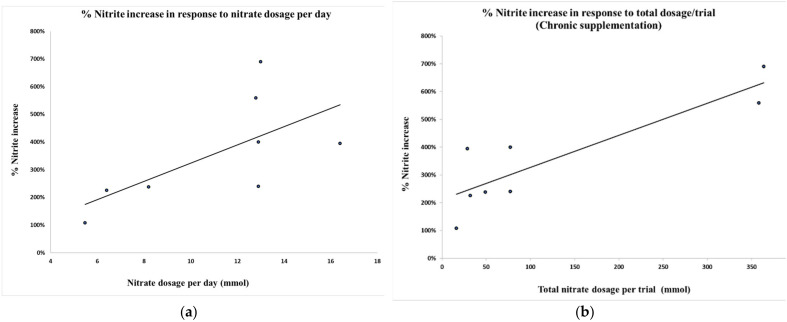
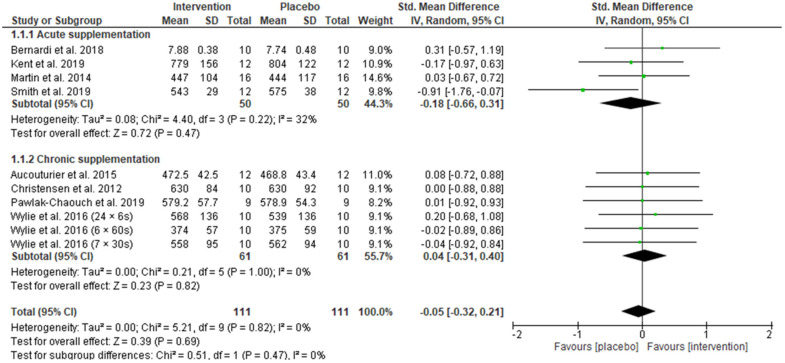
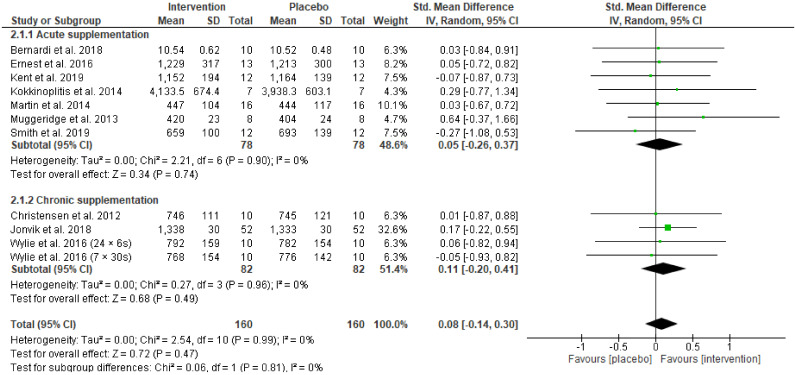
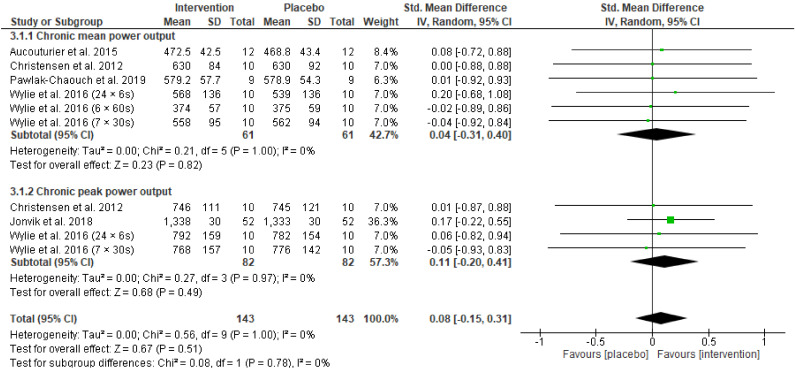
Dietary nitrate supplementation has shown promising ergogenic effects on endurance exercise. However, at present there is no systematic analysis evaluating the effects of acute or chronic nitrate supplementation on performance measures during high-intensity interval training (HIIT) and sprint interval training (SIT). The main aim of this systematic review and meta-analysis was to evaluate the evidence for supplementation of dietary beetroot-a common source of nitrate-to improve peak and mean power output during HIIT and SIT. A systematic literature search was carried out following PRISMA guidelines and the PICOS framework within the following databases: PubMed, ProQuest, ScienceDirect, and SPORTDiscus. Search terms used were: ((nitrate OR nitrite OR beetroot) AND (HIIT or high intensity or sprint interval or SIT) AND (performance)). A total of 17 studies were included and reviewed independently. Seven studies applied an acute supplementation strategy and ten studies applied chronic supplementation. The standardised mean difference for mean power output showed an overall trivial, non-significant effect in favour of placebo (Hedges' g = -0.05, 95% CI -0.32 to 0.21, Z = 0.39, = 0.69). The standardised mean difference for peak power output showed a trivial, non-significant effect in favour of the beetroot juice intervention (Hedges' g = 0.08, 95% CI -0.14 to 0.30, Z = 0.72, = 0.47). The present meta-analysis showed trivial statistical heterogeneity in power output, but the variation in the exercise protocols, nitrate dosage, type of beetroot products, supplementation strategy, and duration among studies restricted a firm conclusion of the effect of beetroot supplementation on HIIT performance. Our findings suggest that beetroot supplementation offers no significant improvement to peak or mean power output during HIIT or SIT. Future research could further examine the ergogenic potential by optimising the beetroot supplementation strategy in terms of dosage, timing, and type of beetroot product. The potential combined effect of other ingredients in the beetroot products should not be undermined. Finally, a chronic supplementation protocol with a higher beetroot dosage (>12.9 mmol/day for 6 days) is recommended for future HIIT and SIT study.
饮食硝酸盐补充剂已显示出对耐力运动有良好的促进作用。然而,目前尚无系统分析评估急性或慢性硝酸盐补充对高强度间歇训练(HIIT)和冲刺间歇训练(SIT)期间性能测量的影响。本系统评价和荟萃分析的主要目的是评估补充食用甜菜根(硝酸盐的常见来源)是否可以改善 HIIT 和 SIT 期间的峰值和平均功率输出。按照 PRISMA 指南和 PICOS 框架,在以下数据库中进行了系统文献检索:PubMed、ProQuest、ScienceDirect 和 SPORTDiscus。使用的搜索词为:((硝酸盐或亚硝酸盐或甜菜根)和(HIIT 或高强度或冲刺间歇或 SIT)和(性能))。共纳入并独立审查了 17 项研究。7 项研究采用急性补充策略,10 项研究采用慢性补充策略。平均功率输出的标准化均数差总体上表明,安慰剂有轻微但无统计学意义的优势(Hedges' g = -0.05,95%CI -0.32 至 0.21,Z = 0.39, = 0.69)。峰值功率输出的标准化均数差表明,甜菜根汁干预有轻微但无统计学意义的优势(Hedges' g = 0.08,95%CI -0.14 至 0.30,Z = 0.72, = 0.47)。本荟萃分析显示,在功率输出方面存在轻微的统计学异质性,但由于研究中的运动方案、硝酸盐剂量、甜菜根产品类型、补充策略和持续时间存在差异,无法得出甜菜根补充对 HIIT 性能影响的确切结论。我们的研究结果表明,甜菜根补充对 HIIT 或 SIT 期间的峰值或平均功率输出没有显著改善。未来的研究可以通过优化剂量、时间和甜菜根产品类型来进一步研究甜菜根补充的潜在功效。不应低估甜菜根产品中其他成分的潜在综合作用。最后,建议未来的 HIIT 和 SIT 研究采用更高的甜菜根剂量(>12.9mmol/天,持续 6 天)进行慢性补充方案。