Center for Health Equity and Community Engagement Research, Mayo Clinic Hospital, Jacksonville, FL 32224, USA.
Biobehavioral Nursing Science, College of Nursing, University of Florida, Gainesville, FL 32610, USA.
Nutrients. 2021 Oct 30;13(11):3910. doi: 10.3390/nu13113910.
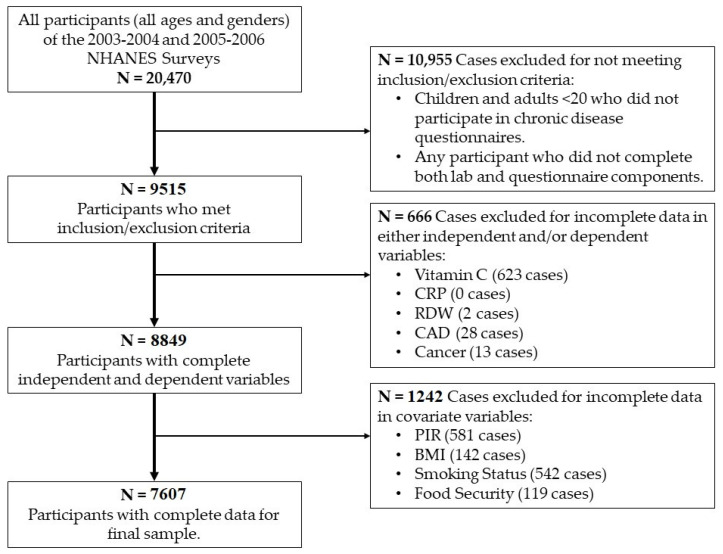
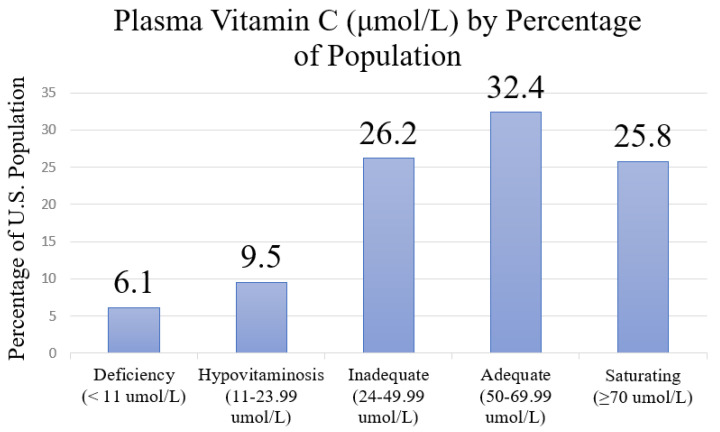
Vitamin C, well-established in immune function and a key factor in epigenetic inflammatory modifications, is only obtained through consistent dietary intake. Identifying individuals at risk for Vitamin C insufficiency may guide prevention and treatment, however, national surveillance has not been evaluated in the United States since 2006. A descriptive, cross-sectional secondary analysis was performed utilizing data from the 2003-2006 National Health and Nutrition Examination Surveys (NHANES) assessing non-institutionalized adults. Five categories of plasma Vitamin C were delineated: deficiency (<11 μmol/L), hypovitaminosis (11-23 μmol/L), inadequate (23-49 μmol/L), adequate (50-69 μmol/L), and saturating (≥70 μmol/L). Results indicated 41.8% of the population possessed insufficient levels (deficiency, hypovitaminosis, and inadequate) of Vitamin C. Males, adults aged 20-59, Black and Mexican Americans, smokers, individuals with increased BMI, middle and high poverty to income ratio and food insecurity were significantly associated with insufficient Vitamin C plasma levels. Plasma Vitamin C levels reveal a large proportion of the population still at risk for inflammatory driven disease with little to no symptoms of Vitamin C hypovitaminosis. Recognition and regulation of the health impact of Vitamin C support the goal of Nutrition and Healthy Eating as part of the Healthy People 2030.
维生素 C 在免疫功能中起着重要作用,是表观遗传炎症修饰的关键因素,只能通过持续的饮食摄入获得。确定维生素 C 不足的高危人群可能有助于预防和治疗,但自 2006 年以来,美国尚未进行国家监测。本研究利用 2003-2006 年国家健康和营养调查(NHANES)的数据进行了描述性、横断面二次分析,评估了非住院成年人。将血浆维生素 C 分为五类:缺乏(<11 μmol/L)、轻度不足(11-23 μmol/L)、不足(23-49 μmol/L)、充足(50-69 μmol/L)和饱和(≥70 μmol/L)。结果表明,41.8%的人群维生素 C 水平不足(缺乏、轻度不足和不足)。男性、20-59 岁成年人、黑人和墨西哥裔美国人、吸烟者、BMI 增加、中高贫困收入比和食物不安全的个体与维生素 C 血浆水平不足显著相关。血浆维生素 C 水平表明,尽管没有明显的维生素 C 缺乏症状,但仍有很大一部分人群存在炎症驱动疾病的风险。认识到维生素 C 的健康影响并加以规范,支持了将营养和健康饮食作为 2030 年健康人目标的一部分。