Department of Pharmacology, Ribeirao Preto Medical School, University of São Paulo - USP, Brazil; Department of Biological Chemistry, The Johns Hopkins University School of Medicine, USA.
Department of Pharmacology, Ribeirao Preto Medical School, University of São Paulo - USP, Brazil; Minas Gerais State University - UEMG, Brazil.
Vascul Pharmacol. 2022 Feb;142:106946. doi: 10.1016/j.vph.2021.106946. Epub 2021 Nov 25.
Mitochondria play a central role in the host response to viral infection and immunity, being key to antiviral signaling and exacerbating inflammatory processes. Mitochondria and Toll-like receptor (TLR) have been suggested as potential targets in SARS-CoV-2 infection. However, the involvement of TLR9 in SARS-Cov-2-induced endothelial dysfunction and potential contribution to cardiovascular complications in COVID-19 have not been demonstrated. This study determined whether infection of endothelial cells by SARS-CoV-2 affects mitochondrial function and induces mitochondrial DNA (mtDNA) release. We also questioned whether TLR9 signaling mediates the inflammatory responses induced by SARS-CoV-2 in endothelial cells.
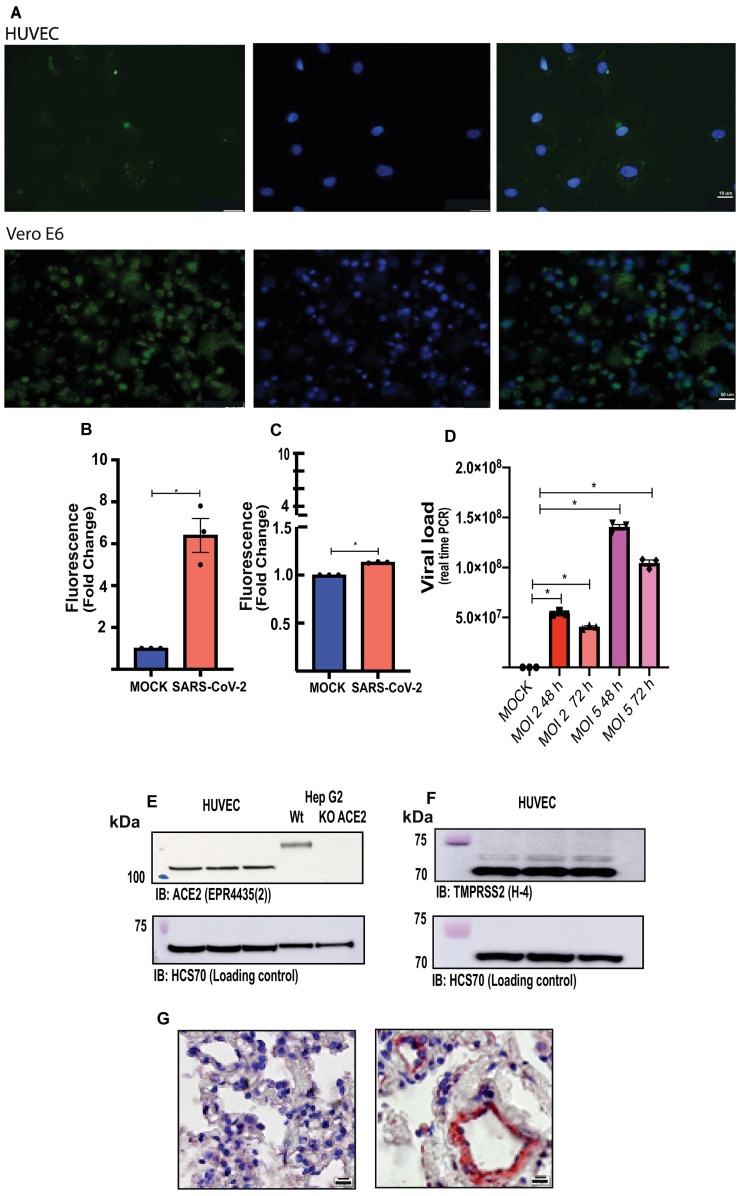
Human umbilical vein endothelial cells (HUVECs) were infected by SARS-CoV-2 and immunofluorescence was used to confirm the infection. Mitochondrial function was analyzed by specific probes and mtDNA levels by real-time polymerase chain reaction (RT-PCR). Inflammatory markers were measured by ELISA, protein expression by western blot, intracellular calcium (Ca) by FLUOR-4, and vascular reactivity with a myography.
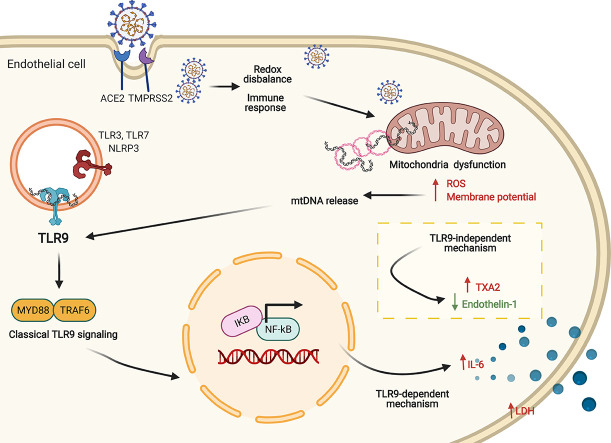
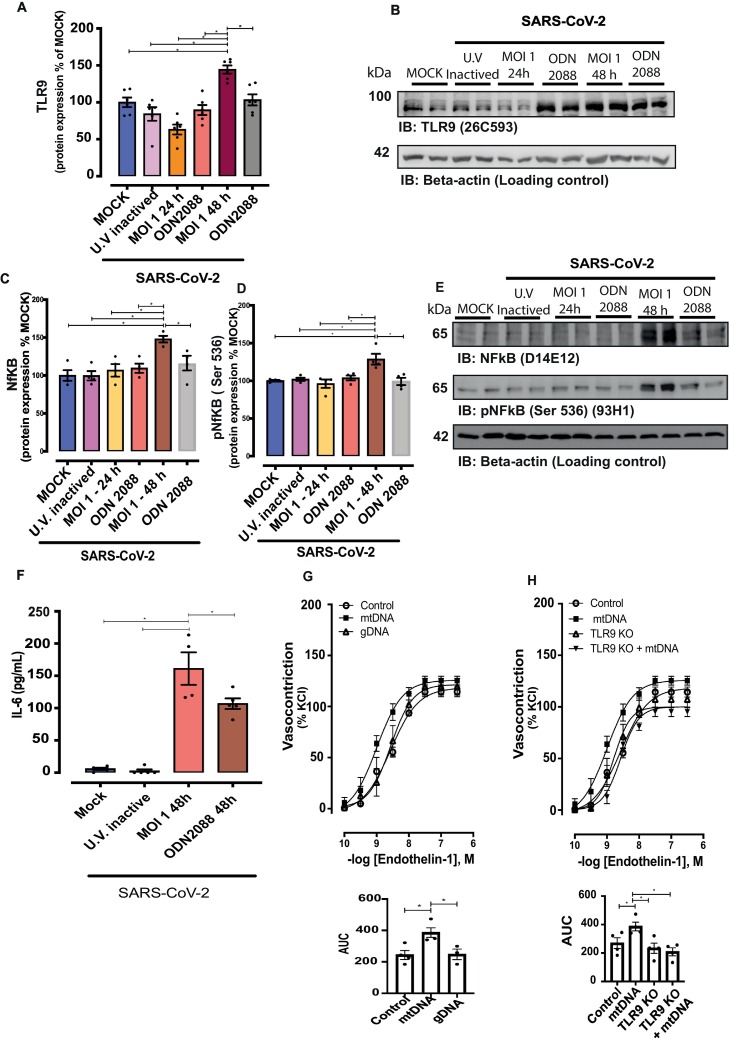
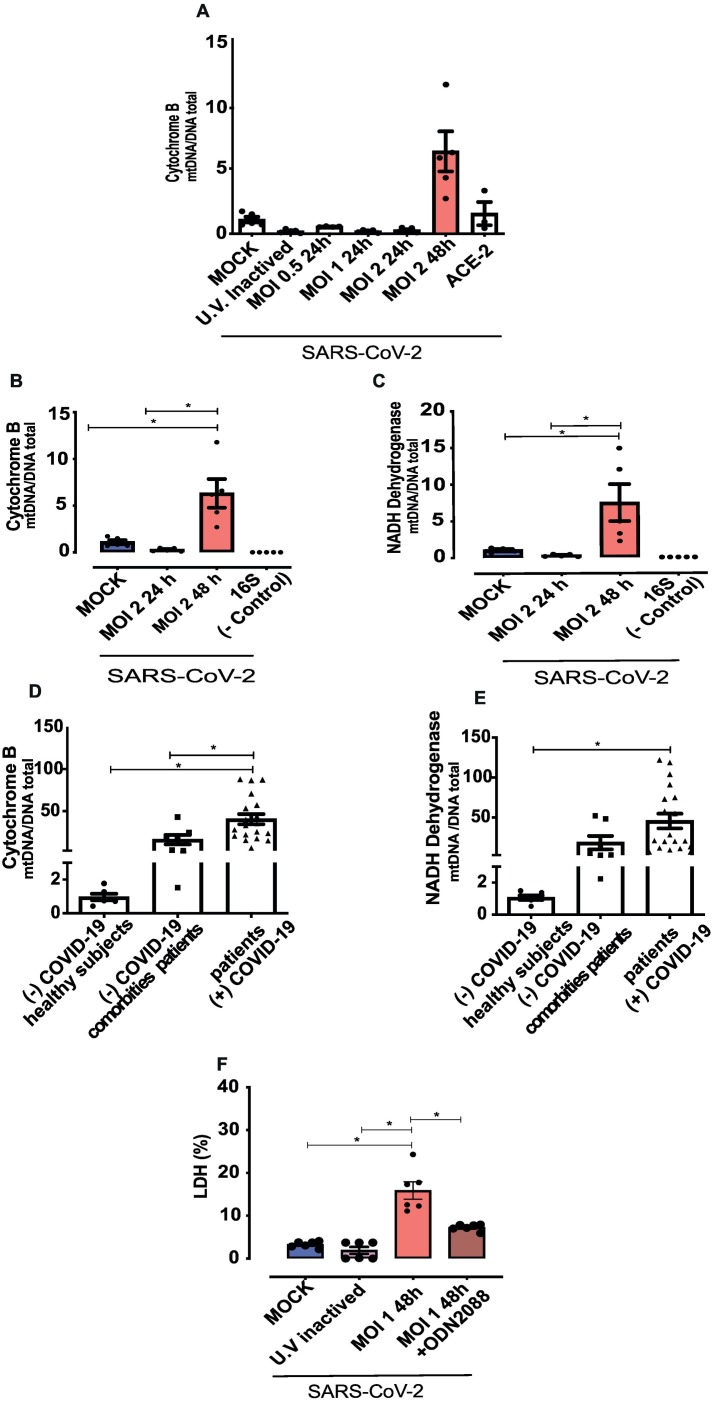
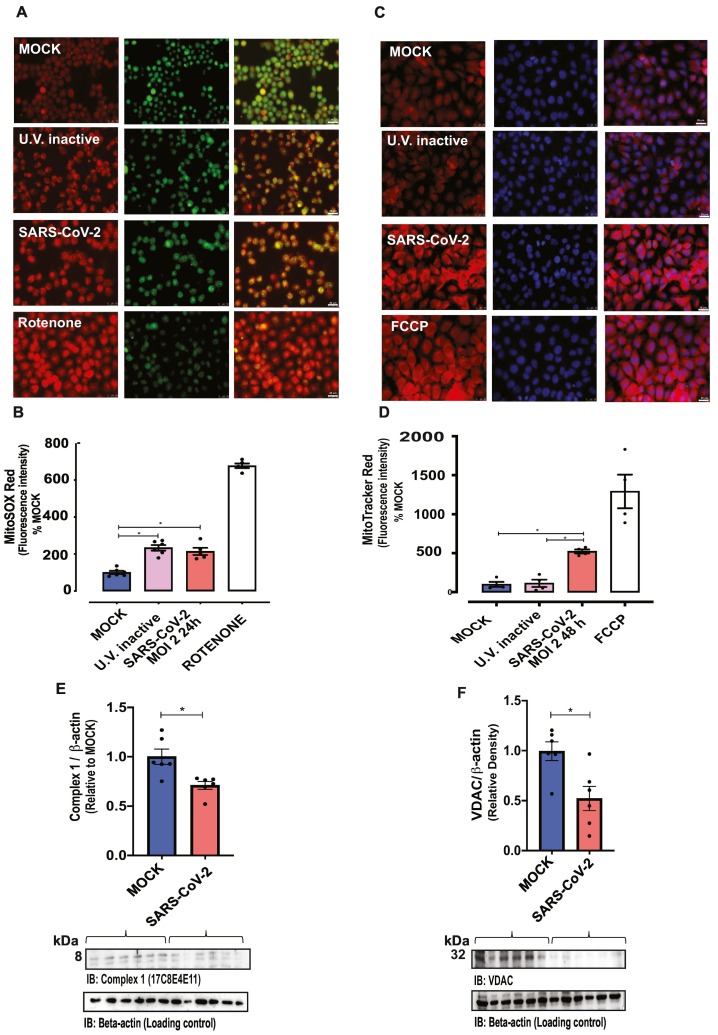
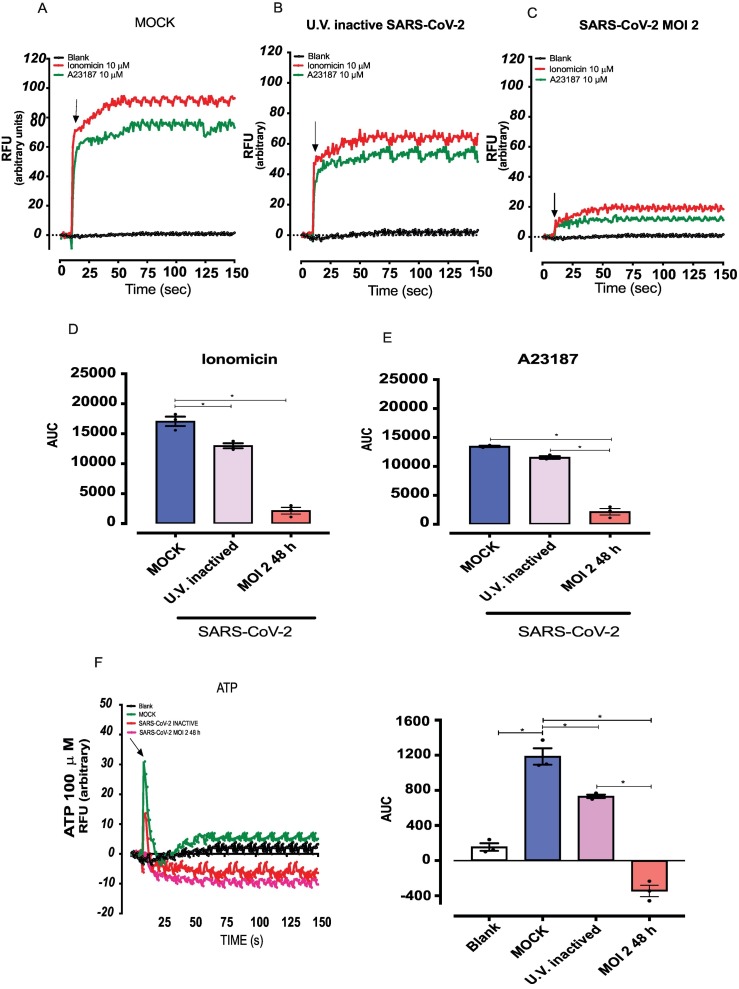
SARS-CoV-2 infected HUVECs, which express ACE2 and TMPRSS2 proteins, and promoted mitochondrial dysfunction, i.e. it increased mitochondria-derived superoxide anion, mitochondrial membrane potential, and mtDNA release, leading to activation of TLR9 and NF-kB, and release of cytokines. SARS-CoV-2 also decreased nitric oxide synthase (eNOS) expression and inhibited Ca responses in endothelial cells. TLR9 blockade reduced SARS-CoV-2-induced IL-6 release and prevented decreased eNOS expression. mtDNA increased vascular reactivity to endothelin-1 (ET-1) in arteries from wild type, but not TLR9 knockout mice. These events were recapitulated in serum samples from COVID-19 patients, that exhibited increased levels of mtDNA compared to sex- and age-matched healthy subjects and patients with comorbidities.
SARS-CoV-2 infection impairs mitochondrial function and activates TLR9 signaling in endothelial cells. TLR9 triggers inflammatory responses that lead to endothelial cell dysfunction, potentially contributing to the severity of symptoms in COVID-19. Targeting mitochondrial metabolic pathways may help to define novel therapeutic strategies for COVID-19.
线粒体在宿主对病毒感染和免疫的反应中发挥核心作用,是抗病毒信号转导和炎症过程加剧的关键。线粒体和 Toll 样受体(TLR)已被认为是 SARS-CoV-2 感染的潜在靶点。然而,TLR9 在 SARS-CoV-2 诱导的内皮功能障碍中的作用以及其对 COVID-19 中心血管并发症的潜在贡献尚未得到证实。本研究旨在确定 SARS-CoV-2 感染内皮细胞是否会影响线粒体功能并诱导线粒体 DNA(mtDNA)释放。我们还质疑 TLR9 信号转导是否介导 SARS-CoV-2 诱导的内皮细胞炎症反应。
用人脐静脉内皮细胞(HUVEC)感染 SARS-CoV-2,并用免疫荧光法确认感染。通过特异性探针分析线粒体功能,通过实时聚合酶链反应(RT-PCR)分析 mtDNA 水平。通过 ELISA 测量炎症标志物,通过 Western blot 测量蛋白表达,通过 FLUOR-4 测量细胞内钙(Ca),通过血管张力测定法测量血管反应性。
SARS-CoV-2 感染表达 ACE2 和 TMPRSS2 蛋白的 HUVEC,并促进线粒体功能障碍,即增加线粒体来源的超氧阴离子、线粒体膜电位和 mtDNA 释放,导致 TLR9 和 NF-kB 激活以及细胞因子释放。SARS-CoV-2 还降低了内皮细胞中一氧化氮合酶(eNOS)的表达并抑制了 Ca 反应。TLR9 阻断减少了 SARS-CoV-2 诱导的 IL-6 释放并防止了 eNOS 表达的降低。与野生型小鼠相比,mtDNA 增加了动脉对内皮素-1(ET-1)的血管反应性,但 TLR9 基因敲除小鼠则没有。这些事件在 COVID-19 患者的血清样本中得到了重现,与性别和年龄匹配的健康受试者和患有合并症的患者相比,COVID-19 患者的 mtDNA 水平升高。
SARS-CoV-2 感染会损害内皮细胞中的线粒体功能并激活 TLR9 信号转导。TLR9 触发炎症反应,导致内皮细胞功能障碍,可能导致 COVID-19 症状加重。靶向线粒体代谢途径可能有助于确定 COVID-19 的新型治疗策略。