Global Obesity Centre, Deakin University, Geelong, Australia.
Institute for Physical Activity and Nutrition, Deakin University, Geelong, Australia.
Global Health. 2021 Dec 2;17(1):138. doi: 10.1186/s12992-021-00781-6.
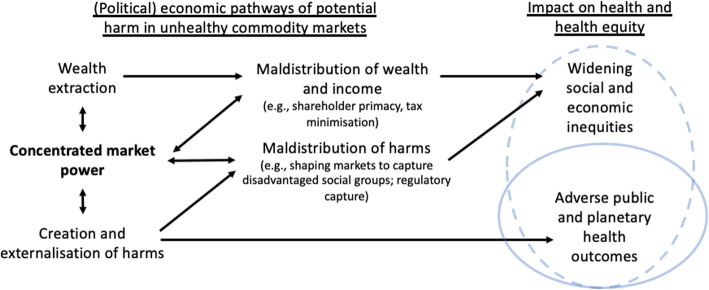
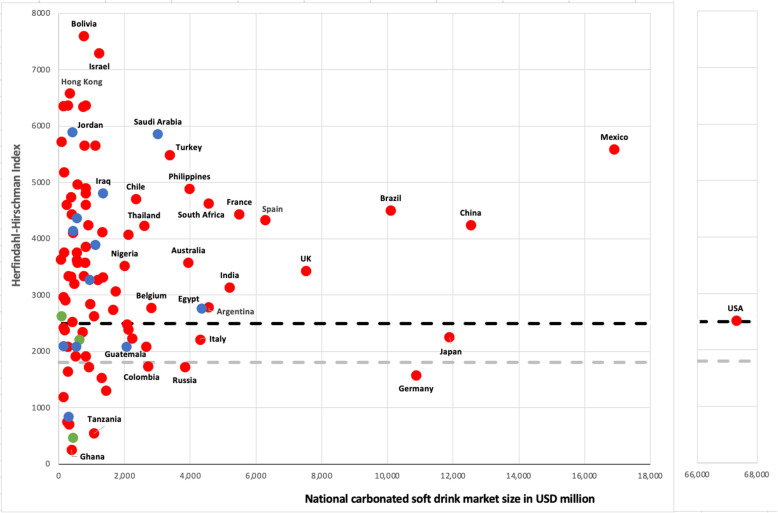
Many of the harms created by the global soft drink industry that directly influence human and planetary health are well documented. However, some of the ways in which the industry indirectly affects population health, via various socio-economic pathways, have received less attention. This paper aimed to analyse the extent to which market power and corporate wealth and income distribution in the global soft drink market negatively impact public health and health equity. In doing so, the paper sought to contribute to the development of a broad-based public health approach to market analysis. A range of dimensions (e.g., market concentration; financial performance; corporate wealth and income distribution) and indicators (e.g., Herfindahl Hirschman Index; earnings relative to the industry average; effective tax rates; and shareholder value ratios) were descriptively analysed. Empirical focus was placed on the two dominant global soft drink manufacturers.
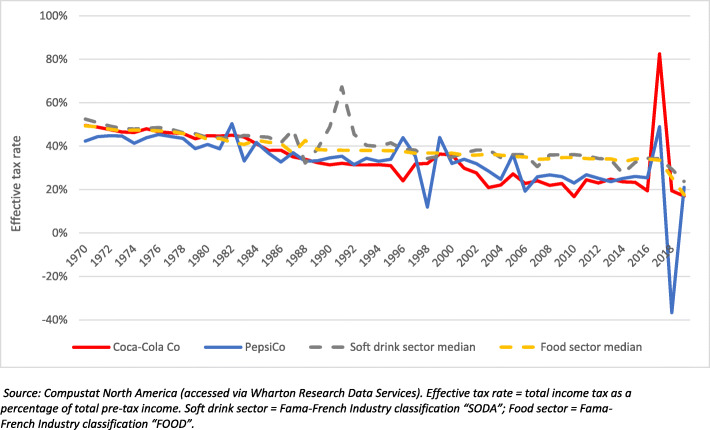
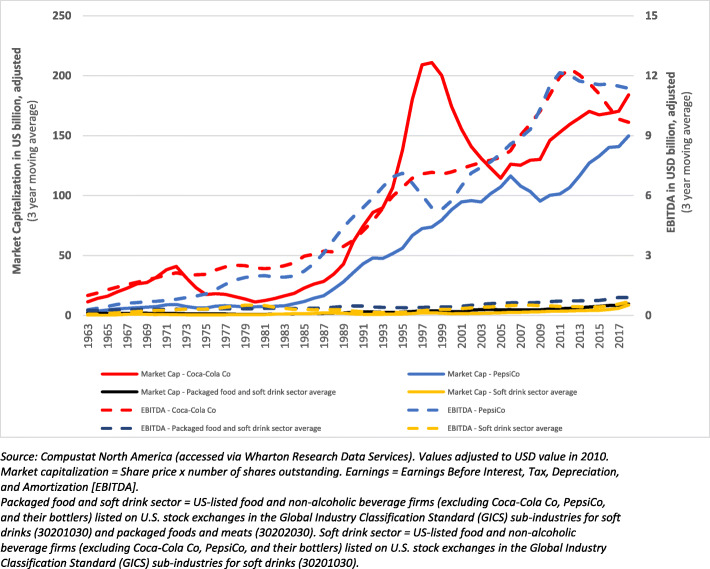
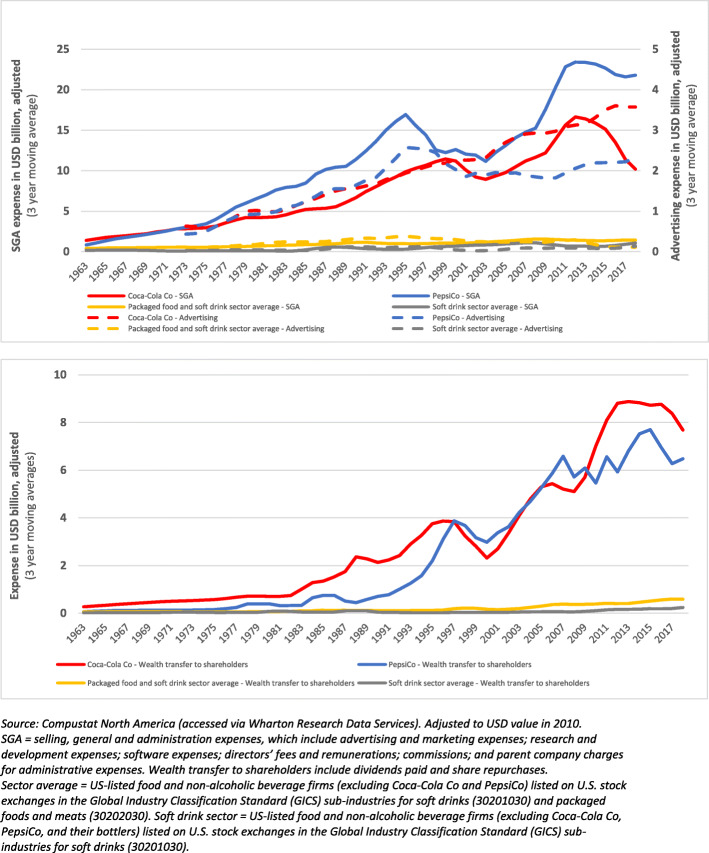
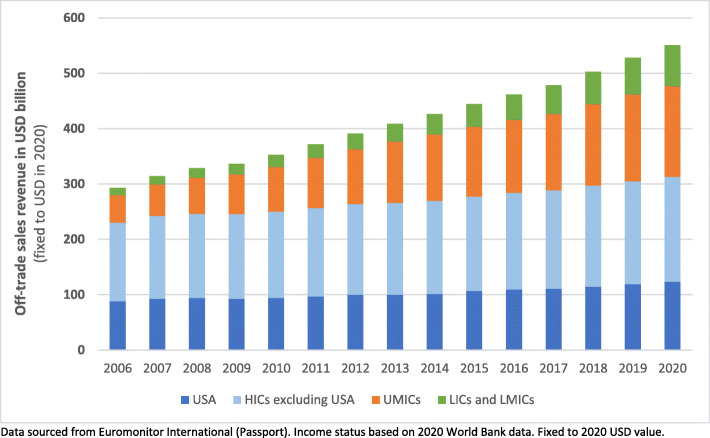
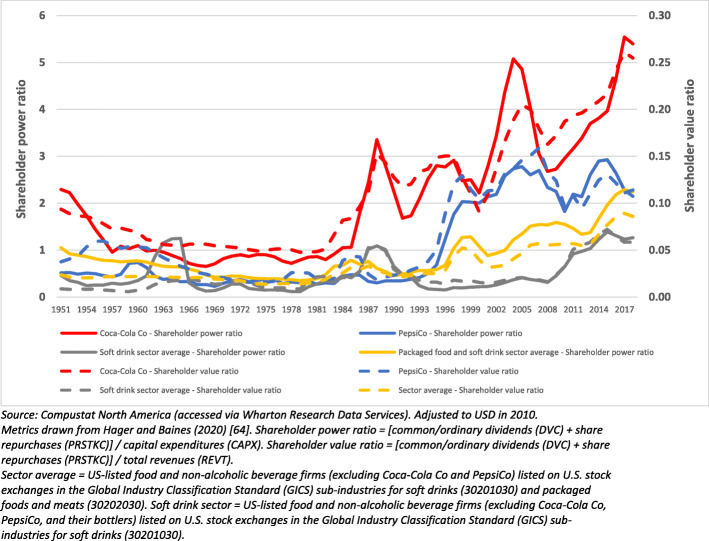
Coca-Cola Co, and, to a lesser extent, PepsiCo, operate across an extensive patchwork of highly concentrated markets. Both corporations control vast amounts of wealth and resources, and are able to allocate relatively large amounts of money to potentially harmful practices, such as extensive marketing of unhealthy products. Over recent decades, the proportion of wealth and income transferred by these firms to their shareholders has increased substantially; whereas the proportion of wealth and income redistributed by these two firms to the public via income taxes has considerably decreased. Meanwhile, the distribution of soft drink consumption is becoming increasingly skewed towards population groups in low and middle-income countries (LMICs).
Market power and corporate wealth and income distribution in the global soft drink market likely compound the market's maldistribution of harms, and indirectly influence health by contributing to social and economic inequalities. Indeed, a 'double burden of maldistribution' pattern can be seen, wherein the wealth of the shareholders of the market's dominant corporations, a group over-represented by a small and wealthy elite, is maximised largely at the expense of the welfare of LMICs and lower socioeconomic groups in high-income countries. If this pattern continues, the appropriate role of the global soft drink market as part of sustainable economic development will require rethinking.
全球软饮料行业对人类和地球健康造成的许多直接危害已经有充分的记录。然而,该行业通过各种社会经济途径间接影响人口健康的一些方式,却受到较少关注。本文旨在分析全球软饮料市场的市场势力、企业财富和收入分配对公共卫生和健康公平的负面影响程度。通过这样做,本文试图为发展一种广泛的基于公共卫生的市场分析方法做出贡献。本文对一系列维度(如市场集中程度、财务表现、企业财富和收入分配)和指标(如赫芬达尔-赫希曼指数、相对于行业平均水平的收益、有效税率、股东价值比率)进行了描述性分析。实证重点放在了两家占主导地位的全球软饮料制造商上。
可口可乐公司和百事公司在高度集中的市场中广泛运营。这两家公司都控制着大量的财富和资源,并且能够将相对大量的资金用于可能有害的做法,如对不健康产品的广泛营销。在过去几十年里,这些公司向股东转移的财富和收入比例大幅增加;而这两家公司通过所得税向公众重新分配的财富和收入比例则大幅下降。与此同时,软饮料消费的分布越来越偏向于中低收入国家的人群。
全球软饮料市场的市场势力、企业财富和收入分配可能会加剧市场对危害的分配不均,并通过导致社会和经济不平等间接影响健康。实际上,可以看到一种“双重分配不均”模式,即市场主导企业的股东财富,一个由一小部分富有精英组成的群体,主要是以牺牲中低收入国家和高收入国家中较低社会经济群体的福利为代价而最大化。如果这种模式继续下去,全球软饮料市场作为可持续经济发展的一部分的适当角色将需要重新思考。