Senjam Suraj Singh, Manna Souvik, Bascaran Covadonga
Department of Community Ophthalmology, Dr. Rajendra Prasad Centre for Ophthalmic Sciences, All India Institute of Medical Sciences, New Delhi, India.
International Centre for Eye Health, Department of Clinical Research, London School of Hygiene and Tropical Medicine, London, UK.
Clin Optom (Auckl). 2021 Nov 27;13:311-322. doi: 10.2147/OPTO.S336361. eCollection 2021.
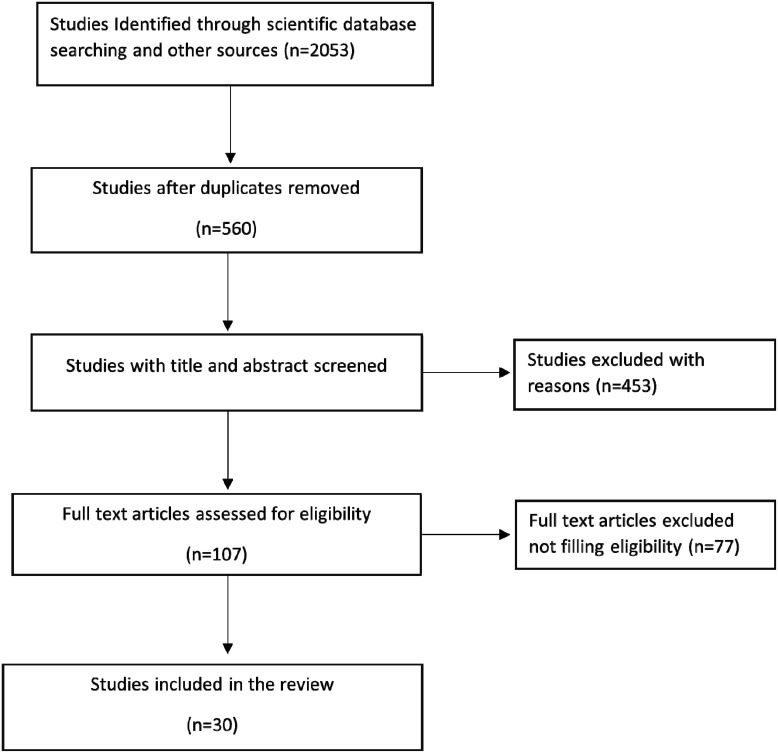
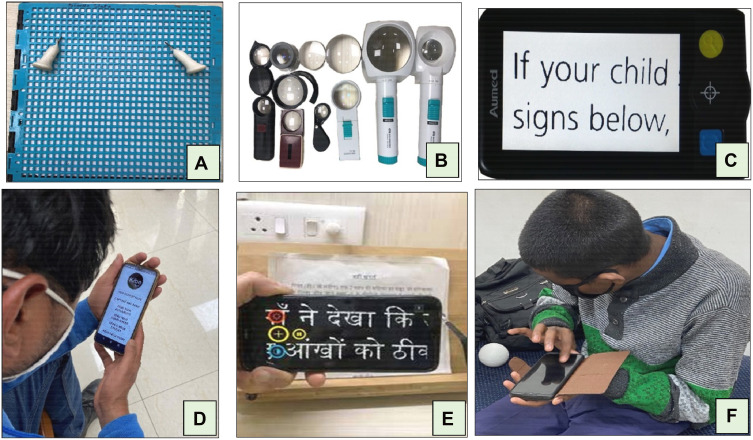
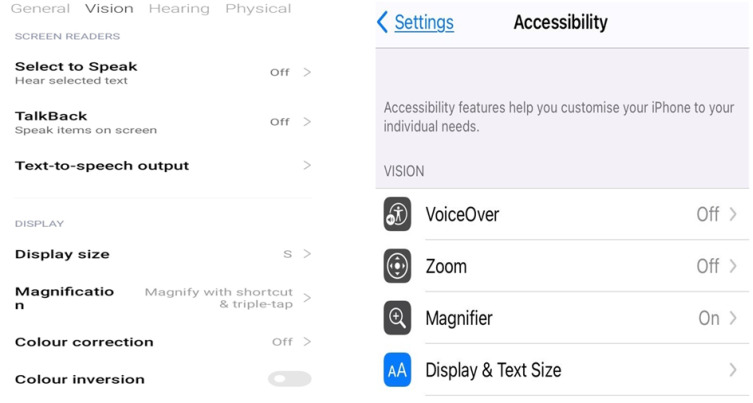
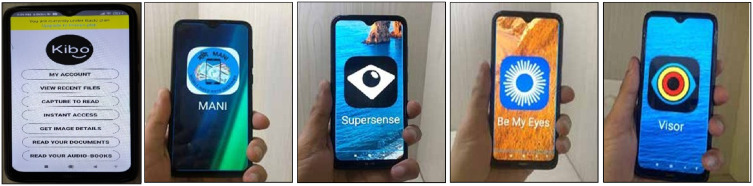
Smartphones are less likely to be considered as assistive technology for visual impairment among a large majority of health care providers, excluding vision rehabilitation professionals, and the general public who are not familiar with accessible features and apps. The present review aims to highlight accessible features and apps along with usages, including educational, and access to smartphones as assistive technology for visual impairment and blindness. It also includes advantages and challenges faced by users, and usability testing by app developers. There have been significant recent developments in mobile technology that incorporate computer technology relating to electronic information, communication, and touch-screen accessibility. Such advances in technology are transforming the use of smartphones from a traditional visual interface to a truly visual free interaction using alternative body senses, such as haptic, gesture, and so on. There are many built-in accessible features and third-party accessible applications that enable people with visual impairment to perform daily activities, independent functioning, movement, social inclusion and participation, education, etc. They are universally designed, so they are unlikely to induce social stigma or negative reactions from peers or public. Healthcare practitioners, not limiting to eye care, and caregivers, family members, teachers, or special educators should be informed about the potential uses and benefits of smartphones for visually impaired in developing nations. Evidence shows that most of the users train by themselves. Enhancing the awareness along with training for teachers and caregivers would be helpful to improve access and skills among users with visual disabilities. Developers are continuously producing more innovative applications for visual impairment, which indicates the need for having a training guideline on the use of smartphones.
在绝大多数医疗保健提供者(不包括视力康复专业人员)以及不熟悉无障碍功能和应用程序的普通公众中,智能手机不太可能被视为视觉障碍的辅助技术。本综述旨在突出无障碍功能和应用程序及其用途,包括教育用途,以及将智能手机作为视觉障碍和失明的辅助技术的使用情况。它还包括用户面临的优势和挑战,以及应用程序开发者进行的可用性测试。移动技术最近有了重大发展,其中融入了与电子信息、通信和触摸屏无障碍相关的计算机技术。这些技术进步正在将智能手机的使用从传统的视觉界面转变为使用触觉、手势等替代身体感官的真正无视觉交互。有许多内置的无障碍功能和第三方无障碍应用程序,使视障人士能够进行日常活动、独立生活、移动、融入社会并参与社交、接受教育等。它们是通用设计的,因此不太可能引起同伴或公众的社会污名或负面反应。医疗从业者(不限于眼科护理)以及护理人员、家庭成员、教师或特殊教育工作者应了解智能手机在发展中国家对视障人士的潜在用途和益处。有证据表明,大多数用户是自行训练的。提高教师和护理人员的意识并对其进行培训,将有助于改善视力残疾用户的获取机会和技能。开发者不断为视障人士开发更具创新性的应用程序,这表明需要制定智能手机使用培训指南。