Department of Microbiology, Immunology & Molecular Genetics, University of Texas Long School of Medicine, UT Health Science Center, San Antonio, TX, United States.
Front Immunol. 2021 Nov 16;12:761450. doi: 10.3389/fimmu.2021.761450. eCollection 2021.
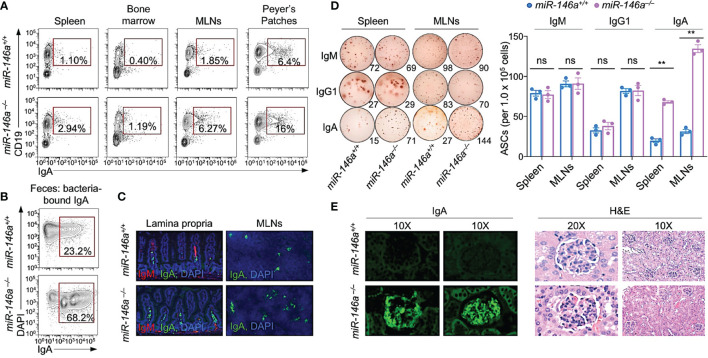
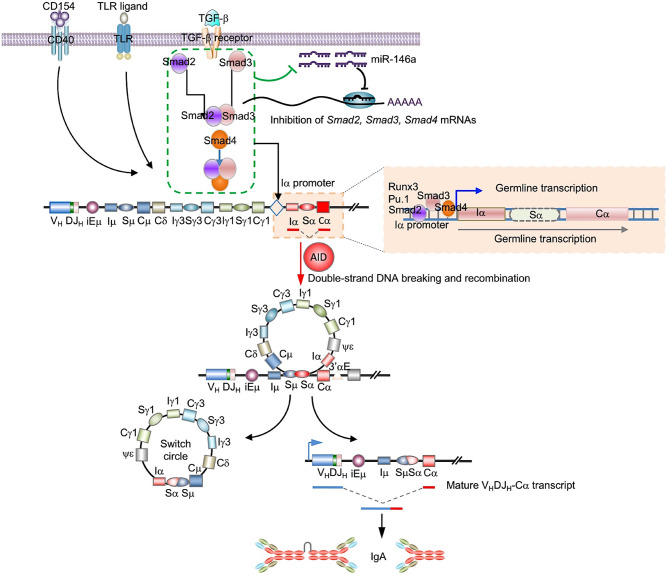
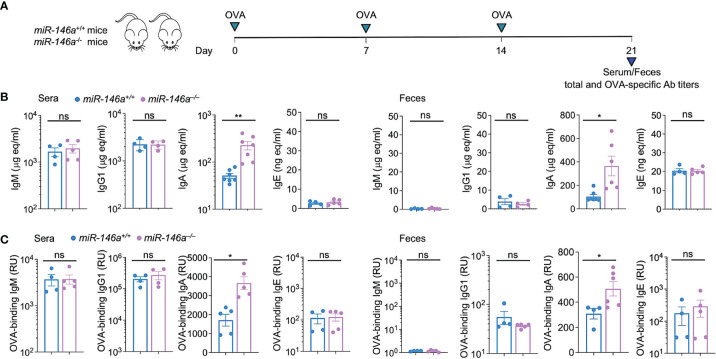
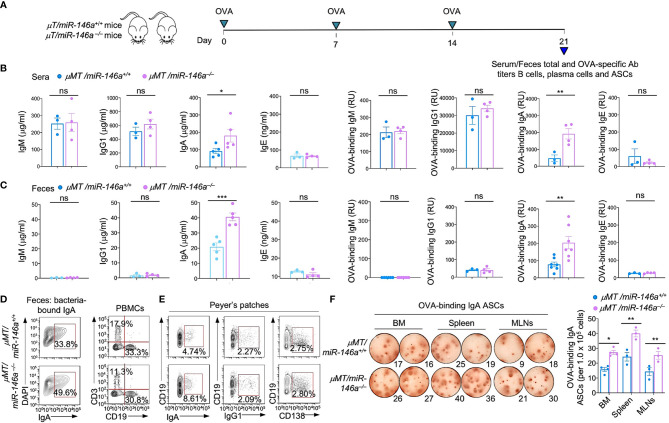
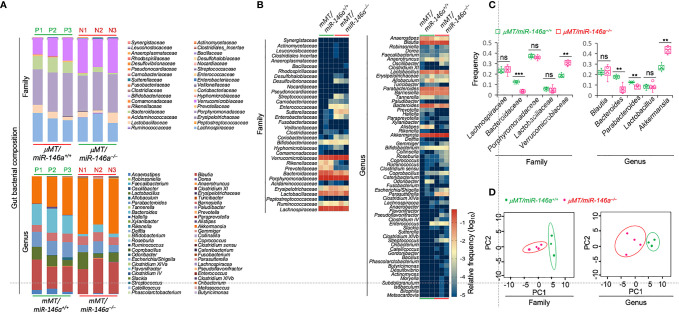
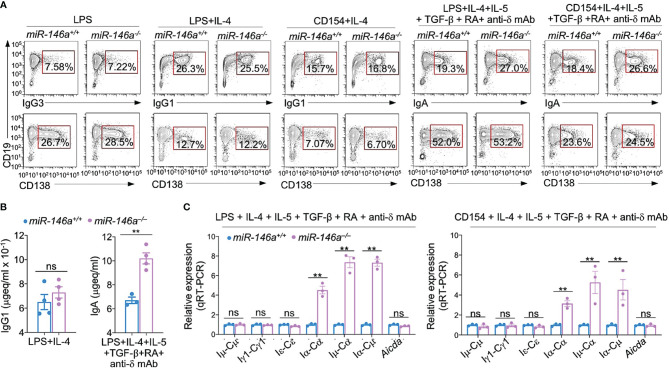
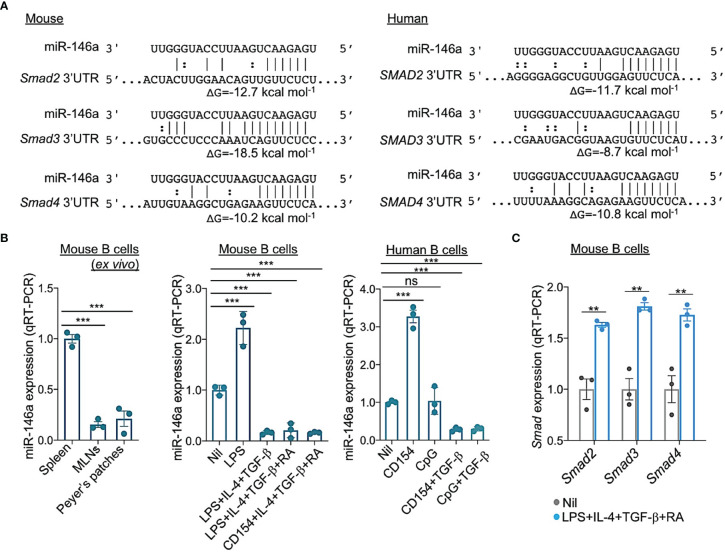
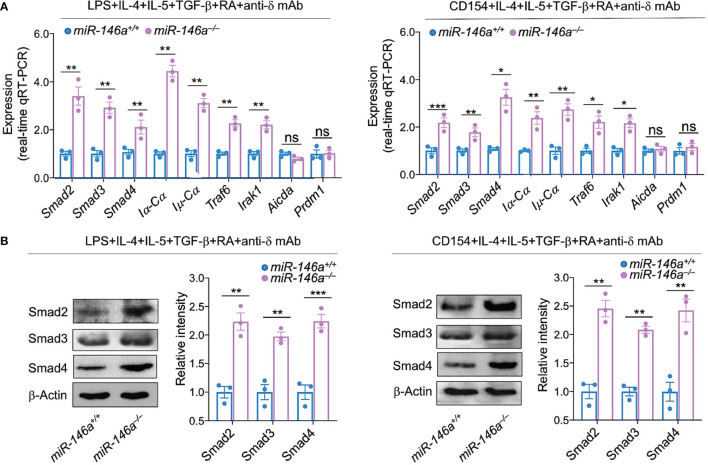
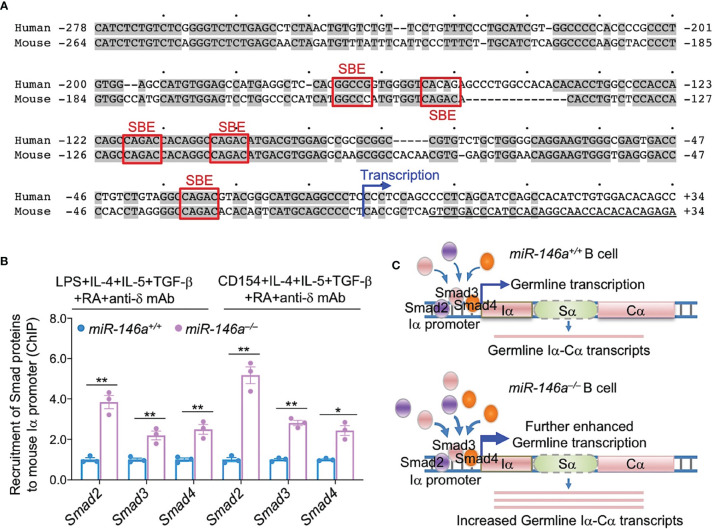
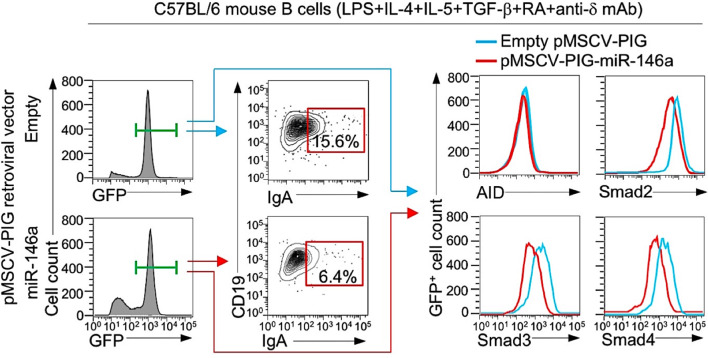
IgA is the predominant antibody isotype at intestinal mucosae, where it plays a critical role in homeostasis and provides a first line of immune protection. Dysregulation of IgA production, however, can contribute to immunopathology, particularly in kidneys in which IgA deposition can cause nephropathy. Class-switch DNA recombination (CSR) to IgA is directed by TGF-β signaling, which activates Smad2 and Smad3. Activated Smad2/Smad3 dimers are recruited together with Smad4 to the α locus promoter to activate germline Iα-Cα transcription, the first step in the unfolding of CSR to IgA. Epigenetic factors, such as non-coding RNAs, particularly microRNAs, have been shown to regulate T cells, dendritic cells and other immune elements, as well as modulate the antibody response, including CSR, in a B cell-intrinsic fashion. Here we showed that the most abundant miRNA in resting B cells, miR-146a targets and mRNA 3'UTRs and keeps CSR to IgA in check in resting B cells. Indeed, enforced miR-146a expression in B cells aborted induction of IgA CSR by decreasing Smad levels. By contrast, upon induction of CSR to IgA, as directed by TGF-β, B cells downregulated miR-146a, thereby reversing the silencing of and , which, once expressed, led to recruitment of Smad2, Smad3 and Smad4 to the Iα promoter for activation of germline transcription. Deletion of miR-146a in mice significantly increased circulating levels of steady state total IgA, but not IgM, IgG or IgE, and heightened the specific IgA antibody response to OVA. In mice, the elevated systemic IgA levels were associated with increased IgA B cells in intestinal mucosae, increased amounts of fecal free and bacteria-bound IgA as well as kidney IgA deposition, a hallmark of IgA nephropathy. Increased germline transcription and CSR to IgA in B cells proved that miR-146a-induced Smad2, Smad3 and Smad4 repression is B cell intrinsic. The B cell-intrinsic role of miR-146a in the modulation of CSR to IgA was formally confirmed by construction and OVA immunization of mixed bone marrow chimeric mice. Thus, by inhibiting , and expression, miR-146a plays an important and B cell intrinsic role in modulation of CSR to IgA and the IgA antibody response.
IgA 是肠黏膜中主要的抗体同种型,在维持内环境稳定和提供第一道免疫保护方面发挥着关键作用。然而,IgA 产生的失调可能导致免疫病理学,特别是在肾脏中,IgA 沉积可导致肾炎。IgA 类别转换 DNA 重组(CSR)由 TGF-β 信号转导指导,该信号转导激活 Smad2 和 Smad3。激活的 Smad2/Smad3 二聚体与 Smad4 一起募集到 α 基因座启动子,激活免疫球蛋白基因转录,这是 CSR 到 IgA 展开的第一步。表观遗传因素,如非编码 RNA,特别是 microRNAs,已被证明可调节 T 细胞、树突状细胞和其他免疫成分,以及调节抗体反应,包括 B 细胞内在的 CSR。在这里,我们发现静息 B 细胞中最丰富的 microRNA,miR-146a 靶向 和 3'UTR,并在静息 B 细胞中抑制 CSR 到 IgA。事实上,在 B 细胞中强制表达 miR-146a 通过降低 Smad 水平来阻止 IgA CSR 的诱导。相比之下,在 TGF-β的指导下诱导 CSR 到 IgA 时,B 细胞下调 miR-146a,从而逆转 和 的沉默,一旦表达,就会导致 Smad2、Smad3 和 Smad4 募集到 Iα 启动子,激活免疫球蛋白基因转录。在 小鼠中缺失 miR-146a 会显著增加稳态总 IgA 的循环水平,但不会增加 IgM、IgG 或 IgE,并且会增强对 OVA 的特异性 IgA 抗体反应。在 小鼠中,升高的系统性 IgA 水平与肠道黏膜中 IgA B 细胞增加、粪便中游离和细菌结合 IgA 以及肾脏 IgA 沉积增加有关,这是 IgA 肾病的标志。在 小鼠的 B 细胞中,发现 miR-146a 诱导的 Smad2、Smad3 和 Smad4 抑制是 B 细胞内在的,这表明 CSR 到 IgA 的基因转录和 CSR 增加。通过构建和 OVA 免疫混合骨髓嵌合小鼠,正式证实了 miR-146a 在 CSR 到 IgA 中的 B 细胞内在作用。因此,miR-146a 通过抑制 和 的表达,在调节 CSR 到 IgA 和 IgA 抗体反应中发挥着重要的 B 细胞内在作用。