Department of Pharmaceutical Biochemistry, College of Pharmacy, Kyung Hee University, Seoul 02447, Korea.
Department of Biomedical and Pharmaceutical Science, Graduate School, Kyung Hee University, Seoul 02447, Korea.
Mar Drugs. 2021 Dec 3;19(12):693. doi: 10.3390/md19120693.
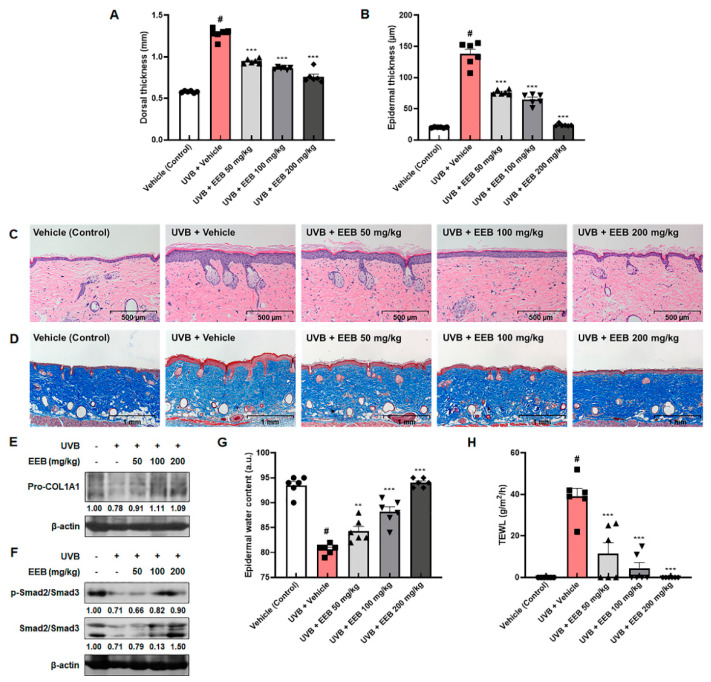
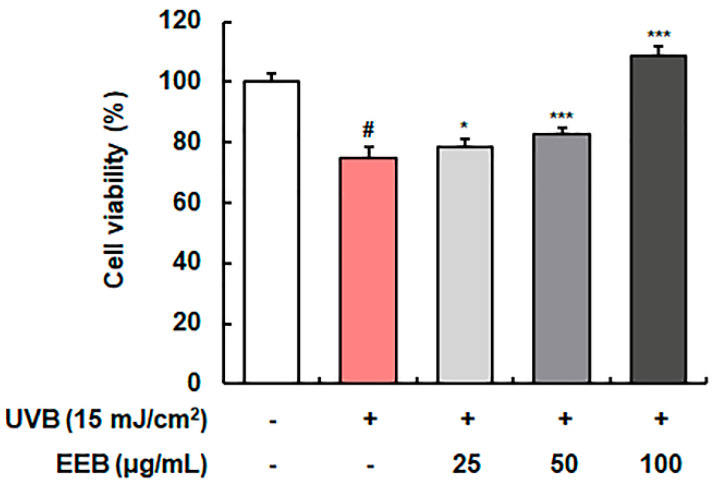
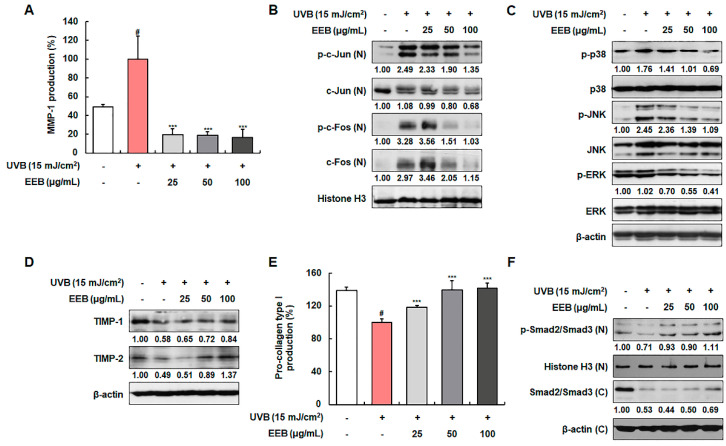
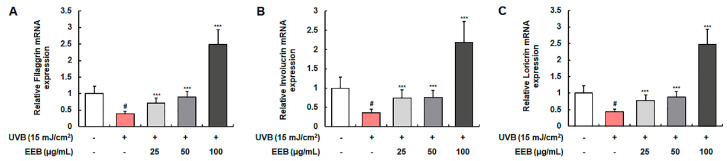
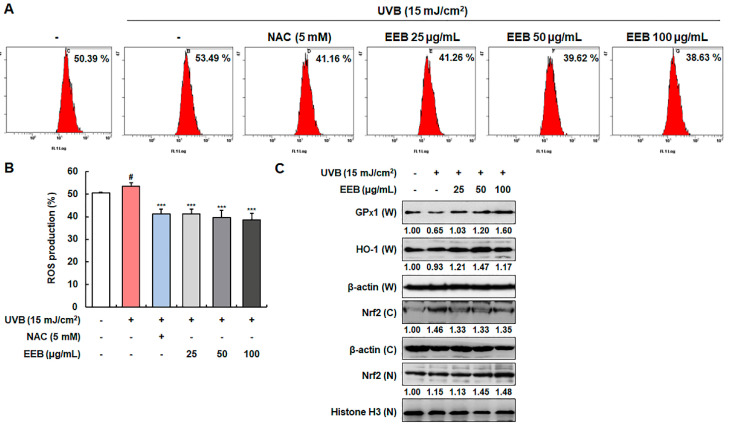
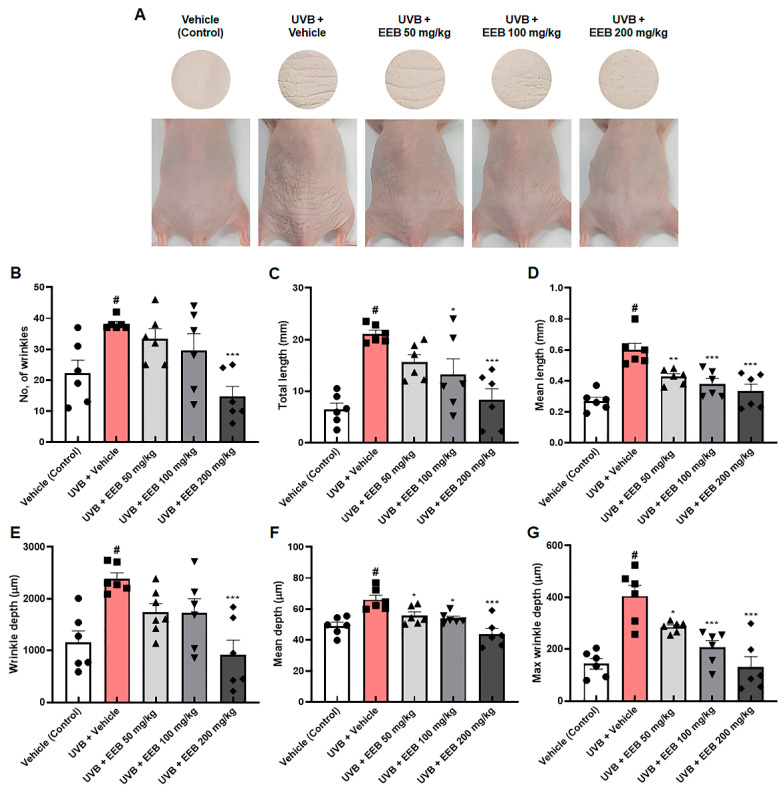
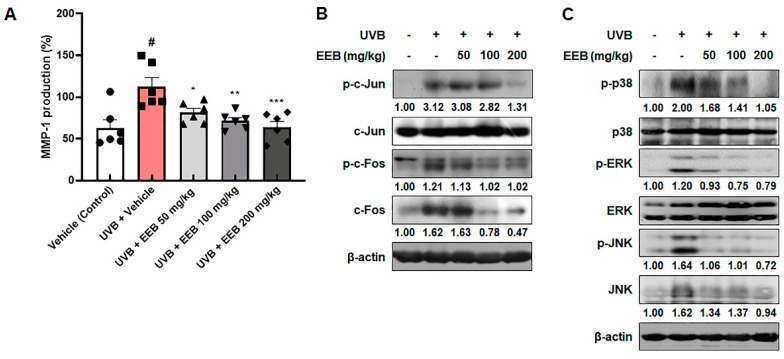
Chronic exposure to ultraviolet B (UVB) is a major cause of skin aging. The aim of the present study was to determine the photoprotective effect of a 30% ethanol extract of (Kjellman) Setchell (EEB) against UVB-induced skin aging. By treating human dermal fibroblasts (Hs68) with EEB after UVB irradiation, we found that EEB had a cytoprotective effect. EEB treatment significantly decreased UVB-induced matrix metalloproteinase-1 (MMP-1) production by suppressing the activation of mitogen-activated protein kinase (MAPK)/activator protein 1 (AP-1) signaling and enhancing the protein expression of tissue inhibitors of metalloproteinases (TIMPs). EEB was also found to recover the UVB-induced degradation of pro-collagen by upregulating Smad signaling. Moreover, EEB increased the mRNA expression of filaggrin, involucrin, and loricrin in UVB-irradiated human epidermal keratinocytes (HaCaT). EEB decreased UVB-induced reactive oxygen species (ROS) generation by upregulating glutathione peroxidase 1 (GPx1) and heme oxygenase-1 (HO-1) expression via nuclear factor erythroid-2-related factor 2 (Nrf2) activation in Hs68 cells. In a UVB-induced HR-1 hairless mouse model, the oral administration of EEB mitigated photoaging lesions including wrinkle formation, skin thickness, and skin dryness by downregulating MMP-1 production and upregulating the expression of pro-collagen type I alpha 1 chain (pro-COL1A1). Collectively, our findings revealed that EEB prevents UVB-induced skin damage by regulating MMP-1 and pro-collagen type I production through MAPK/AP-1 and Smad pathways.
慢性暴露于紫外线 B(UVB)是皮肤衰老的主要原因。本研究旨在确定 30%乙醇提取物(Kjellman)Setchell(EEB)对 UVB 诱导的皮肤衰老的光保护作用。通过在 UVB 照射后用 EEB 处理人真皮成纤维细胞(Hs68),我们发现 EEB 具有细胞保护作用。EEB 处理通过抑制丝裂原活化蛋白激酶(MAPK)/激活蛋白 1(AP-1)信号的激活并增强金属蛋白酶组织抑制剂(TIMPs)的蛋白表达,显著降低 UVB 诱导的基质金属蛋白酶-1(MMP-1)的产生。EEB 还通过上调 Smad 信号恢复 UVB 诱导的原胶原蛋白降解。此外,EEB 通过上调丝裂原活化蛋白激酶(MAPK)/激活蛋白 1(AP-1)信号的激活并增强金属蛋白酶组织抑制剂(TIMPs)的蛋白表达,显著降低 UVB 诱导的基质金属蛋白酶-1(MMP-1)的产生。EEB 还通过上调 Smad 信号恢复 UVB 诱导的原胶原蛋白降解。此外,EEB 通过上调丝裂原活化蛋白激酶(MAPK)/激活蛋白 1(AP-1)信号的激活并增强金属蛋白酶组织抑制剂(TIMPs)的蛋白表达,显著降低 UVB 诱导的基质金属蛋白酶-1(MMP-1)的产生。EEB 还通过上调 Smad 信号恢复 UVB 诱导的原胶原蛋白降解。此外,EEB 增加了 UVB 照射的人表皮角质形成细胞(HaCaT)中纤维连接蛋白、兜甲蛋白和板层素的 mRNA 表达。EEB 通过核因子红细胞 2 相关因子 2(Nrf2)激活上调谷胱甘肽过氧化物酶 1(GPx1)和血红素加氧酶-1(HO-1)的表达,降低 UVB 诱导的人真皮成纤维细胞(Hs68)中活性氧(ROS)的产生。在 UVB 诱导的 HR-1 无毛小鼠模型中,EEB 的口服给药通过下调 MMP-1 的产生和上调原胶原蛋白 I 型 alpha 1 链(pro-COL1A1)的表达,减轻了皱纹形成、皮肤厚度和皮肤干燥等光老化损伤。总的来说,我们的研究结果表明,EEB 通过调节 MAPK/AP-1 和 Smad 通路来调节 MMP-1 和 I 型原胶原蛋白的产生,从而防止 UVB 诱导的皮肤损伤。