Esmaeili Moha
Institute for Marine and Antarctic Studies, University of Tasmania, Hobart Private Bag 49, 15-21 Nubeena Cres, Taroona, TAS 7053, Australia.
Biology (Basel). 2021 Nov 26;10(12):1236. doi: 10.3390/biology10121236.
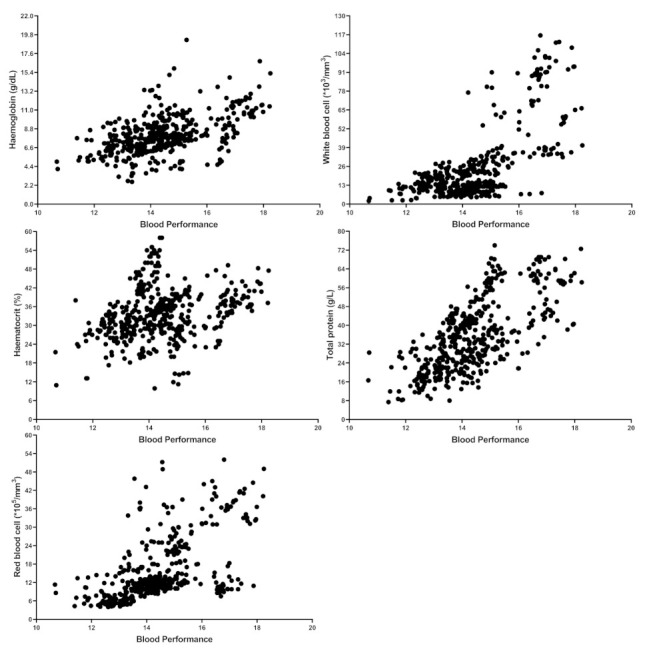
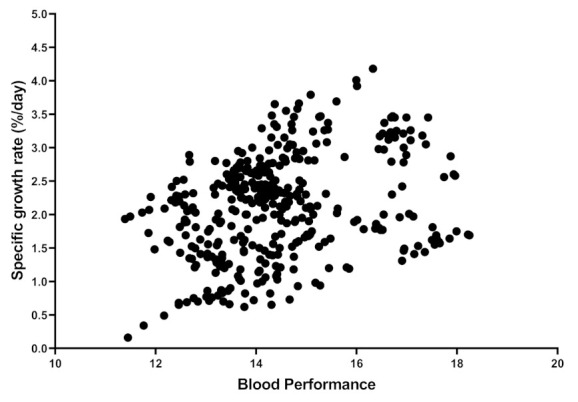
Monitoring fish health in a repeatable and accurate manner can contribute to the profitability and sustainability of aquaculture. Haematological and blood biochemistry parameters have been powerful tools and becoming increasingly common in aquaculture studies. Fish growth is closely related to its health status. A fish with a higher growth rate is more likely to be a healthy one. Any change in the physiological status of the fish, from pollution to nutritional stress, can cause changes in the blood parameters. Various aquaculture studies have measured the following components: red blood cells, white blood cells, haemoglobin, haematocrit, and total protein. However, because these parameters do not always follow the same trend across experimental fish, it is difficult to draw a firm conclusion about which parameter should be considered. Therefore, Blood Performance (BP) as a new formula is introduced, which is a more reliable indicator. This formula is simple and sums up the natural logarithm of the five above-mentioned parameters. More than 90 published peer-reviewed articles that measured these five parameters in the last six years confirmed the reliability and validity of this formula. Regardless of which supplements were added to the diets, the fish with a higher growth rate had higher BP as well. In addition, in 44 studies out of 53 articles, there was a significant positive correlation between specific growth rate and BP. Under different stressful situations, from pollution to thermal stress, the fish under stress had a lower BP than the control. Fish meal and fish oil replacement studies were further evidence for this formula and showed that adding excessive alternative proteins decreased growth along with BP. In conclusion, BP can be a reliable indicator of fish health and growth when it is compared between groups in the same experiment or farm. Although there was a positive correlation between specific growth rate and BP, comparing BP between experiments is not recommended. Standardising the haematological assays can improve the reliability and accuracy of BP across experiments.
以可重复且准确的方式监测鱼类健康有助于水产养殖的盈利能力和可持续性。血液学和血液生化参数一直是强大的工具,并且在水产养殖研究中越来越普遍。鱼类生长与其健康状况密切相关。生长速度较高的鱼更有可能是健康的。鱼类生理状态的任何变化,从污染到营养应激,都可能导致血液参数的变化。各种水产养殖研究测量了以下成分:红细胞、白细胞、血红蛋白、血细胞比容和总蛋白。然而,由于这些参数在实验鱼类中并不总是遵循相同的趋势,因此很难就应考虑哪个参数得出确凿的结论。因此,引入了血液性能(BP)这一新公式,它是一个更可靠的指标。该公式很简单,是上述五个参数的自然对数之和。在过去六年中测量这五个参数的90多篇已发表的同行评审文章证实了该公式的可靠性和有效性。无论在饲料中添加了哪种补充剂,生长速度较高的鱼其BP也较高。此外,在53篇文章中的44项研究中,特定生长率与BP之间存在显著的正相关。在从污染到热应激的不同应激情况下,处于应激状态的鱼的BP低于对照组。鱼粉和鱼油替代研究进一步证明了该公式,并表明添加过多的替代蛋白会降低生长以及BP。总之,在同一实验或养殖场的不同组之间进行比较时,BP可以作为鱼类健康和生长的可靠指标。尽管特定生长率与BP之间存在正相关,但不建议在不同实验之间比较BP。标准化血液学检测可以提高跨实验的BP的可靠性和准确性。