• 文献检索
  • 文档翻译
  • 深度研究
  • 学术资讯
  • Suppr Zotero 插件Zotero 插件
  • 邀请有礼
  • 套餐&价格
  • 历史记录
应用&插件
Suppr Zotero 插件Zotero 插件浏览器插件Mac 客户端Windows 客户端微信小程序
定价
高级版会员购买积分包购买API积分包
服务
文献检索文档翻译深度研究API 文档MCP 服务
关于我们
关于 Suppr公司介绍联系我们用户协议隐私条款
关注我们

Suppr 超能文献

核心技术专利:CN118964589B侵权必究
粤ICP备2023148730 号-1Suppr @ 2026

文献检索

告别复杂PubMed语法,用中文像聊天一样搜索,搜遍4000万医学文献。AI智能推荐,让科研检索更轻松。

立即免费搜索

文件翻译

保留排版,准确专业,支持PDF/Word/PPT等文件格式,支持 12+语言互译。

免费翻译文档

深度研究

AI帮你快速写综述,25分钟生成高质量综述,智能提取关键信息,辅助科研写作。

立即免费体验

基于平衡决策树方法的可解释智能驱动查询优先级排序在多层次心理障碍评估中的应用。

An Explainable Intelligence Driven Query Prioritization Using Balanced Decision Tree Approach for Multi-Level Psychological Disorders Assessment.

机构信息

School of Computer Engineering, Kalinga Institute of Industrial Technology, Deemed to Be University, Bhubaneswar, India.

Department of Computer Engineering, Marwadi Unversity, Rajkot, India.

出版信息

Front Public Health. 2021 Dec 17;9:795007. doi: 10.3389/fpubh.2021.795007. eCollection 2021.

DOI:10.3389/fpubh.2021.795007
PMID:34976936
原文链接:https://pmc.ncbi.nlm.nih.gov/articles/PMC8718454/
Abstract

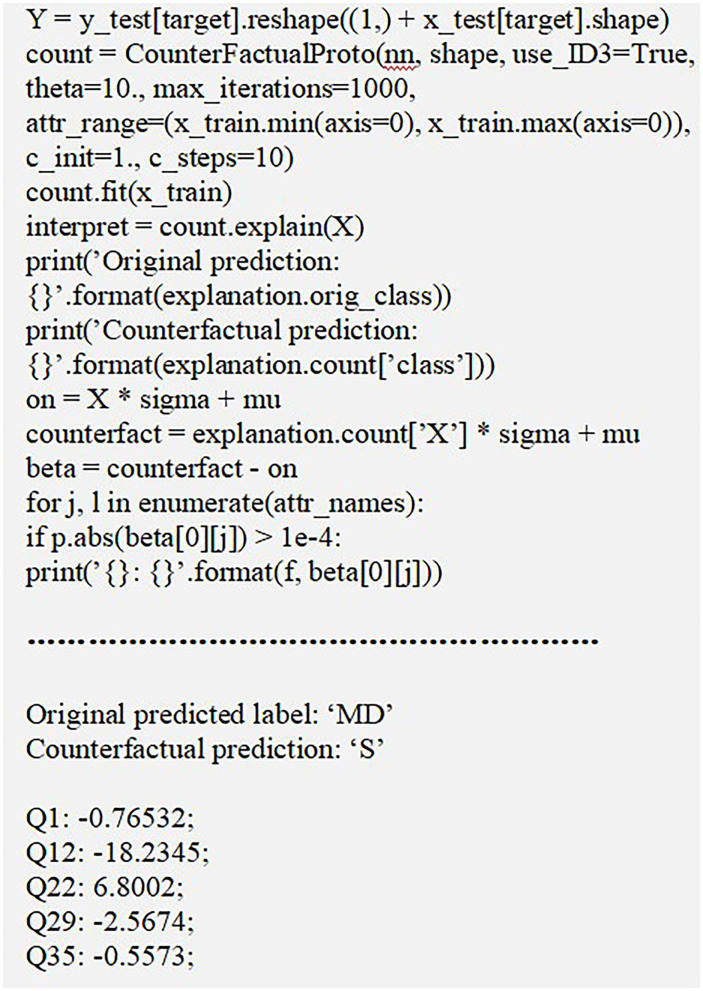
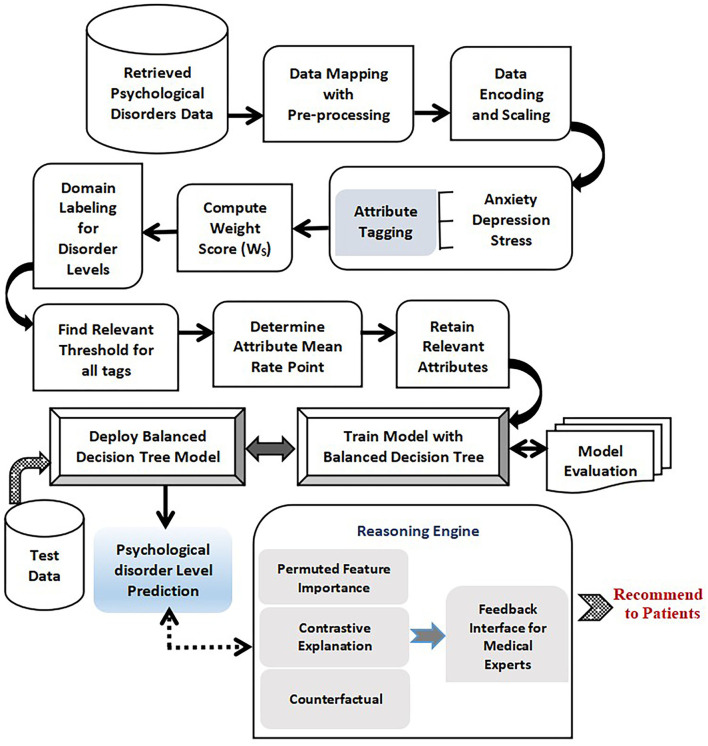
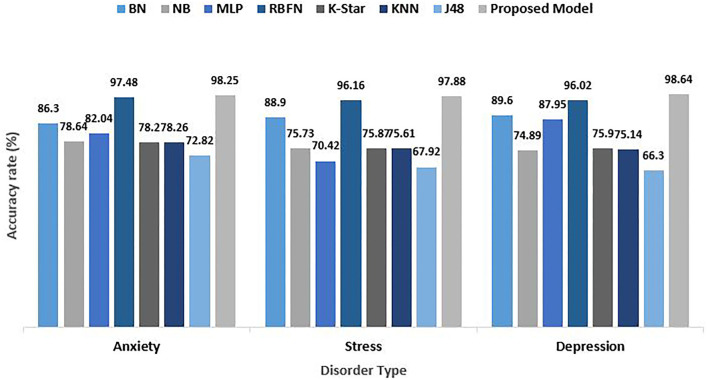
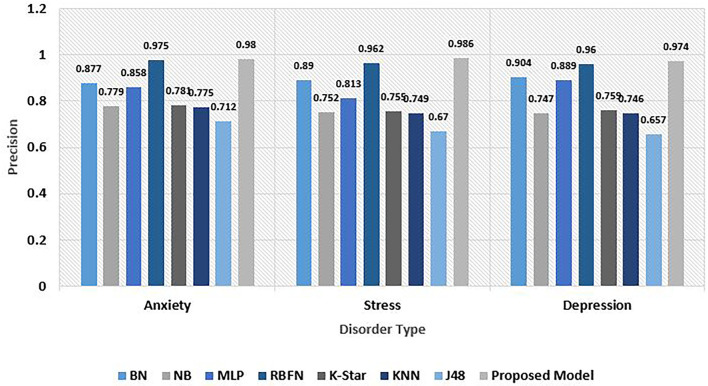
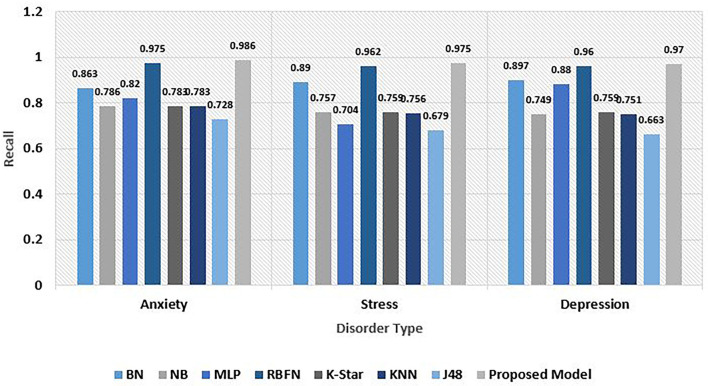
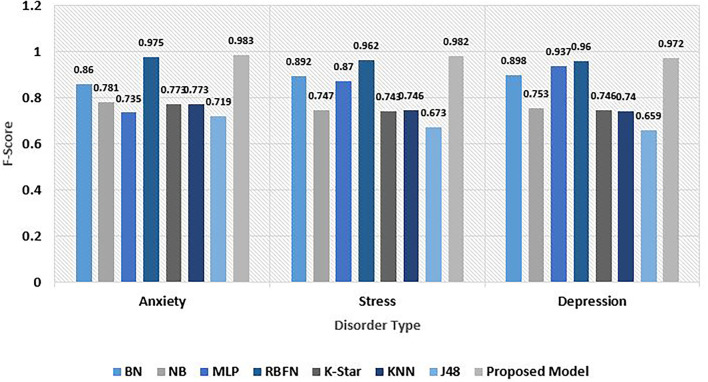
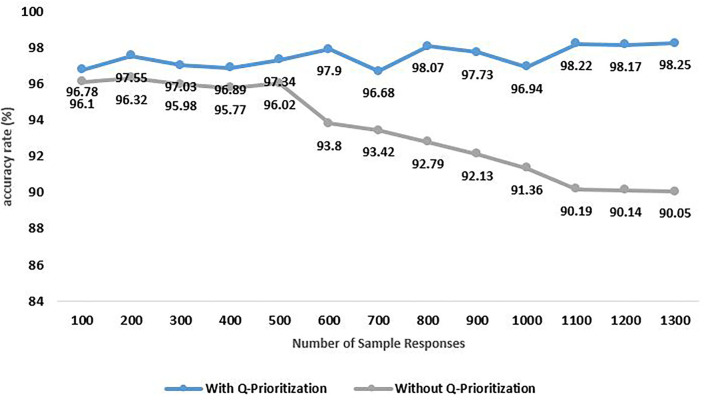
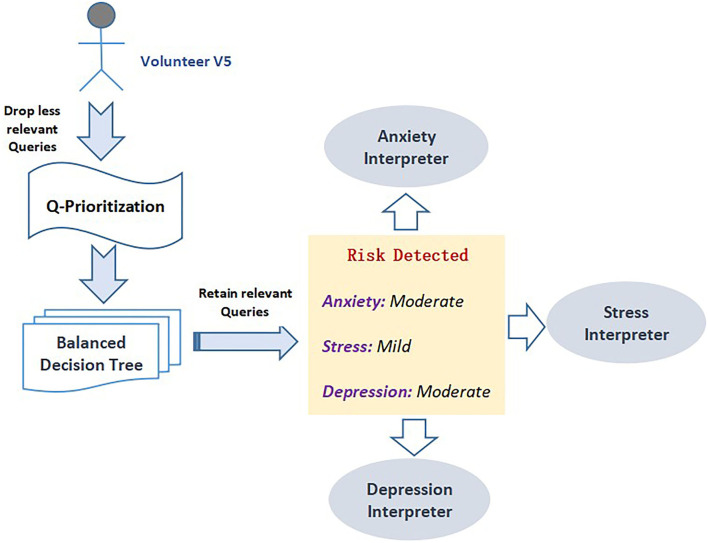
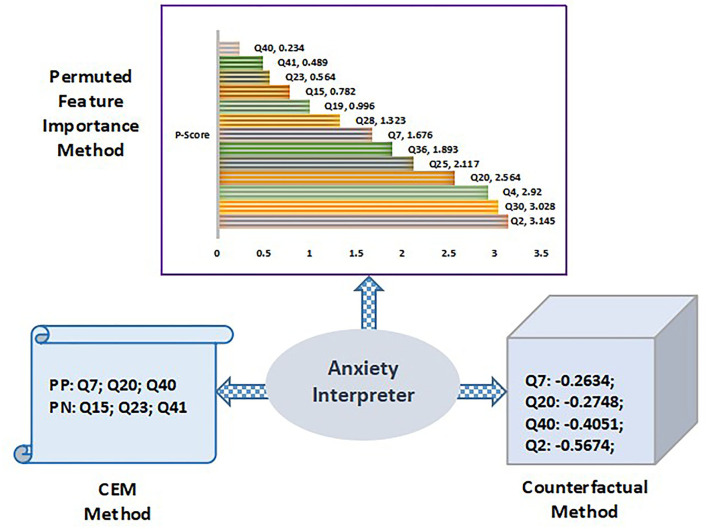
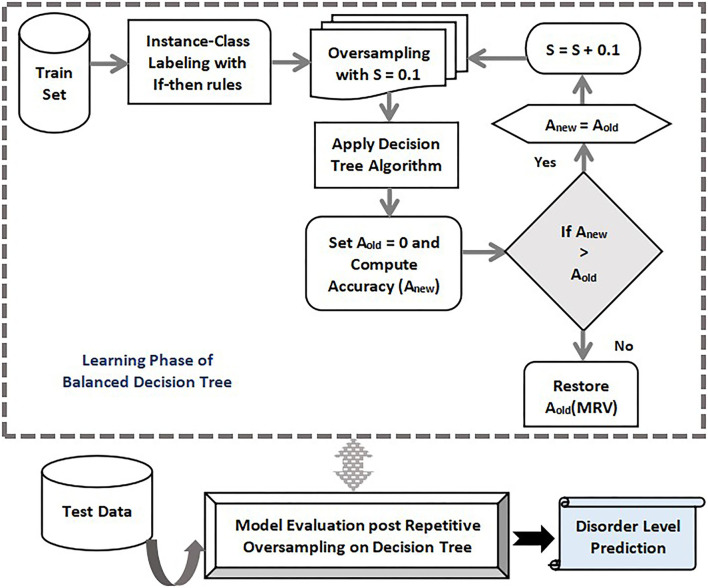
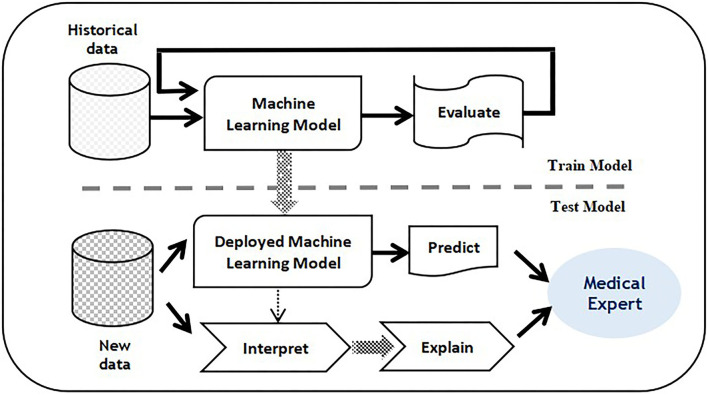
Human emotions affect psychological health to a great level. Positive emotions relate to health improvement; whereas negative emotions may aggravate psychological disorders such as anxiety, stress, and depression. Although there exist several computational methods to predict psychological disorders, most of them provide a black-box view of uncertainty. This research involves developing a novel predictive model for multi class psychological risk recognition with an accurate explainable interface. Standard questionnaires are utilized as data set and a new approach called a Q-Prioritization is employed to drop insignificant questions from the data set. Moreover, a novel balanced decision tree method based on repetitive oversampling is applied for the training and testing of the model. Predictive nature along with its contributing factors are interpreted with three techniques such as permuted feature importance, contrastive explanation, and counterfactual method, which together form a reasoning engine. The prediction outcome generated an impressive performance with an aggregated accuracy of 98.25%. The mean precision, recall, and F-score metric recorded were 0.98, 0.977, and 0.979, respectively. Also, it was noted that without applying Q-Prioritization, the accuracy significantly drops to 90.25%. The error rate observed with our model was only 0.026. The proposed multi-level psychological disorder predictive model can successfully serve as an assistive deployment for medical experts in the effective treatment of mental health.

摘要

人类情感对心理健康有很大的影响。积极的情绪与健康改善有关;而消极的情绪可能会加重焦虑、压力和抑郁等心理障碍。虽然有几种计算方法可以预测心理障碍,但大多数方法提供了不确定性的黑盒视图。本研究涉及开发一种具有准确可解释界面的多类心理风险识别的新型预测模型。标准问卷被用作数据集,一种称为 Q-优先级的新方法被用于从数据集中删除无意义的问题。此外,还应用了一种基于重复过采样的新型平衡决策树方法来训练和测试模型。预测性质及其影响因素通过三种技术进行解释,如置换特征重要性、对比解释和反事实方法,这些技术共同构成了推理引擎。预测结果表现出令人印象深刻的性能,综合准确率为 98.25%。记录的平均精度、召回率和 F 分数分别为 0.98、0.977 和 0.979。此外,还注意到,如果不应用 Q-优先级,准确率会显著下降到 90.25%。我们的模型观察到的错误率仅为 0.026。提出的多层次心理障碍预测模型可以成功地作为医疗专家在有效治疗心理健康方面的辅助部署。
https://cdn.ncbi.nlm.nih.gov/pmc/blobs/cdd8/8718454/4a1f60f0cb16/fpubh-09-795007-g0015.jpg
https://cdn.ncbi.nlm.nih.gov/pmc/blobs/cdd8/8718454/be22b6b90cc7/fpubh-09-795007-g0001.jpg
https://cdn.ncbi.nlm.nih.gov/pmc/blobs/cdd8/8718454/822f14d643fd/fpubh-09-795007-g0002.jpg
https://cdn.ncbi.nlm.nih.gov/pmc/blobs/cdd8/8718454/e1f9012f12ff/fpubh-09-795007-g0003.jpg
https://cdn.ncbi.nlm.nih.gov/pmc/blobs/cdd8/8718454/0b2905141674/fpubh-09-795007-g0004.jpg
https://cdn.ncbi.nlm.nih.gov/pmc/blobs/cdd8/8718454/49ab3b6e6d46/fpubh-09-795007-g0005.jpg
https://cdn.ncbi.nlm.nih.gov/pmc/blobs/cdd8/8718454/1e87ee599c74/fpubh-09-795007-g0006.jpg
https://cdn.ncbi.nlm.nih.gov/pmc/blobs/cdd8/8718454/d9e0b188d253/fpubh-09-795007-g0007.jpg
https://cdn.ncbi.nlm.nih.gov/pmc/blobs/cdd8/8718454/934b6e3b2c24/fpubh-09-795007-g0008.jpg
https://cdn.ncbi.nlm.nih.gov/pmc/blobs/cdd8/8718454/6b55c0731431/fpubh-09-795007-g0009.jpg
https://cdn.ncbi.nlm.nih.gov/pmc/blobs/cdd8/8718454/db6366d24e41/fpubh-09-795007-g0010.jpg
https://cdn.ncbi.nlm.nih.gov/pmc/blobs/cdd8/8718454/9c6e3d8e144a/fpubh-09-795007-g0011.jpg
https://cdn.ncbi.nlm.nih.gov/pmc/blobs/cdd8/8718454/b9c0158c7f06/fpubh-09-795007-g0012.jpg
https://cdn.ncbi.nlm.nih.gov/pmc/blobs/cdd8/8718454/2005a2ef81c3/fpubh-09-795007-g0013.jpg
https://cdn.ncbi.nlm.nih.gov/pmc/blobs/cdd8/8718454/33a1cb58cbc4/fpubh-09-795007-g0014.jpg
https://cdn.ncbi.nlm.nih.gov/pmc/blobs/cdd8/8718454/4a1f60f0cb16/fpubh-09-795007-g0015.jpg
https://cdn.ncbi.nlm.nih.gov/pmc/blobs/cdd8/8718454/be22b6b90cc7/fpubh-09-795007-g0001.jpg
https://cdn.ncbi.nlm.nih.gov/pmc/blobs/cdd8/8718454/822f14d643fd/fpubh-09-795007-g0002.jpg
https://cdn.ncbi.nlm.nih.gov/pmc/blobs/cdd8/8718454/e1f9012f12ff/fpubh-09-795007-g0003.jpg
https://cdn.ncbi.nlm.nih.gov/pmc/blobs/cdd8/8718454/0b2905141674/fpubh-09-795007-g0004.jpg
https://cdn.ncbi.nlm.nih.gov/pmc/blobs/cdd8/8718454/49ab3b6e6d46/fpubh-09-795007-g0005.jpg
https://cdn.ncbi.nlm.nih.gov/pmc/blobs/cdd8/8718454/1e87ee599c74/fpubh-09-795007-g0006.jpg
https://cdn.ncbi.nlm.nih.gov/pmc/blobs/cdd8/8718454/d9e0b188d253/fpubh-09-795007-g0007.jpg
https://cdn.ncbi.nlm.nih.gov/pmc/blobs/cdd8/8718454/934b6e3b2c24/fpubh-09-795007-g0008.jpg
https://cdn.ncbi.nlm.nih.gov/pmc/blobs/cdd8/8718454/6b55c0731431/fpubh-09-795007-g0009.jpg
https://cdn.ncbi.nlm.nih.gov/pmc/blobs/cdd8/8718454/db6366d24e41/fpubh-09-795007-g0010.jpg
https://cdn.ncbi.nlm.nih.gov/pmc/blobs/cdd8/8718454/9c6e3d8e144a/fpubh-09-795007-g0011.jpg
https://cdn.ncbi.nlm.nih.gov/pmc/blobs/cdd8/8718454/b9c0158c7f06/fpubh-09-795007-g0012.jpg
https://cdn.ncbi.nlm.nih.gov/pmc/blobs/cdd8/8718454/2005a2ef81c3/fpubh-09-795007-g0013.jpg
https://cdn.ncbi.nlm.nih.gov/pmc/blobs/cdd8/8718454/33a1cb58cbc4/fpubh-09-795007-g0014.jpg
https://cdn.ncbi.nlm.nih.gov/pmc/blobs/cdd8/8718454/4a1f60f0cb16/fpubh-09-795007-g0015.jpg

相似文献

1
An Explainable Intelligence Driven Query Prioritization Using Balanced Decision Tree Approach for Multi-Level Psychological Disorders Assessment.基于平衡决策树方法的可解释智能驱动查询优先级排序在多层次心理障碍评估中的应用。
Front Public Health. 2021 Dec 17;9:795007. doi: 10.3389/fpubh.2021.795007. eCollection 2021.
2
Explainable artificial intelligence for breast cancer: A visual case-based reasoning approach.可解释人工智能在乳腺癌中的应用:一种基于案例的可视化推理方法。
Artif Intell Med. 2019 Mar;94:42-53. doi: 10.1016/j.artmed.2019.01.001. Epub 2019 Jan 14.
3
CVD22: Explainable artificial intelligence determination of the relationship of troponin to D-Dimer, mortality, and CK-MB in COVID-19 patients.CVD22:探讨肌钙蛋白与 D-二聚体、死亡率和 COVID-19 患者 CK-MB 之间关系的可解释人工智能。
Comput Methods Programs Biomed. 2023 May;233:107492. doi: 10.1016/j.cmpb.2023.107492. Epub 2023 Mar 18.
4
Can Predictive Modeling Tools Identify Patients at High Risk of Prolonged Opioid Use After ACL Reconstruction?预测模型工具能否识别 ACL 重建术后阿片类药物使用时间延长的高风险患者?
Clin Orthop Relat Res. 2020 Jul;478(7):0-1618. doi: 10.1097/CORR.0000000000001251.
5
Explainable Machine Learning Techniques To Predict Amiodarone-Induced Thyroid Dysfunction Risk: Multicenter, Retrospective Study With External Validation.可解释机器学习技术预测胺碘酮诱导甲状腺功能障碍风险:多中心回顾性研究及外部验证。
J Med Internet Res. 2023 Feb 7;25:e43734. doi: 10.2196/43734.
6
Artificial Intelligence-Based Traditional Chinese Medicine Assistive Diagnostic System: Validation Study.基于人工智能的中医辅助诊断系统:验证研究。
JMIR Med Inform. 2020 Jun 15;8(6):e17608. doi: 10.2196/17608.
7
Improvement of a prediction model for heart failure survival through explainable artificial intelligence.通过可解释人工智能改进心力衰竭生存预测模型。
Front Cardiovasc Med. 2023 Aug 1;10:1219586. doi: 10.3389/fcvm.2023.1219586. eCollection 2023.
8
Exploratory Data Mining Techniques (Decision Tree Models) for Examining the Impact of Internet-Based Cognitive Behavioral Therapy for Tinnitus: Machine Learning Approach.探索性数据挖掘技术(决策树模型)在研究基于互联网的认知行为疗法对耳鸣影响中的应用:机器学习方法。
J Med Internet Res. 2021 Nov 2;23(11):e28999. doi: 10.2196/28999.
9
Diagnosis of Human Psychological Disorders using Supervised Learning and Nature-Inspired Computing Techniques: A Meta-Analysis.使用监督学习和受自然启发的计算技术诊断人类心理障碍:荟萃分析。
J Med Syst. 2019 May 28;43(7):204. doi: 10.1007/s10916-019-1341-2.
10
Prioritized and predictive intelligence of things enabled waste management model in smart and sustainable environment.基于优先级和预测性的物联网智能与可持续环境中的废物管理模型。
PLoS One. 2022 Aug 11;17(8):e0272383. doi: 10.1371/journal.pone.0272383. eCollection 2022.

引用本文的文献

1
Explainable artificial intelligence for mental health through transparency and interpretability for understandability.通过透明度和可解释性实现心理健康的可解释人工智能,以提高可理解性。
NPJ Digit Med. 2023 Jan 18;6(1):6. doi: 10.1038/s41746-023-00751-9.
2
A Nomogram for Predicting Cancer-Specific Survival in Children With Wilms Tumor: A Study Based on SEER Database and External Validation in China.一种预测肾母细胞瘤患儿癌症特异性生存的列线图:基于监测、流行病学和最终结果(SEER)数据库的研究及在中国的外部验证
Front Public Health. 2022 Apr 7;10:829840. doi: 10.3389/fpubh.2022.829840. eCollection 2022.
3
A Web-Based Prediction Model for Cancer-Specific Survival of Middle-Aged Patients With Non-metastatic Renal Cell Carcinoma: A Population-Based Study.

本文引用的文献

1
ReCognizing SUspect and PredictiNg ThE SpRead of Contagion Based on Mobile Phone LoCation DaTa (COUNTERACT): A system of identifying COVID-19 infectious and hazardous sites, detecting disease outbreaks based on the internet of things, edge computing, and artificial intelligence.基于手机位置数据识别可疑病例并预测传染病传播(COUNTERACT):一个基于物联网、边缘计算和人工智能来识别新冠病毒感染和危险场所、检测疾病爆发的系统。
Sustain Cities Soc. 2021 Jun;69:102798. doi: 10.1016/j.scs.2021.102798. Epub 2021 Feb 24.
2
CP-BDHCA: Blockchain-Based Confidentiality-Privacy Preserving Big Data Scheme for Healthcare Clouds and Applications.基于区块链的医疗云与应用中数据机密性和隐私保护的大数据方案(CP-BDHCA)
IEEE J Biomed Health Inform. 2022 May;26(5):1937-1948. doi: 10.1109/JBHI.2021.3097237. Epub 2022 May 5.
3
基于网络的中年非转移性肾细胞癌患者癌症特异性生存预测模型:一项基于人群的研究。
Front Public Health. 2022 Feb 24;10:822808. doi: 10.3389/fpubh.2022.822808. eCollection 2022.
Predicting clinically significant motor function improvement after contemporary task-oriented interventions using machine learning approaches.运用机器学习方法预测当代以任务为导向的干预后临床显著的运动功能改善。
J Neuroeng Rehabil. 2020 Sep 29;17(1):131. doi: 10.1186/s12984-020-00758-3.
4
Predicting persistent depressive symptoms in older adults: A machine learning approach to personalised mental healthcare.预测老年人持续性抑郁症状:个性化心理健康护理的机器学习方法。
J Affect Disord. 2019 Mar 1;246:857-860. doi: 10.1016/j.jad.2018.12.095. Epub 2018 Dec 25.
5
Identifying probable post-traumatic stress disorder: applying supervised machine learning to data from a UK military cohort.识别可能的创伤后应激障碍:将监督机器学习应用于英国军事队列数据。
J Ment Health. 2019 Feb;28(1):34-41. doi: 10.1080/09638237.2018.1521946. Epub 2018 Nov 16.
6
A Big Five facet analysis of sub-clinical dependent personality disorder (Dutifulness).依赖型人格障碍亚临床症状的大五因素分析(尽责性)。
Psychiatry Res. 2018 Dec;270:622-626. doi: 10.1016/j.psychres.2018.10.052. Epub 2018 Oct 22.
7
Internet use by older adults with bipolar disorder: international survey results.双相情感障碍老年患者的互联网使用情况:国际调查结果。
Int J Bipolar Disord. 2018 Sep 4;6(1):20. doi: 10.1186/s40345-018-0127-7.
8
Extracting psychiatric stressors for suicide from social media using deep learning.利用深度学习从社交媒体中提取自杀相关的精神压力源
BMC Med Inform Decis Mak. 2018 Jul 23;18(Suppl 2):43. doi: 10.1186/s12911-018-0632-8.
9
Data Mining Algorithms and Techniques in Mental Health: A Systematic Review.数据挖掘算法和技术在精神健康中的应用:系统评价。
J Med Syst. 2018 Jul 21;42(9):161. doi: 10.1007/s10916-018-1018-2.
10
Using Machine Learning to Advance Personality Assessment and Theory.利用机器学习推进人格评估与理论。
Pers Soc Psychol Rev. 2019 May;23(2):190-203. doi: 10.1177/1088868318772990. Epub 2018 May 23.