Hu Ruizhi, Wu Shusong, Li Baizhen, Tan Jijun, Yan Jiahao, Wang Ying, Tang Zhiyi, Liu Ming, Fu Chenxing, Zhang Hongfu, He Jianhua
Hunan Collaborative Innovation Center for Utilization of Botanical Functional Ingredients, College of Animal Science and Technology, Hunan Agricultural University, Changsha, 410128, China.
Beijing China-Agri HongKe Bio-Technology Co., Ltd., Beijing, 102206, China.
Anim Nutr. 2022 Mar;8(1):144-152. doi: 10.1016/j.aninu.2021.06.009. Epub 2021 Sep 25.
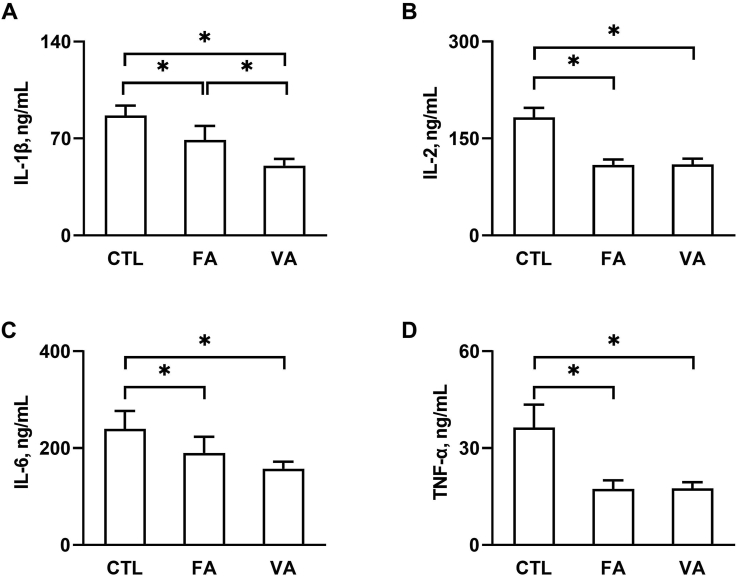
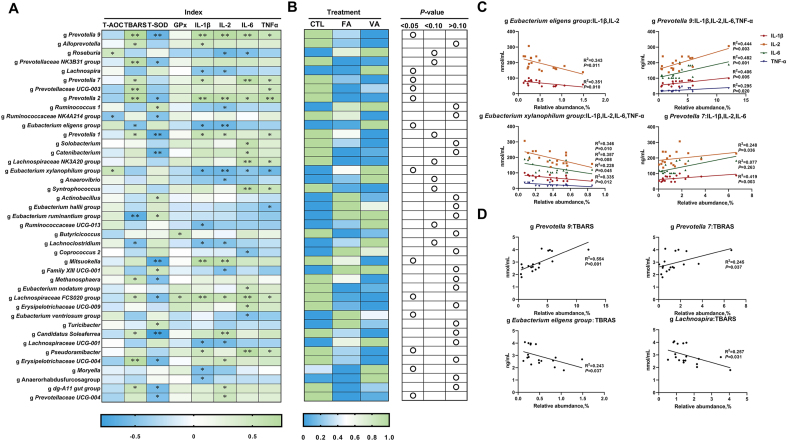
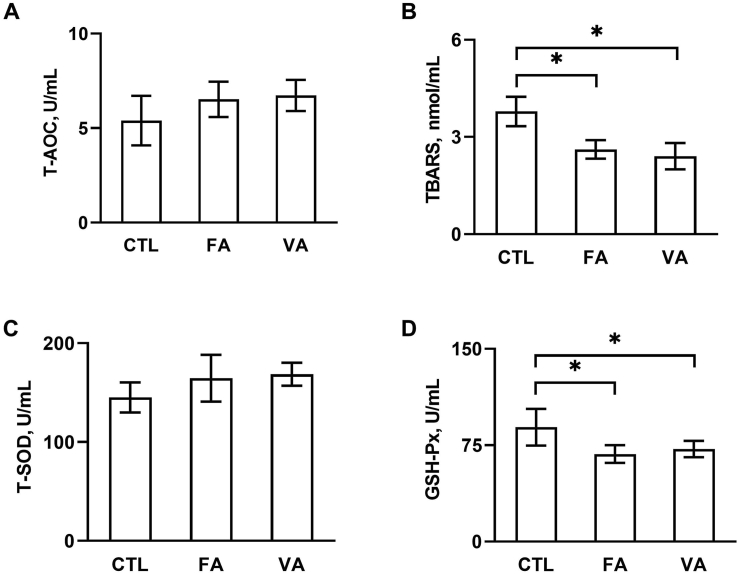
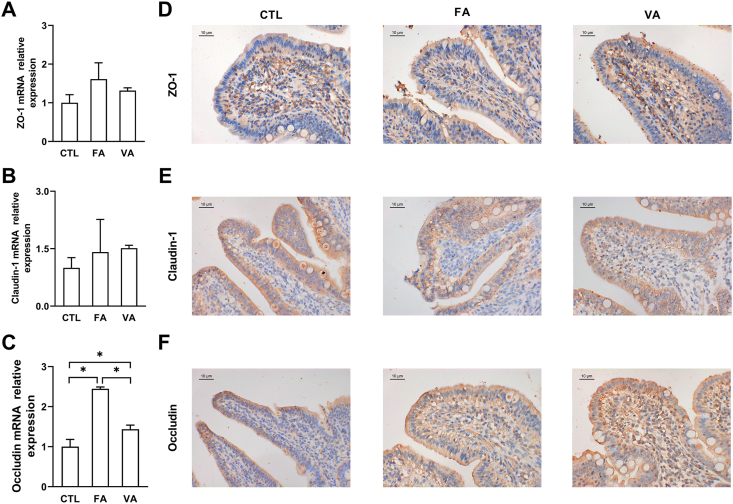
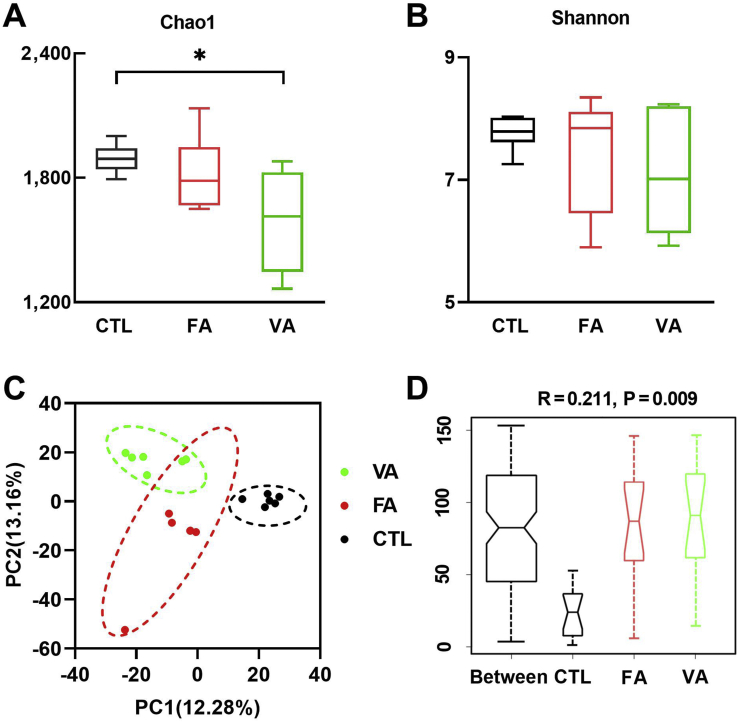
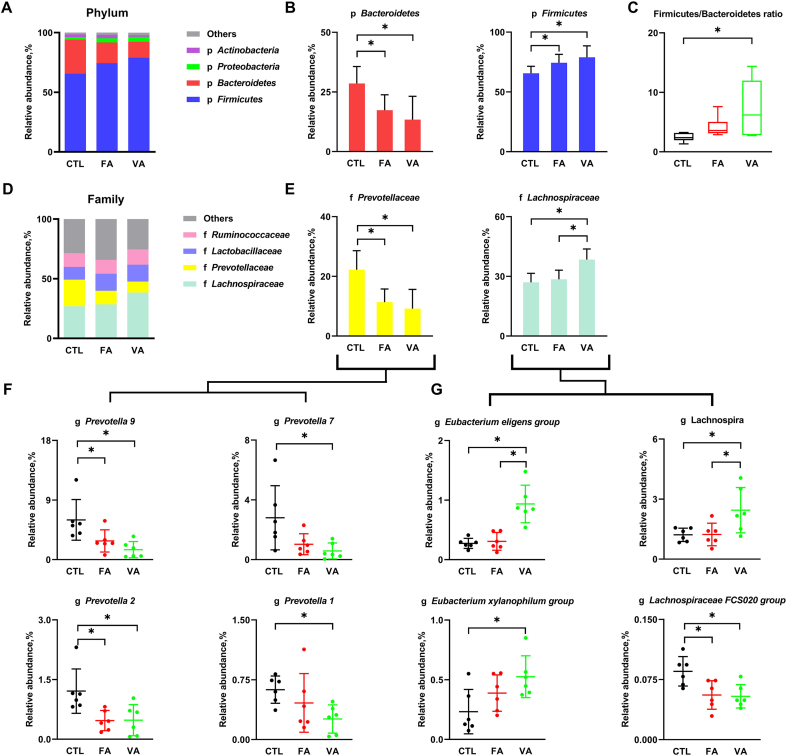
Ferulic acid (FA) and vanillic acid (VA) are considered as major phenolic metabolites of cyanidin 3-glucoside, a polyphenol that widely exists in plants that possess a protective effect against oxidative stress and inflammation in our previous study. This study aimed to investigate the effect of FA and VA on inflammation, gut barrier function, and growth performance in a weaned piglet model challenged with lipopolysaccharide (LPS). Thirty-six piglets (PIC 337 × C48, 28 d of age) were randomly allocated into 3 treatments with 6 replicate pens (2 piglets per pen). They were fed with a basal diet or a diet containing 4,000 mg/kg of FA or VA. Dietary supplementation of VA significantly increased average daily gain (ADG) (P < 0.05). Both FA and VA decreased serum levels of thiobarbituric acid reactive substances (TBARS), interlukin (IL)-1β, IL-2, IL-6, and tumor necrosis factor (TNF)-α ( < 0.05), and enhanced the expression of tight junction protein oclaudin ( < 0.05). Analysis of gut microbiota indicated that both FA and VA increased the Firmicutes/Bacteroidetes ratio alongside reducing the relative abundance of the Prevotellaceae family including 9 and 2 genera, but enriched the Lachoiraceaea family including the group ( < 0.05). Moreover, VA reduced the relative abundance of 7 and 1 but enriched , group, and group ( < 0.05), while FA showed a limited effect on these genera. The results demonstrated that both VA and FA could alleviate inflammation and oxidative stress, but only VA has a significant positive effect on the growth performance of LPS-challenged piglets potentially through modulating gut microbiota.
阿魏酸(FA)和香草酸(VA)被认为是花青素3-葡萄糖苷的主要酚类代谢产物,花青素3-葡萄糖苷是一种广泛存在于植物中的多酚,在我们之前的研究中发现其对氧化应激和炎症具有保护作用。本研究旨在探讨FA和VA对脂多糖(LPS)攻击的断奶仔猪模型的炎症、肠道屏障功能和生长性能的影响。36头仔猪(PIC 337×C48,28日龄)被随机分为3组,每组6个重复栏(每栏2头仔猪)。它们分别饲喂基础日粮或含有4000mg/kg FA或VA的日粮。日粮中添加VA显著提高了平均日增重(ADG)(P<0.05)。FA和VA均降低了血清硫代巴比妥酸反应物质(TBARS)、白细胞介素(IL)-1β、IL-2、IL-6和肿瘤坏死因子(TNF)-α的水平(P<0.05),并增强了紧密连接蛋白occludin的表达(P<0.05)。肠道微生物群分析表明,FA和VA均提高了厚壁菌门/拟杆菌门的比例,同时降低了包括9个和2个属的普雷沃氏菌科的相对丰度,但增加了包括该组的毛螺菌科的相对丰度(P<0.05)。此外,VA降低了7个和1个属的相对丰度,但增加了、该组和该组的相对丰度(P<0.05),而FA对这些属的影响有限。结果表明,VA和FA均可减轻炎症和氧化应激,但只有VA可能通过调节肠道微生物群对LPS攻击的仔猪生长性能有显著的积极影响。