• 文献检索
  • 文档翻译
  • 深度研究
  • 学术资讯
  • Suppr Zotero 插件Zotero 插件
  • 邀请有礼
  • 套餐&价格
  • 历史记录
应用&插件
Suppr Zotero 插件Zotero 插件浏览器插件Mac 客户端Windows 客户端微信小程序
定价
高级版会员购买积分包购买API积分包
服务
文献检索文档翻译深度研究API 文档MCP 服务
关于我们
关于 Suppr公司介绍联系我们用户协议隐私条款
关注我们

Suppr 超能文献

核心技术专利:CN118964589B侵权必究
粤ICP备2023148730 号-1Suppr @ 2026

文献检索

告别复杂PubMed语法,用中文像聊天一样搜索,搜遍4000万医学文献。AI智能推荐,让科研检索更轻松。

立即免费搜索

文件翻译

保留排版,准确专业,支持PDF/Word/PPT等文件格式,支持 12+语言互译。

免费翻译文档

深度研究

AI帮你快速写综述,25分钟生成高质量综述,智能提取关键信息,辅助科研写作。

立即免费体验

基于深度学习的长短期记忆模型在预测传染病爆发方面的功效。

The efficacy of deep learning based LSTM model in forecasting the outbreak of contagious diseases.

作者信息

Absar Nurul, Uddin Nazim, Khandaker Mayeen Uddin, Ullah Habib

机构信息

Department of Computer Science and Engineering, BGC Trust University, Bangladesh, Chittagong, 4381, Bangladesh.

Centre for Applied Physics and Radiation Technologies, School of Engineering and Technology, Sunway University, Bandar Sunway, 47500, Selangor, Malaysia.

出版信息

Infect Dis Model. 2022 Mar;7(1):170-183. doi: 10.1016/j.idm.2021.12.005. Epub 2021 Dec 28.

DOI:10.1016/j.idm.2021.12.005
PMID:34977438
原文链接:https://pmc.ncbi.nlm.nih.gov/articles/PMC8712463/
Abstract

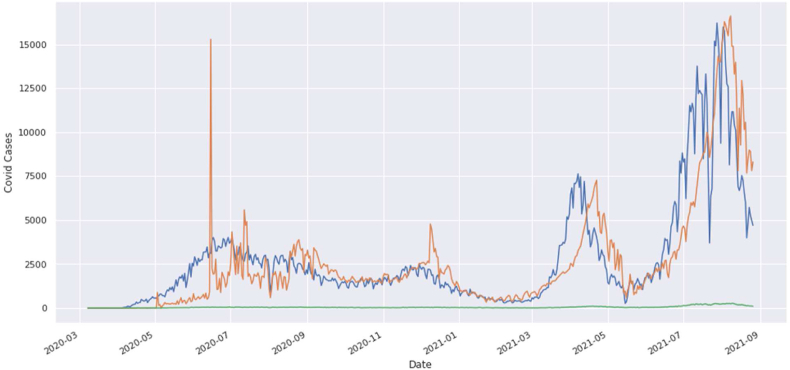
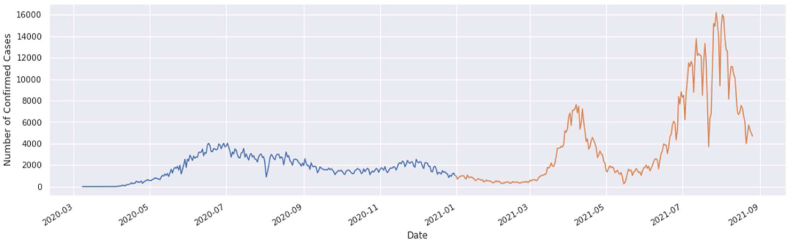
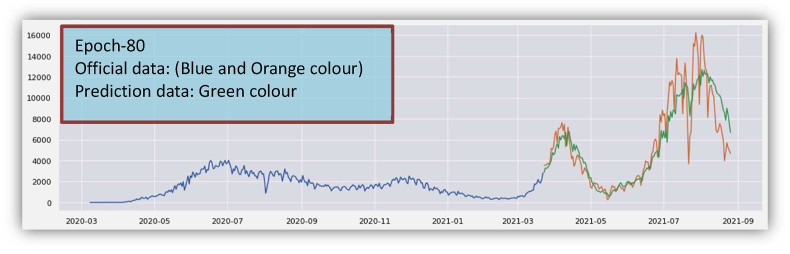
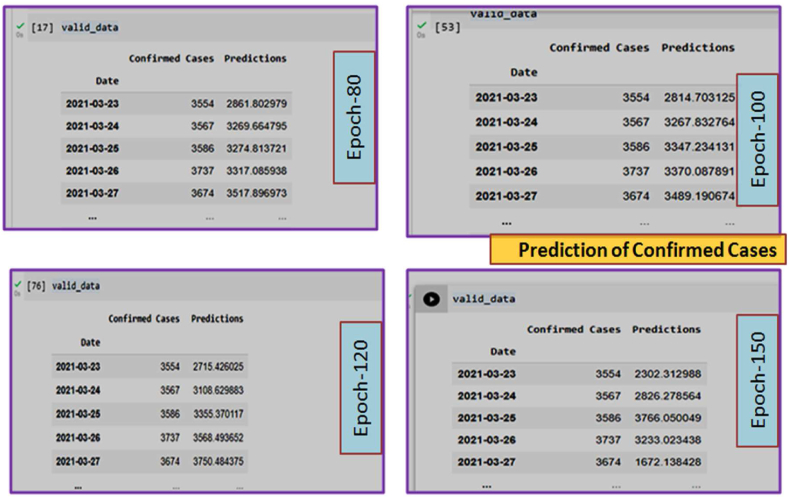
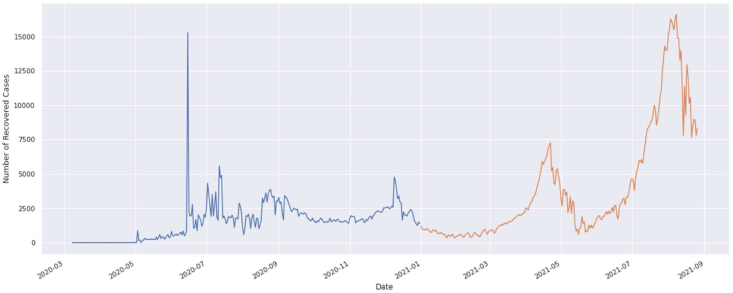
The coronavirus disease that outbreak in 2019 has caused various health issues. According to the WHO, the first positive case was detected in Bangladesh on 7 March 2020, but while writing this paper in June 2021, the total confirmed, recovered, and death cases were 826922, 766266 and 13118, respectively. Due to the emergence of COVID-19 in Bangladesh, the country is facing a major public health crisis. Unfortunately, the country does not have a comprehensive health policy to address this issue. This makes it hard to predict how the pandemic will affect the population. Machine learning techniques can help us detect the disease's spread. To predict the trend, parameters, risks, and to take preventive measure in Bangladesh; this work utilized the Recurrent Neural Networks based Deep Learning methodologies like LongShort-Term Memory. Here, we aim to predict the epidemic's progression for a period of more than a year under various scenarios in Bangladesh. We extracted the data for daily confirmed, recovered, and death cases from March 2020 to August 2021. The obtained Root Mean Square Error (RMSE) values of confirmed, recovered, and death cases indicates that our result is more accurate than other contemporary techniques. This study indicates that the LSTM model could be used effectively in predicting contagious diseases. The obtained results could help in explaining the seriousness of the situation, also mayhelp the authorities to take precautionary steps to control the situation.

摘要

2019年爆发的冠状病毒病引发了各种健康问题。根据世界卫生组织的数据,2020年3月7日在孟加拉国检测到首例阳性病例,但在2021年6月撰写本文时,确诊、康复和死亡病例总数分别为826922例、766266例和13118例。由于孟加拉国出现了新冠疫情,该国正面临重大的公共卫生危机。不幸的是,该国没有全面的卫生政策来应对这一问题。这使得很难预测疫情将如何影响民众。机器学习技术可以帮助我们检测疾病的传播情况。为了预测孟加拉国的疫情趋势、参数、风险并采取预防措施;这项工作采用了基于循环神经网络的深度学习方法,如长短期记忆网络。在这里,我们旨在预测孟加拉国在各种情况下一年多时间内的疫情发展情况。我们提取了2020年3月至2021年8月每日确诊、康复和死亡病例的数据。确诊、康复和死亡病例的均方根误差(RMSE)值表明,我们的结果比其他当代技术更准确。这项研究表明,长短期记忆网络模型可以有效地用于预测传染病。所获得的结果有助于解释疫情形势的严峻性,也可能有助于当局采取预防措施来控制局势。
https://cdn.ncbi.nlm.nih.gov/pmc/blobs/4f27/8743219/7fa33b54f433/gr8c.jpg
https://cdn.ncbi.nlm.nih.gov/pmc/blobs/4f27/8743219/8c4d61934db5/gr1.jpg
https://cdn.ncbi.nlm.nih.gov/pmc/blobs/4f27/8743219/7b5b1d177d5e/gr2.jpg
https://cdn.ncbi.nlm.nih.gov/pmc/blobs/4f27/8743219/b503b2ccaa20/gr3.jpg
https://cdn.ncbi.nlm.nih.gov/pmc/blobs/4f27/8743219/4e920751170b/gr4.jpg
https://cdn.ncbi.nlm.nih.gov/pmc/blobs/4f27/8743219/38140e7fee83/fx1.jpg
https://cdn.ncbi.nlm.nih.gov/pmc/blobs/4f27/8743219/f56bdfb1eebe/gr5a.jpg
https://cdn.ncbi.nlm.nih.gov/pmc/blobs/4f27/8743219/3da99acbe74e/gr5b.jpg
https://cdn.ncbi.nlm.nih.gov/pmc/blobs/4f27/8743219/71ddb528bcdd/gr5c.jpg
https://cdn.ncbi.nlm.nih.gov/pmc/blobs/4f27/8743219/1e476465d71b/gr6a.jpg
https://cdn.ncbi.nlm.nih.gov/pmc/blobs/4f27/8743219/813e3689e4ff/gr6b.jpg
https://cdn.ncbi.nlm.nih.gov/pmc/blobs/4f27/8743219/244d8feeea9e/gr6c.jpg
https://cdn.ncbi.nlm.nih.gov/pmc/blobs/4f27/8743219/995867ab180f/gr7a.jpg
https://cdn.ncbi.nlm.nih.gov/pmc/blobs/4f27/8743219/c4f64faf7b5f/gr7b.jpg
https://cdn.ncbi.nlm.nih.gov/pmc/blobs/4f27/8743219/5286e439077b/gr7c.jpg
https://cdn.ncbi.nlm.nih.gov/pmc/blobs/4f27/8743219/21f80094197a/gr8a.jpg
https://cdn.ncbi.nlm.nih.gov/pmc/blobs/4f27/8743219/292c4722a2d0/gr8b.jpg
https://cdn.ncbi.nlm.nih.gov/pmc/blobs/4f27/8743219/7fa33b54f433/gr8c.jpg
https://cdn.ncbi.nlm.nih.gov/pmc/blobs/4f27/8743219/8c4d61934db5/gr1.jpg
https://cdn.ncbi.nlm.nih.gov/pmc/blobs/4f27/8743219/7b5b1d177d5e/gr2.jpg
https://cdn.ncbi.nlm.nih.gov/pmc/blobs/4f27/8743219/b503b2ccaa20/gr3.jpg
https://cdn.ncbi.nlm.nih.gov/pmc/blobs/4f27/8743219/4e920751170b/gr4.jpg
https://cdn.ncbi.nlm.nih.gov/pmc/blobs/4f27/8743219/38140e7fee83/fx1.jpg
https://cdn.ncbi.nlm.nih.gov/pmc/blobs/4f27/8743219/f56bdfb1eebe/gr5a.jpg
https://cdn.ncbi.nlm.nih.gov/pmc/blobs/4f27/8743219/3da99acbe74e/gr5b.jpg
https://cdn.ncbi.nlm.nih.gov/pmc/blobs/4f27/8743219/71ddb528bcdd/gr5c.jpg
https://cdn.ncbi.nlm.nih.gov/pmc/blobs/4f27/8743219/1e476465d71b/gr6a.jpg
https://cdn.ncbi.nlm.nih.gov/pmc/blobs/4f27/8743219/813e3689e4ff/gr6b.jpg
https://cdn.ncbi.nlm.nih.gov/pmc/blobs/4f27/8743219/244d8feeea9e/gr6c.jpg
https://cdn.ncbi.nlm.nih.gov/pmc/blobs/4f27/8743219/995867ab180f/gr7a.jpg
https://cdn.ncbi.nlm.nih.gov/pmc/blobs/4f27/8743219/c4f64faf7b5f/gr7b.jpg
https://cdn.ncbi.nlm.nih.gov/pmc/blobs/4f27/8743219/5286e439077b/gr7c.jpg
https://cdn.ncbi.nlm.nih.gov/pmc/blobs/4f27/8743219/21f80094197a/gr8a.jpg
https://cdn.ncbi.nlm.nih.gov/pmc/blobs/4f27/8743219/292c4722a2d0/gr8b.jpg
https://cdn.ncbi.nlm.nih.gov/pmc/blobs/4f27/8743219/7fa33b54f433/gr8c.jpg

相似文献

1
The efficacy of deep learning based LSTM model in forecasting the outbreak of contagious diseases.基于深度学习的长短期记忆模型在预测传染病爆发方面的功效。
Infect Dis Model. 2022 Mar;7(1):170-183. doi: 10.1016/j.idm.2021.12.005. Epub 2021 Dec 28.
2
Time series forecasting of new cases and new deaths rate for COVID-19 using deep learning methods.使用深度学习方法对COVID-19的新增病例和新增死亡率进行时间序列预测。
Results Phys. 2021 Aug;27:104495. doi: 10.1016/j.rinp.2021.104495. Epub 2021 Jun 26.
3
A COVID-19 Pandemic Artificial Intelligence-Based System With Deep Learning Forecasting and Automatic Statistical Data Acquisition: Development and Implementation Study.一种基于人工智能的新冠肺炎大流行深度学习预测与自动统计数据采集系统:开发与实施研究
J Med Internet Res. 2021 May 20;23(5):e27806. doi: 10.2196/27806.
4
COVID-19 in Bangladesh: A Deeper Outlook into The Forecast with Prediction of Upcoming Per Day Cases Using Time Series.孟加拉国的新冠肺炎疫情:基于时间序列对每日新增病例预测的深入展望
Procedia Comput Sci. 2020;178:291-300. doi: 10.1016/j.procs.2020.11.031. Epub 2020 Dec 7.
5
Temporal deep learning architecture for prediction of COVID-19 cases in India.用于预测印度新冠肺炎病例的时态深度学习架构。
Expert Syst Appl. 2022 Jun 1;195:116611. doi: 10.1016/j.eswa.2022.116611. Epub 2022 Feb 5.
6
Forecasting of COVID-19 using deep layer Recurrent Neural Networks (RNNs) with Gated Recurrent Units (GRUs) and Long Short-Term Memory (LSTM) cells.使用带有门控循环单元(GRU)和长短期记忆(LSTM)细胞的深层循环神经网络(RNN)对2019冠状病毒病(COVID-19)进行预测。
Chaos Solitons Fractals. 2021 May;146:110861. doi: 10.1016/j.chaos.2021.110861. Epub 2021 Mar 14.
7
Analysis and Prediction of COVID-19 Pandemic in Bangladesh by Using ANFIS and LSTM Network.基于自适应神经模糊推理系统(ANFIS)和长短期记忆网络(LSTM)对孟加拉国新冠肺炎疫情的分析与预测
Cognit Comput. 2021;13(3):761-770. doi: 10.1007/s12559-021-09859-0. Epub 2021 Apr 12.
8
Time series forecasting of COVID-19 transmission in Asia Pacific countries using deep neural networks.使用深度神经网络对亚太国家新冠病毒传播进行时间序列预测。
Pers Ubiquitous Comput. 2023;27(3):733-750. doi: 10.1007/s00779-020-01494-0. Epub 2021 Jan 10.
9
A Novel Matrix Profile-Guided Attention LSTM Model for Forecasting COVID-19 Cases in USA.一种基于新型矩阵特征值引导注意力 LSTM 模型的美国新冠肺炎病例预测方法
Front Public Health. 2021 Oct 7;9:741030. doi: 10.3389/fpubh.2021.741030. eCollection 2021.
10
Predictions for COVID-19 with deep learning models of LSTM, GRU and Bi-LSTM.使用长短期记忆网络(LSTM)、门控循环单元(GRU)和双向长短期记忆网络(Bi-LSTM)深度学习模型对新型冠状病毒肺炎(COVID-19)进行预测。
Chaos Solitons Fractals. 2020 Nov;140:110212. doi: 10.1016/j.chaos.2020.110212. Epub 2020 Aug 19.

引用本文的文献

1
Harnessing artificial intelligence for enhanced public health surveillance: a narrative review.利用人工智能加强公共卫生监测:一篇叙述性综述。
Front Public Health. 2025 Jul 30;13:1601151. doi: 10.3389/fpubh.2025.1601151. eCollection 2025.
2
Implications of Big Data Analytics, AI, Machine Learning, and Deep Learning in the Health Care System of Bangladesh: Scoping Review.大数据分析、人工智能、机器学习和深度学习在孟加拉国医疗保健系统中的应用:范围综述。
J Med Internet Res. 2024 Oct 28;26:e54710. doi: 10.2196/54710.
3
Backtracking: Improved methods for identifying the source of a deliberate release of Bacillus anthracis from the temporal and spatial distribution of cases.

本文引用的文献

1
Predicting the growth and trend of COVID-19 pandemic using machine learning and cloud computing.利用机器学习和云计算预测新冠疫情的发展与趋势。
Internet Things (Amst). 2020 Sep;11:100222. doi: 10.1016/j.iot.2020.100222. Epub 2020 May 12.
2
Forecasting and Evaluating Multiple Interventions for COVID-19 Worldwide.全球范围内针对新冠肺炎的多种干预措施的预测与评估
Front Artif Intell. 2020 May 22;3:41. doi: 10.3389/frai.2020.00041. eCollection 2020.
3
Changes in risk perception and self-reported protective behaviour during the first week of the COVID-19 pandemic in the United States.
回溯分析:从时间和空间分布上确定炭疽杆菌蓄意释放源的改进方法。
PLoS Comput Biol. 2024 Sep 6;20(9):e1010817. doi: 10.1371/journal.pcbi.1010817. eCollection 2024 Sep.
4
Recognition of inscribed cursive Pashtu numeral through optimized deep learning.通过优化深度学习识别手写体普什图语数字。
PeerJ Comput Sci. 2024 Jul 11;10:e2124. doi: 10.7717/peerj-cs.2124. eCollection 2024.
5
Deep learning hybrid model for analyzing and predicting the impact of imported malaria cases from Africa on the rise of Plasmodium falciparum in China before and during the COVID-19 pandemic.用于分析和预测 COVID-19 大流行前后非洲输入性疟疾病例对中国恶性疟原虫上升影响的深度学习混合模型。
PLoS One. 2023 Dec 6;18(12):e0287702. doi: 10.1371/journal.pone.0287702. eCollection 2023.
6
Detecting Minor Symptoms of Parkinson's Disease in the Wild Using Bi-LSTM with Attention Mechanism.使用带注意力机制的 Bi-LSTM 模型在野外检测帕金森病的微小症状。
Sensors (Basel). 2023 Sep 13;23(18):7850. doi: 10.3390/s23187850.
7
Estimate the incubation period of coronavirus 2019 (COVID-19).估算 2019 年冠状病毒(COVID-19)的潜伏期。
Comput Biol Med. 2023 May;158:106794. doi: 10.1016/j.compbiomed.2023.106794. Epub 2023 Mar 30.
8
Optimal Feature Selection-Based Dental Caries Prediction Model Using Machine Learning for Decision Support System.基于最优特征选择的机器学习龋齿预测模型用于决策支持系统
Bioengineering (Basel). 2023 Feb 13;10(2):245. doi: 10.3390/bioengineering10020245.
9
Study on the influence of meteorological factors on influenza in different regions and predictions based on an LSTM algorithm.基于 LSTM 算法的不同地区气象因素对流感影响的研究及预测。
BMC Public Health. 2022 Dec 13;22(1):2335. doi: 10.1186/s12889-022-14299-y.
10
Deep learning for Covid-19 forecasting: State-of-the-art review.用于新冠疫情预测的深度学习:最新综述
Neurocomputing (Amst). 2022 Oct 28;511:142-154. doi: 10.1016/j.neucom.2022.09.005. Epub 2022 Sep 8.
美国新冠疫情大流行第一周期间风险认知及自我报告的防护行为变化
R Soc Open Sci. 2020 Sep 16;7(9):200742. doi: 10.1098/rsos.200742. eCollection 2020 Sep.
4
Early prediction of mortality risk among patients with severe COVID-19, using machine learning.利用机器学习技术对重症 COVID-19 患者的死亡率进行早期预测。
Int J Epidemiol. 2021 Jan 23;49(6):1918-1929. doi: 10.1093/ije/dyaa171.
5
Predicting the cumulative number of cases for the COVID-19 epidemic in China from early data.从早期数据预测中国 COVID-19 疫情的累计病例数。
Math Biosci Eng. 2020 Apr 8;17(4):3040-3051. doi: 10.3934/mbe.2020172.
6
Prediction of COVID-19 spreading profiles in South Korea, Italy and Iran by data-driven coding.基于数据驱动编码对韩国、意大利和伊朗的 COVID-19 传播情况进行预测。
PLoS One. 2020 Jul 6;15(7):e0234763. doi: 10.1371/journal.pone.0234763. eCollection 2020.
7
The challenges of modeling and forecasting the spread of COVID-19.新冠病毒传播建模和预测面临的挑战。
Proc Natl Acad Sci U S A. 2020 Jul 21;117(29):16732-16738. doi: 10.1073/pnas.2006520117. Epub 2020 Jul 2.
8
Time series prediction of COVID-19 by mutation rate analysis using recurrent neural network-based LSTM model.基于递归神经网络的长短期记忆模型通过突变率分析对COVID-19进行时间序列预测。
Chaos Solitons Fractals. 2020 Sep;138:110018. doi: 10.1016/j.chaos.2020.110018. Epub 2020 Jun 13.
9
Estimate of the Basic Reproduction Number for COVID-19: A Systematic Review and Meta-analysis.2019年冠状病毒病基本繁殖数的估计:一项系统评价和荟萃分析
J Prev Med Public Health. 2020 May;53(3):151-157. doi: 10.3961/jpmph.20.076. Epub 2020 Mar 20.
10
Extended SIR Prediction of the Epidemics Trend of COVID-19 in Italy and Compared With Hunan, China.意大利新冠疫情趋势的扩展SIR预测及与中国湖南的比较。
Front Med (Lausanne). 2020 May 6;7:169. doi: 10.3389/fmed.2020.00169. eCollection 2020.