Verma Hanuman, Mandal Saurav, Gupta Akshansh
Bareilly College, Bareilly, Uttar Pradesh, 243005, India.
School of Computational and Integrative Sciences, Jawaharlal Nehru University, New Delhi, 110067, India.
Expert Syst Appl. 2022 Jun 1;195:116611. doi: 10.1016/j.eswa.2022.116611. Epub 2022 Feb 5.
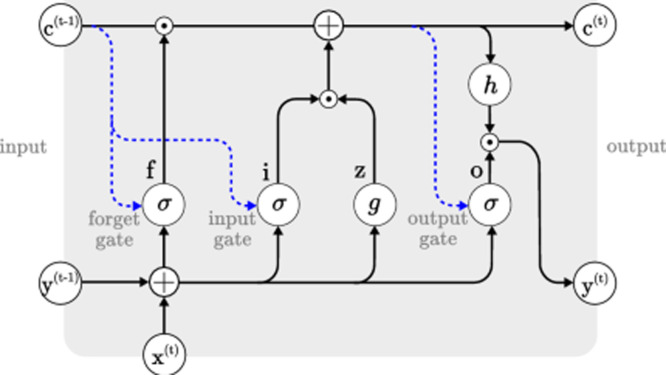
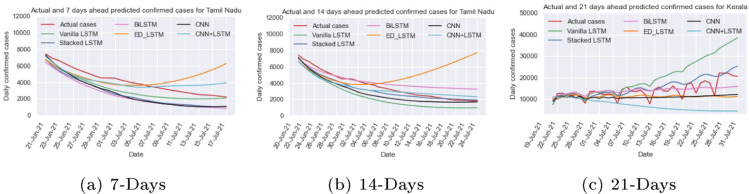
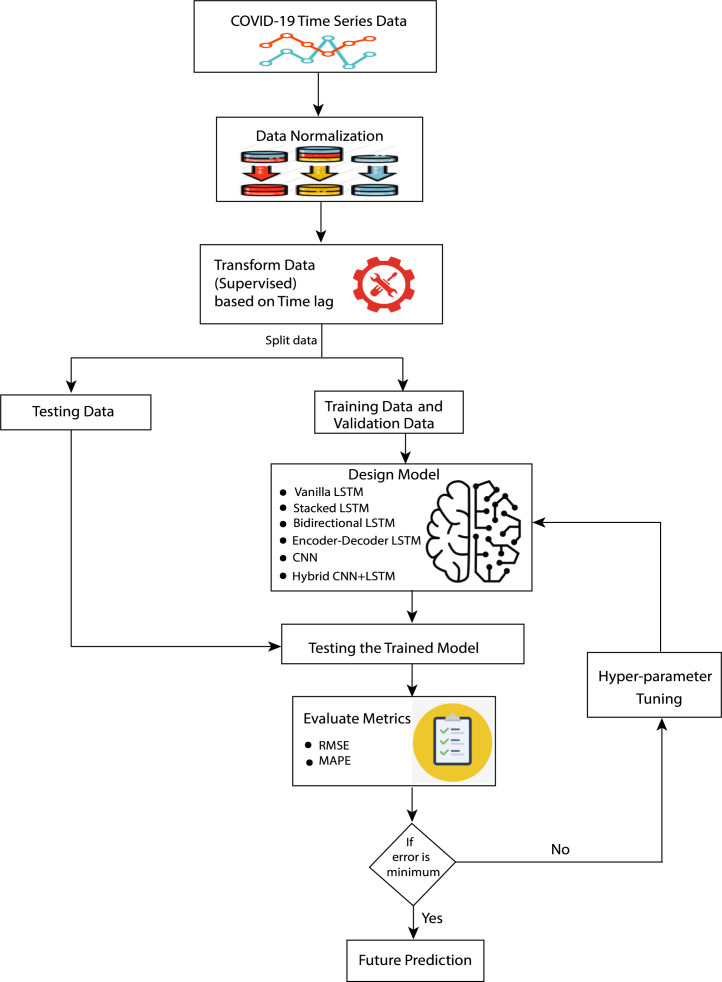
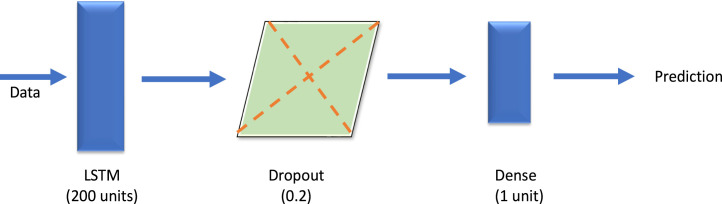
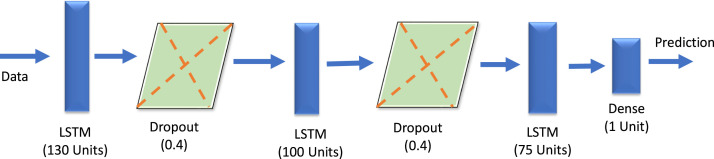
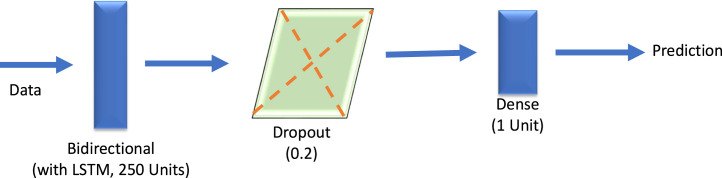
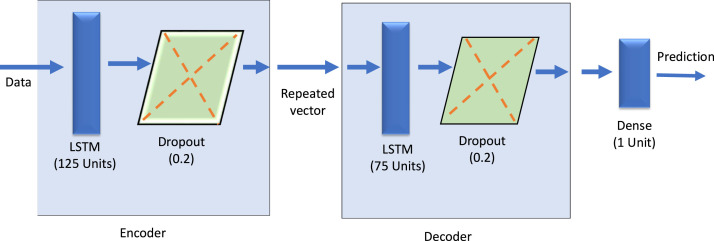
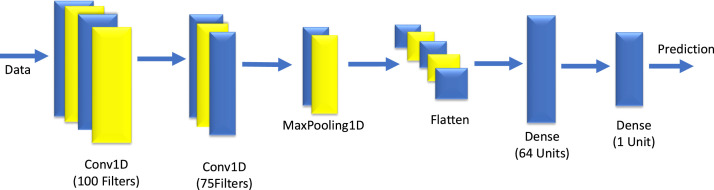
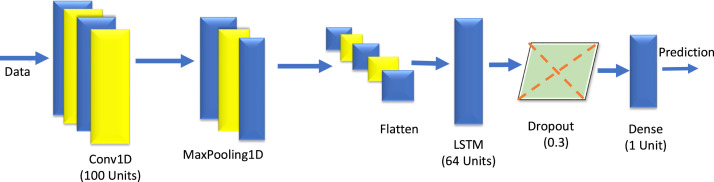
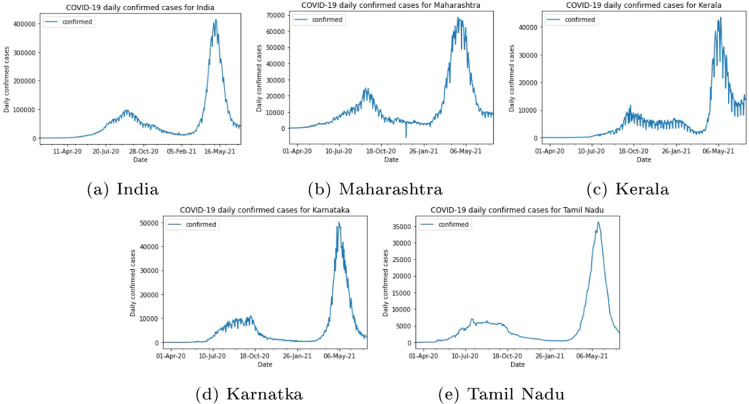
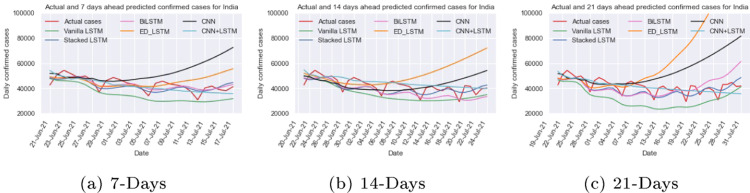
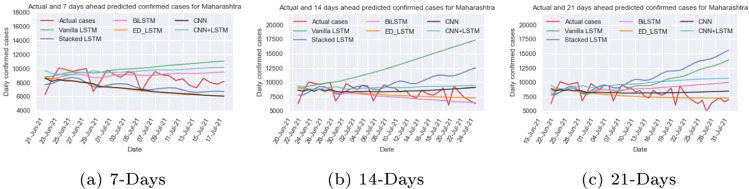
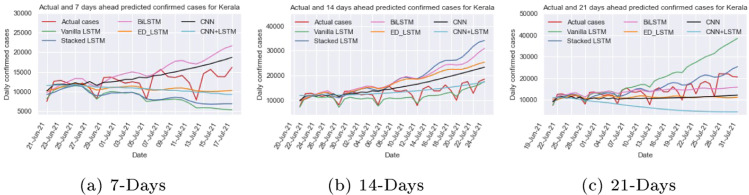
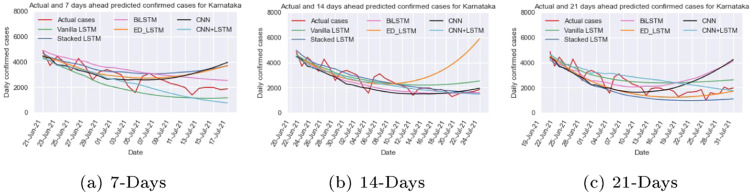
To combat the recent coronavirus disease 2019 (COVID-19), academician and clinician are in search of new approaches to predict the COVID-19 outbreak dynamic trends that may slow down or stop the pandemic. Epidemiological models like Susceptible-Infected-Recovered (SIR) and its variants are helpful to understand the dynamics trend of pandemic that may be used in decision making to optimize possible controls from the infectious disease. But these epidemiological models based on mathematical assumptions may not predict the real pandemic situation. Recently the new machine learning approaches are being used to understand the dynamic trend of COVID-19 spread. In this paper, we designed the recurrent and convolutional neural network models: vanilla LSTM, stacked LSTM, ED_LSTM, BiLSTM, CNN, and hybrid CNN+LSTM model to capture the complex trend of COVID-19 outbreak and perform the forecasting of COVID-19 daily confirmed cases of 7, 14, 21 days for India and its four most affected states (Maharashtra, Kerala, Karnataka, and Tamil Nadu). The root mean square error (RMSE) and mean absolute percentage error (MAPE) evaluation metric are computed on the testing data to demonstrate the relative performance of these models. The results show that the stacked LSTM and hybrid CNN+LSTM models perform best relative to other models.
为抗击近期的2019冠状病毒病(COVID-19),院士和临床医生正在寻找新方法来预测COVID-19疫情的动态趋势,以期减缓或阻止这场大流行。诸如易感-感染-康复(SIR)及其变体等流行病学模型有助于理解大流行的动态趋势,可用于决策,以优化针对传染病的可能防控措施。但这些基于数学假设的流行病学模型可能无法预测实际的大流行情况。最近,新的机器学习方法正被用于理解COVID-19传播的动态趋势。在本文中,我们设计了循环神经网络和卷积神经网络模型:普通长短期记忆网络(vanilla LSTM)、堆叠长短期记忆网络(stacked LSTM)、增强门控长短期记忆网络(ED_LSTM)、双向长短期记忆网络(BiLSTM)、卷积神经网络(CNN)以及混合卷积神经网络+长短期记忆网络(CNN+LSTM)模型,以捕捉COVID-19疫情爆发的复杂趋势,并对印度及其四个受影响最严重的邦(马哈拉施特拉邦、喀拉拉邦、卡纳塔克邦和泰米尔纳德邦)未来7天、14天、21天的COVID-19每日确诊病例进行预测。在测试数据上计算均方根误差(RMSE)和平均绝对百分比误差(MAPE)评估指标,以展示这些模型的相对性能。结果表明,相对于其他模型,堆叠长短期记忆网络和混合卷积神经网络+长短期记忆网络模型表现最佳。