School of Biomedical Engineering, Capital Medical University, Beijing, China.
Beijing Key Laboratory of Fundamental Research on Biomechanics in Clinical Application, Capital Medical University, Beijing, China.
BMC Microbiol. 2022 Jan 3;22(1):4. doi: 10.1186/s12866-021-02414-9.
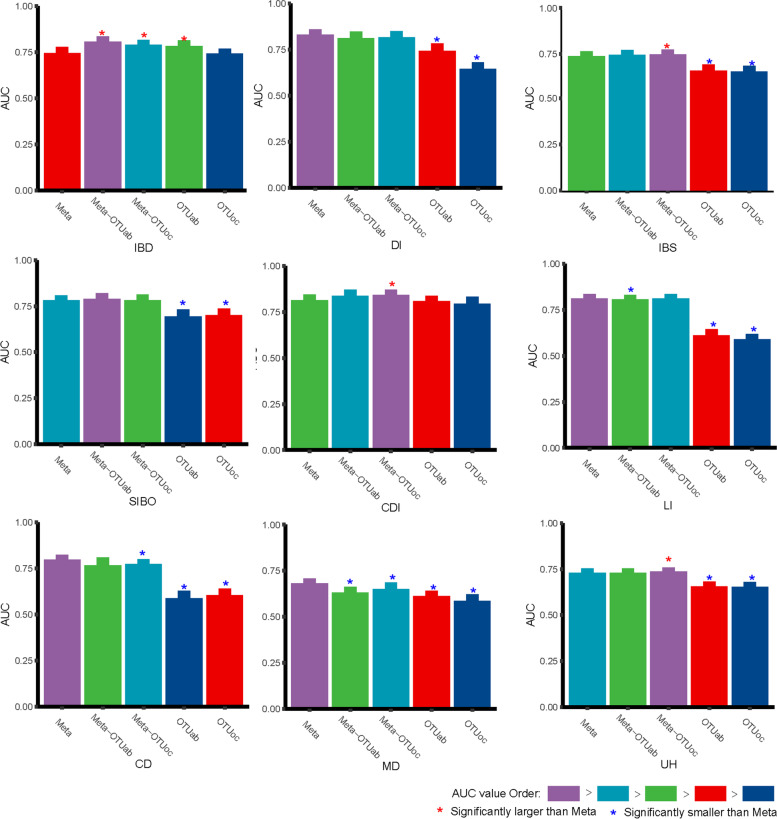
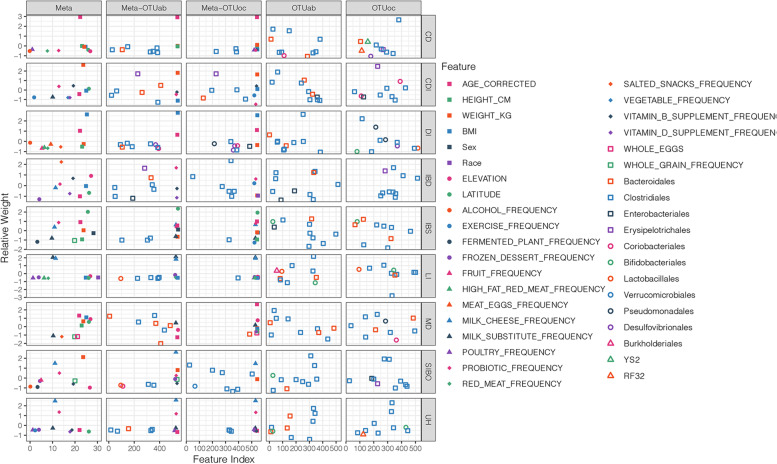
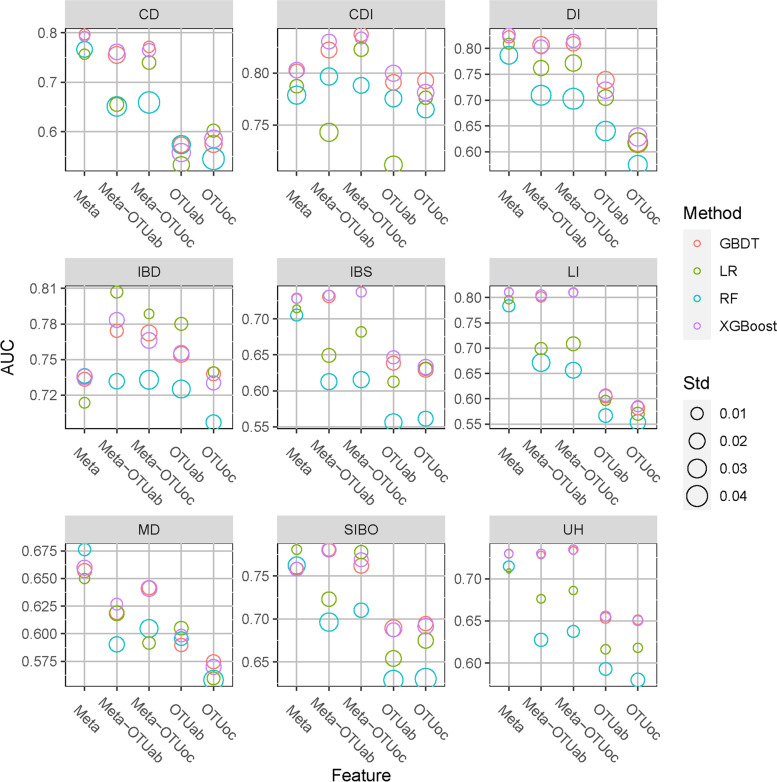
Lifestyle and physiological variables on human disease risk have been revealed to be mediated by gut microbiota. Low concordance between case-control studies for detecting disease-associated microbe existed due to limited sample size and population-wide bias in lifestyle and physiological variables. To infer gut microbiota-disease associations accurately, we propose to build machine learning models by including both human variables and gut microbiota. When the model's performance with both gut microbiota and human variables is better than the model with just human variables, the independent gut microbiota -disease associations will be confirmed. By building models on the American Gut Project dataset, we found that gut microbiota showed distinct association strengths with different diseases. Adding gut microbiota into human variables enhanced the classification performance of IBD significantly; independent associations between occurrence information of gut microbiota and irritable bowel syndrome, C. difficile infection, and unhealthy status were found; adding gut microbiota showed no improvement on models' performance for diabetes, small intestinal bacterial overgrowth, lactose intolerance, cardiovascular disease. Our results suggested that although gut microbiota was reported to be associated with many diseases, a considerable proportion of these associations may be very weak. We proposed a list of microbes as biomarkers to classify IBD and unhealthy status. Further functional investigations of these microbes will improve understanding of the molecular mechanism of human diseases.
生活方式和生理变量对人类疾病风险的影响已被证明是由肠道微生物群介导的。由于样本量有限以及生活方式和生理变量在人群中的广泛偏差,病例对照研究在检测与疾病相关的微生物方面存在一致性低的问题。为了准确推断肠道微生物群与疾病的关联,我们建议通过纳入人类变量和肠道微生物群来构建机器学习模型。当模型同时使用肠道微生物群和人类变量的性能优于仅使用人类变量的模型时,将确认独立的肠道微生物群与疾病的关联。通过在“美国肠道计划”数据集上构建模型,我们发现肠道微生物群与不同疾病表现出明显不同的关联强度。将肠道微生物群加入人类变量可显著提高 IBD 的分类性能;发现了肠道微生物群的发生信息与肠易激综合征、艰难梭菌感染和不健康状态之间的独立关联;加入肠道微生物群对糖尿病、小肠细菌过度生长、乳糖不耐受和心血管疾病模型的性能没有改善。我们的研究结果表明,尽管肠道微生物群与许多疾病有关,但这些关联中有相当一部分可能非常微弱。我们提出了一系列微生物作为生物标志物来区分 IBD 和不健康状态。进一步研究这些微生物的功能将有助于深入了解人类疾病的分子机制。