Adedinsewo Demilade A, Johnson Patrick W, Douglass Erika J, Attia Itzhak Zachi, Phillips Sabrina D, Goswami Rohan M, Yamani Mohamad H, Connolly Heidi M, Rose Carl H, Sharpe Emily E, Blauwet Lori, Lopez-Jimenez Francisco, Friedman Paul A, Carter Rickey E, Noseworthy Peter A
Department of Cardiovascular Medicine, Mayo Clinic, 4500 San Pablo Rd, Jacksonville, FL 32224, USA.
Department of Quantitative Health Sciences, Mayo Clinic, 4500 San Pablo Rd, Jacksonville, FL 32224, USA.
Eur Heart J Digit Health. 2021 Aug 27;2(4):586-596. doi: 10.1093/ehjdh/ztab078. eCollection 2021 Dec.
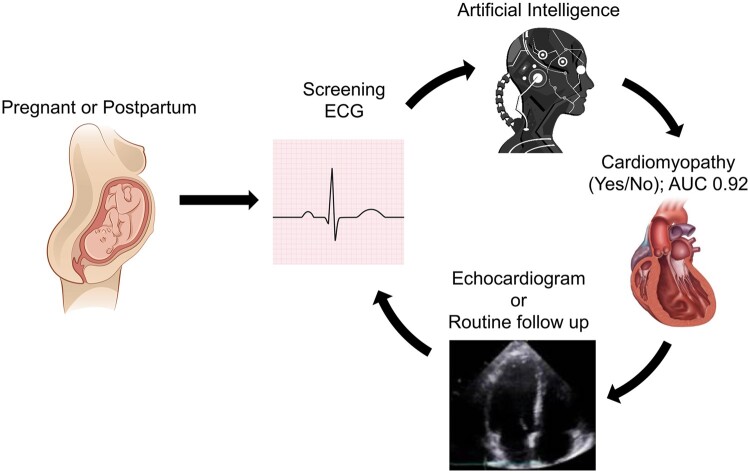
Cardiovascular disease is a major threat to maternal health, with cardiomyopathy being among the most common acquired cardiovascular diseases during pregnancy and the postpartum period. The aim of our study was to evaluate the effectiveness of an electrocardiogram (ECG)-based deep learning model in identifying cardiomyopathy during pregnancy and the postpartum period.
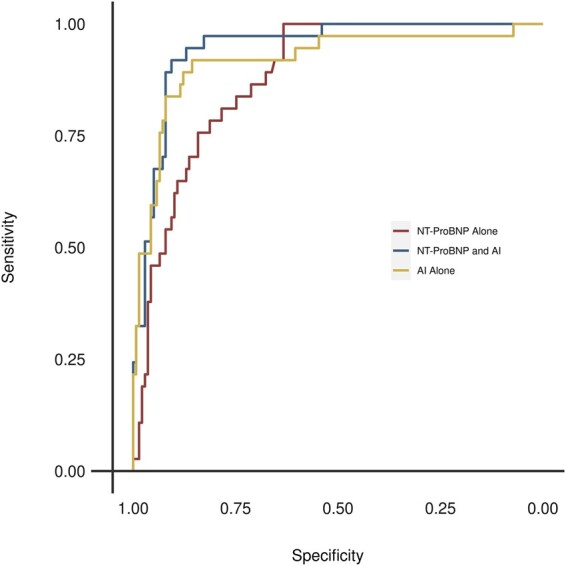
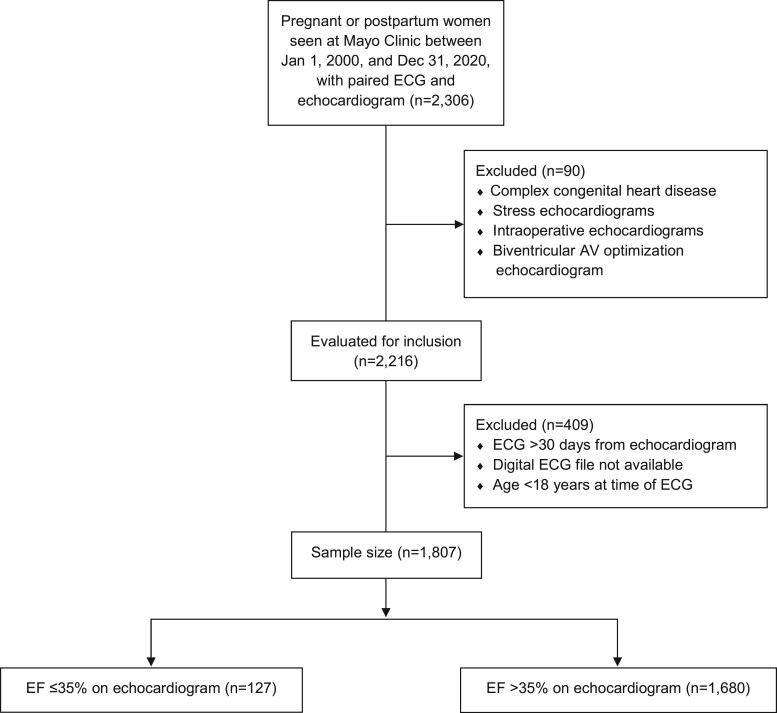
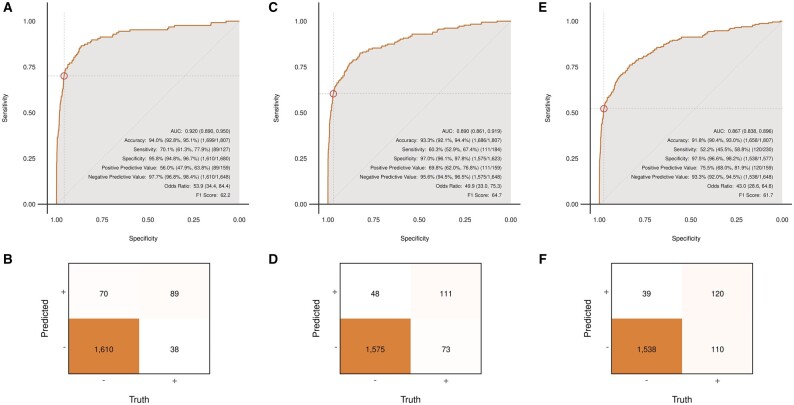
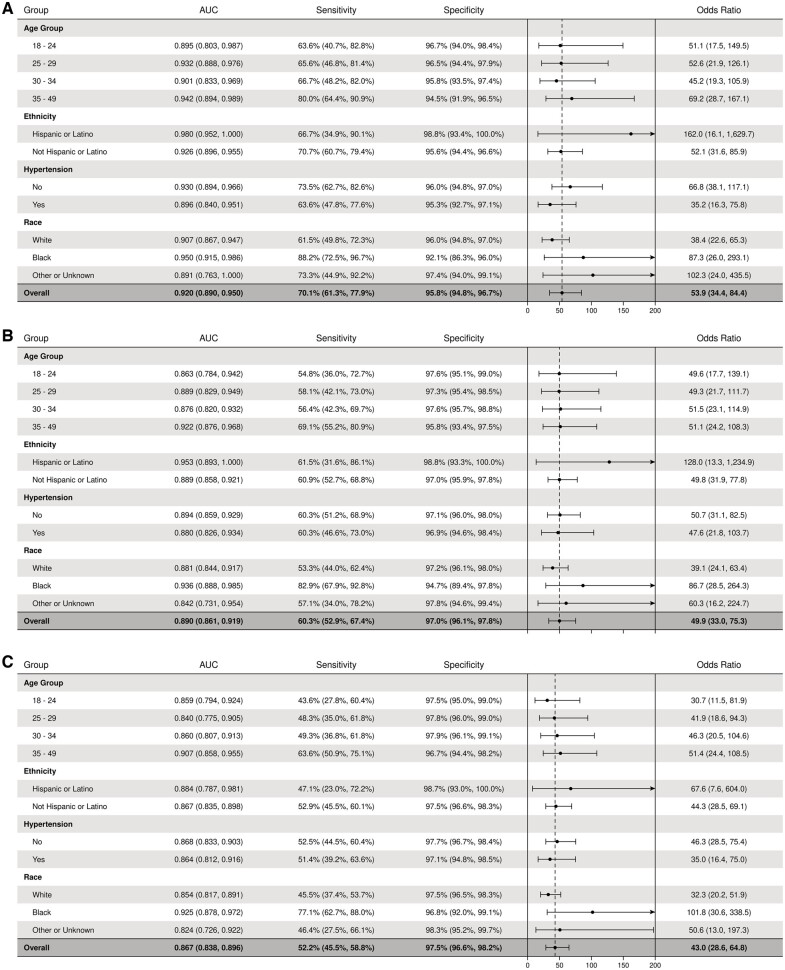
We used an ECG-based deep learning model to detect cardiomyopathy in a cohort of women who were pregnant or in the postpartum period seen at Mayo Clinic. Model performance was evaluated using the area under the receiver operating characteristic curve (AUC), accuracy, sensitivity, and specificity. We compared the diagnostic probabilities of the deep learning model with natriuretic peptides and a multivariable model consisting of demographic and clinical parameters. The study cohort included 1807 women; 7%, 10%, and 13% had left ventricular ejection fraction (LVEF) of 35% or less, <45%, and <50%, respectively. The ECG-based deep learning model identified cardiomyopathy with AUCs of 0.92 (LVEF ≤ 35%), 0.89 (LVEF < 45%), and 0.87 (LVEF < 50%). For LVEF of 35% or less, AUC was higher in Black (0.95) and Hispanic (0.98) women compared to White (0.91). Natriuretic peptides and the multivariable model had AUCs of 0.85 to 0.86 and 0.72, respectively.
An ECG-based deep learning model effectively identifies cardiomyopathy during pregnancy and the postpartum period and outperforms natriuretic peptides and traditional clinical parameters with the potential to become a powerful initial screening tool for cardiomyopathy in the obstetric care setting.
心血管疾病是孕产妇健康的主要威胁,心肌病是孕期和产后最常见的后天性心血管疾病之一。我们研究的目的是评估基于心电图(ECG)的深度学习模型在识别孕期和产后心肌病方面的有效性。
我们使用基于ECG的深度学习模型,对梅奥诊所就诊的孕期或产后女性队列中的心肌病进行检测。使用受试者操作特征曲线下面积(AUC)、准确性、敏感性和特异性来评估模型性能。我们将深度学习模型的诊断概率与利钠肽以及由人口统计学和临床参数组成的多变量模型进行了比较。研究队列包括1807名女性;分别有7%、10%和13%的女性左心室射血分数(LVEF)≤35%、<45%和<50%。基于ECG的深度学习模型识别心肌病的AUC分别为0.92(LVEF≤35%)、0.89(LVEF<45%)和0.87(LVEF<50%)。对于LVEF≤35%的情况,黑人(0.95)和西班牙裔(0.98)女性的AUC高于白人(0.91)女性。利钠肽和多变量模型的AUC分别为0.85至0.86和0.72。
基于ECG的深度学习模型能有效识别孕期和产后的心肌病,并且优于利钠肽和传统临床参数,有潜力成为产科护理中筛查心肌病的强大初始工具。