Kaur Taranjit, Gandhi Tapan Kumar
Department of Electrical Engineering, Indian Institute of Technology, Delhi (IIT Delhi), Hauz Khas, New Delhi, 110016 India.
Circuits Syst Signal Process. 2022;41(6):3397-3414. doi: 10.1007/s00034-021-01939-8. Epub 2022 Jan 3.
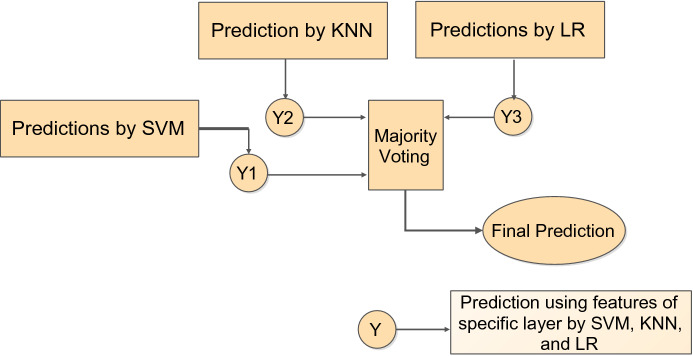
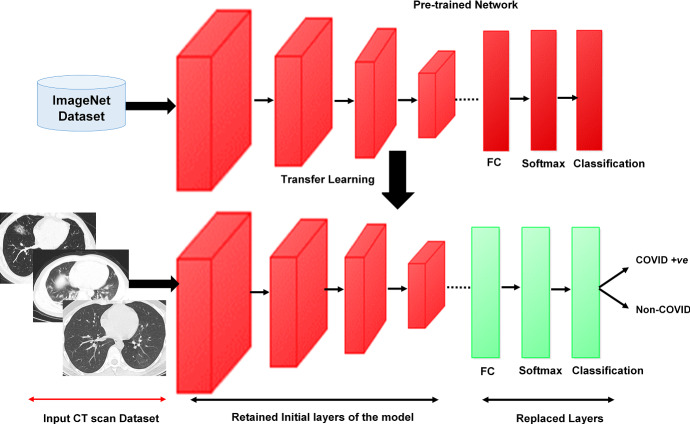
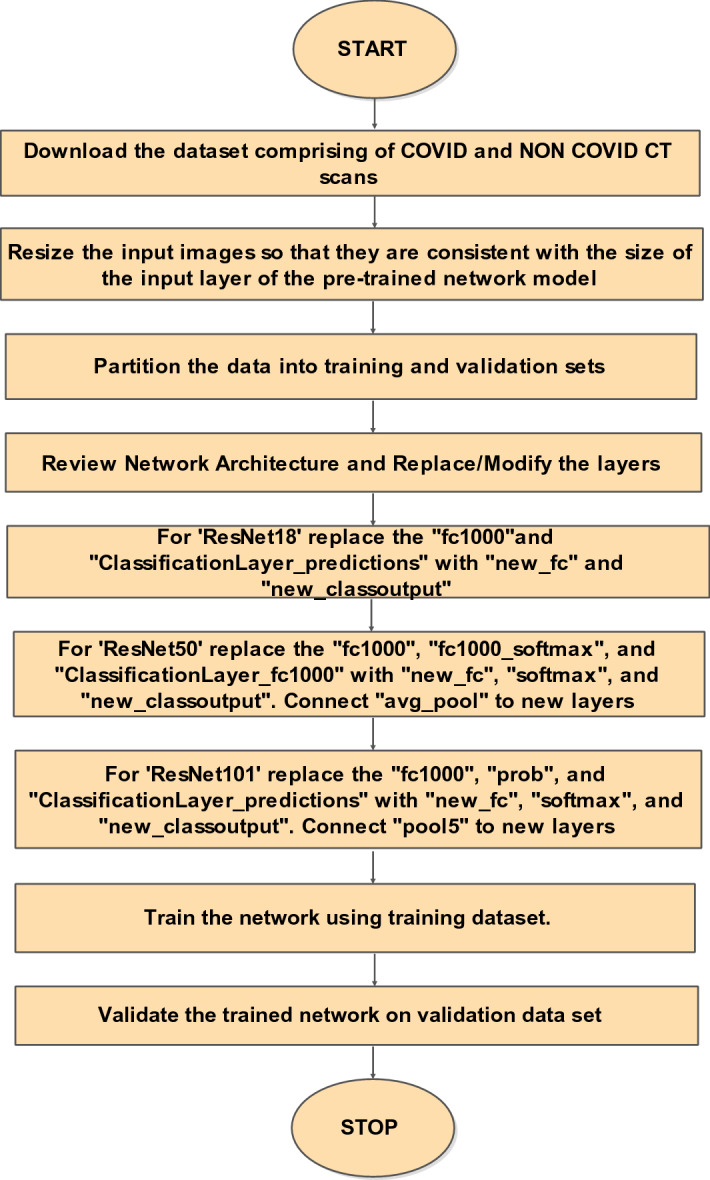
The coronavirus disease (COVID-19) is an infectious disease caused by the SARS-CoV-2 virus. COVID-19 is found to be the most infectious disease in last few decades. This disease has infected millions of people worldwide. The inadequate availability and the limited sensitivity of the testing kits have motivated the clinicians and the scientist to use Computer Tomography (CT) scans to screen COVID-19. Recent advances in technology and the availability of deep learning approaches have proved to be very promising in detecting COVID-19 with increased accuracy. However, deep learning approaches require a huge labeled training dataset, and the current availability of benchmark COVID-19 data is still small. For the limited training data scenario, the CNN usually overfits after several iterations. Hence, in this work, we have investigated different pre-trained network architectures with transfer learning for COVID-19 detection that can work even on a small medical imaging dataset. Various variants of the pre-trained ResNet model, namely ResNet18, ResNet50, and ResNet101, are investigated in the current paper for the detection of COVID-19. The experimental results reveal that transfer learned ResNet50 model outperformed other models by achieving a recall of 98.80% and an F1-score of 98.41%. To further improvise the results, the activations from different layers of best performing model are also explored for the detection using the support vector machine, logistic regression and K-nearest neighbor classifiers. Moreover, a classifier fusion strategy is also proposed that fuses the predictions from the different classifiers via majority voting. Experimental results reveal that via using learned image features and classification fusion strategy, the recall, and F1-score have improvised to 99.20% and 99.40%.
冠状病毒病(COVID-19)是由严重急性呼吸综合征冠状病毒2(SARS-CoV-2)病毒引起的一种传染病。事实证明,COVID-19是过去几十年来传染性最强的疾病。这种疾病已在全球感染了数百万人。检测试剂盒供应不足且灵敏度有限,促使临床医生和科学家使用计算机断层扫描(CT)来筛查COVID-19。技术的最新进展以及深度学习方法的可用性已被证明在以更高的准确率检测COVID-19方面非常有前景。然而,深度学习方法需要大量带标签的训练数据集,而目前基准COVID-19数据的可用量仍然很少。对于有限训练数据的情况,卷积神经网络(CNN)通常在几次迭代后就会出现过拟合。因此,在这项工作中,我们研究了不同的预训练网络架构,并通过迁移学习来进行COVID-19检测,即使在小型医学影像数据集上也能起作用。本文研究了预训练的残差网络(ResNet)模型的各种变体,即ResNet18、ResNet50和ResNet101,用于检测COVID-19。实验结果表明,通过迁移学习的ResNet50模型表现优于其他模型,召回率达到98.80%,F1分数达到98.41%。为了进一步改进结果,还探索了性能最佳模型不同层的激活值,用于使用支持向量机、逻辑回归和K近邻分类器进行检测。此外,还提出了一种分类器融合策略,通过多数投票融合不同分类器的预测结果。实验结果表明,通过使用学习到的图像特征和分类融合策略,召回率和F1分数分别提高到了99.20%和99.40%。