Tan Zhenyu, Li Xinghua, Gao Meiling, Jiang Liangcun
College of Urban and Environmental SciencesNorthwest University Xi'an 710127 China.
School of Remote Sensing and Information EngineeringWuhan University Wuhan 430079 China.
IEEE Geosci Remote Sens Lett. 2020 Dec 8;19:1001005. doi: 10.1109/LGRS.2020.3040435. eCollection 2022.
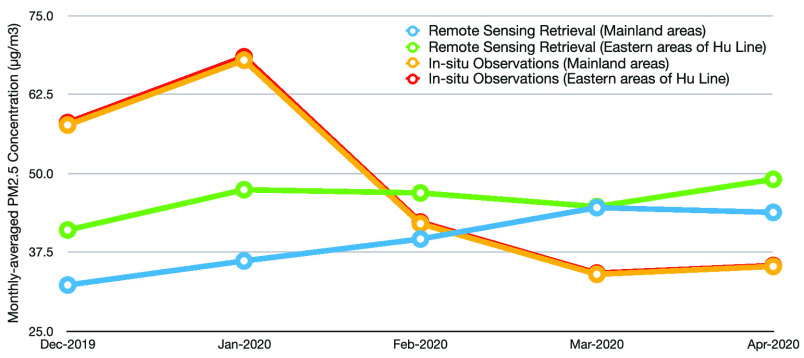
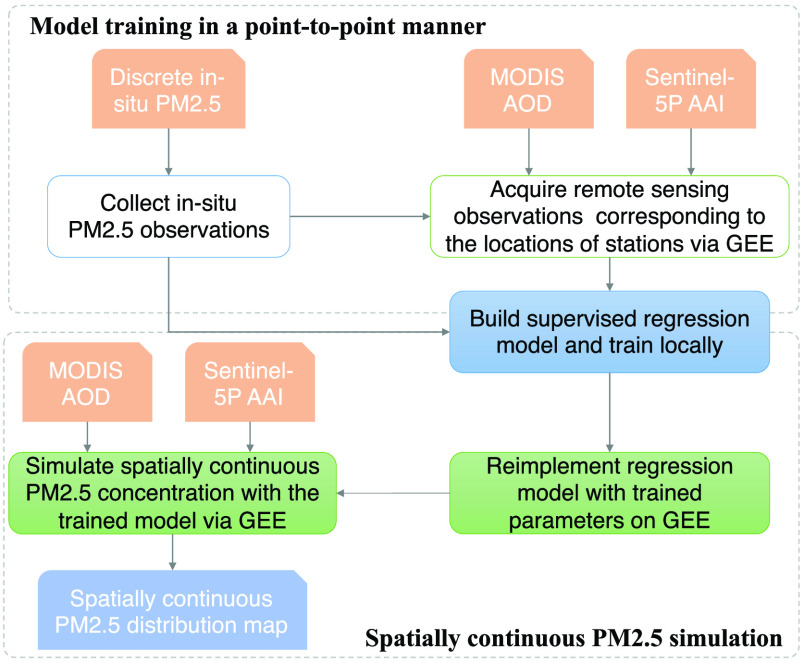
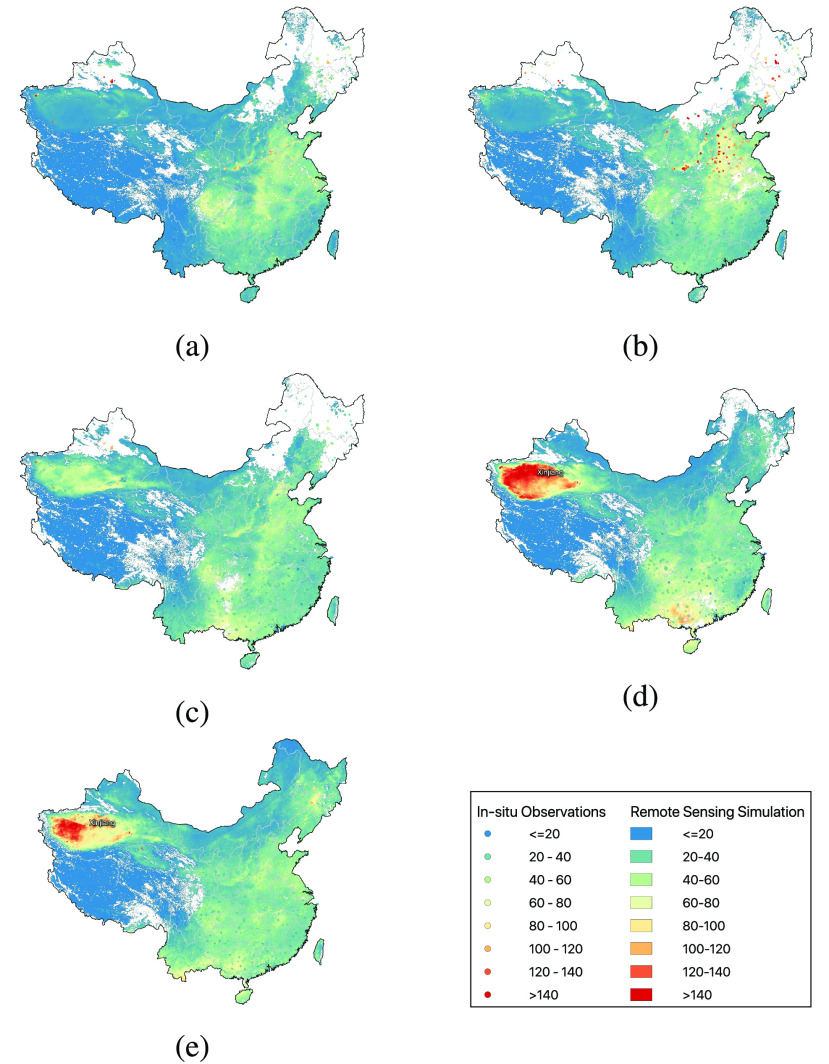
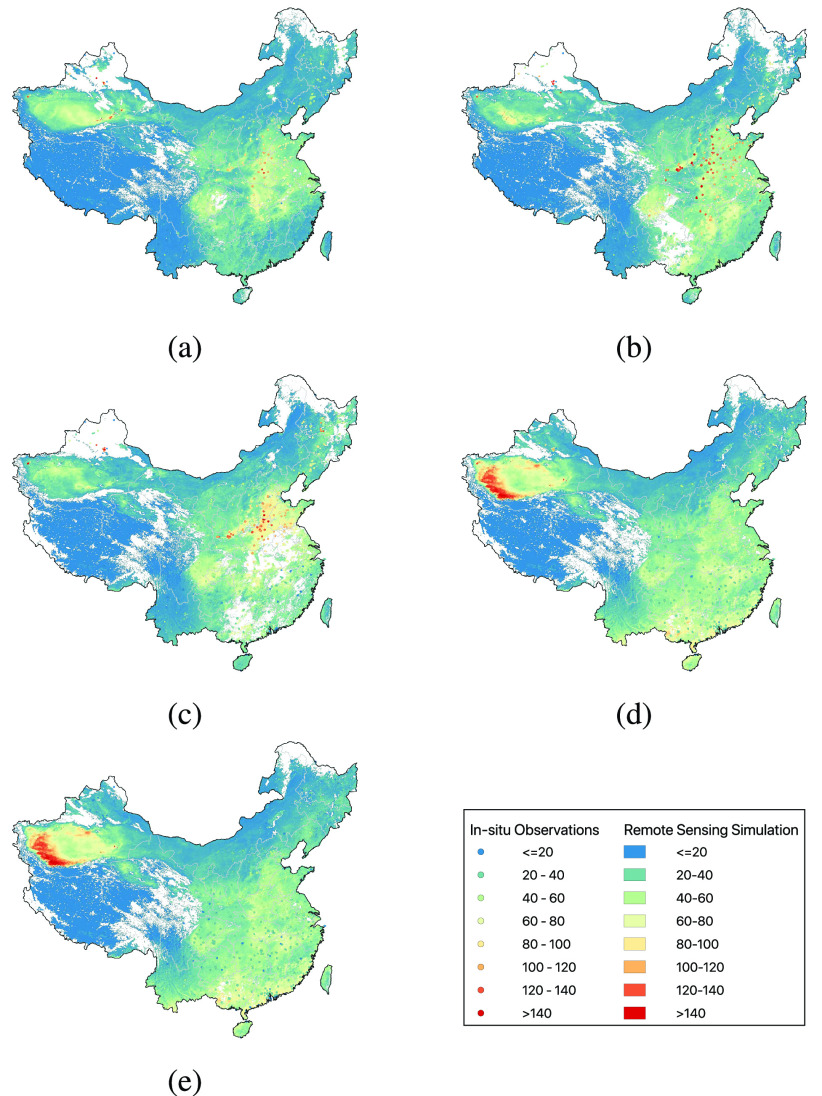
At the end of 2019, the very first COVID-19 coronavirus infection was reported and then it spread across the world just like wildfires. From late January to March 2020, most cities and villages in China were locked down, and consequently, human activities decreased dramatically. This letter presents an "offline learning and online inference" approach to explore the variation of PM2.5 pollution during this period. In the experiments, a deep regression model was trained to establish the complex relationship between remote sensing data and PM2.5 observations, and then the spatially continuous monthly PM2.5 distribution map was simulated using the Google Earth Engine platform. The results reveal that the COVID-19 lockdown truly decreased the PM2.5 pollution with certain hysteresis and the fine particle pollution begins to increase when advancing resumption of work and production gradually.
2019年底,首次报告了新型冠状病毒肺炎(COVID-19)冠状病毒感染病例,随后它如野火般在全球蔓延。从2020年1月下旬到3月,中国的大多数城乡都实施了封锁,因此人类活动大幅减少。本文提出了一种“离线学习与在线推理”方法,以探究这一时期细颗粒物(PM2.5)污染的变化情况。在实验中,训练了一个深度回归模型来建立遥感数据与PM2.5观测值之间的复杂关系,然后利用谷歌地球引擎平台模拟了空间连续的月度PM2.5分布图。结果表明,COVID-19封锁措施确实使PM2.5污染有所下降,但存在一定滞后性,随着复工复产的逐步推进,细颗粒物污染又开始增加。