Department of Agricultural Biotechnology and Research Institute of Agriculture and Life Sciences, Seoul National Universitygrid.31501.36, Seoul, Republic of Korea.
eGnome, Inc., Seoul, Republic of Korea.
Microbiol Spectr. 2022 Feb 23;10(1):e0181521. doi: 10.1128/spectrum.01815-21. Epub 2022 Jan 12.
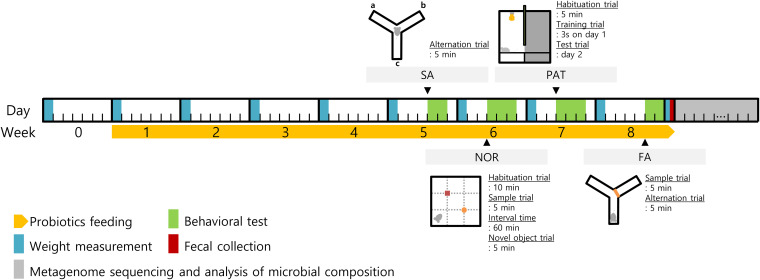
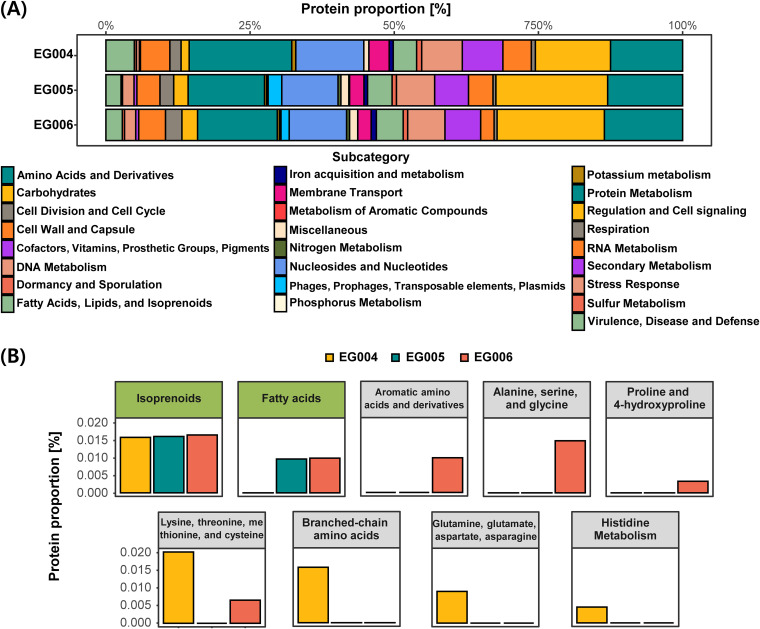
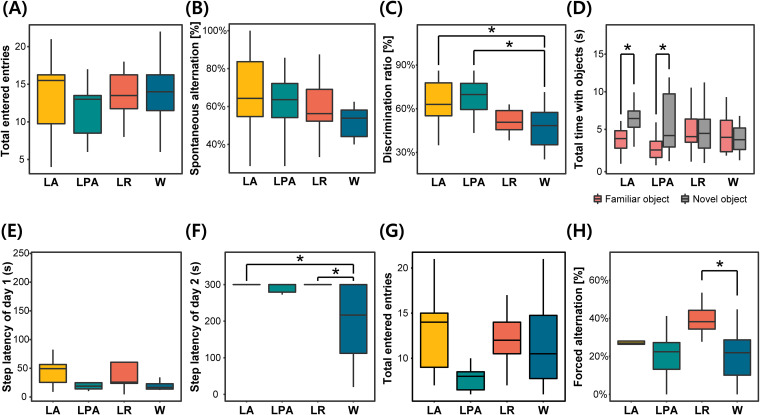
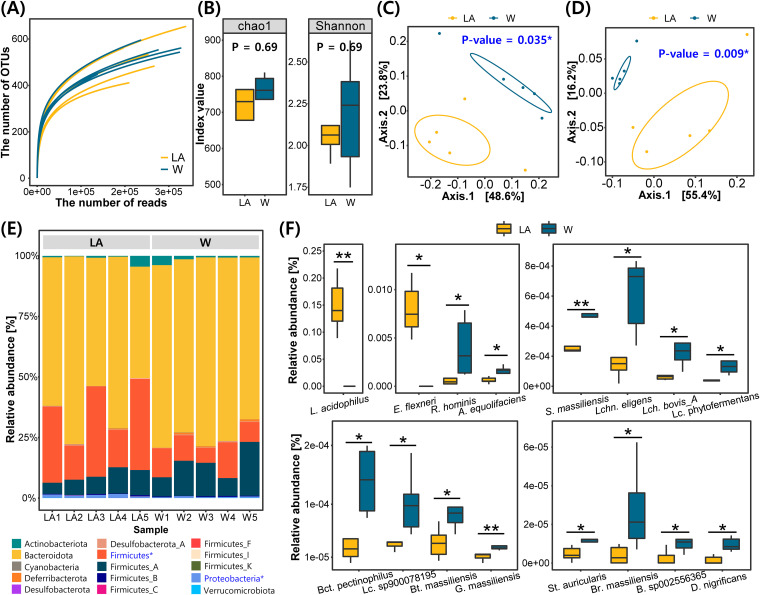
Evidence for the concept of the "gut-brain axis" (GBA) has risen. Many types of research demonstrated the mechanism of the GBA and the effect of probiotic intake. Although many studies have been reported, most were focused on neurodegenerative disease and, it is still not clear what type of bacterial strains have positive effects. We designed an experiment to discover a strain that positively affects brain function, which can be recognized through changes in cognitive processes using healthy mice. The experimental group consisted of a control group and three probiotic consumption groups, namely, Lactobacillus acidophilus, Lacticaseibacillus paracasei, and Lacticaseibacillus rhamnosus. Three experimental groups fed probiotics showed an improved cognitive ability by cognitive-behavioral tests, and the group fed on L. acidophilus showed the highest score. To provide an understanding of the altered microbial composition effect on the brain, we performed full 16S-23S rRNA sequencing using Nanopore, and operational taxonomic units (OTUs) were identified at species level. In the group fed on L. acidophilus, the intestinal bacterial ratio of and phyla increased, and the bacterial proportions of 16 species were significantly different from those of the control group. We estimated that the positive results on the cognitive behavioral tests were due to the increased proportion of the L. acidophilus EG004 strain in the subjects' intestines since the strain can produce butyrate and therefore modulate neurotransmitters and neurotrophic factors. We expect that this strain expands the industrial field of L. acidophilus and helps understand the mechanism of the gut-brain axis. Recently, the concept of the "gut-brain axis" has risen and suggested that microbes in the GI tract affect the brain by modulating signal molecules. Although many pieces of research were reported in a short period, a signaling mechanism and the effects of a specific bacterial strain are still unclear. Besides, since most of the research was focused on neurodegenerative disease, the study with a healthy animal model is still insufficient. In this study, we show using a healthy animal model that a bacterial strain (Lactobacillus acidophilus EG004) has a positive effect on mouse cognitive ability. We experimentally verified an improved cognitive ability by cognitive behavioral tests. We performed full 16S-23S rRNA sequencing using a Nanopore MinION instrument and provided the gut microbiome composition at the species level. This microbiome composition consisted of candidate microbial groups as a biomarker that shows positive effects on cognitive ability. Therefore, our study suggests a new perspective for probiotic strain use applicable for various industrialization processes.
“肠脑轴”(Gut-Brain Axis,GBA)概念的证据不断涌现。许多类型的研究都证实了 GBA 的机制以及益生菌摄入的影响。尽管已经有很多研究报告,但大多数都集中在神经退行性疾病上,目前仍不清楚哪种类型的细菌菌株具有积极影响。我们设计了一项实验,旨在发现一种通过健康小鼠的认知过程变化来识别的对大脑功能有积极影响的菌株。实验组由对照组和三个益生菌摄入组组成,分别为嗜酸乳杆菌、副干酪乳杆菌和鼠李糖乳杆菌。三组实验组通过认知行为测试显示出认知能力的提高,而摄入嗜酸乳杆菌的组得分最高。为了提供对改变微生物组成对大脑影响的理解,我们使用 Nanopore 进行了全长 16S-23S rRNA 测序,并在物种水平上识别了操作分类单元(OTUs)。在摄入嗜酸乳杆菌的组中,肠道细菌的 和 门的比例增加,16 个物种的细菌比例与对照组有显著差异。我们估计,认知行为测试中的阳性结果是由于受试者肠道中嗜酸乳杆菌 EG004 菌株的比例增加所致,因为该菌株可以产生丁酸盐,从而调节神经递质和神经营养因子。我们期望该菌株扩展嗜酸乳杆菌的工业领域,并有助于理解肠脑轴的机制。
最近,“肠脑轴”的概念兴起,并表明胃肠道中的微生物通过调节信号分子来影响大脑。虽然在短时间内报告了许多研究,但信号机制和特定细菌菌株的影响仍不清楚。此外,由于大多数研究都集中在神经退行性疾病上,因此使用健康动物模型的研究仍然不足。在这项研究中,我们使用健康动物模型表明,一种细菌菌株(嗜酸乳杆菌 EG004)对小鼠的认知能力有积极影响。我们通过认知行为测试实验验证了认知能力的提高。我们使用 Nanopore MinION 仪器进行了全长 16S-23S rRNA 测序,并提供了物种水平的肠道微生物组组成。这种微生物组组成包括作为对认知能力有积极影响的生物标志物的候选微生物群。因此,我们的研究为益生菌菌株的使用提供了一个新的视角,适用于各种工业化进程。