Dental Research Center, Dentistry Research Institute, Tehran University of Medical Sciences, Tehran, Iran.
Pediatric Infectious Disease Research Center, Tehran University of Medical Sciences, Tehran, Iran.
BMC Microbiol. 2022 Jan 17;22(1):28. doi: 10.1186/s12866-022-02438-9.
The biofilm-forming ability of Acinetobacter baumannii in the burn wound is clinically problematic due to the development of antibiotic-resistant characteristics, leading to new approaches for treatment being needed. In this study, antimicrobial photo-sonodynamic therapy (aPSDT) was used to assess the anti-biofilm efficacy and wound healing activity in mice with established A. baumannii infections.
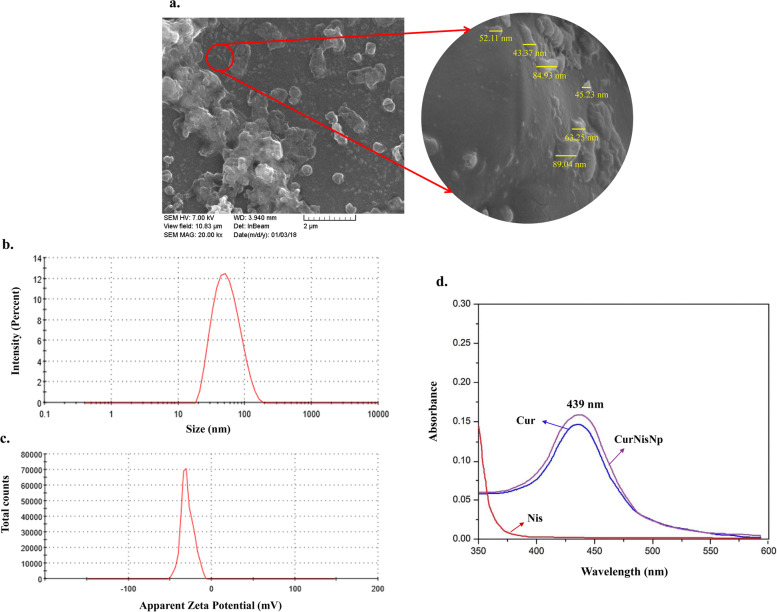
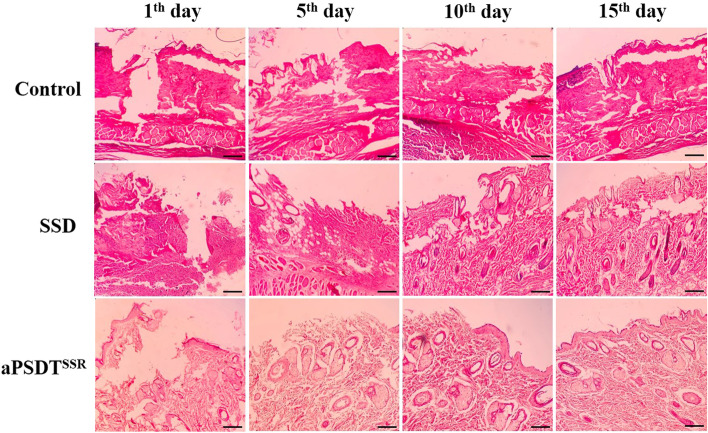
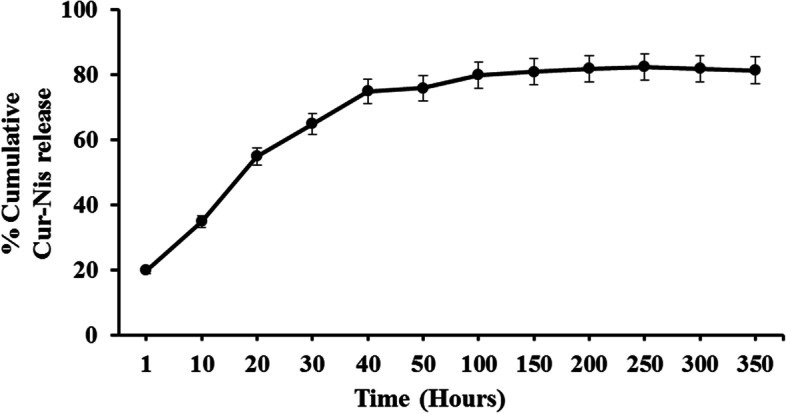
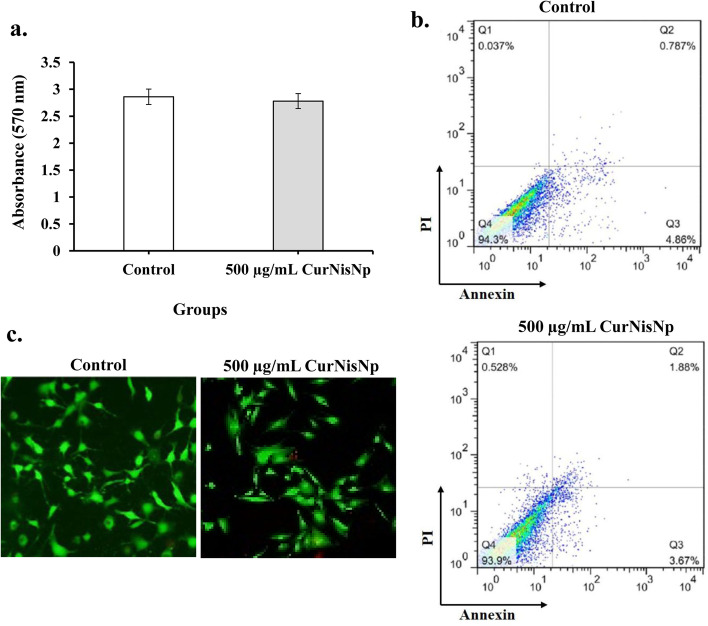
Following synthesis and confirmation of Curcumin-Nisin-based poly (L-lactic acid) nanoparticle (CurNisNp), its cytotoxic and release times were evaluated. After determination of the sub-significant reduction (SSR) doses of CurNisNp, irradiation time of light, and ultrasound intensity against A. baumannii, anti-biofilm activity and the intracellular reactive oxygen species (ROS) generation were evaluated. The antibacterial and anti-virulence effects, as well as, histopathological examination of the burn wound sites of treated mice by CurNisNp-mediated aPSDT were assessed and compared with silver sulfadiazine (SSD) as the standard treatment group.
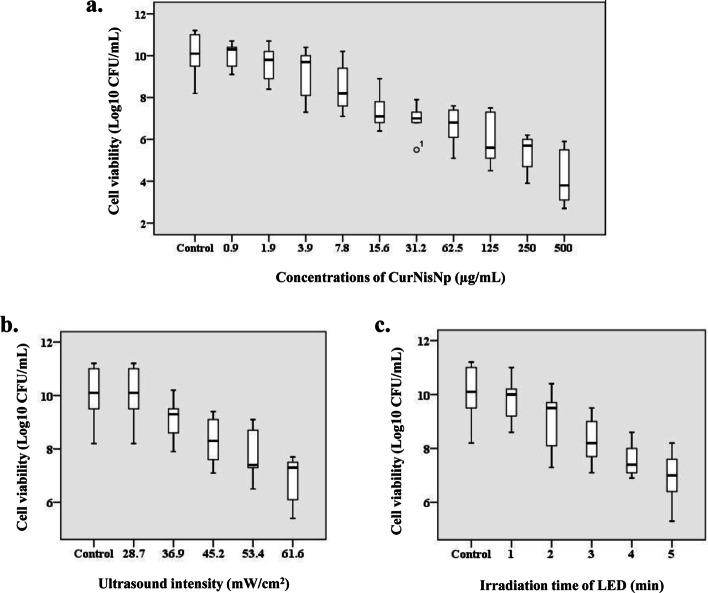
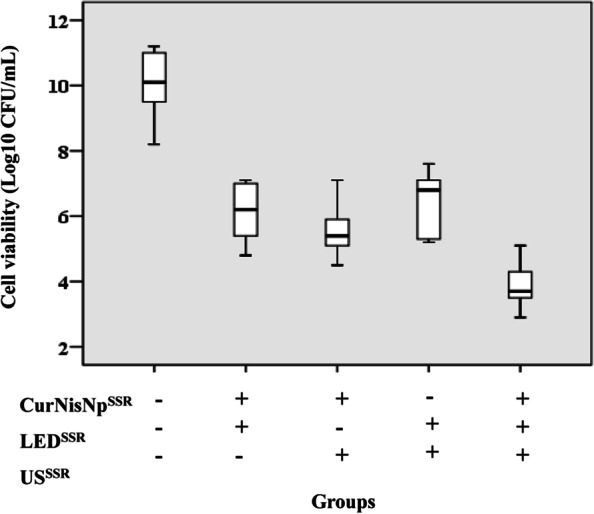
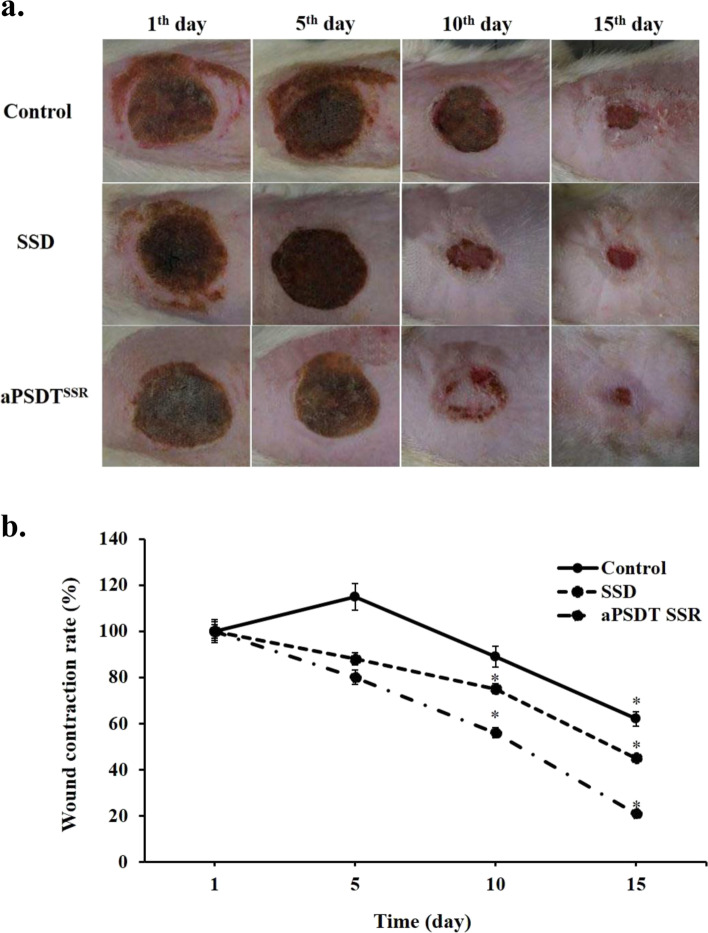
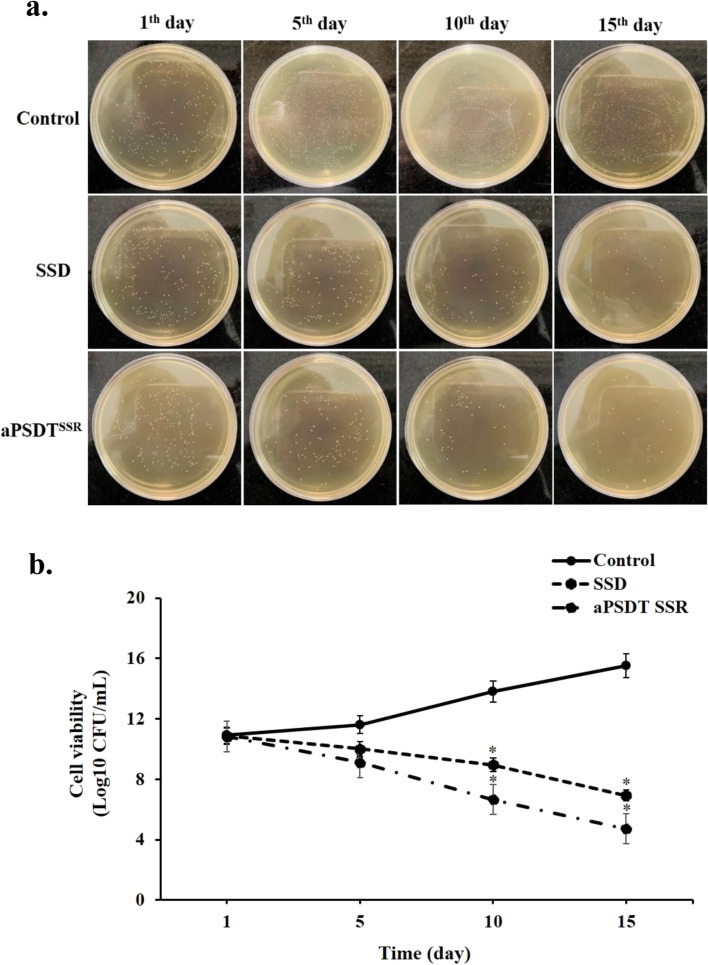
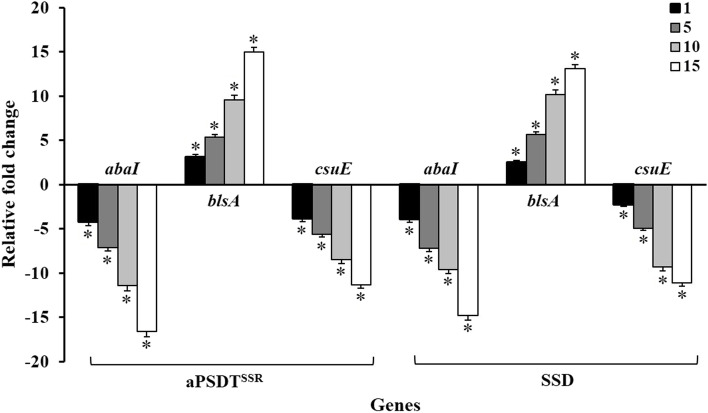
The results showed that non-cytotoxic CurNisNp has a homogeneous surface and a sphere-shaped vesicle with continuous release until the 14th day. The dose-dependent reduction in cell viability of A. baumannii was achieved by increasing the concentrations of CurNisNp, irradiation time of light, and ultrasound intensity. There was a time-dependent reduction in biofilm growth, changes in gene expression, and promotion in wound healing by the acceleration of skin re-epithelialization in mice. Not only there was no significant difference between aPSDT and SSD groups in antibacterial and anti-virulence activities, but also wound healing and re-epithelialization occurred more efficiently in aPSDT than in the SSD group.
In conclusion, CurNisNp-mediated aPSDT might be a promising complementary approach to treat burn wound infections.
由于鲍曼不动杆菌在烧伤创面形成生物膜的能力导致抗生素耐药性的发展,临床上出现了问题,因此需要新的治疗方法。在这项研究中,采用抗菌光声动力学疗法(aPSDT)评估了在建立的鲍曼不动杆菌感染小鼠中抗生物膜功效和伤口愈合活性。
合成并确认姜黄素-乳链菌肽基聚(L-乳酸)纳米粒(CurNisNp)后,评估其细胞毒性和释放时间。确定 CurNisNp 的亚显著降低(SSR)剂量、光照射时间和超声强度对鲍曼不动杆菌的作用后,评估其抗生物膜活性和细胞内活性氧(ROS)的产生。通过 CurNisNp 介导的 aPSDT 评估和比较治疗小鼠的烧伤创面的抗菌和抗毒力作用以及组织病理学检查,并与磺胺嘧啶银(SSD)作为标准治疗组进行比较。
结果表明,非细胞毒性的 CurNisNp 具有均匀的表面和连续释放的球形囊泡,直到第 14 天。通过增加 CurNisNp 的浓度、光照射时间和超声强度,可以实现对鲍曼不动杆菌细胞活力的剂量依赖性降低。通过加速皮肤再上皮化,观察到生物膜生长的时间依赖性减少、基因表达的变化以及小鼠伤口愈合的促进。不仅 aPSDT 与 SSD 组在抗菌和抗毒力方面没有显著差异,而且 aPSDT 组的伤口愈合和再上皮化比 SSD 组更有效。
总之,CurNisNp 介导的 aPSDT 可能是治疗烧伤创面感染的一种有前途的辅助方法。