Department of Vascular and Endovascular Surgery, First Affiliated Hospital of Zhengzhou University, Zhengzhou, China.
Key Vascular Physiology and Applied Research Laboratory of Zhengzhou City, Zhengzhou, China.
Front Immunol. 2022 Jan 5;12:780804. doi: 10.3389/fimmu.2021.780804. eCollection 2021.
Currently, cardiovascular risk associated with COVID-19 has been brought to people's attention, but the mechanism is not clear. The aim of this study is to elucidate the mechanisms based on multiple omics data.
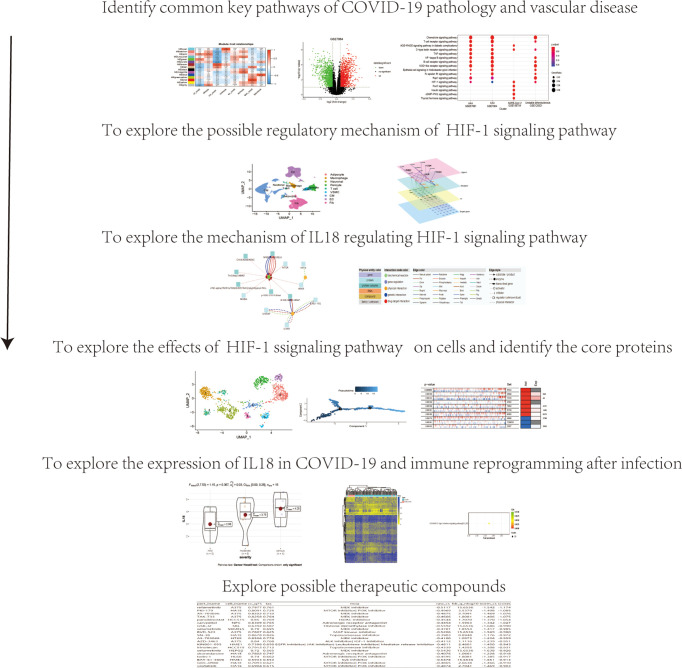
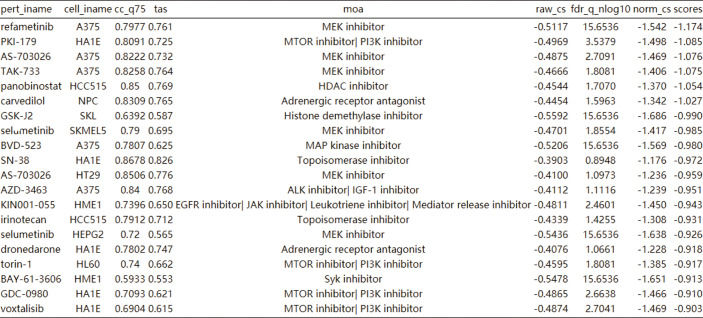
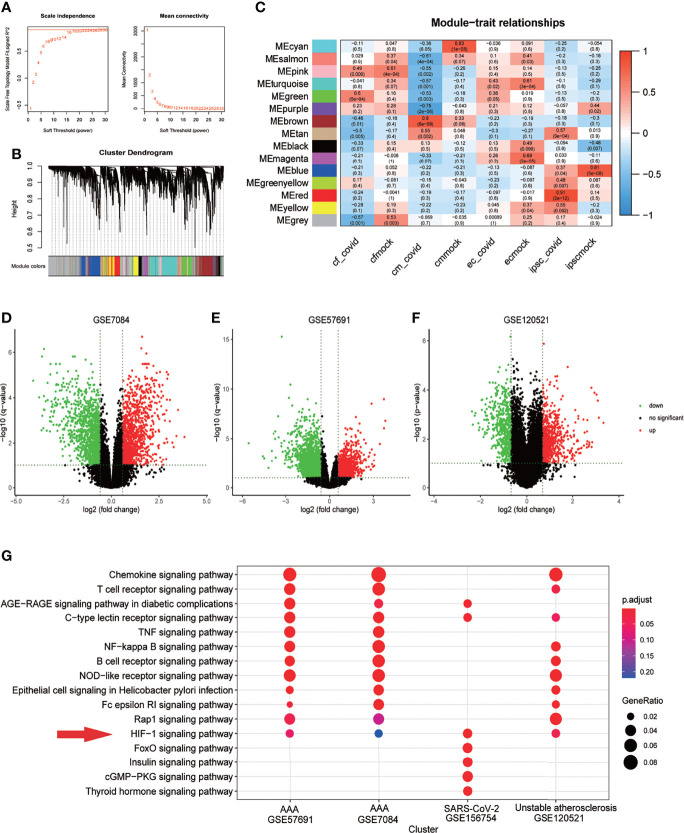
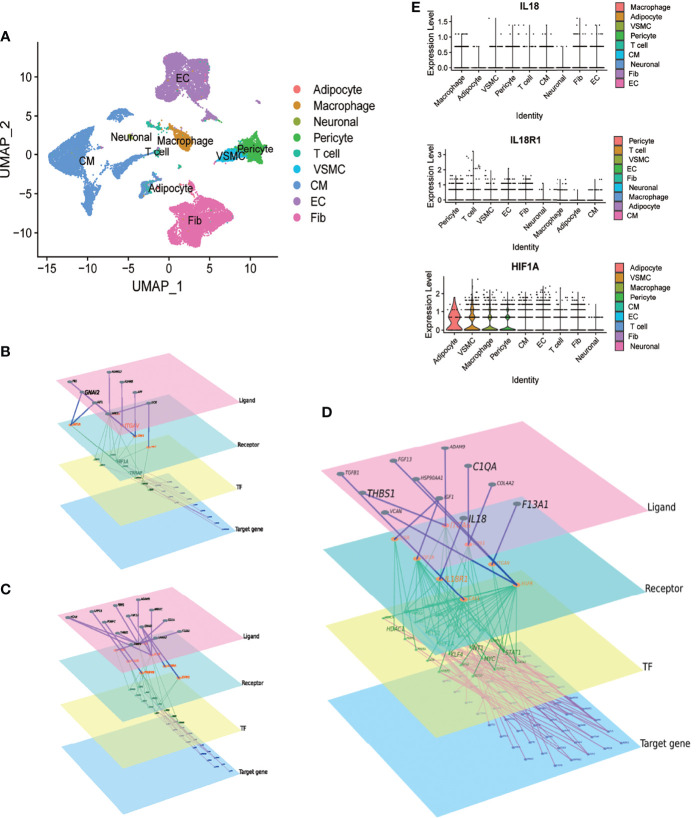
Weighted gene co-expression network analysis (WGCNA) was used to identify key pathways. Combination analysis with aneurysm and atherosclerosis related pathways, hypoxia induced factor-1 (HIF-1) signaling were identified as key pathways of the increased cardiovascular risk associated with COVID-19. ScMLnet algorithm based on scRNA-seq was used to explore the regulation of HIF-1 pathway by intercellular communication. Proteomic analysis was used to detect the regulatory mechanisms between IL18 and HIF-1 signaling pathway. Pseudo time locus analysis was used to study the regulation of HIF1 signaling pathway in macrophages and vascular smooth muscle cells (VSMC) phenotypic transformation. The Virtual Inference of protein-activity by Enriched Regulon (VIPER) analysis was used to study the activity of regulatory proteins. Epigenetic analysis based on methylation revealed epigenetic changes in PBMC after SARS-CoV-2 infection. Potential therapeutic compounds were explored by using Cmap algorithm.
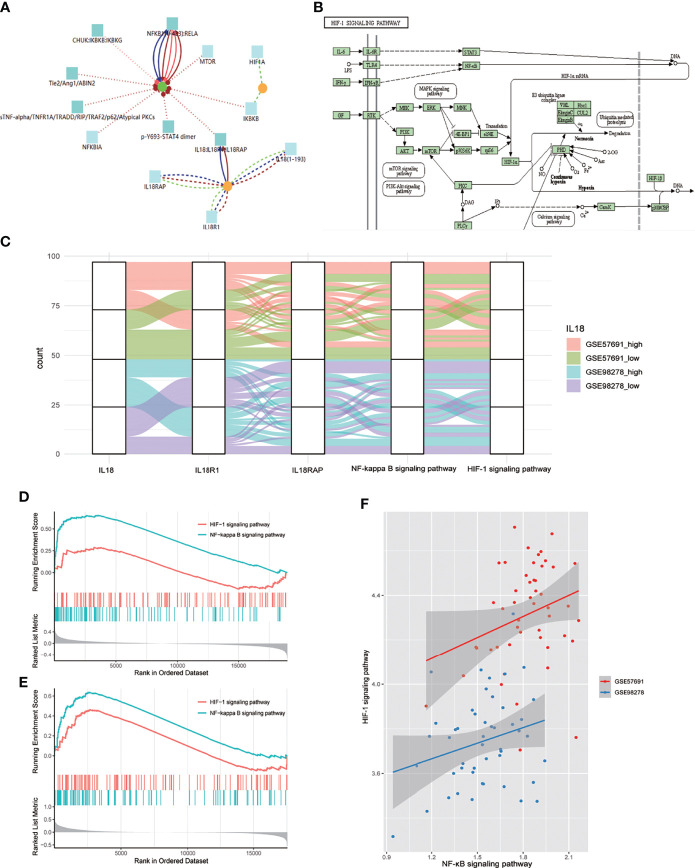
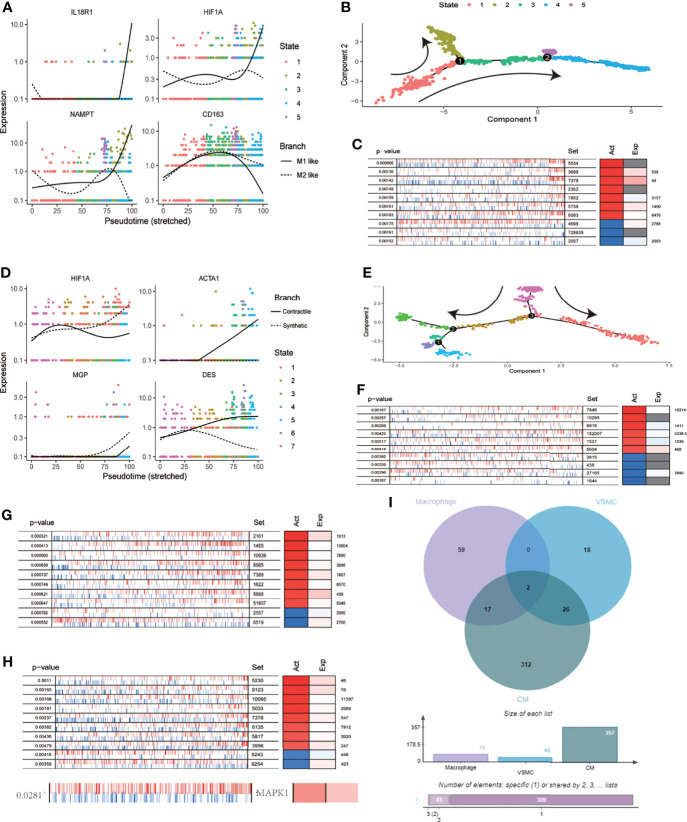
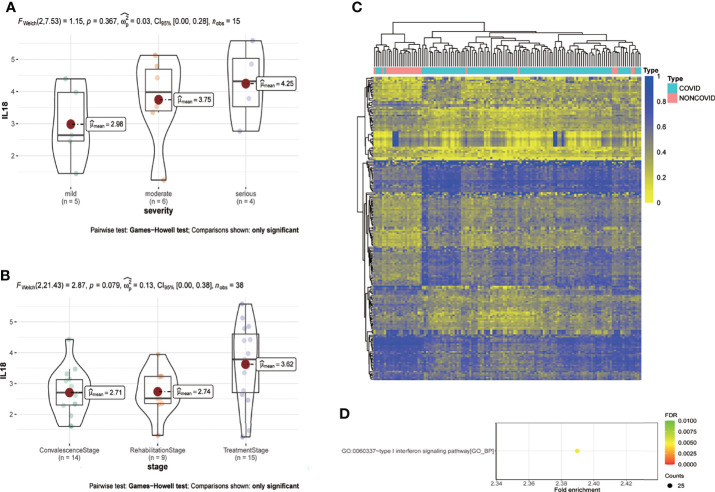
HIF-1 signaling pathway is a common key pathway for aneurysms, atherosclerosis and SARS-CoV-2 infection. Intercellular communication analysis showed that macrophage-derived interleukin-18 (IL-18) activates the HIF-1 signaling pathway through IL18R1. Proteomic analysis showed that IL18/IL18R1 promote NF-κB entry into the nucleus, and activated the HIF-1 signaling pathway. Macrophage-derived IL18 promoted the M1 polarization of macrophages and the syntactic phenotype transformation of VSMCs. MAP2K1 mediates the functional regulation of HIF-1 signaling pathway in various cell types. Epigenetic changes in PBMC after COVID-19 infection are characterized by activation of the type I interferon pathway. MEK inhibitors are the promising compounds for the treatment of HIF-1 overactivation.
The IL18/IL18R1/HIF1A axis is expected to be an therapeutic target for cardiovascular protection after SARS-CoV-2 infection. MEK inhibitors may be an choice for cardiovascular protection after SARS-COV-2 infection.
目前,人们已经意识到 COVID-19 相关的心血管风险,但机制尚不清楚。本研究旨在基于多组学数据阐明其机制。
采用加权基因共表达网络分析(WGCNA)鉴定关键通路。结合与动脉瘤和动脉粥样硬化相关的通路、缺氧诱导因子-1(HIF-1)信号通路的组合分析,确定 COVID-19 相关心血管风险增加的关键通路。基于 scRNA-seq 的 ScMLnet 算法用于探索细胞间通讯对 HIF-1 通路的调控。蛋白质组学分析用于检测 IL18 与 HIF-1 信号通路之间的调控机制。伪时间轨迹分析用于研究巨噬细胞和血管平滑肌细胞(VSMC)表型转化中 HIF1 信号通路的调控。通过富集调控子的蛋白质活性虚拟推断(VIPER)分析研究调控蛋白的活性。基于甲基化的表观遗传分析揭示了 SARS-CoV-2 感染后 PBMC 的表观遗传变化。使用 Cmap 算法探索潜在的治疗化合物。
HIF-1 信号通路是动脉瘤、动脉粥样硬化和 SARS-CoV-2 感染的共同关键通路。细胞间通讯分析表明,巨噬细胞衍生的白细胞介素 18(IL-18)通过 IL18R1 激活 HIF-1 信号通路。蛋白质组学分析表明,IL18/IL18R1 促进 NF-κB 进入细胞核,并激活 HIF-1 信号通路。巨噬细胞衍生的 IL18 促进巨噬细胞 M1 极化和 VSMC 收缩表型转化。MAP2K1 介导 HIF-1 信号通路在各种细胞类型中的功能调节。COVID-19 感染后 PBMC 的表观遗传变化特征是 I 型干扰素途径的激活。MEK 抑制剂是治疗 HIF-1 过度激活的有前途的化合物。
IL18/IL18R1/HIF1A 轴有望成为 COVID-19 后心血管保护的治疗靶点。MEK 抑制剂可能是 COVID-19 后心血管保护的选择。