Division of Viral Gastroenteritis and Hepatitis Pathogens and Enteroviruses, Department of Infectious Diseases, Robert Koch Institute, Berlin, Germany.
Institute of Virology, Charité-Universitätsmedizin Berlin, Corporate Member of Freie Universität Berlin, Humboldt-Universität Zu Berlin, Berlin Institute of Health, German Centre for Infection Research, Berlin, Germany.
Sci Rep. 2022 Feb 2;12(1):1720. doi: 10.1038/s41598-022-05706-w.
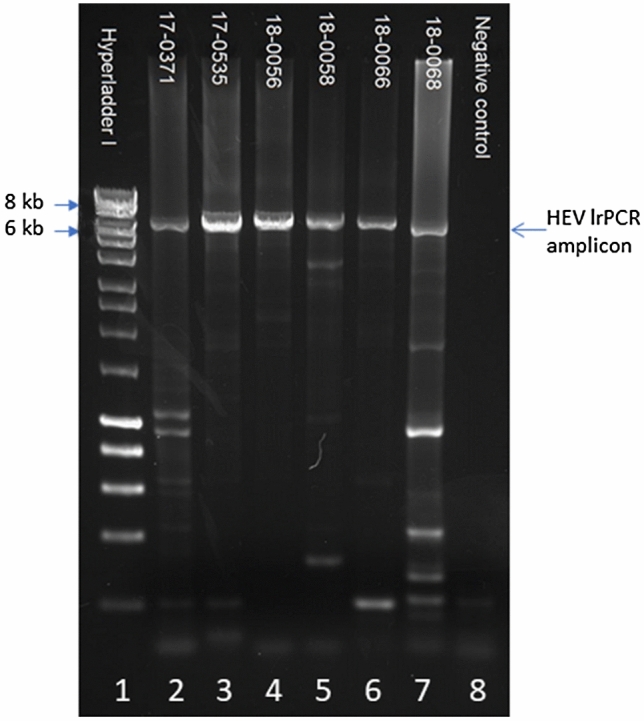
The awareness of hepatitis E virus (HEV) increased significantly in the last decade due to its unexpectedly high prevalence in high-income countries. There, infections with HEV-genotype 3 (HEV-3) are predominant which can progress to chronicity in immunocompromised individuals. Persistent infection and antiviral therapy can select HEV-3 variants; however, the spectrum and occurrence of HEV-3 variants is underreported. To gain in-depth insights into the viral population and to perform detailed characterization of viral genomes, we used a new approach combining long-range PCR with next-generation and third-generation sequencing which allowed near full-length sequencing of HEV-3 genomes. Furthermore, we developed a targeted ultra-deep sequencing approach to assess the dynamics of clinically relevant mutations in the RdRp-region and to detect insertions in the HVR-domain in the HEV genomes. Using this new approach, we not only identified several insertions of human (AHNAK, RPL18) and viral origin (RdRp-derived) in the HVR-region isolated from an exemplary sample but detected a variant containing two different insertions simultaneously (AHNAK- and RdRp-derived). This finding is the first HEV-variant recognized as such showing various insertions in the HVR-domain. Thus, this molecular approach will add incrementally to our current knowledge of the HEV-genome organization and pathogenesis in chronic hepatitis E.
由于在高收入国家中出人意料的高流行率,戊型肝炎病毒(HEV)在过去十年中的意识显著提高。在这些国家,感染 HEV-3 基因型(HEV-3)为主,在免疫功能低下的个体中可进展为慢性感染。持续性感染和抗病毒治疗可选择 HEV-3 变异体;然而,HEV-3 变异体的谱和发生频率报道较少。为了深入了解病毒群体并对病毒基因组进行详细表征,我们使用了一种新方法,将长距离 PCR 与下一代和第三代测序相结合,从而能够对 HEV-3 基因组进行近乎全长测序。此外,我们开发了一种靶向超深度测序方法来评估 RdRp 区域中临床相关突变的动态,并检测 HEV 基因组中 HVR 结构域中的插入。使用这种新方法,我们不仅在从一个典型样本中分离出的 HVR 区域中鉴定出了几个插入的人类(AHNAK、RPL18)和病毒起源(RdRp 衍生),而且还检测到了同时含有两个不同插入的变异体(AHNAK 和 RdRp 衍生)。这一发现是第一个被识别为具有 HVR 结构域中各种插入的 HEV 变异体。因此,这种分子方法将逐步增加我们对慢性戊型肝炎中 HEV 基因组组织和发病机制的现有认识。