Department of Pharmacy, College of Pharmacy and Research Institute of Life and Pharmaceutical Sciences, Sunchon National University, Sunchon, Jeonnam, Republic of Korea.
Department of Pharmacy, College of Pharmacy and Research Institute of Life and Pharmaceutical Sciences, Sunchon National University, Sunchon, Jeonnam, Republic of Korea.
Nutr Res. 2022 Apr;100:19-32. doi: 10.1016/j.nutres.2021.11.003. Epub 2021 Dec 18.
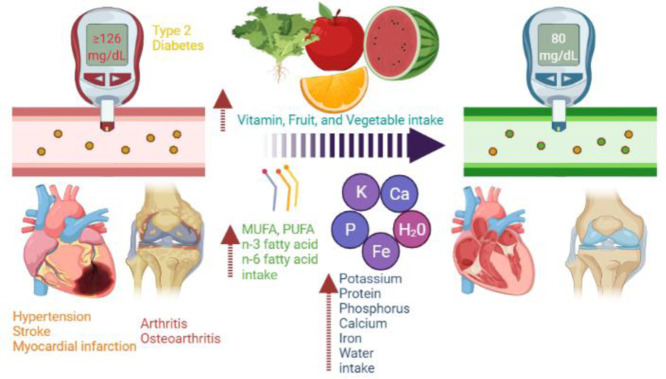
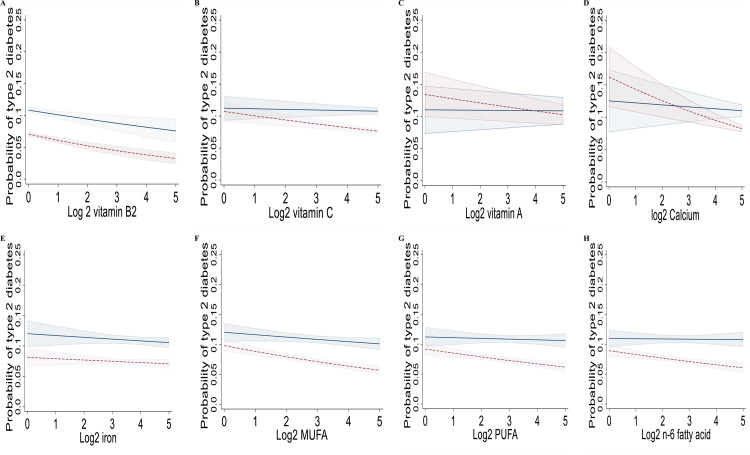
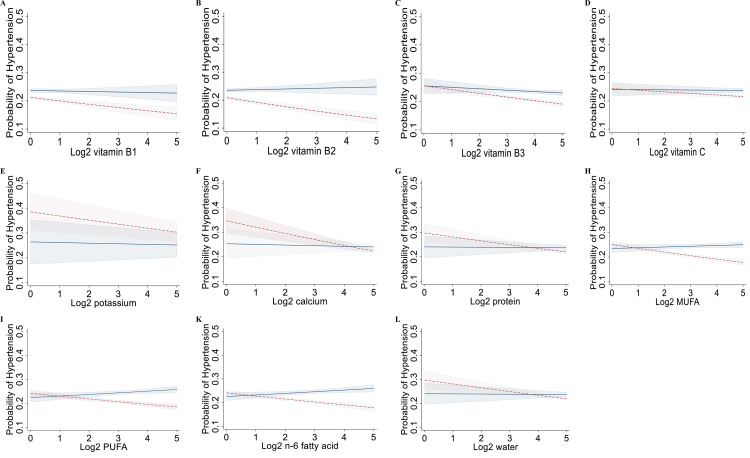
Persons with underlying noncommunicable diseases (NCDs) are more likely to acquire severe coronavirus disease 2019 disease and to die from coronavirus disease 2019. An urgent need for potential therapy to prevent and control NCDs is critical. We hypothesized that higher intakes of multiple individual nutrients, fruits, or vegetables would be linked with a low risk of NCDs in the Korean population. Thus, we aim to explore the association between NCDs, including cardiovascular diseases, type 2 diabetes mellitus (T2DM), arthritis, depression, and dietary factors. A total of 56,462 adults aged 18 years (2009-2019) were included. Dietary factors, including intakes of multiple individual nutrients, fruits, and vegetables, were assessed. Multivariable-adjusted logistic regression models were used to explore the associations between dietary factors and NCDs. Interactions were found between intakes of multiple individual nutrients and sex for T2DM, hypertension, stroke, myocardial infarction, arthritis, and osteoarthritis. Only in women was a 2-fold increase in daily multiple individual nutrient intake (vitamins A, B1, B2, B3, C; potassium, protein; phosphorus; calcium; iron; monounsaturated fatty acid and polyunsaturated fatty acid; n-3 fatty acid and n-6 fatty acid; and water) associated with a lower prevalence of T2DM, hypertension, stroke, myocardial infarction, arthritis, and osteoarthritis. In both women and men, high fruit or vegetable consumption was linked with a lower risk of T2DM, hypertension, dyslipidemia, osteoarthritis, and depression than low consumption. Our findings found higher intakes of fruits, vegetables, and multiple individual nutrients are linked with a lower risk of NCDs in the Korean adult population. Further work is needed to identify whether interactions between intake of multiple individual nutrients, vegetables, and fruits affect the presence of NCDs.
患有基础性非传染性疾病(NCDs)的人更有可能感染严重的 2019 年冠状病毒病并因此死亡。因此,迫切需要潜在的疗法来预防和控制 NCDs。我们假设,摄入更多的多种个体营养素、水果或蔬菜与韩国人群中 NCDs 的低风险相关。因此,我们旨在探讨 NCDs(包括心血管疾病、2 型糖尿病(T2DM)、关节炎、抑郁症和饮食因素)与饮食因素之间的关联。共纳入了 56462 名 18 岁及以上的成年人(2009-2019 年)。评估了饮食因素,包括多种个体营养素、水果和蔬菜的摄入量。使用多变量调整的逻辑回归模型来探讨饮食因素与 NCDs 之间的关系。我们发现多种个体营养素的摄入量与性别之间存在交互作用,这些交互作用与 T2DM、高血压、中风、心肌梗死、关节炎和骨关节炎有关。只有女性每日多种个体营养素摄入(维生素 A、B1、B2、B3、C;钾、蛋白质;磷;钙;铁;单不饱和脂肪酸和多不饱和脂肪酸;n-3 脂肪酸和 n-6 脂肪酸;以及水)增加两倍与 T2DM、高血压、中风、心肌梗死、关节炎和骨关节炎的低患病率相关。在女性和男性中,与低摄入量相比,高水果或蔬菜摄入量与 T2DM、高血压、血脂异常、骨关节炎和抑郁症的低风险相关。我们的研究结果发现,摄入更多的水果、蔬菜和多种个体营养素与韩国成年人 NCDs 的低风险相关。需要进一步的研究来确定多种个体营养素、蔬菜和水果的摄入量之间的相互作用是否会影响 NCDs 的发生。