Center for Convergent Research of Emerging Virus Infection, Korea Research Institute of Chemical Technology, Daejeon, 34114, Republic of Korea.
Department of Internal Medicine, Jeonbuk National University Medical School, Jeonju, Jeollabuk-do 54986, Republic of Korea; Biomedical Research Institute of Jeonbuk National University Hospital, Jeonju, Jeollabuk-do 54907, Republic of Korea.
Biosens Bioelectron. 2022 May 1;203:114034. doi: 10.1016/j.bios.2022.114034. Epub 2022 Jan 29.
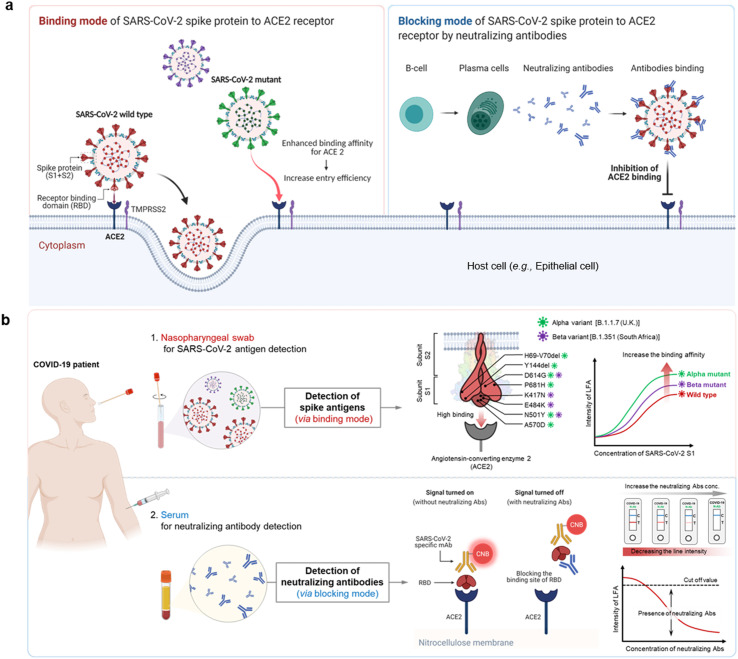
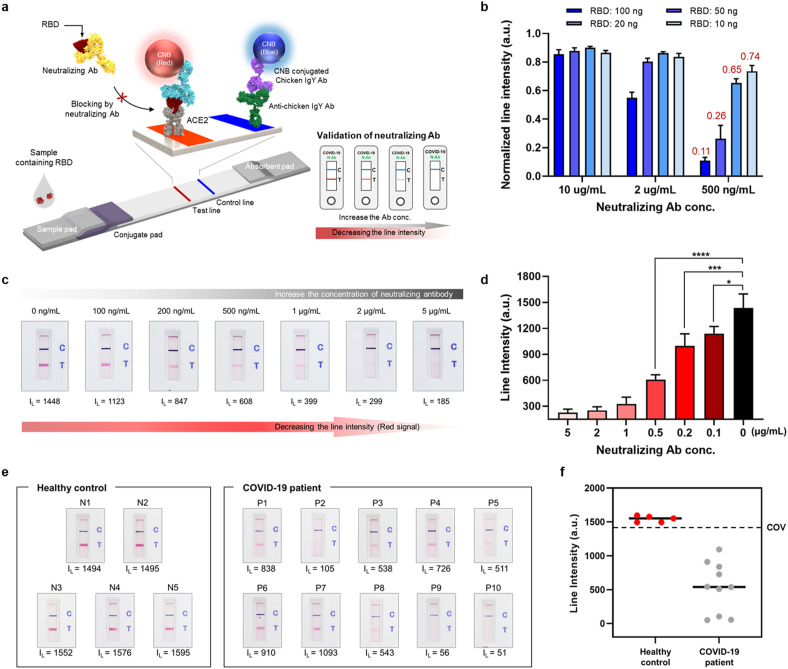
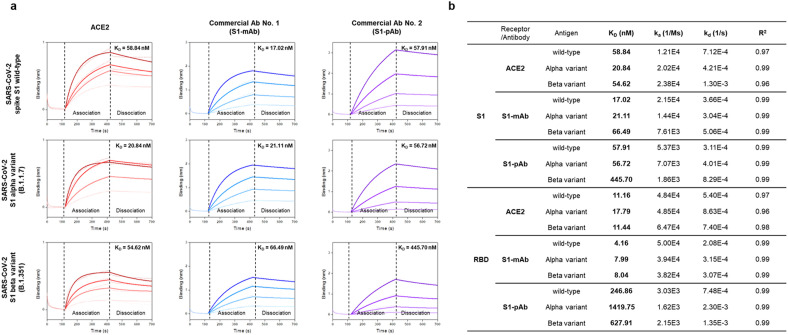
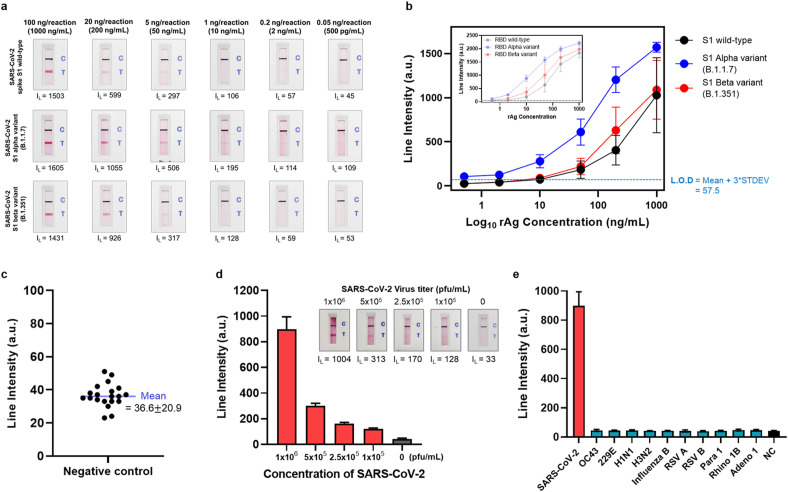
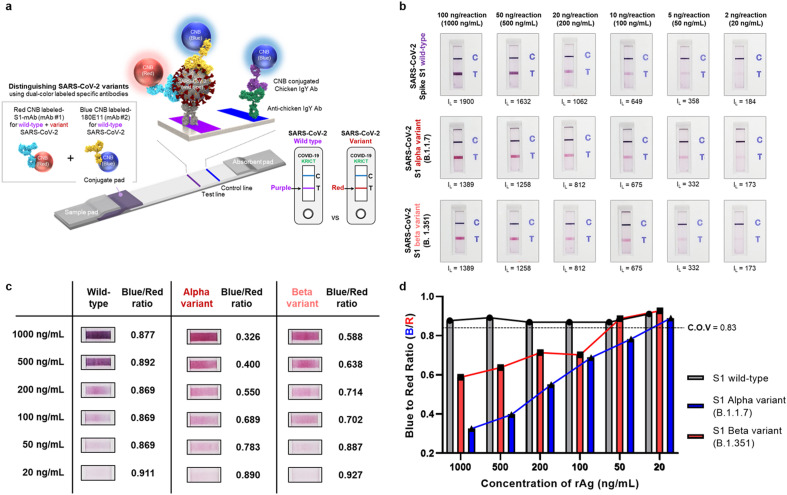
Since the beginning of the COVID-19 pandemic, accumulating mutations have led to marked changes in the genetic sequence of SARS-CoV-2. Of these, mutations in the spike (S) protein can alter the properties of the virus, particularly transmissibility and antigenicity. However, it is difficult to detect antigenic variants of the SARS-CoV-2 S protein by immunoassay. Here, we developed an ACE2-based biosensor designed to detect both SARS-CoV-2 S1 mutations and neutralizing antibodies. In "binding mode", the biosensor works by detecting binding of the S protein to an immobilized ACE2 receptor. The ACE2-based biosensor was able to detect S1 proteins of the alpha (500 pg/mL) and beta variants (10 ng/mL), as well as wild-type S1 (10 ng/mL), of SARS-CoV-2. The biosensor distinguished wild-type SARS-CoV-2 S1 from the S1 alpha and beta variants via color differences. In addition, a slight modification to the protocol enabled the ACE2-based biosensor to operate in "blocking mode" to detect neutralizing antibodies in serum samples from COVID-19 patients. Therefore, the ACE2-based biosensor is a versatile test for detecting wild-type S1, S1 mutants, and neutralizing antibodies against SARS-CoV-2. This approach to targeting both the mechanism by which SARS-CoV-2 enters host cells and the subsequent adaptive immune response will facilitate the development of various biosensors against SARS-CoV-2.
自 COVID-19 大流行开始以来,不断积累的突变导致 SARS-CoV-2 的遗传序列发生了显著变化。其中,刺突(S)蛋白的突变可以改变病毒的特性,特别是传染性和抗原性。然而,通过免疫测定很难检测到 SARS-CoV-2 S 蛋白的抗原变异体。在这里,我们开发了一种基于 ACE2 的生物传感器,用于检测 SARS-CoV-2 S1 突变和中和抗体。在“结合模式”下,生物传感器通过检测 S 蛋白与固定化 ACE2 受体的结合来工作。该基于 ACE2 的生物传感器能够检测到 SARS-CoV-2 的 alpha(500pg/mL)和 beta 变体(10ng/mL)以及野生型 S1(10ng/mL)的 S1 蛋白。生物传感器通过颜色差异区分野生型 SARS-CoV-2 S1 与 S1 alpha 和 beta 变体。此外,对方案进行了轻微修改,使基于 ACE2 的生物传感器能够在“阻断模式”下运行,以检测来自 COVID-19 患者血清样本中的中和抗体。因此,基于 ACE2 的生物传感器是一种用于检测野生型 S1、S1 突变体和针对 SARS-CoV-2 的中和抗体的多功能测试方法。这种针对 SARS-CoV-2 进入宿主细胞的机制和随后的适应性免疫反应的靶向方法将促进针对 SARS-CoV-2 的各种生物传感器的开发。