School of Public Health, College of Medicine and Health Science, Hawassa University, Hawassa, Ethiopia.
School CAPHRI, Department of Family Medicine, Maastricht University, Maastricht, Netherlands.
BMC Infect Dis. 2022 Feb 4;22(1):123. doi: 10.1186/s12879-022-07120-z.
People living with HIV, who take antiretroviral therapy (ART), often enjoy long and healthy lives, but this therapy has well known metabolic adverse effects. Physical activity is found to be an important factor in improving these physiological parameters. This study aimed to determine physical activity level and associated factors among HIV patients in Ethiopia.
An institutional based cross sectional study was conducted from May to June 2019. We selected a total of 422 adult HIV patients, attending antiretroviral therapy clinics in three selected hospitals in Southern Ethiopia. Data were collected at routine care consultations by nine trained nurses using a pre-tested structured questionnaire. The level of physical activity was measured by the international physical activity questionnaire (IPAQ).
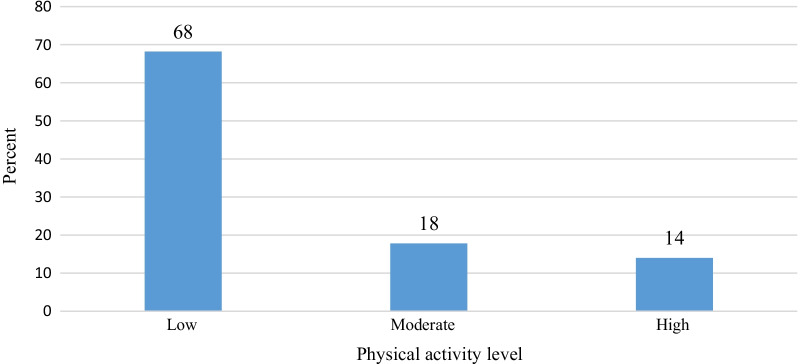
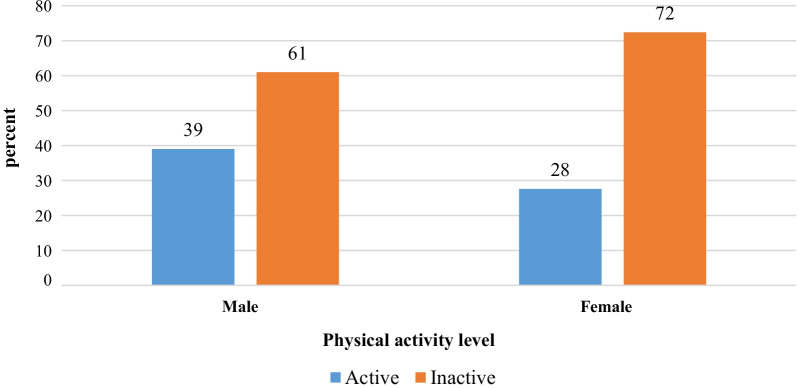
The mean age of participants was 38.7 ± 9.13 years. Of the participants, 68% were physically inactive, with a higher proportion of inactive women (74%) than men (61%) [(AOR = 1.64, 95% CI (1.07, 2.53)]. In addition, urban vs. rural residents [(AOR = 2.57, 95% CI (1.16, 5.72)] and patients who were on ART for ≥ 24 months [(AOR = 1.88, 95% CI (1.15, 3.08)] had higher odds of having a low physical activity level.
Most people living with HIV and receiving ART have low physical activity levels. Especially female and urban living patients and those with longer treatment duration have low levels of physical activity. More insight is needed on the reasons for physical inactivity among HIV patients and physical activity programs for HIV patients in low-income countries need to be developed.
接受抗逆转录病毒疗法(ART)的艾滋病毒感染者通常能过上长寿且健康的生活,但该疗法存在众所周知的代谢不良反应。运动被发现是改善这些生理参数的重要因素。本研究旨在确定埃塞俄比亚艾滋病毒感染者的身体活动水平及其相关因素。
这是一项 2019 年 5 月至 6 月在埃塞俄比亚南部三家选定医院的抗逆转录病毒治疗门诊进行的基于机构的横断面研究。我们共选择了 422 名成年艾滋病毒感染者参与研究,这些参与者均由 9 名经过培训的护士在常规护理咨询中使用经过预测试的结构化问卷收集数据。身体活动水平通过国际体力活动问卷(IPAQ)进行测量。
参与者的平均年龄为 38.7±9.13 岁。其中 68%的人身体活动不足,女性(74%)比男性(61%)中不活跃的比例更高[比值比(AOR)=1.64,95%置信区间(CI)(1.07,2.53)]。此外,城市居民与农村居民相比(AOR=2.57,95%CI(1.16,5.72))和接受 ART 治疗时间≥24 个月的患者(AOR=1.88,95%CI(1.15,3.08))更有可能身体活动水平较低。
大多数接受抗逆转录病毒疗法的艾滋病毒感染者身体活动水平较低。特别是女性和城市居民以及治疗时间较长的患者,身体活动水平更低。需要更深入了解艾滋病毒感染者身体不活跃的原因,并为低收入国家的艾滋病毒感染者制定身体活动计划。