• 文献检索
  • 文档翻译
  • 深度研究
  • 学术资讯
  • Suppr Zotero 插件Zotero 插件
  • 邀请有礼
  • 套餐&价格
  • 历史记录
应用&插件
Suppr Zotero 插件Zotero 插件浏览器插件Mac 客户端Windows 客户端微信小程序
定价
高级版会员购买积分包购买API积分包
服务
文献检索文档翻译深度研究API 文档MCP 服务
关于我们
关于 Suppr公司介绍联系我们用户协议隐私条款
关注我们

Suppr 超能文献

核心技术专利:CN118964589B侵权必究
粤ICP备2023148730 号-1Suppr @ 2026

文献检索

告别复杂PubMed语法,用中文像聊天一样搜索,搜遍4000万医学文献。AI智能推荐,让科研检索更轻松。

立即免费搜索

文件翻译

保留排版,准确专业,支持PDF/Word/PPT等文件格式,支持 12+语言互译。

免费翻译文档

深度研究

AI帮你快速写综述,25分钟生成高质量综述,智能提取关键信息,辅助科研写作。

立即免费体验

AGA 临床实践更新:胃食管反流病评估和管理的个体化方法:专家综述。

AGA Clinical Practice Update on the Personalized Approach to the Evaluation and Management of GERD: Expert Review.

机构信息

Division of Gastroenterology, University of California San Diego School of Medicine, La Jolla, California.

Division of Gastroenterology, Washington University School of Medicine, St. Louis, Missouri.

出版信息

Clin Gastroenterol Hepatol. 2022 May;20(5):984-994.e1. doi: 10.1016/j.cgh.2022.01.025. Epub 2022 Feb 2.

DOI:10.1016/j.cgh.2022.01.025
PMID:35123084
原文链接:https://pmc.ncbi.nlm.nih.gov/articles/PMC9838103/
Abstract

BACKGROUND & AIMS: As many as one-half of all patients with suspected gastroesophageal reflux disease (GERD) do not derive benefit from acid suppression. This review outlines a personalized diagnostic and therapeutic approach to GERD symptoms.

METHODS

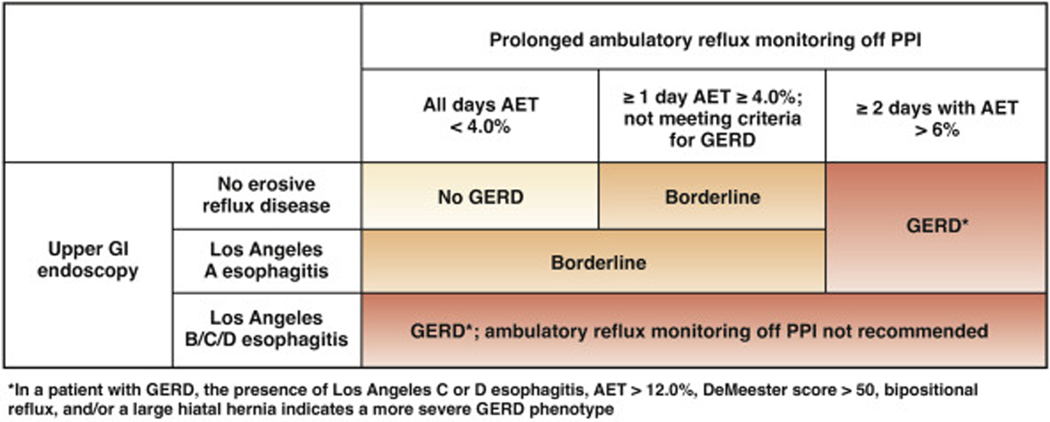
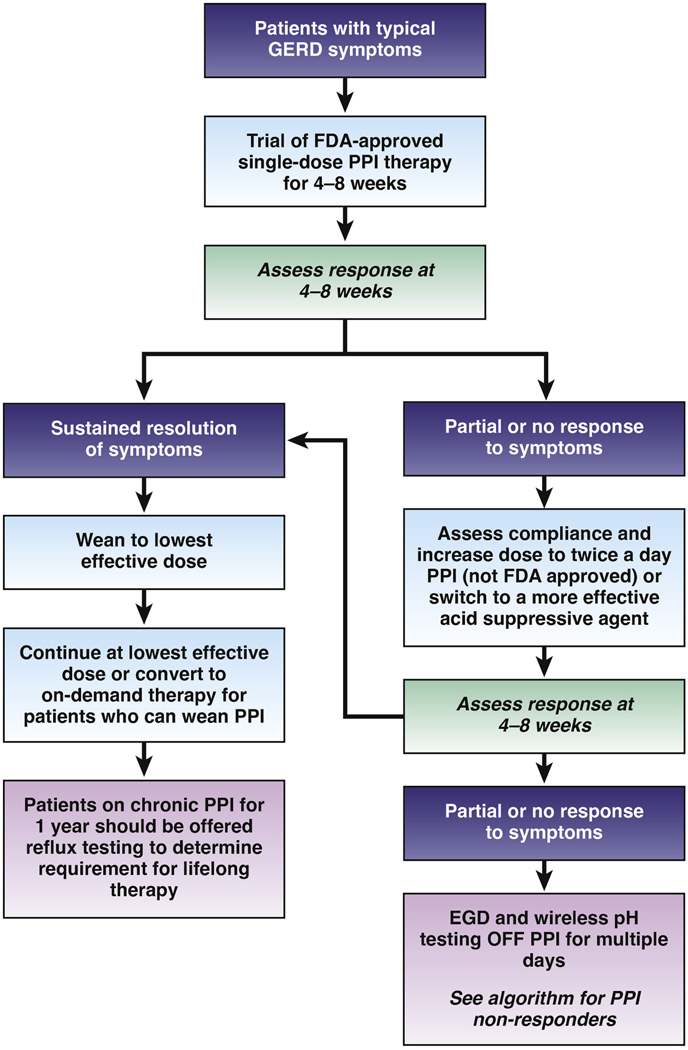
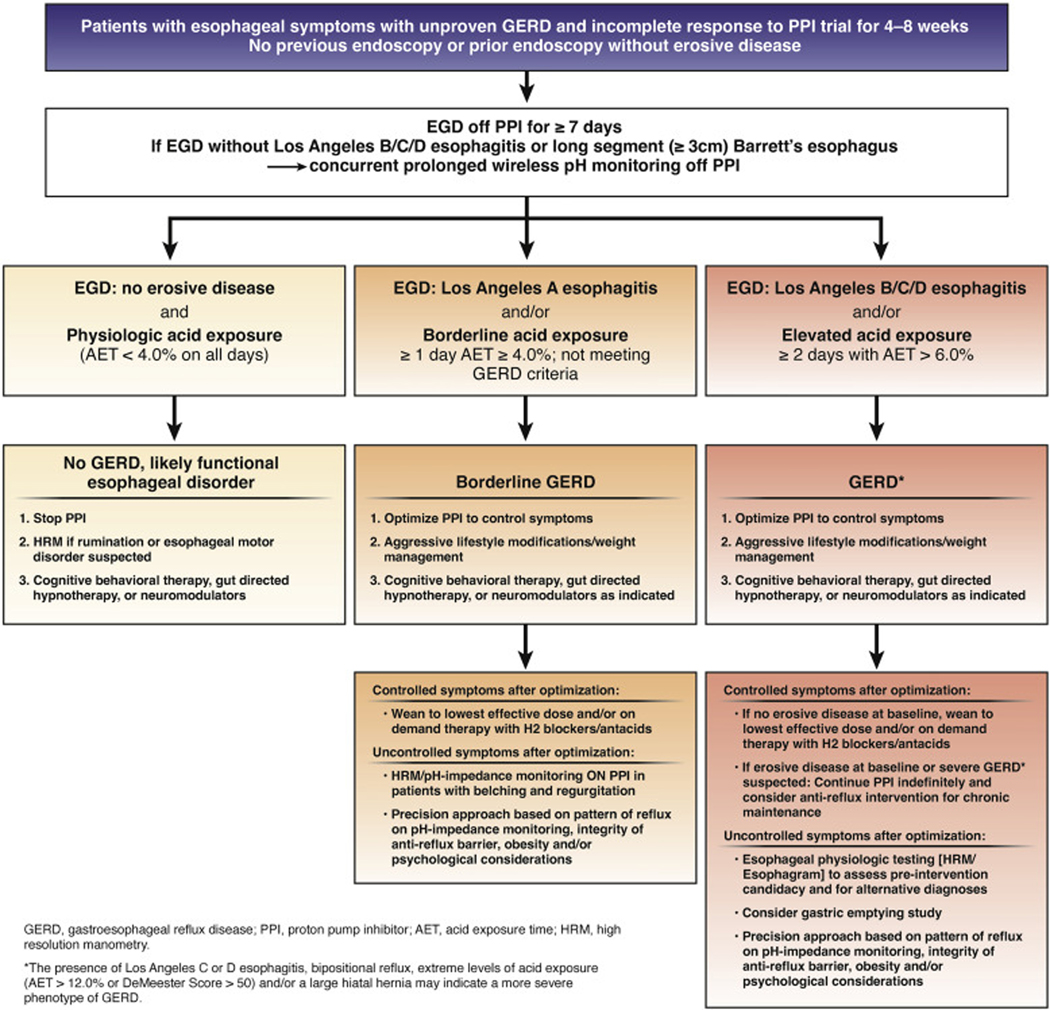
The Best Practice Advice statements presented here were developed from expert review of existing literature combined with extensive discussion and expert opinion to provide practical advice. Formal rating of the quality of evidence or strength of recommendations was not the intent of this clinical practice update. BEST PRACTICE ADVICE 1: Clinicians should develop a care plan for investigation of symptoms suggestive of GERD, selection of therapy (with explanation of potential risks and benefits), and long-term management, including possible de-escalation, in a shared-decision making model with the patient. BEST PRACTICE ADVICE 2: Clinicians should provide standardized educational material on GERD mechanisms, weight management, lifestyle and dietary behaviors, relaxation strategies, and awareness about the brain-gut axis relationship to patients with reflux symptoms. BEST PRACTICE ADVICE 3: Clinicians should emphasize safety of proton pump inhibitors (PPIs) for the treatment of GERD. BEST PRACTICE ADVICE 4: Clinicians should provide patients presenting with troublesome heartburn, regurgitation, and/or non-cardiac chest pain without alarm symptoms a 4- to 8-week trial of single-dose PPI therapy. With inadequate response, dosing can be increased to twice a day or switched to a more effective acid suppressive agent once a day. When there is adequate response, PPI should be tapered to the lowest effective dose. BEST PRACTICE ADVICE 5: If PPI therapy is continued in a patient with unproven GERD, clinicians should evaluate the appropriateness and dosing within 12 months after initiation, and offer endoscopy with prolonged wireless reflux monitoring off PPI therapy to establish appropriateness of long-term PPI therapy. BEST PRACTICE ADVICE 6: If troublesome heartburn, regurgitation, and/or non-cardiac chest pain do not respond adequately to a PPI trial or when alarm symptoms exist, clinicians should investigate with endoscopy and, in the absence of erosive reflux disease (Los Angeles B or greater) or long-segment (≥3 cm) Barrett's esophagus, perform prolonged wireless pH monitoring off medication (96-hour preferred if available) to confirm and phenotype GERD or to rule out GERD. BEST PRACTICE ADVICE 7: Complete endoscopic evaluation of GERD symptoms includes inspection for erosive esophagitis (graded according to the Los Angeles classification when present), diaphragmatic hiatus (Hill grade of flap valve), axial hiatus hernia length, and inspection for Barrett's esophagus (graded according to the Prague classification and biopsied when present). BEST PRACTICE ADVICE 8: Clinicians should perform upfront objective reflux testing off medication (rather than an empiric PPI trial) in patients with isolated extra-esophageal symptoms and suspicion for reflux etiology. BEST PRACTICE ADVICE 9: In symptomatic patients with proven GERD, clinicians should consider ambulatory 24-hour pH-impedance monitoring on PPI as an option to determine the mechanism of persisting esophageal symptoms despite therapy (if adequate expertise exists for interpretation). BEST PRACTICE ADVICE 10: Clinicians should personalize adjunctive pharmacotherapy to the GERD phenotype, in contrast to empiric use of these agents. Adjunctive agents include alginate antacids for breakthrough symptoms, nighttime H2 receptor antagonists for nocturnal symptoms, baclofen for regurgitation or belch predominant symptoms, and prokinetics for coexistent gastroparesis. BEST PRACTICE ADVICE 11: Clinicians should provide pharmacologic neuromodulation, and/or referral to a behavioral therapist for hypnotherapy, cognitive behavioral therapy, diaphragmatic breathing, and relaxation strategies in patients with functional heartburn or reflux disease associated with esophageal hypervigilance reflux hypersensitivity and/or behavioral disorders. BEST PRACTICE ADVICE 12: In patients with proven GERD, laparoscopic fundoplication and magnetic sphincter augmentation are effective surgical options, and transoral incisionless fundoplication is an effective endoscopic option in carefully selected patients. BEST PRACTICE ADVICE 13: In patients with proven GERD, Roux-en-Y gastric bypass is an effective primary anti-reflux intervention in obese patients, and a salvage option in non-obese patients, whereas sleeve gastrectomy has potential to worsen GERD. BEST PRACTICE ADVICE 14: Candidacy for invasive anti-reflux procedures includes confirmatory evidence of pathologic GERD, exclusion of achalasia, and assessment of esophageal peristaltic function.
https://cdn.ncbi.nlm.nih.gov/pmc/blobs/8ca6/9838103/d7a556efa7b5/nihms-1828871-f0003.jpg
https://cdn.ncbi.nlm.nih.gov/pmc/blobs/8ca6/9838103/42f5806352a4/nihms-1828871-f0001.jpg
https://cdn.ncbi.nlm.nih.gov/pmc/blobs/8ca6/9838103/34efe03f72b0/nihms-1828871-f0002.jpg
https://cdn.ncbi.nlm.nih.gov/pmc/blobs/8ca6/9838103/d7a556efa7b5/nihms-1828871-f0003.jpg
https://cdn.ncbi.nlm.nih.gov/pmc/blobs/8ca6/9838103/42f5806352a4/nihms-1828871-f0001.jpg
https://cdn.ncbi.nlm.nih.gov/pmc/blobs/8ca6/9838103/34efe03f72b0/nihms-1828871-f0002.jpg
https://cdn.ncbi.nlm.nih.gov/pmc/blobs/8ca6/9838103/d7a556efa7b5/nihms-1828871-f0003.jpg
摘要

背景与目的

多达一半的疑似胃食管反流病(GERD)患者不能从抑酸治疗中获益。本综述概述了 GERD 症状的个性化诊断和治疗方法。

方法

这里提出的最佳实践建议陈述是通过专家对现有文献的审查以及广泛的讨论和专家意见来制定的,旨在提供实用建议。本临床实践更新并未旨在对证据质量或推荐强度进行正式评级。最佳实践建议 1:临床医生应制定针对 GERD 症状的调查、治疗选择(解释潜在风险和益处)以及长期管理计划,包括可能的降级,以与患者共同决策。最佳实践建议 2:临床医生应向有反流症状的患者提供关于 GERD 机制、体重管理、生活方式和饮食行为、放松策略以及对大脑-肠道轴关系的认识的标准化教育材料。最佳实践建议 3:临床医生应强调质子泵抑制剂(PPIs)治疗 GERD 的安全性。最佳实践建议 4:对于出现烦人的烧心、反流和/或非心源性胸痛且无警报症状的患者,临床医生应给予 4-8 周的单剂量 PPI 治疗试验。如果反应不足,可以增加剂量至每天两次,或更换更有效的抑酸剂每天一次。当反应充分时,应将 PPI 逐渐减少至最低有效剂量。最佳实践建议 5:如果在未经证实的 GERD 患者中继续使用 PPI 治疗,临床医生应在开始后 12 个月内评估其适当性和剂量,并提供在 PPI 治疗之外进行内镜检查和延长无线反流监测,以确定长期 PPI 治疗的适当性。最佳实践建议 6:如果烦人的烧心、反流和/或非心源性胸痛不能通过 PPI 试验充分缓解,或者存在警报症状,临床医生应进行内镜检查,如果没有糜烂性反流病(洛杉矶 B 或更高级别)或长段(≥3 厘米)巴雷特食管,在药物治疗之外进行延长无线 pH 监测(如果有 96 小时则首选),以确认和表现 GERD 或排除 GERD。最佳实践建议 7:GERD 症状的完整内镜评估包括检查糜烂性食管炎(如有存在,根据洛杉矶分类分级)、横膈裂孔(瓣阀的 Hill 分级)、轴向裂孔疝长度以及巴雷特食管检查(根据布拉格分类分级,如有存在则进行活检)。最佳实践建议 8:对于有孤立性食管外症状和怀疑反流病因的患者,临床医生应在开始时进行药物治疗之外的客观反流测试(而不是经验性 PPI 试验)。最佳实践建议 9:对于已确诊的 GERD 患者,在有症状的患者中,如果存在治疗后食管症状持续存在的情况,临床医生应考虑在 PPI 治疗之外进行 24 小时 pH 阻抗监测,以确定其机制(如果有足够的专业知识进行解释)。最佳实践建议 10:临床医生应根据 GERD 表型个体化辅助药物治疗,而不是经验性使用这些药物。辅助药物包括用于突破性症状的藻酸盐抗酸剂、用于夜间症状的夜间 H2 受体拮抗剂、用于反流或嗳气为主症状的巴氯芬,以及用于并存胃轻瘫的促动力药。最佳实践建议 11:临床医生应提供药物神经调节,并/或将患者转介给行为治疗师,进行催眠治疗、认知行为治疗、膈式呼吸和放松策略,用于功能性烧心或与食管高敏性反流、过度敏感和/或行为障碍相关的反流性疾病。最佳实践建议 12:在已确诊的 GERD 患者中,腹腔镜胃底折叠术和磁括约肌增强术是有效的手术选择,经口无切口胃底折叠术是精心选择患者的有效内镜选择。最佳实践建议 13:在已确诊的 GERD 患者中,肥胖患者的 Roux-en-Y 胃旁路手术是一种有效的原发性抗反流干预措施,在非肥胖患者中是一种补救选择,而袖状胃切除术有加重 GERD 的潜力。最佳实践建议 14:侵入性抗反流手术的候选者包括病理性 GERD 的确认证据、排除贲门失弛缓症以及食管蠕动功能的评估。

相似文献

1
AGA Clinical Practice Update on the Personalized Approach to the Evaluation and Management of GERD: Expert Review.AGA 临床实践更新:胃食管反流病评估和管理的个体化方法:专家综述。
Clin Gastroenterol Hepatol. 2022 May;20(5):984-994.e1. doi: 10.1016/j.cgh.2022.01.025. Epub 2022 Feb 2.
2
Multimodality evaluation of patients with gastroesophageal reflux disease symptoms who have failed empiric proton pump inhibitor therapy.胃食管反流病症状患者经经验性质子泵抑制剂治疗失败后的多模态评估。
Dis Esophagus. 2013 Jul;26(5):443-50. doi: 10.1111/j.1442-2050.2012.01381.x. Epub 2012 Aug 2.
3
AGA Clinical Practice Update on the Diagnosis and Management of Extraesophageal Gastroesophageal Reflux Disease: Expert Review.AGA 临床实践更新:胃食管反流病的食管外诊断和管理:专家综述。
Clin Gastroenterol Hepatol. 2023 Jun;21(6):1414-1421.e3. doi: 10.1016/j.cgh.2023.01.040. Epub 2023 Apr 14.
4
AGA Clinical Practice Update on Functional Heartburn: Expert Review.AGA 临床实践更新:功能性烧心症专家评论
Gastroenterology. 2020 Jun;158(8):2286-2293. doi: 10.1053/j.gastro.2020.01.034. Epub 2020 Feb 1.
5
The Risks and Benefits of Long-term Use of Proton Pump Inhibitors: Expert Review and Best Practice Advice From the American Gastroenterological Association.质子泵抑制剂长期使用的风险和益处:美国胃肠病学会的专家评论和最佳实践建议。
Gastroenterology. 2017 Mar;152(4):706-715. doi: 10.1053/j.gastro.2017.01.031.
6
AGA Clinical Practice Update on Integrating Potassium-Competitive Acid Blockers Into Clinical Practice: Expert Review.AGA 临床实践更新:将钾离子竞争性酸阻滞剂整合到临床实践中:专家评论。
Gastroenterology. 2024 Nov;167(6):1228-1238. doi: 10.1053/j.gastro.2024.06.038. Epub 2024 Sep 11.
7
ARE THE PERSISTENT SYMPTOMS TO PROTON PUMP INHIBITOR THERAPY DUE TO REFRACTORY GASTROESOPHAGEAL REFLUX DISEASE OR TO OTHER DISORDERS?质子泵抑制剂治疗后持续出现症状是由于难治性胃食管反流病还是其他疾病?
Arq Gastroenterol. 2018 Nov;55Suppl 1(Suppl 1):85-91. doi: 10.1590/S0004-2803.201800000-48. Epub 2018 Oct 4.
8
Canadian Consensus Conference on the management of gastroesophageal reflux disease in adults - update 2004.加拿大成人胃食管反流病管理共识会议——2004年更新版
Can J Gastroenterol. 2005 Jan;19(1):15-35. doi: 10.1155/2005/836030.
9
AGA Clinical Practice Update on New Technology and Innovation for Surveillance and Screening in Barrett's Esophagus: Expert Review.AGA 临床实践更新:用于 Barrett 食管监测和筛查的新技术和创新:专家综述。
Clin Gastroenterol Hepatol. 2022 Dec;20(12):2696-2706.e1. doi: 10.1016/j.cgh.2022.06.003. Epub 2022 Jul 3.
10
Gastroesophageal Reflux Disease: A Review.胃食管反流病:综述。
JAMA. 2020 Dec 22;324(24):2536-2547. doi: 10.1001/jama.2020.21360.

引用本文的文献

1
The short-term effect of laparoscopic sleeve gastrectomy with his angle reconstruction (LSG-His) on gastroesophageal reflux disease.腹腔镜袖状胃切除术联合His角重建术(LSG-His)对胃食管反流病的短期影响。
BMC Gastroenterol. 2025 Aug 21;25(1):611. doi: 10.1186/s12876-025-04216-z.
2
Association between gastroesophageal reflux disease and DMFT index in the PERSIAN Guilan Cohort Study.波斯吉兰队列研究中胃食管反流病与龋失补指数之间的关联。
Sci Rep. 2025 Aug 7;15(1):28888. doi: 10.1038/s41598-025-13744-3.
3
Diagnosis and Management of Gastroesophageal Reflux Disease: Current Insights.

本文引用的文献

1
Value of pH Impedance Monitoring While on Twice-Daily Proton Pump Inhibitor Therapy to Identify Need for Escalation of Reflux Management.pH 阻抗监测在质子泵抑制剂每日 2 次治疗时对识别反流管理升级需求的价值。
Gastroenterology. 2021 Nov;161(5):1412-1422. doi: 10.1053/j.gastro.2021.07.004. Epub 2021 Jul 14.
2
Esophageal hypervigilance is prevalent across gastroesophageal reflux disease presentations.食管高敏在胃食管反流病的各种表现中都很常见。
Neurogastroenterol Motil. 2021 Aug;33(8):e14081. doi: 10.1111/nmo.14081. Epub 2021 Jan 11.
3
ESNM/ANMS consensus paper: Diagnosis and management of refractory gastro-esophageal reflux disease.
胃食管反流病的诊断与管理:当前见解
Clin Exp Gastroenterol. 2025 Jul 8;18:149-162. doi: 10.2147/CEG.S507237. eCollection 2025.
4
Amprenavir Mitigates Pepsin-Induced Transcriptomic Changes in Normal and Precancerous Esophageal Cells.安普那韦减轻胃蛋白酶诱导的正常和癌前食管细胞转录组变化。
Int J Mol Sci. 2025 Jun 26;26(13):6182. doi: 10.3390/ijms26136182.
5
Chitosan-based formulations for therapeutic applications. A recent overview.用于治疗应用的基于壳聚糖的制剂。近期综述。
J Biomed Sci. 2025 Jul 8;32(1):62. doi: 10.1186/s12929-025-01161-7.
6
Addition of bedtime lafutidine inhibits nocturnal acid-breakthrough and improves sleep quality in gastroesophageal reflux disease patients on esomeprazole: a randomized controlled trial.睡前加用拉呋替丁可抑制夜间酸突破并改善接受埃索美拉唑治疗的胃食管反流病患者的睡眠质量:一项随机对照试验。
Sci Rep. 2025 Jul 2;15(1):23286. doi: 10.1038/s41598-025-06767-3.
7
Recent advances in machine learning for precision diagnosis and treatment of esophageal disorders.机器学习在食管疾病精准诊断与治疗方面的最新进展。
World J Gastroenterol. 2025 Jun 21;31(23):105076. doi: 10.3748/wjg.v31.i23.105076.
8
Reflux Esophagitis.反流性食管炎
Korean J Helicobacter Up Gastrointest Res. 2025 Jun;25(2):98-107. doi: 10.7704/kjhugr.2025.0001. Epub 2025 Jun 4.
9
Patients Presenting With Reflux Symptoms - Whom to Test and Whom to Treat?出现反流症状的患者——该检查谁以及该治疗谁?
Korean J Helicobacter Up Gastrointest Res. 2025 Mar;25(1):7-12. doi: 10.7704/kjhugr.2025.0005. Epub 2025 Mar 7.
10
Step 1 Approach for Patients With Reflux Symptoms: Whom to Test and Whom to Treat?第一步 反流症状患者的处理方法:检测谁与治疗谁?
Korean J Helicobacter Up Gastrointest Res. 2025 Mar;25(1):3-4. doi: 10.7704/kjhugr.2025.0016. Epub 2025 Mar 7.
ESNM/ANMS 共识文件:难治性胃食管反流病的诊断和治疗。
Neurogastroenterol Motil. 2021 Apr;33(4):e14075. doi: 10.1111/nmo.14075. Epub 2020 Dec 28.
4
Pathophysiology and treatment options for gastroesophageal reflux disease: looking beyond acid.胃食管反流病的病理生理学和治疗选择:超越酸。
Ann N Y Acad Sci. 2021 Feb;1486(1):3-14. doi: 10.1111/nyas.14501. Epub 2020 Oct 4.
5
Effects of Diaphragmatic Breathing on the Pathophysiology and Treatment of Upright Gastroesophageal Reflux: A Randomized Controlled Trial.膈肌呼吸对直立性胃食管反流病病理生理学和治疗的影响:一项随机对照试验。
Am J Gastroenterol. 2021 Jan 1;116(1):86-94. doi: 10.14309/ajg.0000000000000913.
6
Ambulatory Reflux Monitoring Guides Proton Pump Inhibitor Discontinuation in Patients With Gastroesophageal Reflux Symptoms: A Clinical Trial.动态反流监测指导胃食管反流症状患者停用质子泵抑制剂:一项临床试验
Gastroenterology. 2021 Jan;160(1):174-182.e1. doi: 10.1053/j.gastro.2020.09.013. Epub 2020 Sep 16.
7
Inter-reviewer Variability in Interpretation of pH-Impedance Studies: The Wingate Consensus.pH 阻抗研究解读的审稿人变异:温盖特共识。
Clin Gastroenterol Hepatol. 2021 Sep;19(9):1976-1978.e1. doi: 10.1016/j.cgh.2020.09.002. Epub 2020 Sep 2.
8
ACG Clinical Guidelines: Clinical Use of Esophageal Physiologic Testing.ACG 临床指南:食管生理测试的临床应用。
Am J Gastroenterol. 2020 Sep;115(9):1412-1428. doi: 10.14309/ajg.0000000000000734.
9
How to advise patients on the risk of chronic proton pump inhibitor therapy.如何向患者告知慢性质子泵抑制剂治疗的风险。
Curr Opin Gastroenterol. 2020 Jul;36(4):317-322. doi: 10.1097/MOG.0000000000000641.
10
Identification of Different Phenotypes of Esophageal Reflux Hypersensitivity and Implications for Treatment.食管反流高敏不同表型的识别及其治疗意义
Clin Gastroenterol Hepatol. 2021 Apr;19(4):690-698.e2. doi: 10.1016/j.cgh.2020.03.063. Epub 2020 Apr 6.