Soto Doris, Chávez Carlos, León-Muñoz Jorge, Luengo Carol, Soria-Galvarro Yuri
Interdisciplinary Center for Aquaculture Research (INCAR), Puerto Montt, Chile.
Faculty of Economics and Business, University of Talca, Chile.
Mar Policy. 2021 Jun;128:104486. doi: 10.1016/j.marpol.2021.104486. Epub 2021 Apr 1.
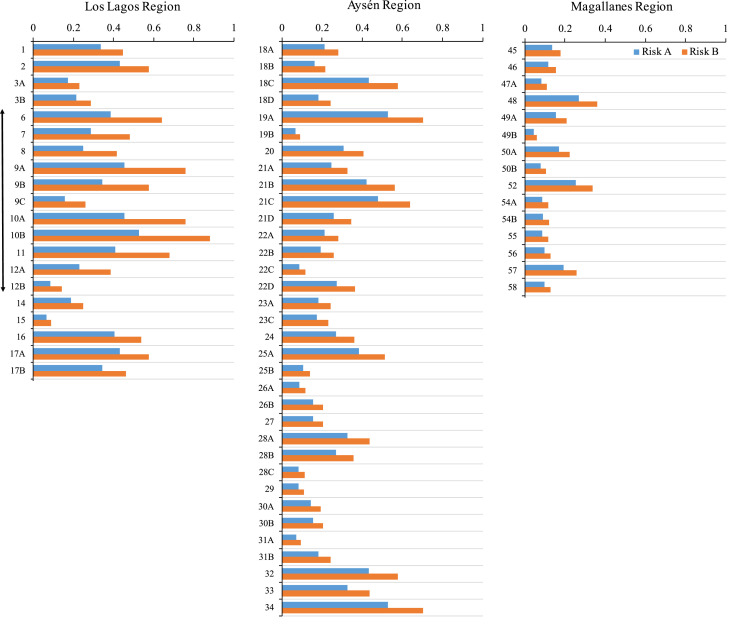
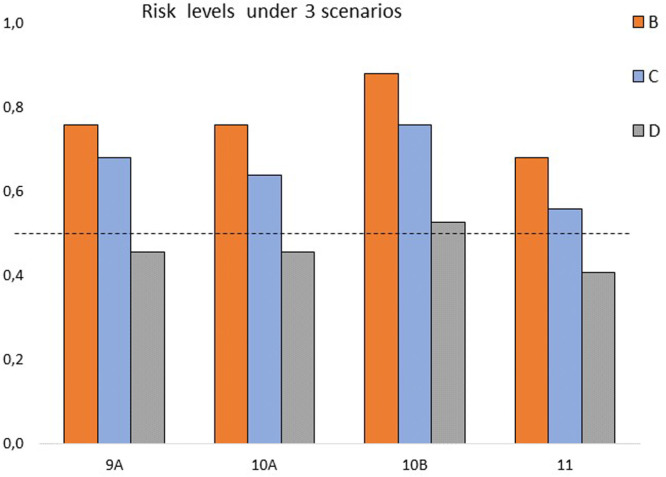
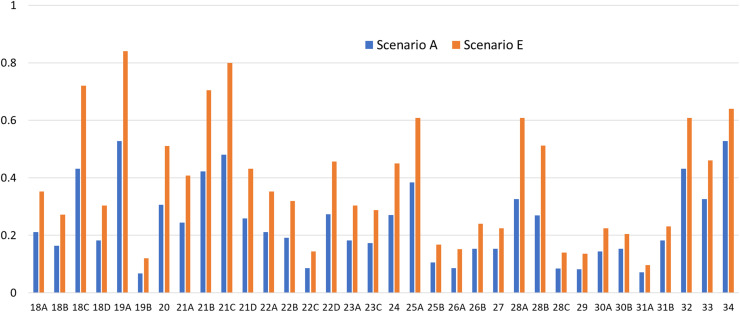
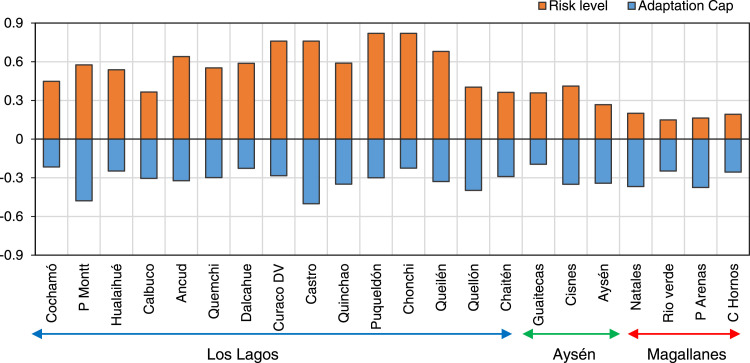
This study addresses the risk and vulnerability of Chilean salmon production to hazards resulting from the COVID-19 pandemic threat, including limited access to farms, limited processing capacity and reduced market demand. The role of different management approaches in reducing risk and vulnerability is also explored. Results suggest that concession areas having the largest accumulated and current biomass have the highest risk, which is also transferred to the municipal level. The scenarios modelled with better management practices that reduce diseases were able to reduce risks by 30-40%. The largest risk reduction is achieved when production biomass is divided in a more equitable manner among concession areas, suggesting the need for strategic improvements in spatial planning of the activity in the marine environment according to ecosystem carrying capacity and better practices. Improving adaptation capacity can reduce vulnerability between 20% and 30% for municipalities; for example, providing local employment can be a win-win management measure under the COVID-19 threat because it reduces movement of people and facilitates handling and responses to emergencies. A larger footprint in local economies and employment can also improve social perception and acceptance of the sector, thus contributing to improve adaptation changes and governance to face the threats. The framework used here to perform a risk and vulnerability assessment of salmon farming to the pandemic-associated threats can also be useful for other aquaculture systems elsewhere, provided that relevant information is available.
本研究探讨了智利鲑鱼养殖因新冠疫情威胁而面临的风险和脆弱性,包括养殖场出入受限、加工能力有限以及市场需求下降。同时还探讨了不同管理方法在降低风险和脆弱性方面的作用。结果表明,累计生物量和当前生物量最大的特许区域风险最高,且这种风险也传导至市级层面。采用更好的疾病防控管理措施进行建模的情景能够将风险降低30%-40%。当生产生物量在特许区域之间以更公平的方式分配时,风险降低幅度最大,这表明需要根据生态系统承载能力对海洋环境中的养殖活动空间规划进行战略改进,并采用更好的做法。提高适应能力可使各市政府的脆弱性降低20%至30%;例如,提供当地就业机会在新冠疫情威胁下可能是一项双赢的管理措施,因为它减少了人员流动,便于应对紧急情况。在当地经济和就业方面占据更大份额还可改善社会对该行业的认知和接受度,从而有助于改进适应措施和治理以应对威胁。此处用于对鲑鱼养殖面临的与疫情相关威胁进行风险和脆弱性评估的框架,只要有相关信息,对其他地方的水产养殖系统也可能有用。