Abbasi Ebrahim, Vahedi Mozaffar, Bagheri Masoumeh, Gholizadeh Saber, Alipour Hamzeh, Moemenbellah-Fard Mohammad Djaefar
Student Research Committee, Department of Biology and Control of Disease Vectors, School of Health, Shiraz University of Medical Sciences, Shiraz, Iran.
School of Public Health, Urmia University of Medical Sciences, Urmia, Iran.
Heliyon. 2022 Jan 24;8(1):e08830. doi: 10.1016/j.heliyon.2022.e08830. eCollection 2022 Jan.
In Iran, the prospect of malaria control relies mainly on insecticides used against the genus (Diptera: Culicidae) as important vectors of malaria, arboviruses, and so on. Only eight out of 30 malaria mosquito vectors ( species) have been examined for insecticide resistance in Iran. This study aimed to review articles related to the incremental trend in insecticide resistance and their mechanisms among anopheline malaria vectors in Iran.
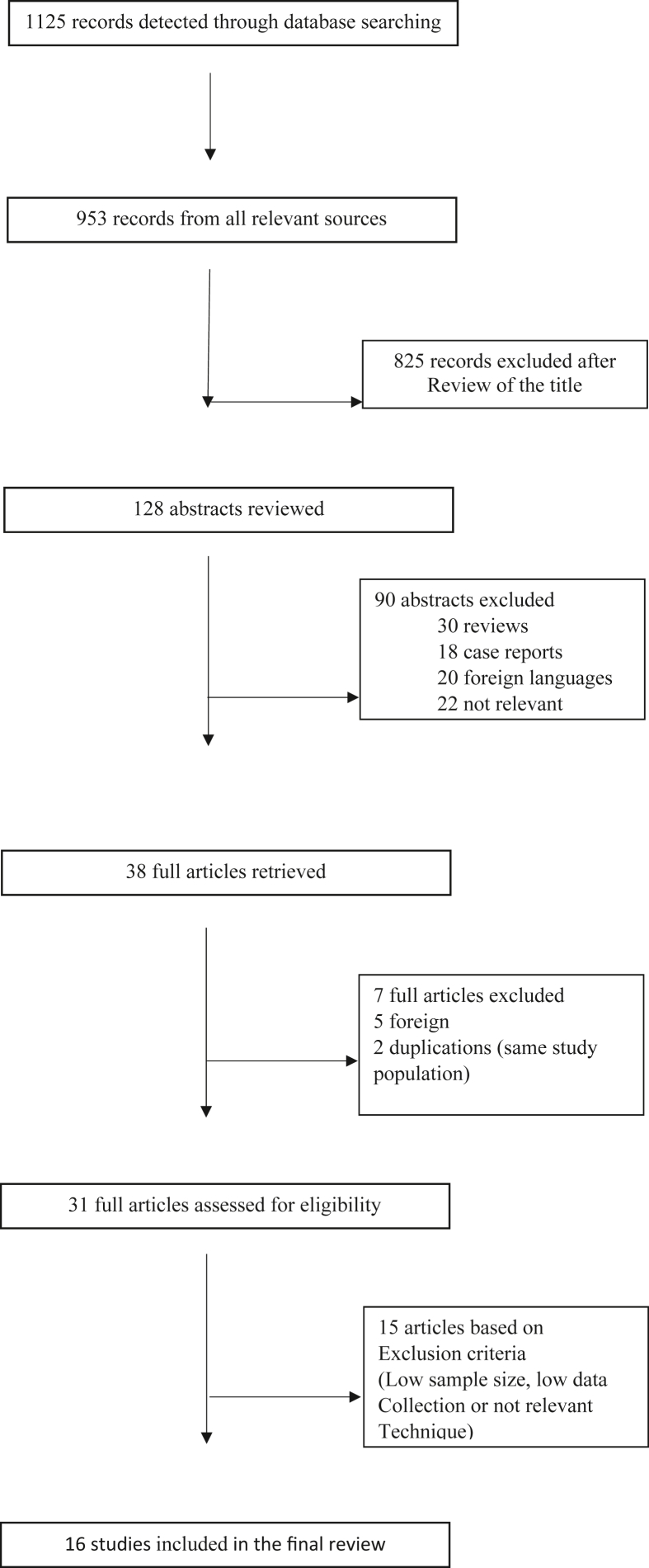
A literature review was conducted based on such search engines as Iran doc, Web of Science, SID, PubMed, Scopus, and Google Scholar websites using the following keywords: "," "Malaria," "Resistance," "Vectors," "Insecticide Resistance," and "Iran" for data collection. Published papers in English or Persian covering 1980 to 2020 were reviewed.
A total of 1125 articles were screened, only 16 of which were filtered to be pertinent in this review. While most of the mosquito vectors of malaria, such as were resistant to DDT, dieldrin, malathion, and becoming less susceptible to deltamethrin and other synthetic pyrethroid insecticides, few like s. l. were susceptible to all insecticides. A disseminating trend in insecticide resistance among different anopheline mosquito vector species was evident. Metabolic and insecticide target-site resistance mechanisms were involved with organochlorines and pyrethroids, respectively.
Insecticide resistance is becoming a severe scourge to the effectiveness of vector-borne disease management measures. This event is especially critical in developing and marginalized communities that applied chemical-based vector elimination programs for malaria; therefore, it is crucial to monitor insecticide resistance in malaria vectors in Iran using biochemical and molecular tools.
在伊朗,疟疾防控的前景主要依赖于用于防治按蚊属(双翅目:蚊科)的杀虫剂,按蚊是疟疾、虫媒病毒等的重要传播媒介。在伊朗30种疟疾蚊媒(物种)中,仅有8种接受了杀虫剂抗性检测。本研究旨在综述伊朗按蚊疟媒中杀虫剂抗性的递增趋势及其机制的相关文章。
基于伊朗文献数据库、科学网、伊朗科学信息数据库、PubMed、Scopus和谷歌学术等搜索引擎进行文献综述,使用以下关键词收集数据:“按蚊属”“疟疾”“抗性”“媒介”“杀虫剂抗性”和“伊朗”。对1980年至2020年发表的英文或波斯文论文进行了综述。
共筛选出1125篇文章,其中仅16篇被筛选为本综述的相关文章。虽然大多数疟疾蚊媒,如对滴滴涕、狄氏剂、马拉硫磷具有抗性,并且对溴氰菊酯和其他合成拟除虫菊酯类杀虫剂的敏感性降低,但少数如伊朗按蚊对所有杀虫剂敏感。不同按蚊蚊媒物种间杀虫剂抗性呈扩散趋势。代谢抗性和杀虫剂靶标位点抗性机制分别与有机氯和拟除虫菊酯有关。
杀虫剂抗性正成为媒介传播疾病管理措施有效性的严重祸害。这一情况在应用基于化学方法的疟疾媒介消除计划的发展中社区和边缘化社区尤为关键;因此,使用生化和分子工具监测伊朗疟疾蚊媒的杀虫剂抗性至关重要。