Veterinary Department, Universidade Federal de Viçosa, Viçosa, Brasil.
Laboratory of Synthesis of Ceramic Materials, Universidade Federal de Campina Grande, Campina Grande, Brasil.
J Mater Sci Mater Med. 2022 Feb 7;33(2):21. doi: 10.1007/s10856-022-06640-z.
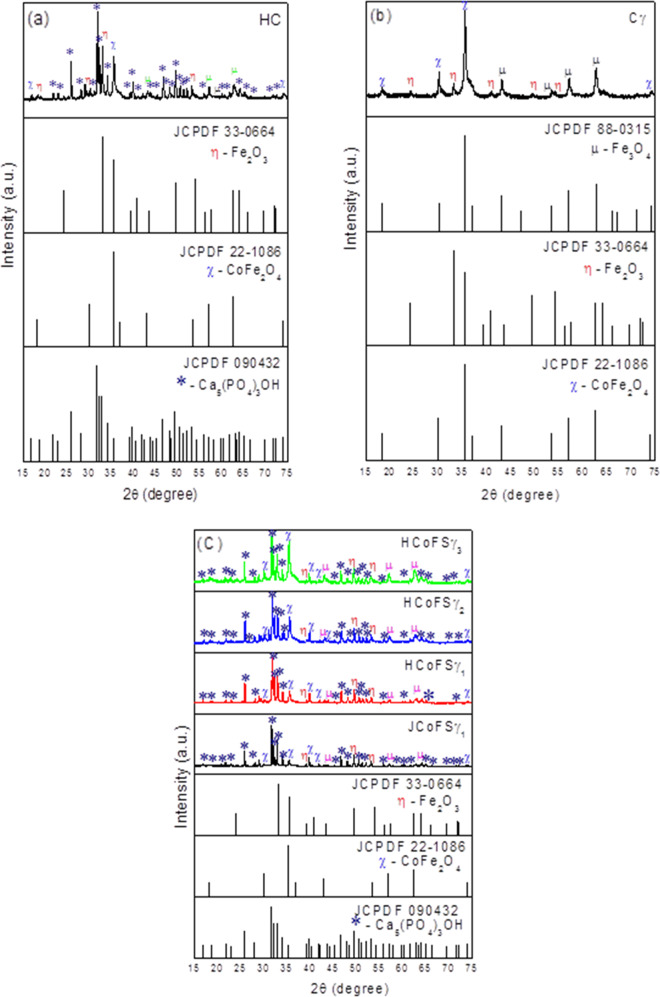
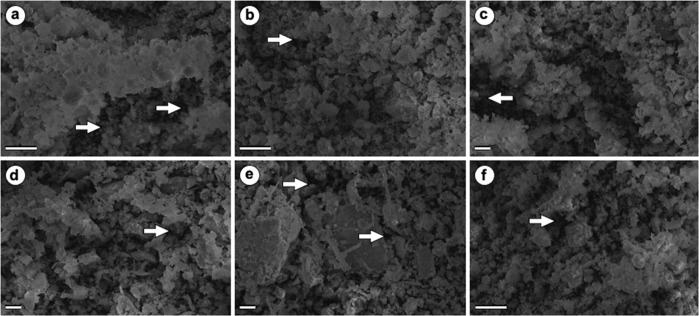
Bioactive materials in combination with antibiotics have been widely developed for the treatment of bone infection. Thus, this work aims to characterize six biomaterials formulated with different concentrations of hydroxyapatite and cobalt ferrite nanoparticles, in addition to the antibiotic ciprofloxacin, using X-ray diffraction (XRD), scanning electron microscopy (SEM), and the antibiotic diffusion test on agar. Furthermore, in vivo biocompatibility and the reabsorption process of these materials were analyzed. XRD showed that both hydroxyapatite and cobalt ferrite present high crystallinity. The photomicrographs obtained by SEM revealed that composites have a complex surface, evidenced by the irregular arrangement of the hydroxyapatite and cobalt ferrite granules, besides demonstrating the interaction between their components. The antibiotic-diffusion test showed that all biomaterials produced an inhibition halo in Staphylococcus aureus cultures. For the biocompatibility study, composites were surgically implanted in the dorsal region of rabbits. At 15, 30, 70, and 100 days, biopsies of the implanted regions were performed. The biomaterials were easily identified during histological analysis and no significant inflammatory process, nor histological signs of toxicity or rejection by the adjacent tissue were observed. We can conclude that the biomaterials analyzed are biocompatible, degradable, and effective in inhibiting the in vitro growth of Staphylococcus aureus. Graphical abstract.
生物活性材料与抗生素联合使用已广泛应用于治疗骨感染。因此,本工作旨在对 6 种生物材料进行表征,这些生物材料由不同浓度的羟基磷灰石和钴铁氧体纳米粒子与抗生素环丙沙星共同组成,采用 X 射线衍射(XRD)、扫描电子显微镜(SEM)和琼脂抗生素扩散试验进行分析。此外,还分析了这些材料的体内生物相容性和吸收过程。XRD 表明,羟基磷灰石和钴铁氧体均具有高结晶度。SEM 获得的显微照片显示,复合材料具有复杂的表面,羟基磷灰石和钴铁氧体颗粒的不规则排列证明了这一点,此外还证明了它们之间的相互作用。抗生素扩散试验表明,所有生物材料对金黄色葡萄球菌培养物均产生了抑制晕圈。为了进行生物相容性研究,将复合材料在兔子的背部区域进行了手术植入。在 15、30、70 和 100 天,对植入区域进行了活检。在组织学分析中很容易识别出生物材料,没有观察到明显的炎症过程,也没有观察到相邻组织的毒性或排斥的组织学迹象。我们可以得出结论,分析的生物材料具有生物相容性、可降解性,并能有效抑制金黄色葡萄球菌的体外生长。