Department of (Experimental) Vascular Medicine, Amsterdam University Medical Center (UMC), Amsterdam, The Netherlands.
Department of Surgery, Spaarne Gasthuis, Hoofddorp, The Netherlands.
Gut Microbes. 2022 Jan-Dec;14(1):2031696. doi: 10.1080/19490976.2022.2031696.
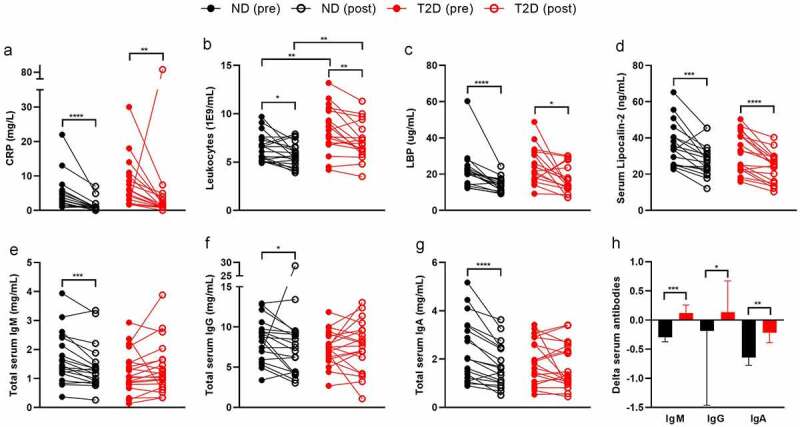
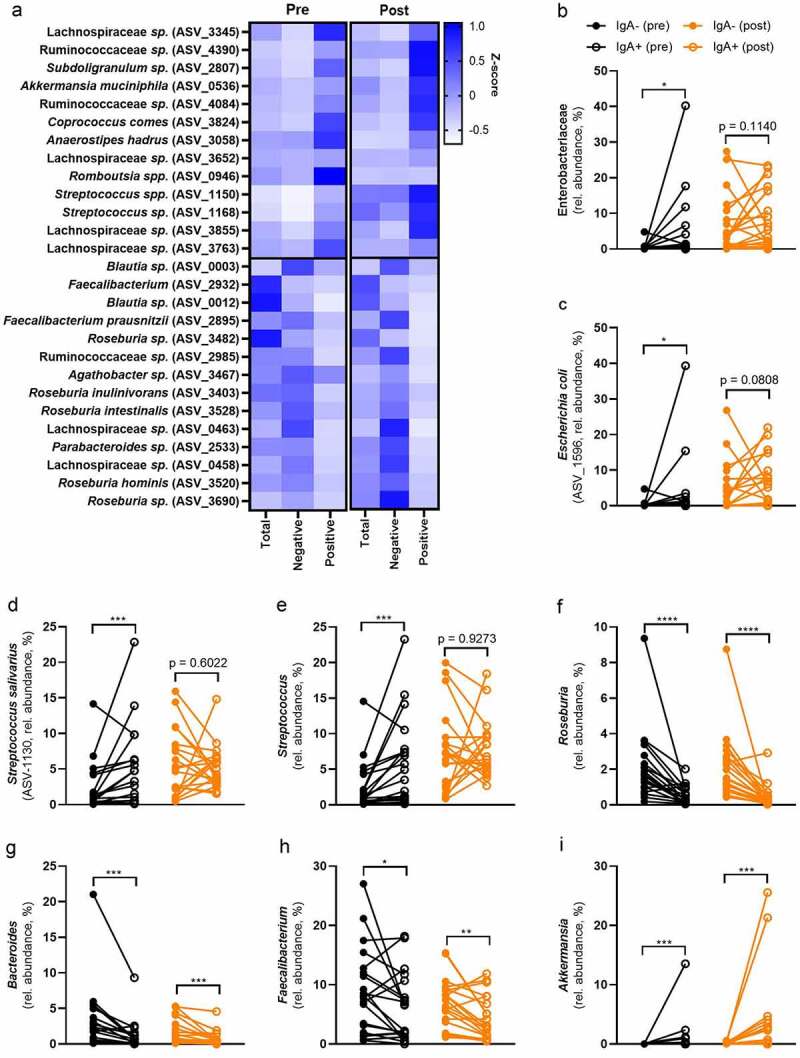
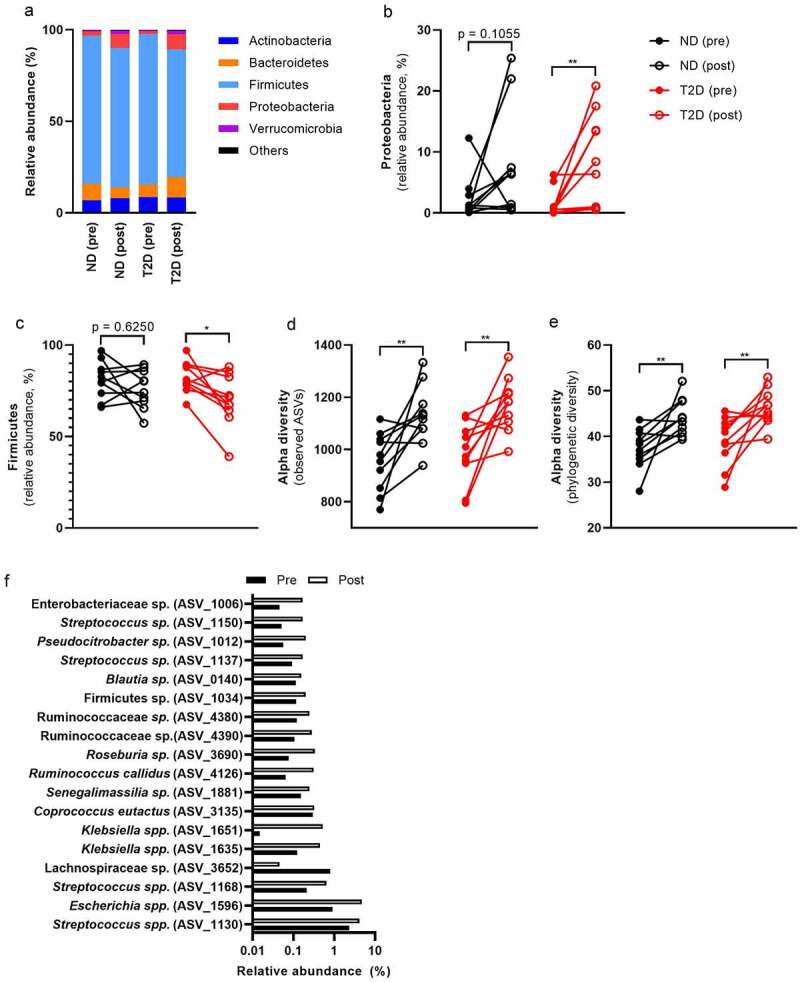
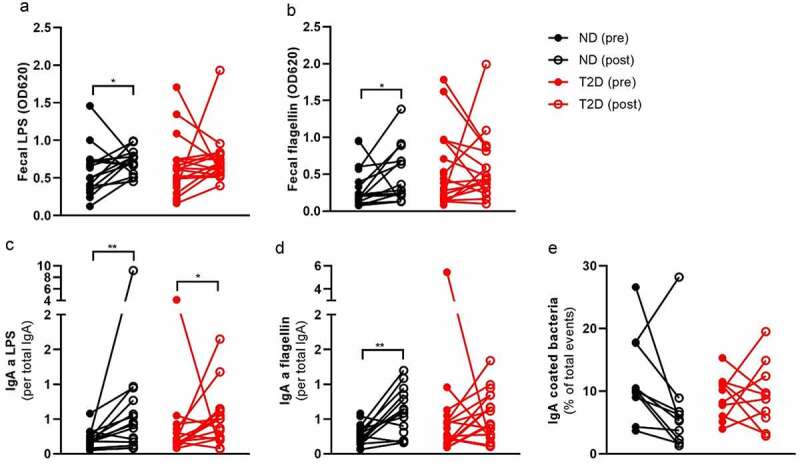
Obesity and type 2 diabetes (T2D) are growing burdens for individuals and the health-care system. Bariatric surgery is an efficient, but drastic treatment to reduce body weight, normalize glucose values, and reduce low-grade inflammation. The gut microbiome, which is in part controlled by intestinal antibodies, such as IgA, is involved in the development of both conditions. Knowledge of the effect of bariatric surgery on systemic and intestinal antibody response is limited. Here, we determined the fecal antibody and gut microbiome response in 40 T2D and non-diabetic (ND) obese individuals that underwent bariatric surgery (N = 40). Body weight, fasting glucose concentrations and inflammatory parameters decreased after bariatric surgery, whereas pro-inflammatory bacterial species such as lipopolysaccharide (LPS), and flagellin increased in the feces. Simultaneously, concentrations of LPS- and flagellin-specific intestinal IgA levels increased with the majority of pro-inflammatory bacteria coated with IgA after surgery. Finally, serum antibodies decreased in both groups, along with a lower inflammatory tone. We conclude that intestinal rearrangement by bariatric surgery leads to expansion of typical pro-inflammatory bacteria, which may be compensated by an improved antibody response. Although further evidence and mechanistic insights are needed, we postulate that this apparent compensatory antibody response might help to reduce systemic inflammation by neutralizing intestinal immunogenic components and thereby enhance intestinal barrier function after bariatric surgery.
肥胖和 2 型糖尿病(T2D)给个人和医疗保健系统带来了越来越大的负担。减重手术是一种有效的治疗方法,可以减轻体重、使葡萄糖值正常化,并降低低度炎症。肠道微生物组部分受肠道抗体(如 IgA)控制,与这两种疾病的发生有关。关于减重手术对全身和肠道抗体反应的影响的知识有限。在这里,我们在 40 名接受减重手术的 T2D 和非糖尿病(ND)肥胖个体(N=40)中确定了粪便抗体和肠道微生物组的反应。减重手术后体重、空腹血糖浓度和炎症参数降低,而脂多糖(LPS)和鞭毛等促炎细菌种类在粪便中增加。同时,LPS 和鞭毛特异性肠道 IgA 水平的浓度随着手术后大多数被 IgA 包裹的促炎细菌而增加。最后,两组的血清抗体均下降,炎症反应降低。我们得出的结论是,减重手术引起的肠道重排导致典型促炎细菌的扩张,这可能通过改善抗体反应得到补偿。尽管需要进一步的证据和机制见解,但我们推测,这种明显的代偿性抗体反应可能有助于通过中和肠道免疫原性成分来减轻全身炎症,并在减重手术后增强肠道屏障功能。