Otolaryngology Unit, Santi Paolo e Carlo Hospital, Department of Health Sciences, Università degli Studi di Milano, Via Antonio di Rudinì, 8, 20142, Milan, Italy.
ISGOS, the Italian Study Group on Odontogenic Sinusitis, Milan, Italy.
Eur Arch Otorhinolaryngol. 2022 Jul;279(7):3257-3267. doi: 10.1007/s00405-022-07290-1. Epub 2022 Feb 9.
Intranasal cocaine is known to potentially lead to midline destructive lesions. The present systematic review was undertaken to systematically define the localization of cocaine-induced midline destructive lesions and their prevalence and to propose a practical classification of these lesions.
A PRISMA-compliant systematic review was performed in multiple databases with criteria designed to include all studies published until March 2021 providing a precise definition of cocaine-induced midline lesions in humans. We selected all original studies except case reports. After duplicate removal, abstract and full-text selection, and quality assessment, we reviewed eligible articles for lesion localization, patients' demographics, exposure to cocaine, and relationship with external nose destruction.
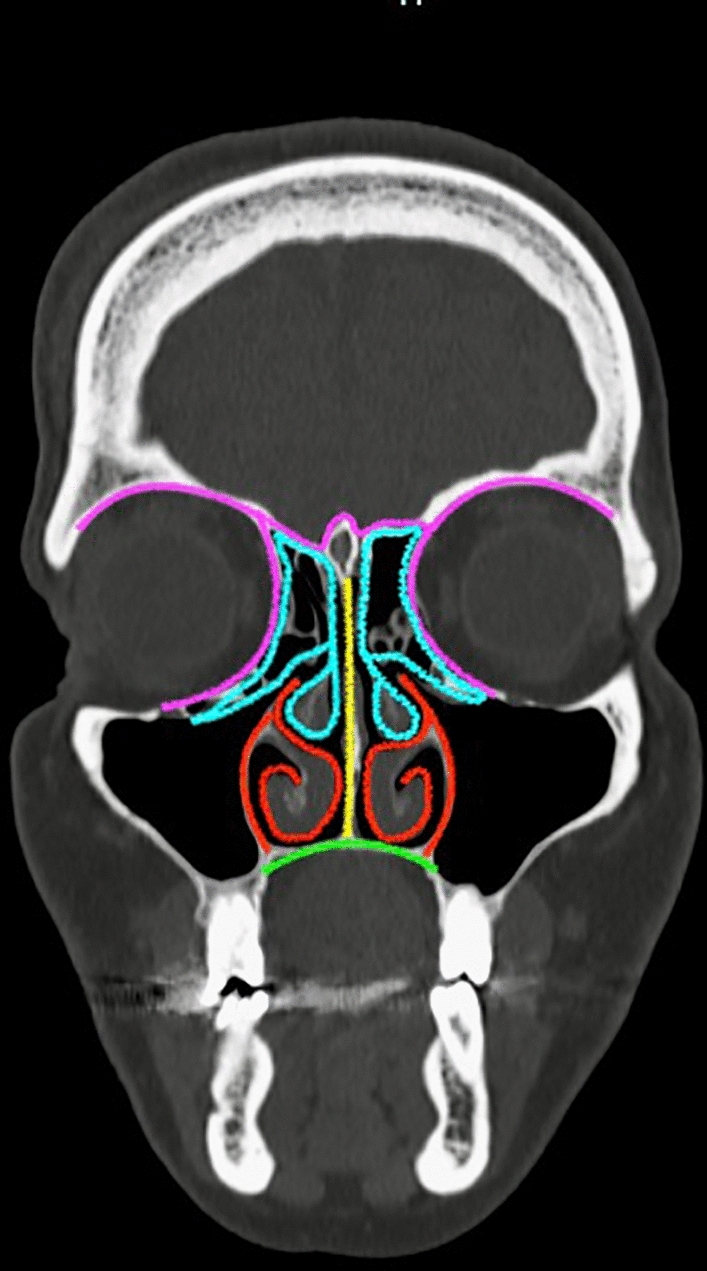
Among 2593 unique citations, 17 studies were deemed eligible (127 patients). All studies were retrospective case series. The destructive process determined a septal perforation in 99.2% of patients. The distribution prevalence decreased from the inferior third of the sinonasal complex (nasal floor and inferolateral nasal wall, respectively, 59% and 29.9% of patients) to the middle third (middle turbinate and ethmoid, 22.8% of patients), and ultimately to neurocranial structures (7.9% of patients). Nasal deformities were inconsistently reported across reviewed studies. Cocaine use duration, frequency, and status were reported only occasionally.
Based on the distribution prevalence observed, we propose a four-grade destruction location-based classification. Future prospective studies following the evolution of cocaine-induced lesions are needed to validate our classification, its relationship with lesion evolution, and whether it represents a reliable tool for homogeneous research results reporting.
鼻内可卡因已知可能导致中线破坏性病变。本系统评价旨在系统定义可卡因引起的中线破坏性病变的定位及其发生率,并提出这些病变的实用分类方法。
在多个数据库中进行了符合 PRISMA 原则的系统评价,制定了标准,以纳入截至 2021 年 3 月发表的所有研究,这些研究明确定义了人类可卡因引起的中线病变。我们选择了所有原始研究(除病例报告外)。经过重复去除、摘要和全文选择以及质量评估后,我们回顾了合格文章中的病变定位、患者人口统计学、可卡因暴露和与外部鼻破坏的关系。
在 2593 条独特的引用中,有 17 项研究被认为符合条件(127 名患者)。所有研究均为回顾性病例系列研究。破坏性过程导致 99.2%的患者出现鼻中隔穿孔。分布流行率从鼻旁窦复合体的下三分之一(鼻底和下外侧鼻壁,分别为 59%和 29.9%的患者)降低到中三分之一(中鼻甲和筛骨,22.8%的患者),最终降低到颅神经结构(7.9%的患者)。在回顾的研究中,鼻畸形的报道不一致。可卡因使用时间、频率和状况仅偶尔报告。
根据观察到的分布流行率,我们提出了一种基于四级破坏位置的分类。需要进行前瞻性研究,以跟踪可卡因引起的病变的演变,以验证我们的分类、其与病变演变的关系,以及它是否代表了一种可靠的工具,用于报告同质的研究结果。