Hamidi Amir Abbas, Khalili-Tanha Ghazaleh, Nasrpour Navaei Zahra, Moghbeli Meysam
Student Research Committee, Faculty of Medicine, Mashhad University of Medical Sciences, Mashhad, Iran.
Department of Medical Genetics and Molecular Medicine, School of Medicine, Mashhad University of Medical Sciences, Mashhad, Iran.
Cancer Cell Int. 2022 Feb 10;22(1):71. doi: 10.1186/s12935-022-02501-5.
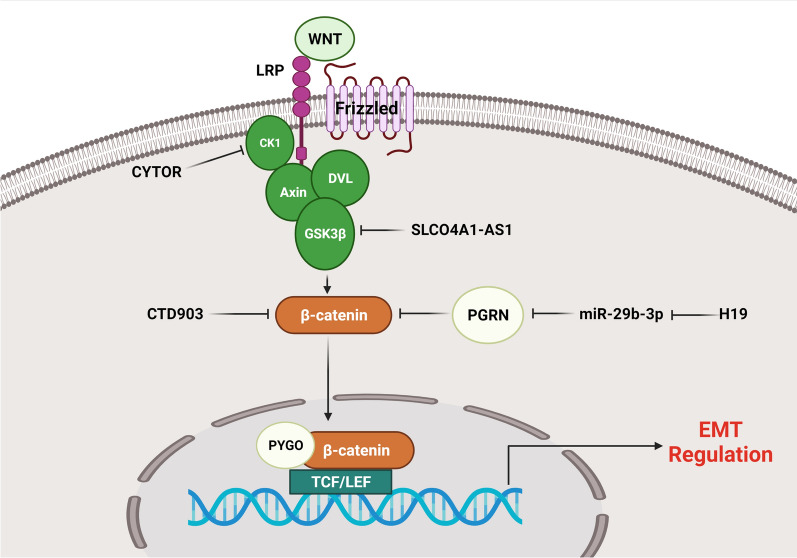
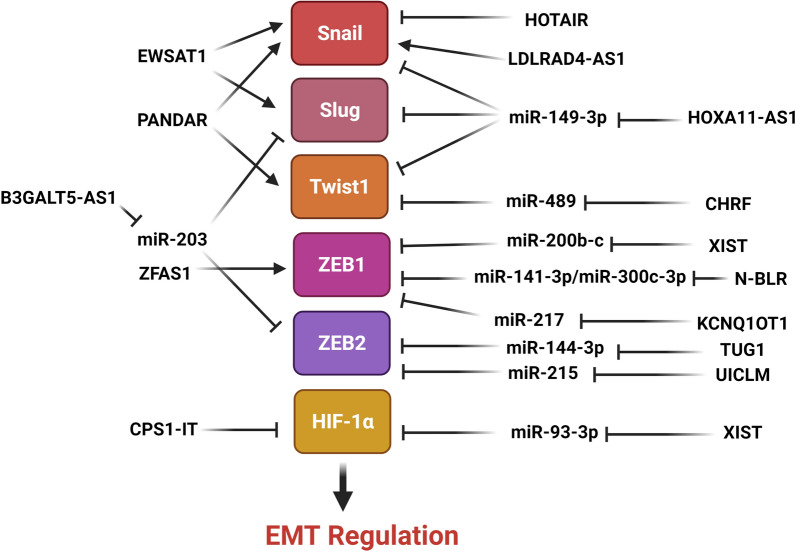
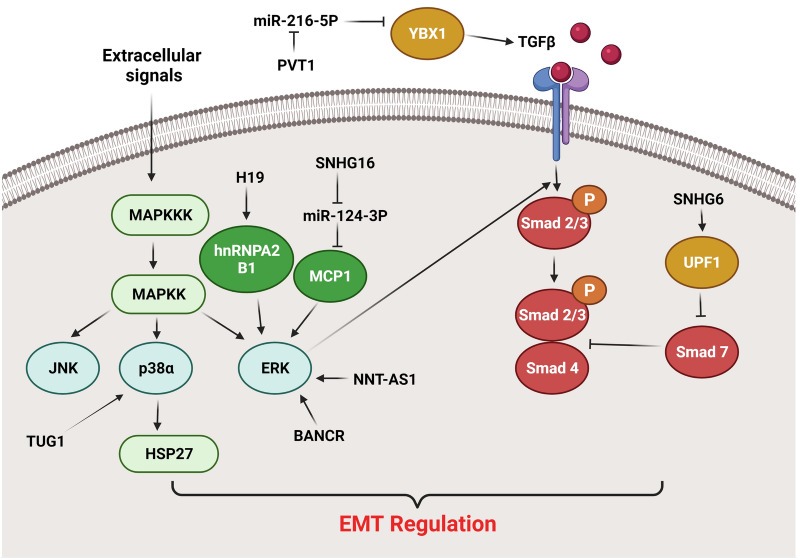
Colorectal cancer (CRC) is the second most common cause of cancer mortality and a major health challenge worldwide. Despite advances in therapeutic and diagnostic methods, there is still a poor prognosis in CRC patients. Tumor recurrence and metastasis are the main causes of high mortality rate in these patients, which are due to late diagnosis in advanced tumor stages. Epithelial-mesenchymal transition (EMT) is known to be the most important cause of CRC metastasis, during which tumor cells obtain metastasis ability by losing epithelial features and gaining mesenchymal features. Long non-coding RNAs (lncRNAs) are pivotal regulators of EMT process. Regarding the higher stability of lncRNAs compared with coding RNAs in body fluids, they can be used as non-invasive diagnostic markers for EMT process. In the present review, we summarized all of the lncRNAs involved in regulation of EMT process during CRC progression and metastasis. It was observed that lncRNAs mainly induced the EMT process in CRC cells by regulation of EMT-related transcription factors, Poly comb repressive complex (PRC), and also signaling pathways such as WNT, NOTCH, MAPK, and Hippo.
结直肠癌(CRC)是癌症死亡的第二大常见原因,也是全球主要的健康挑战。尽管治疗和诊断方法取得了进展,但CRC患者的预后仍然很差。肿瘤复发和转移是这些患者高死亡率的主要原因,这是由于晚期肿瘤阶段的诊断延迟所致。上皮-间质转化(EMT)被认为是CRC转移的最重要原因,在此过程中,肿瘤细胞通过丧失上皮特征并获得间质特征而获得转移能力。长链非编码RNA(lncRNAs)是EMT过程的关键调节因子。鉴于lncRNAs在体液中比编码RNA具有更高的稳定性,它们可作为EMT过程的非侵入性诊断标志物。在本综述中,我们总结了CRC进展和转移过程中所有参与调节EMT过程的lncRNAs。据观察,lncRNAs主要通过调节EMT相关转录因子、多梳抑制复合体(PRC)以及WNT、NOTCH、MAPK和Hippo等信号通路来诱导CRC细胞中的EMT过程。