Jonglertmontree Woraluk, Kaewboonchoo Orawan, Morioka Ikuharu, Boonyamalik Plernpit
Department of Public Health Nursing, Faculty of Public Health, Mahidol University, 420/1 Ratchawithi Road., Ratchathewi, 10400, Bangkok, Thailand.
Graduate School of Health and Nursing Science, Wakayama Medical University, Mikazura 580, 641-0011, Wakayama, Japan.
BMC Public Health. 2022 Feb 11;22(1):282. doi: 10.1186/s12889-022-12713-z.
Seafarers are often reported to be engaged in a dangerous physical and psychosocial work environment. However, mental health status among seafarers has not been focused on compared with physical health issues. Systematic, comprehensive reviews of mental health problems and their relevant factors are lacking. This review aimed to clarify beneficial approaches to the mental health problems faced among seafarers using a scoping review to systematically map the evidence regarding mental health issues and their related factors.
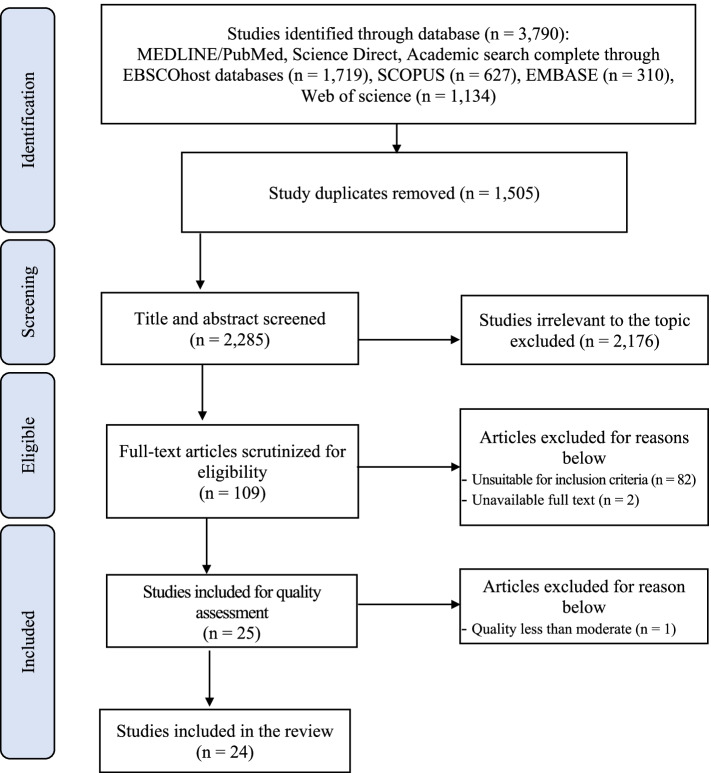
Studies were searched on MEDLINE/PubMed, Science Direct, Academic search complete using EBSCOhost databases, SCOPUS, EMBASE, and Web of science on 20, August 2020. This scoping review was conducted based on the framework of Arksey and O'Malley and Preferred Reporting items for Scoping Reviews flow diagram. The inclusion criteria were studies which determined the relationship between factors relevant to working conditions or working environment, and mental health in seafarers, and etc. Data were narratively summarized and reported.
Twenty-four were included in this review while two major findings were clarified. Firstly, the prevalence of stress, depressive symptoms, and burnout have been mentioned for decades. Secondly, factors related to mental health and psychological issues can be categorized as individual and work environmental factors. The individual factors include experience, age, health status (high BMI, poor sleep, and diabetics), and resilience. The work environmental factors consist of two parts. Job demands comprise pressure from contractors/customers/time, working hours, ship department, job title, voyage episodes, period of seafaring, noise, and vibration. The job resources included instrumental support, team cohesion, shipboard caring and effort-reward imbalance.
A beneficial approach to mental health problems faced among seafarers is necessary to understand comprehensively at individual and organization levels. Promoting health behaviors, training resilience, and managing obesity and chronic diseases comprise individual level strategies. Providing seafarers with adequate instrumental support, and practical support to communicate with customers, managing their distinct work-rest hours and adequate effort-reward balance comprise organization level methods.
据报道,海员经常置身于危险的身体和社会心理工作环境中。然而,与身体健康问题相比,海员的心理健康状况尚未得到关注。目前缺乏对心理健康问题及其相关因素的系统、全面综述。本综述旨在通过范围综述系统梳理有关海员心理健康问题及其相关因素的证据,以阐明应对海员所面临心理健康问题的有益方法。
于2020年8月20日在MEDLINE/PubMed、Science Direct、使用EBSCOhost数据库的Academic search complete、SCOPUS、EMBASE和科学网中检索研究。本范围综述基于Arksey和O'Malley框架以及范围综述的首选报告项目流程图进行。纳入标准为确定与工作条件或工作环境相关因素与海员心理健康之间关系的研究等。对数据进行叙述性总结和报告。
本综述纳入了24项研究,同时阐明了两个主要发现。首先,压力、抑郁症状和职业倦怠的患病率已被提及数十年。其次,与心理健康和心理问题相关的因素可分为个人因素和工作环境因素。个人因素包括经历、年龄、健康状况(高体重指数、睡眠不佳和糖尿病)以及心理韧性。工作环境因素由两部分组成。工作需求包括来自承包商/客户/时间的压力、工作时间、船舶部门、职位、航行阶段、航海时长、噪音和振动。工作资源包括工具性支持、团队凝聚力、船上关怀以及努力与回报失衡。
有必要在个人和组织层面全面了解应对海员所面临心理健康问题的有益方法。促进健康行为、培养心理韧性以及管理肥胖和慢性病属于个人层面的策略。为海员提供足够的工具性支持以及与客户沟通的实际支持、管理他们独特的工作休息时间并实现适当的努力与回报平衡属于组织层面的方法。