Department of Physics and Astronomy, Rowan University, Glassboro, NJ 08028, USA.
Department of Biomedical Engineering, Rowan University, Glassboro, NJ 08028, USA.
Int J Mol Sci. 2022 Jan 26;23(3):1415. doi: 10.3390/ijms23031415.
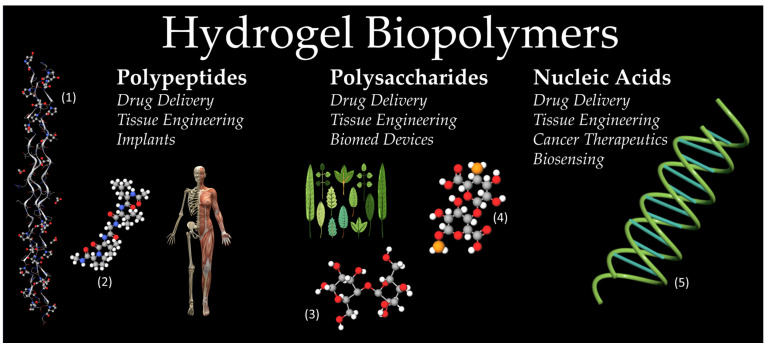
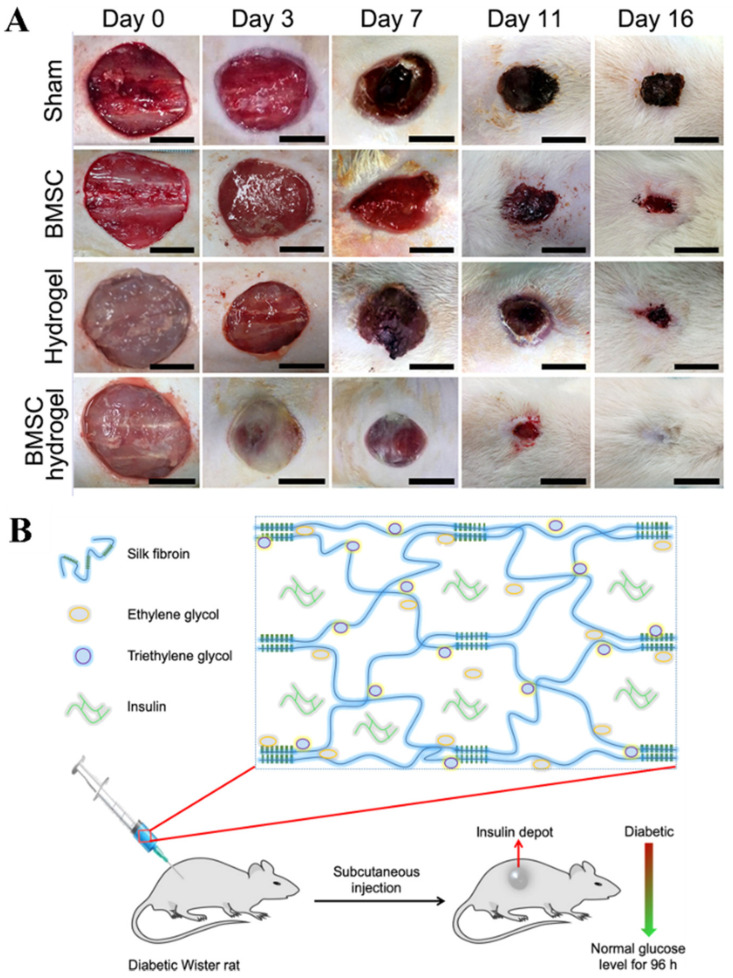
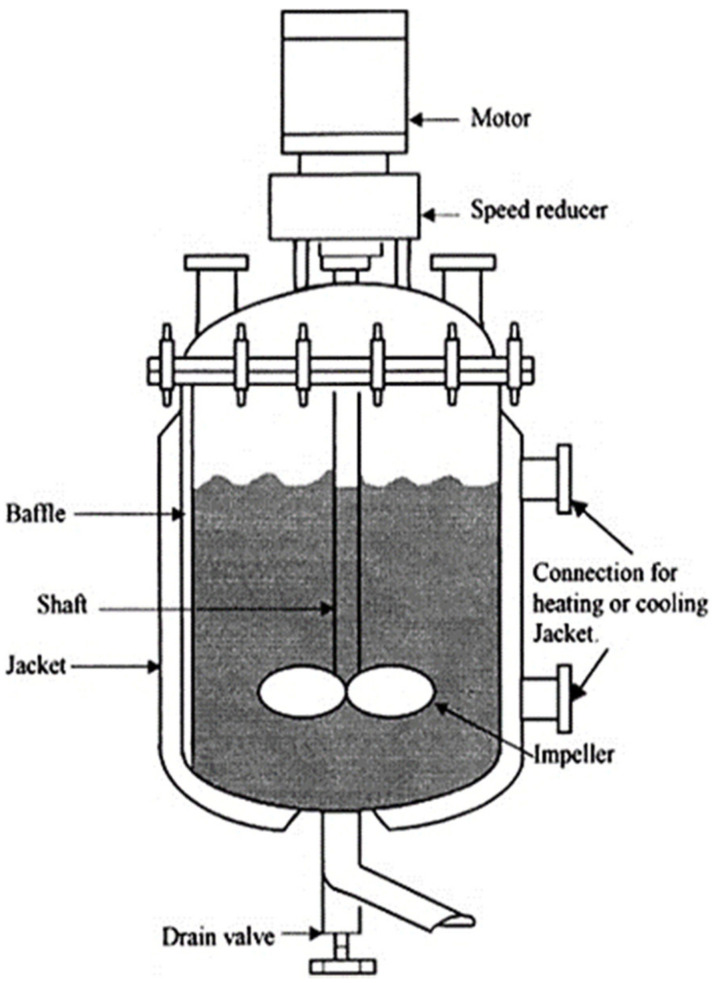
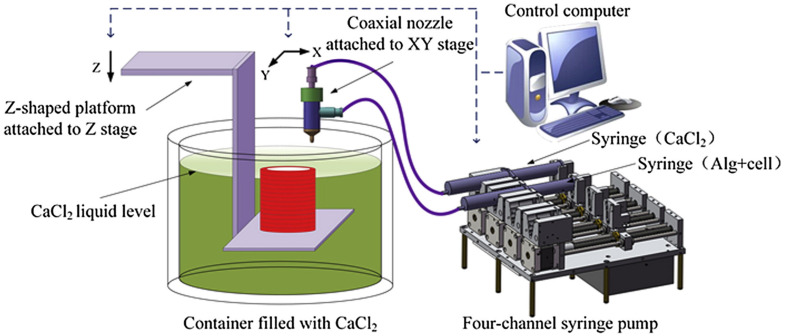
Hydrogels from biopolymers are readily synthesized, can possess various characteristics for different applications, and have been widely used in biomedicine to help with patient treatments and outcomes. Polysaccharides, polypeptides, and nucleic acids can be produced into hydrogels, each for unique purposes depending on their qualities. Examples of polypeptide hydrogels include collagen, gelatin, and elastin, and polysaccharide hydrogels include alginate, cellulose, and glycosaminoglycan. Many different theories have been formulated to research hydrogels, which include Flory-Rehner theory, Rubber Elasticity Theory, and the calculation of porosity and pore size. All these theories take into consideration enthalpy, entropy, and other thermodynamic variables so that the structure and pore sizes of hydrogels can be formulated. Hydrogels can be fabricated in a straightforward process using a homogeneous mixture of different chemicals, depending on the intended purpose of the gel. Different types of hydrogels exist which include pH-sensitive gels, thermogels, electro-sensitive gels, and light-sensitive gels and each has its unique biomedical applications including structural capabilities, regenerative repair, or drug delivery. Major biopolymer-based hydrogels used for cell delivery include encapsulated skeletal muscle cells, osteochondral muscle cells, and stem cells being delivered to desired locations for tissue regeneration. Some examples of hydrogels used for drug and biomolecule delivery include insulin encapsulated hydrogels and hydrogels that encompass cancer drugs for desired controlled release. This review summarizes these newly developed biopolymer-based hydrogel materials that have been mainly made since 2015 and have shown to work and present more avenues for advanced medical applications.
水凝胶是由生物聚合物合成的,具有各种特性,可应用于不同的领域,已广泛应用于生物医学领域,以帮助治疗和改善患者的预后。多糖、多肽和核酸都可以制成水凝胶,根据其特性,每种水凝胶都有其独特的用途。例如,多肽水凝胶包括胶原蛋白、明胶和弹性蛋白,多糖水凝胶包括海藻酸盐、纤维素和糖胺聚糖。已经提出了许多不同的理论来研究水凝胶,包括 Flory-Rehner 理论、橡胶弹性理论和孔隙率和孔径的计算。所有这些理论都考虑了焓、熵和其他热力学变量,以便可以设计水凝胶的结构和孔径。水凝胶可以通过不同化学物质的均匀混合物,以简单的工艺进行制备,具体取决于凝胶的预期用途。存在不同类型的水凝胶,包括 pH 敏感凝胶、温敏凝胶、电敏感凝胶和光敏感凝胶,每种水凝胶都有其独特的生物医学应用,包括结构功能、再生修复或药物输送。用于细胞输送的主要生物聚合物基水凝胶包括封装的骨骼肌细胞、骨软骨肌肉细胞和干细胞,这些细胞被输送到所需的位置以进行组织再生。用于药物和生物分子输送的水凝胶的一些例子包括封装胰岛素的水凝胶和包含癌症药物的水凝胶,以实现所需的控制释放。这篇综述总结了自 2015 年以来主要开发的新型生物聚合物基水凝胶材料,这些材料已被证明有效,并为先进的医疗应用提供了更多途径。