School of Automation Science and Engineering, Faculty of Electronic and Information Engineering, Xi'an Jiaotong University, Xi'an, Shaanxi, China.
MOE Key Lab for Intelligent Networks & Networks Security, Faculty of Electronic and Information Engineering, Xi'an Jiaotong University, Xi'an, Shaanxi, China.
Mol Biol Evol. 2022 Mar 2;39(3). doi: 10.1093/molbev/msac041.
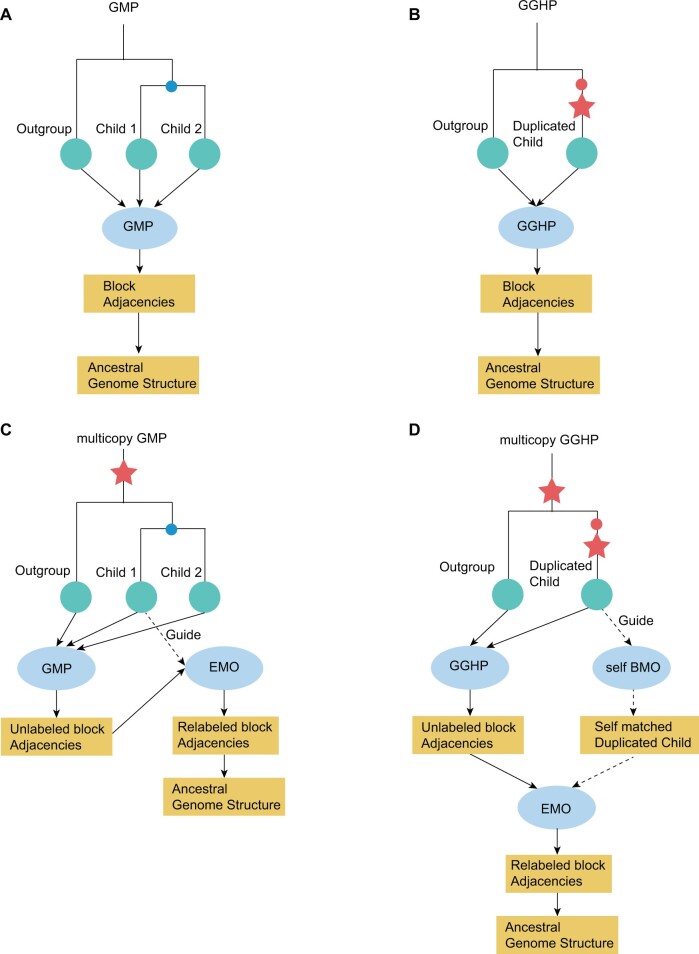
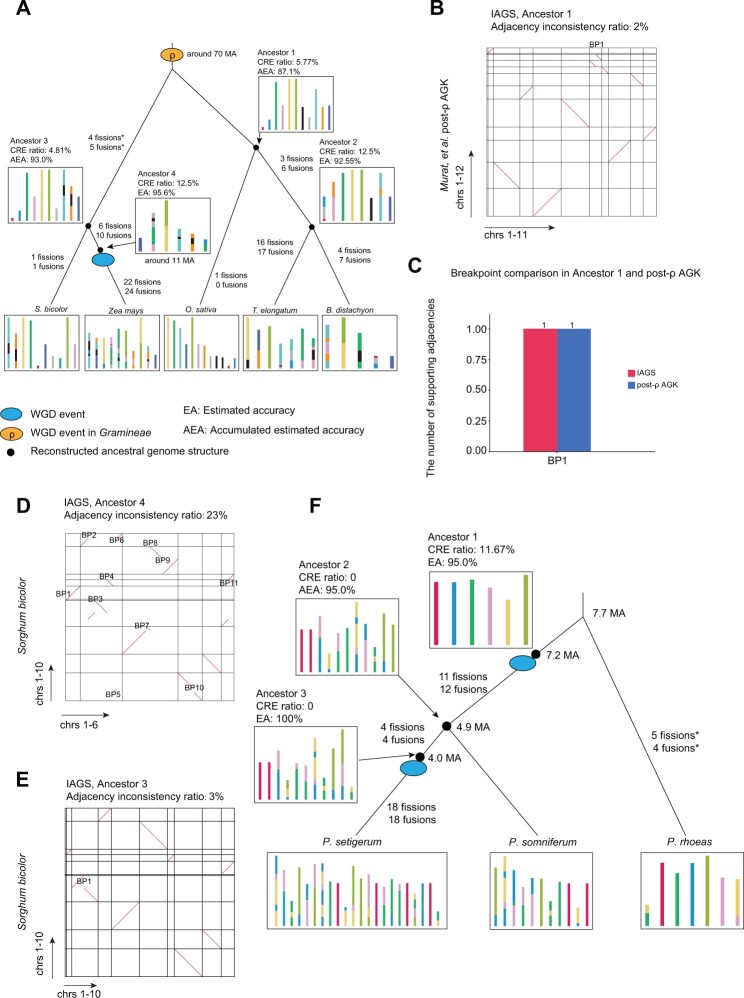
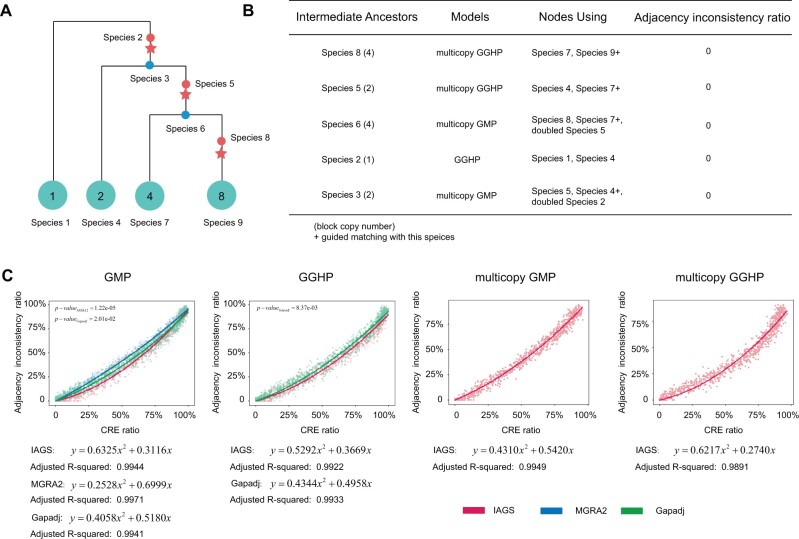
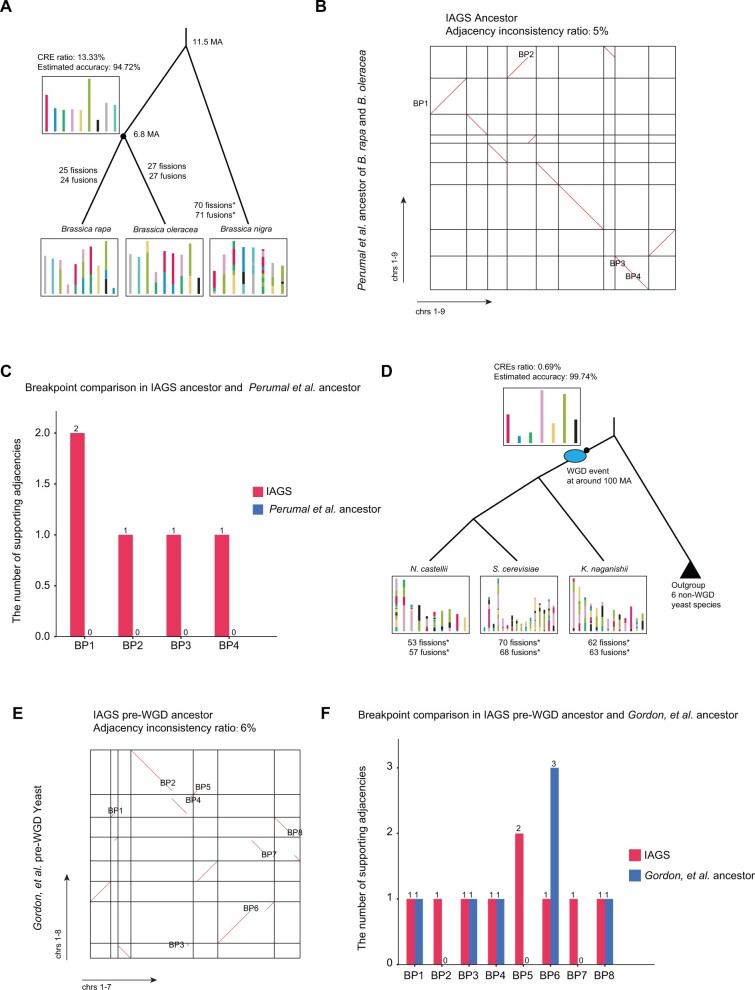
Significant improvements in genome sequencing and assembly technology have led to increasing numbers of high-quality genomes, revealing complex evolutionary scenarios such as multiple whole-genome duplication events, which hinders ancestral genome reconstruction via the currently available computational frameworks. Here, we present the Inferring Ancestor Genome Structure (IAGS) framework, a novel block/endpoint matching optimization strategy with single-cut-or-join distance, to allow ancestral genome reconstruction under both simple (single-copy ancestor) and complex (multicopy ancestor) scenarios. We evaluated IAGS with two simulated data sets and applied it to four different real evolutionary scenarios to demonstrate its performance and general applicability. IAGS is available at https://github.com/xjtu-omics/IAGS.
基因组测序和组装技术的显著进步导致了越来越多的高质量基因组的出现,揭示了复杂的进化场景,如多次全基因组复制事件,这使得通过现有的计算框架进行祖先基因组重建变得困难。在这里,我们提出了推断祖先基因组结构(IAGS)框架,这是一种新颖的块/端点匹配优化策略,具有单切或单连距离,允许在简单(单拷贝祖先)和复杂(多拷贝祖先)场景下进行祖先基因组重建。我们使用两个模拟数据集评估了 IAGS,并将其应用于四个不同的真实进化场景,以证明其性能和通用性。IAGS 可在 https://github.com/xjtu-omics/IAGS 上获得。