Department of Microbiology, Immunology, and Molecular Genetics, University of California, Los Angeles, Los Angeles, CA 90095, USA.
Department of Microbiology, Immunology, and Molecular Genetics, University of California, Los Angeles, Los Angeles, CA 90095, USA.
Mol Ther. 2022 May 4;30(5):1869-1884. doi: 10.1016/j.ymthe.2022.02.014. Epub 2022 Feb 14.
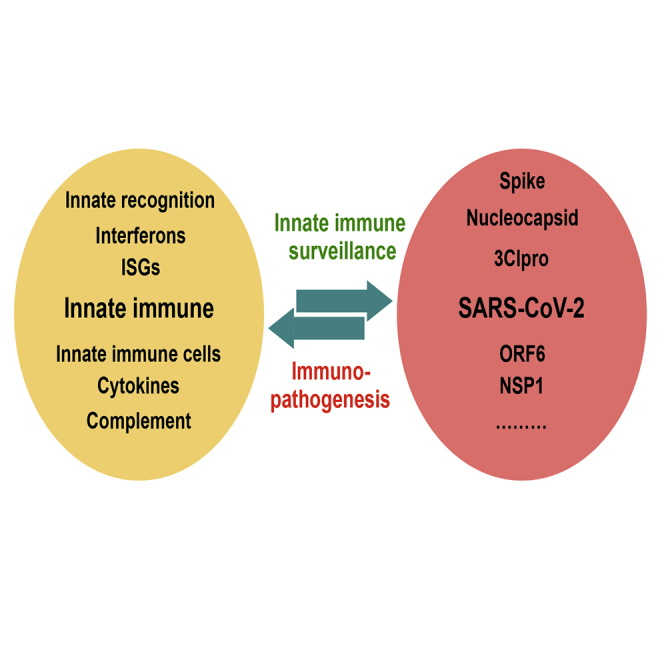
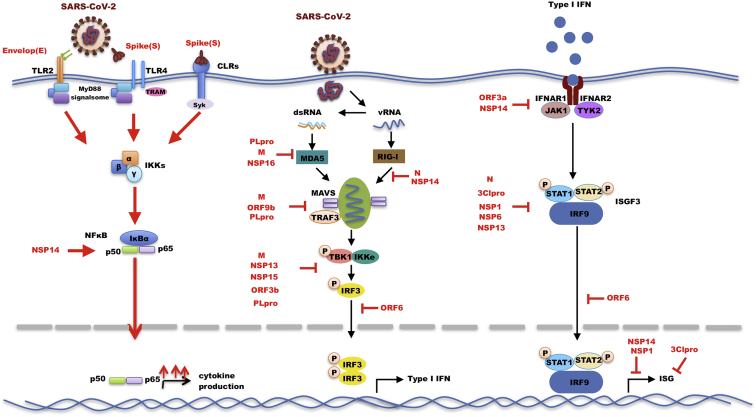
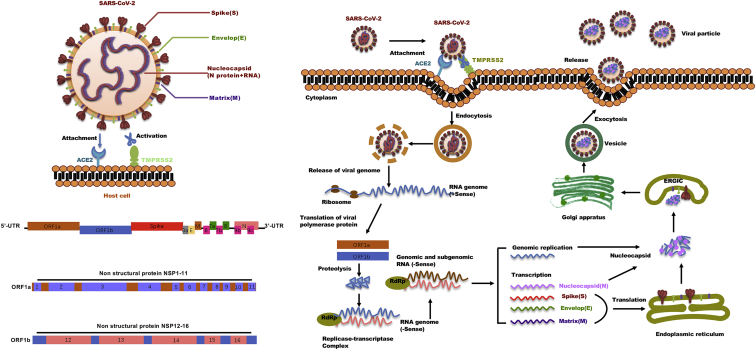
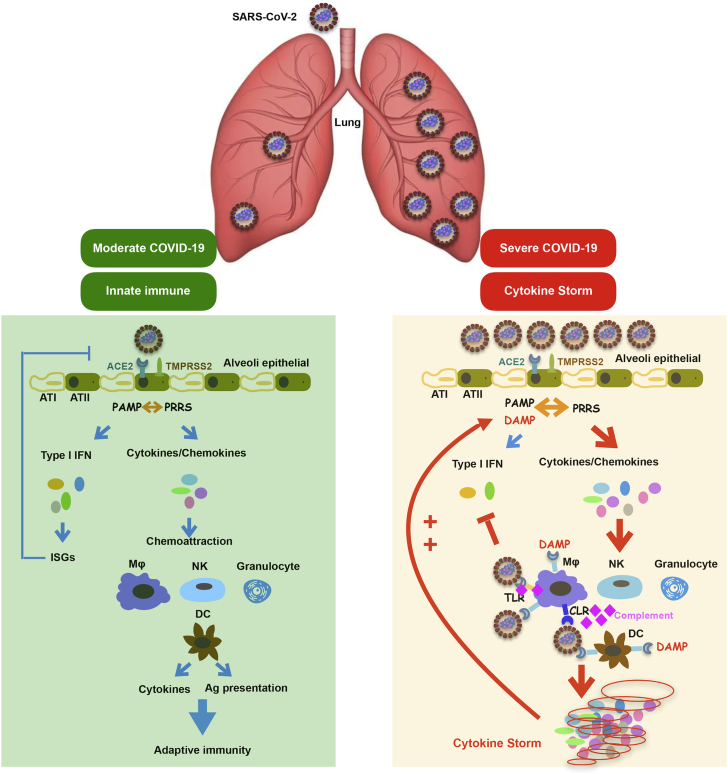
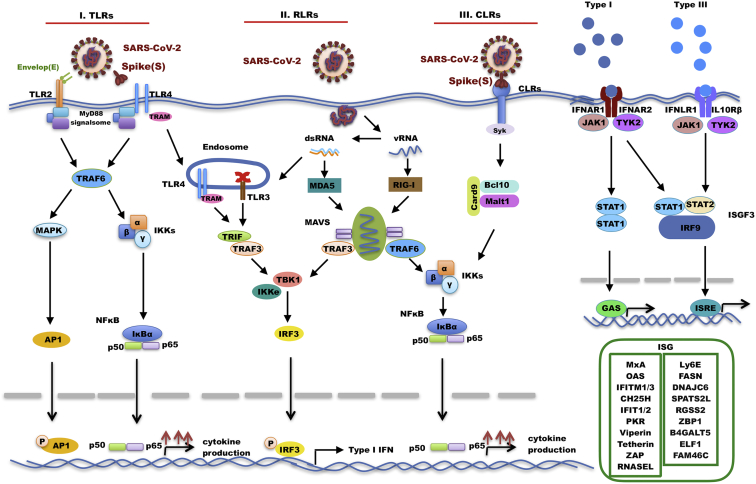
The SARS-CoV-2 virus, the pathogen causing COVID-19, has caused more than 200 million confirmed cases, resulting in more than 4.5 million deaths worldwide by the end of August, 2021. Upon detection of SARS-CoV-2 infection by pattern recognition receptors (PRRs), multiple signaling cascades are activated, which ultimately leads to innate immune response such as induction of type I and III interferons, as well as other antiviral genes that together restrict viral spread by suppressing different steps of the viral life cycle. Our understanding of the contribution of the innate immune system in recognizing and subsequently initiating a host response to an invasion of SARS-CoV-2 has been rapidly expanding from 2020. Simultaneously, SARS-CoV-2 has evolved multiple immune evasion strategies to escape from host immune surveillance for successful replication. In this review, we will address the current knowledge of innate immunity in the context of SARS-CoV-2 infection and highlight recent advances in the understanding of the mechanisms by which SARS-CoV-2 evades a host's innate defense system.
导致 COVID-19 的 SARS-CoV-2 病毒已造成超过 2 亿例确诊病例,截至 2021 年 8 月底,已导致全球超过 450 万人死亡。当模式识别受体(PRRs)检测到 SARS-CoV-2 感染时,会激活多个信号级联反应,最终导致先天免疫反应,如诱导 I 型和 III 型干扰素以及其他抗病毒基因,这些反应共同通过抑制病毒生命周期的不同步骤来限制病毒的传播。自 2020 年以来,我们对先天免疫系统在识别 SARS-CoV-2 并随后引发宿主反应方面的作用的理解迅速扩展。同时,SARS-CoV-2 已经进化出多种免疫逃避策略,以逃避宿主的免疫监视从而成功复制。在这篇综述中,我们将讨论先天免疫在 SARS-CoV-2 感染背景下的现有知识,并强调在理解 SARS-CoV-2 逃避宿主先天防御系统的机制方面的最新进展。