Wang Lijun, You Xiuling, Zhang Lingli, Zhang Changqing, Zou Weiguo
Institute of Microsurgery on Extremities, Department of Orthopedic Surgery, Shanghai Jiao Tong University Affiliated Sixth People's Hospital, 200233, Shanghai, China.
State Key Laboratory of Cell Biology, Shanghai Institute of Biochemistry and Cell Biology, CAS Center for Excellence in Molecular Cell Science, Chinese Academy of Sciences, University of Chinese Academy of Sciences, 320 Yueyang Road, 200031, Shanghai, China.
Bone Res. 2022 Feb 18;10(1):16. doi: 10.1038/s41413-022-00190-4.
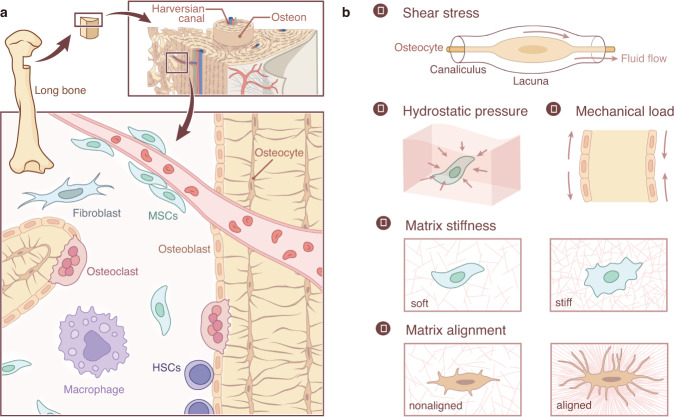
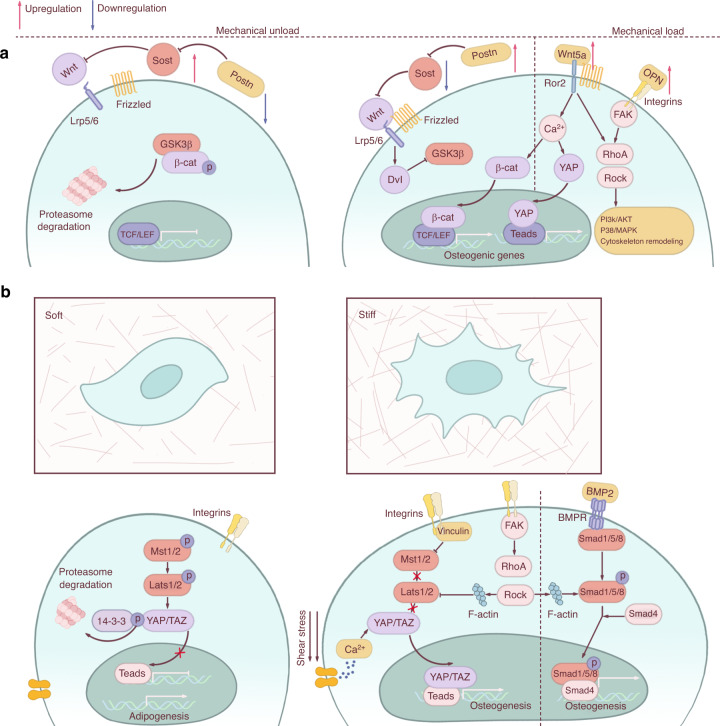
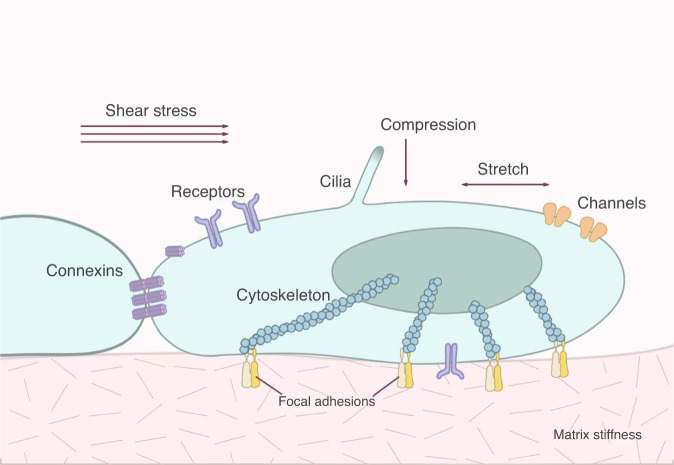
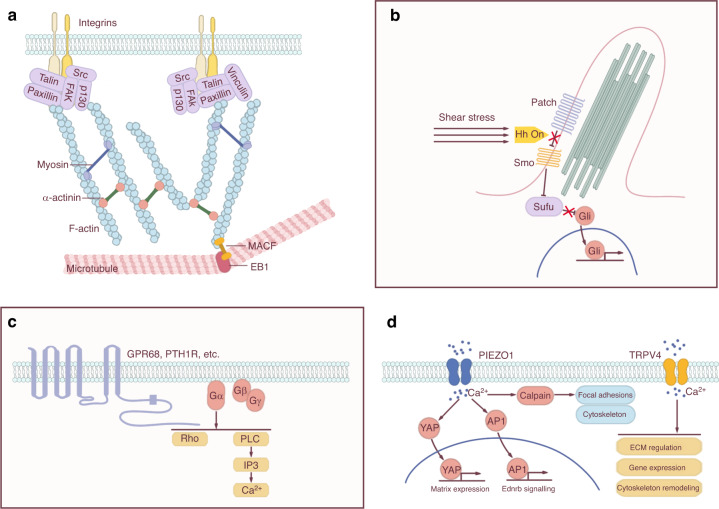
Bone remodeling is a lifelong process that gives rise to a mature, dynamic bone structure via a balance between bone formation by osteoblasts and resorption by osteoclasts. These opposite processes allow the accommodation of bones to dynamic mechanical forces, altering bone mass in response to changing conditions. Mechanical forces are indispensable for bone homeostasis; skeletal formation, resorption, and adaptation are dependent on mechanical signals, and loss of mechanical stimulation can therefore significantly weaken the bone structure, causing disuse osteoporosis and increasing the risk of fracture. The exact mechanisms by which the body senses and transduces mechanical forces to regulate bone remodeling have long been an active area of study among researchers and clinicians. Such research will lead to a deeper understanding of bone disorders and identify new strategies for skeletal rejuvenation. Here, we will discuss the mechanical properties, mechanosensitive cell populations, and mechanotransducive signaling pathways of the skeletal system.
骨重塑是一个终身过程,通过成骨细胞形成骨与破骨细胞吸收骨之间的平衡,产生成熟、动态的骨结构。这些相反的过程使骨骼能够适应动态机械力,根据变化的条件改变骨量。机械力对于骨稳态不可或缺;骨骼的形成、吸收和适应依赖于机械信号,因此机械刺激的丧失会显著削弱骨结构,导致废用性骨质疏松并增加骨折风险。长期以来,身体感知并传导机械力以调节骨重塑的确切机制一直是研究人员和临床医生活跃的研究领域。此类研究将有助于更深入地了解骨疾病,并确定骨骼恢复活力的新策略。在此,我们将讨论骨骼系统的力学特性、机械敏感细胞群体和机械转导信号通路。