Department of Marine Biology, Leon H. Charney School of Marine Sciences, University of Haifa, Haifa 31905, Israel.
Cells. 2022 Feb 9;11(4):595. doi: 10.3390/cells11040595.
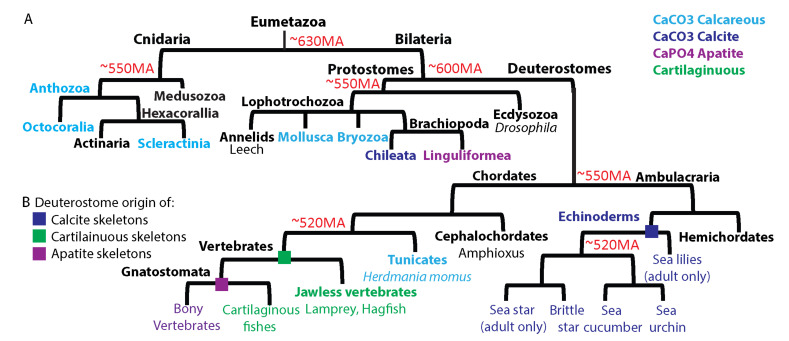
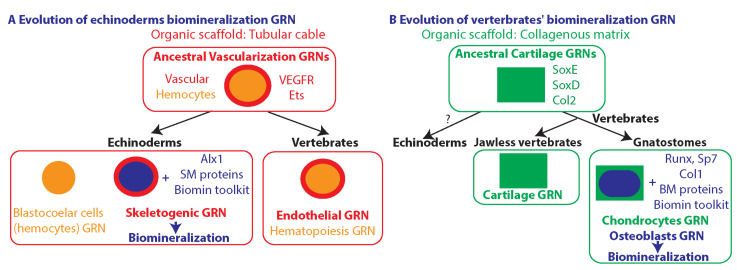
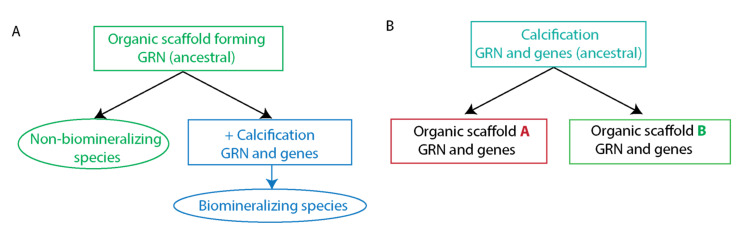
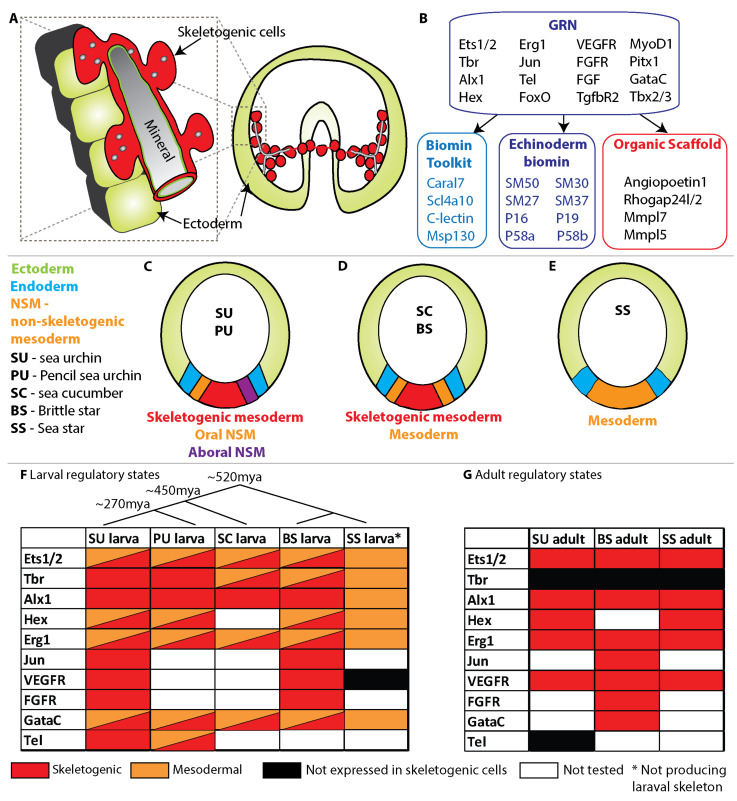
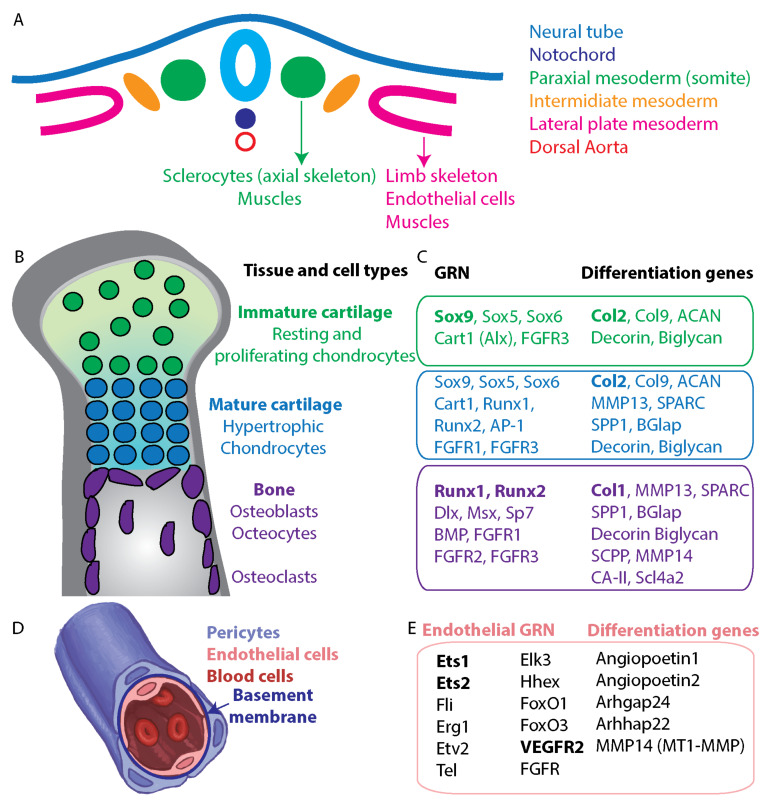
Biomineralization is the process in which organisms use minerals to generate hard structures like teeth, skeletons and shells. Biomineralization is proposed to have evolved independently in different phyla through the co-option of pre-existing developmental programs. Comparing the gene regulatory networks (GRNs) that drive biomineralization in different species could illuminate the molecular evolution of biomineralization. Skeletogenesis in the sea urchin embryo was extensively studied and the underlying GRN shows high conservation within echinoderms, larval and adult skeletogenesis. The organic scaffold in which the calcite skeletal elements form in echinoderms is a tubular compartment generated by the syncytial skeletogenic cells. This is strictly different than the organic cartilaginous scaffold that vertebrates mineralize with hydroxyapatite to make their bones. Here I compare the GRNs that drive biomineralization and tubulogenesis in echinoderms and in vertebrates. The GRN that drives skeletogenesis in the sea urchin embryo shows little similarity to the GRN that drives bone formation and high resemblance to the GRN that drives vertebrates' vascular tubulogenesis. On the other hand, vertebrates' bone-GRNs show high similarity to the GRNs that operate in the cells that generate the cartilage-like tissues of basal chordate and invertebrates that do not produce mineralized tissue. These comparisons suggest that biomineralization in deuterostomes evolved through the phylum specific co-option of GRNs that control distinct organic scaffolds to mineralization.
生物矿化是生物体利用矿物质生成牙齿、骨骼和贝壳等硬结构的过程。生物矿化被认为是通过对现有发育程序的共同选择,在不同的门中独立进化而来的。比较不同物种中驱动生物矿化的基因调控网络(GRN)可以阐明生物矿化的分子进化。海胆胚胎的骨骼发生过程已经得到了广泛的研究,其潜在的 GRN 在棘皮动物中具有高度的保守性,包括幼虫和成年骨骼发生。在棘皮动物中,碳酸钙骨骼元素形成的有机支架是由合胞体骨骼细胞产生的管状隔室。这与脊椎动物用羟磷灰石矿化形成骨骼的有机软骨支架严格不同。在这里,我比较了驱动棘皮动物和脊椎动物生物矿化和管状发生的 GRN。海胆胚胎骨骼发生的 GRN 与驱动骨骼形成的 GRN 几乎没有相似之处,而与驱动脊椎动物血管管状发生的 GRN 非常相似。另一方面,脊椎动物的骨 GRN 与控制基干脊索动物和无脊椎动物软骨样组织生成的细胞中的 GRN 以及不产生矿化组织的细胞中的 GRN 具有高度相似性。这些比较表明,后口动物的生物矿化是通过对特定门的 GRN 的共同选择进化而来的,这些 GRN 控制着不同的有机支架进行矿化。