Curone Giulio, Biscarini Filippo, Cotozzolo Elisa, Menchetti Laura, Dal Bosco Alessandro, Riva Federica, Cremonesi Paola, Agradi Stella, Mattioli Simona, Castiglioni Bianca, Di Giancamillo Alessia, Cartoni Mancinelli Alice, Draghi Susanna, Quattrone Alda, Collodel Giulia, Modina Silvia Clotilde, Castellini Cesare, Brecchia Gabriele
Department of Veterinary Medicine, University of Milano, Via dell'Università 6, 26900 Lodi, Italy.
Institute of Agricultural Biology and Biotechnology (IBBA)-National Research Council (CNR), U.O.S. di Lodi, Via Einstein, 26900 Lodi, Italy.
Antibiotics (Basel). 2022 Feb 10;11(2):227. doi: 10.3390/antibiotics11020227.
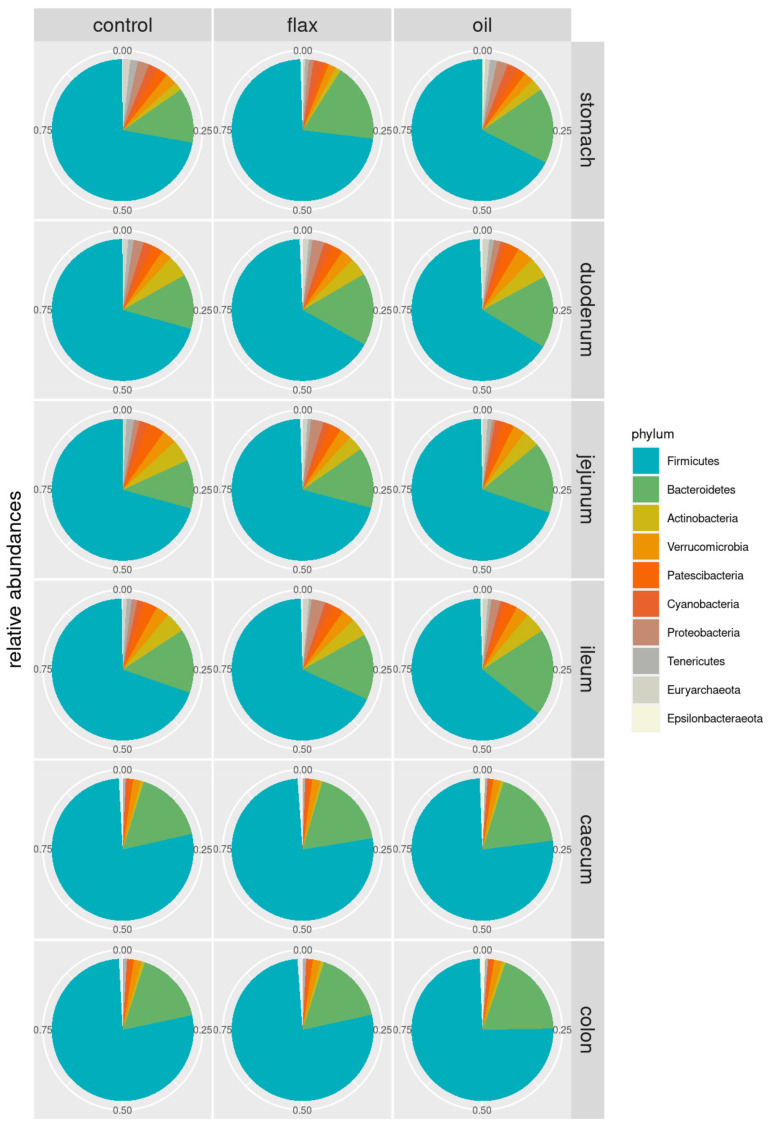
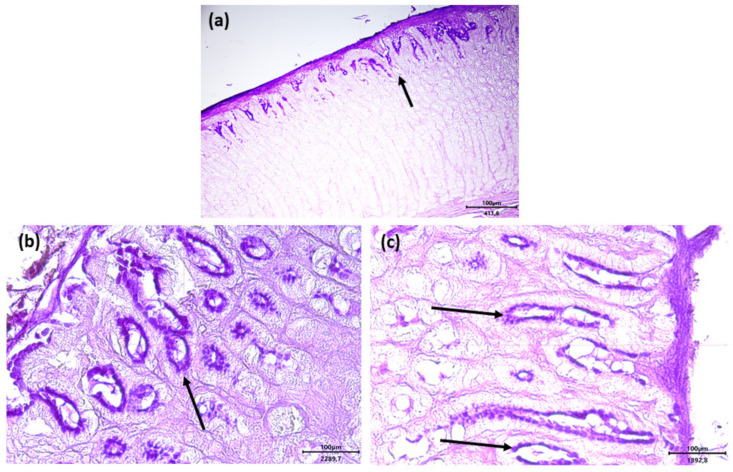
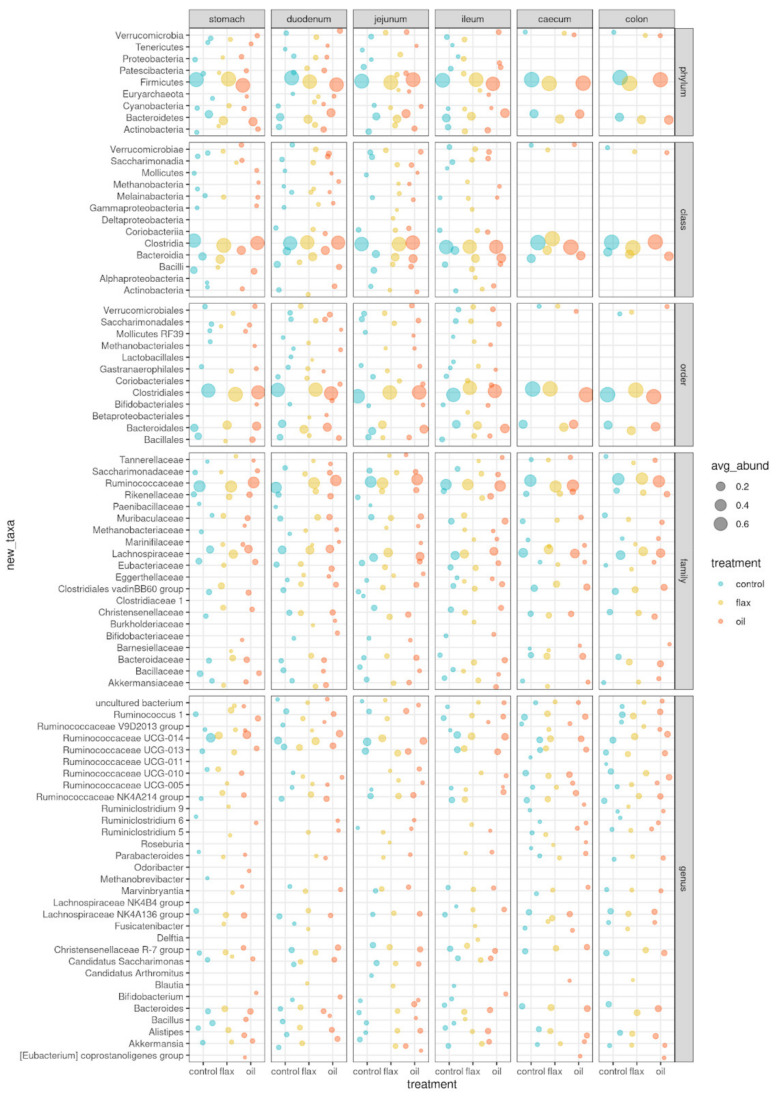
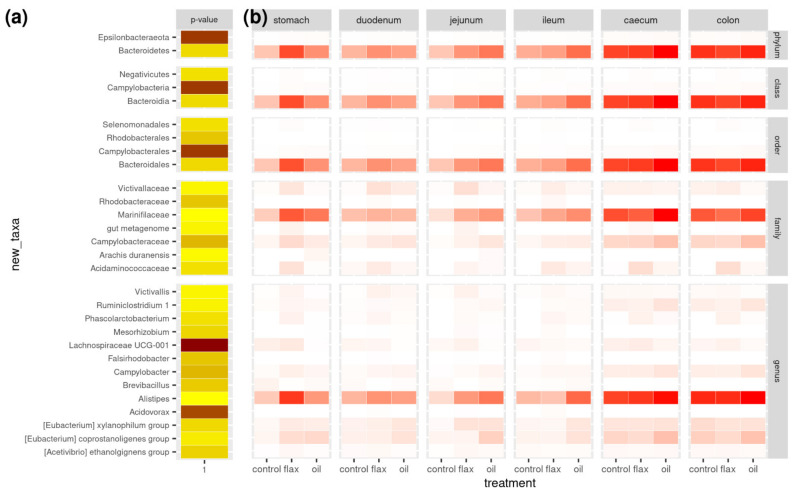
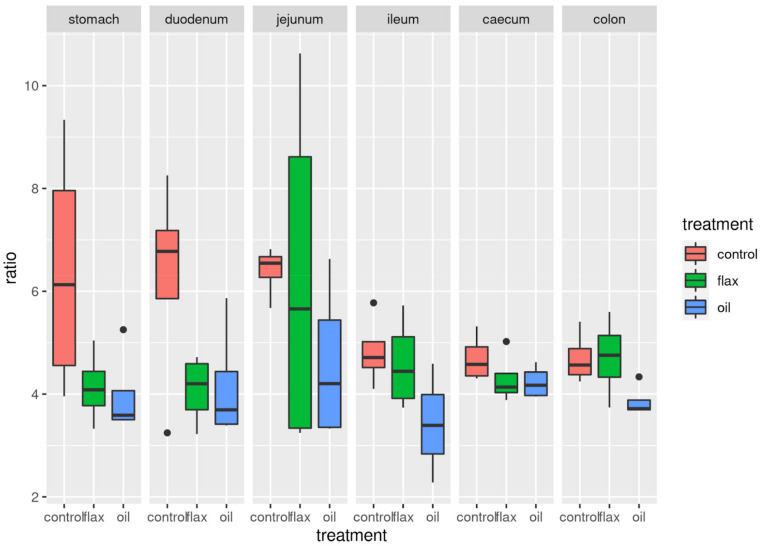
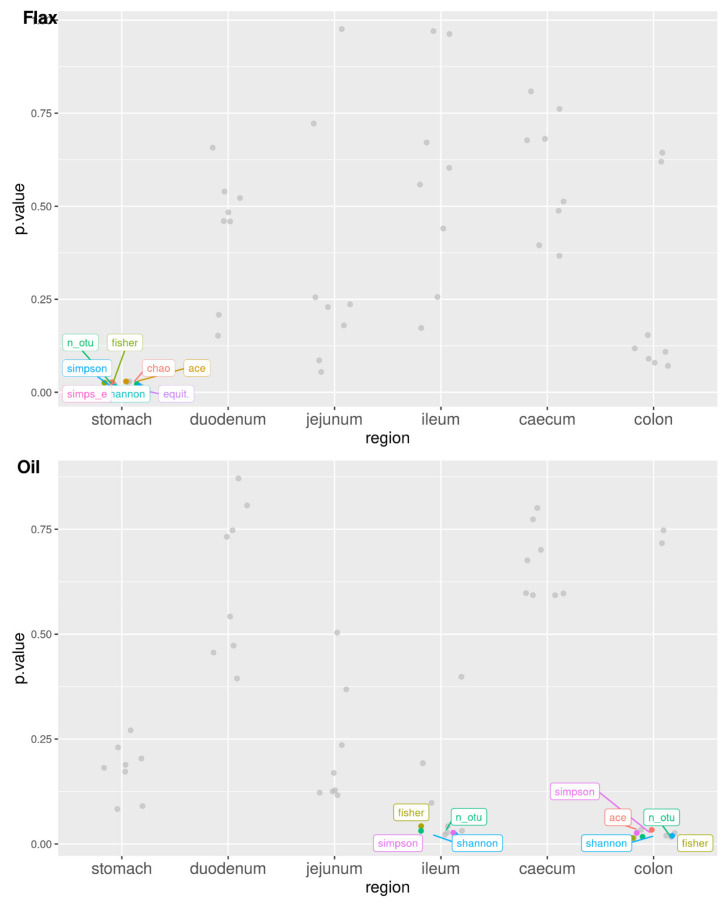
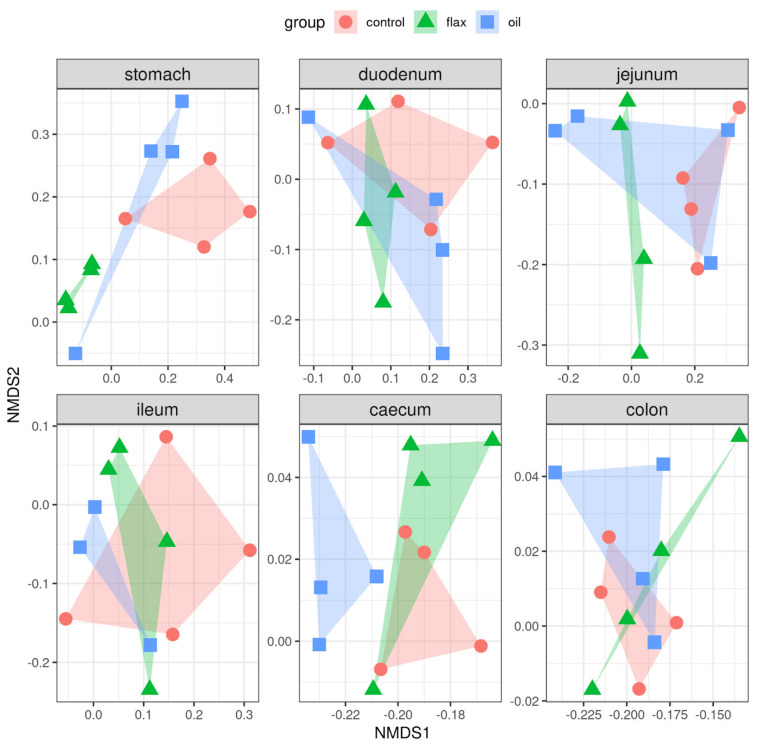
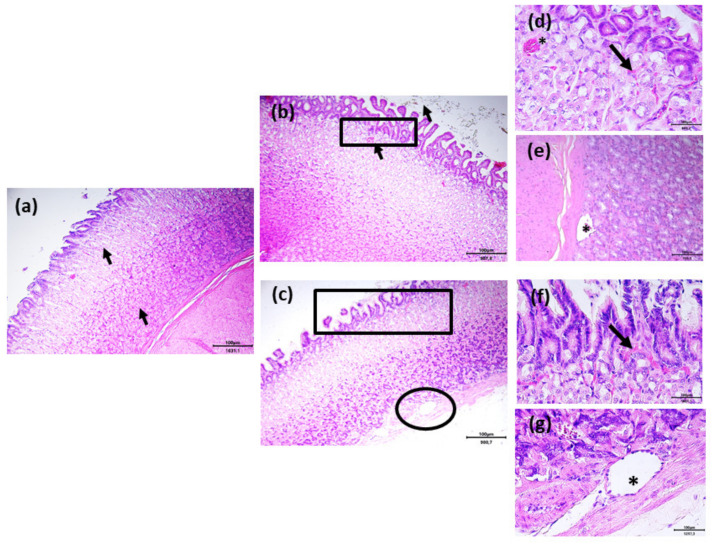
The present study evaluated the effects of feed supplemented with two dietary sources of n-3 polyunsaturated fatty acids (PUFAs; fish oil and extruded flaxseed) on the gut microbiota, caecal fermentations, gastrointestinal histology, and histochemistry in rabbits. Fifteen male New Zealand White rabbits were divided into three groups ( = 5/group) and fed with different diets from weaning (35 days of age) until slaughtering (90 days of age): C group, fed with a commercial diet; F group, supplemented with 10% of extruded flaxseed; and O group, supplemented with 3.5% of fish oil. At slaughter, the content of the stomach, duodenum, jejunum, ileum, caecum, and colon was collected and analyzed by Next Generation 16S rRNA gene sequencing. Tissue samples of the same tracts were evaluated with histological and histochemical analysis. Ammonia and lactic acid in the caecum were also quantified. Twenty-nine operational taxonomic units (OTUs) were significantly different between groups. Groups receiving n-3 PUFAs supplementation showed an increase in Bacteroidetes and in several gastrointestinal tracts, while Bacilli abundance, as well as Firmicutes/Bacteroidetes ratio, were reduced compared to the control group (for all < 0.05). Caecal ammonia was lower in the F than C group ( < 0.032), whereas no difference was found for lactic acid. Finally, histological evaluations revealed a mild hemorrhagic infiltration and vessels ectasia in the stomach mucosa of both F and O groups, but no effect of nutritional treatment was evidenced by the histochemical analyses. In conclusion, n-3 PUFAs supplementation could modify the rabbit gut microbiota and fermentation. The increase in beneficial bacterial populations may, at least partially, explain the positive effects of n-3 PUFAs diet supplementation on human and animals' health, although the appropriate dosage should be established.
本研究评估了添加两种膳食来源的n-3多不饱和脂肪酸(PUFAs;鱼油和膨化亚麻籽)的饲料对家兔肠道微生物群、盲肠发酵、胃肠道组织学和组织化学的影响。将15只雄性新西兰白兔分为三组(每组n = 5),从断奶(35日龄)至屠宰(90日龄)饲喂不同日粮:C组,饲喂商业日粮;F组,添加10%的膨化亚麻籽;O组,添加3.5%的鱼油。屠宰时,收集胃、十二指肠、空肠、回肠、盲肠和结肠内容物,采用新一代16S rRNA基因测序进行分析。对相同肠道的组织样本进行组织学和组织化学分析。还对盲肠中的氨和乳酸进行了定量。三组之间有29个可操作分类单元(OTUs)存在显著差异。补充n-3 PUFAs的组在几个胃肠道中拟杆菌门增加,而与对照组相比,芽孢杆菌丰度以及厚壁菌门/拟杆菌门比例降低(所有P < 0.05)。F组盲肠氨含量低于C组(P < 0.032),而乳酸含量无差异。最后,组织学评估显示F组和O组胃黏膜均有轻度出血性浸润和血管扩张,但组织化学分析未发现营养处理的影响。总之,补充n-3 PUFAs可改变家兔肠道微生物群和发酵。有益细菌种群的增加可能至少部分解释了补充n-3 PUFAs日粮对人和动物健康的积极影响,尽管应确定合适的剂量。