College of Horticulture, Northwest A&F University, Yangling, Xianyang 712100, China.
Genes (Basel). 2022 Jan 28;13(2):262. doi: 10.3390/genes13020262.
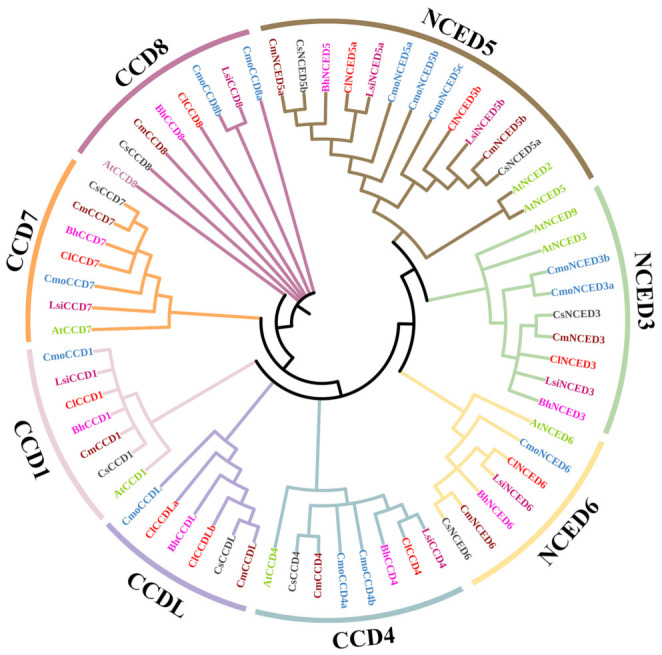
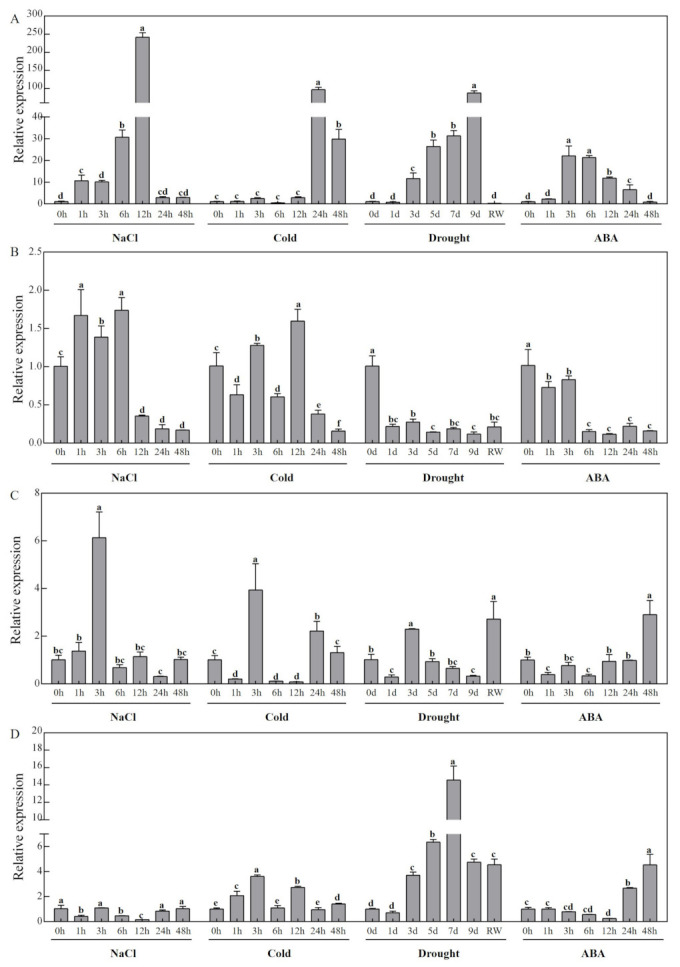
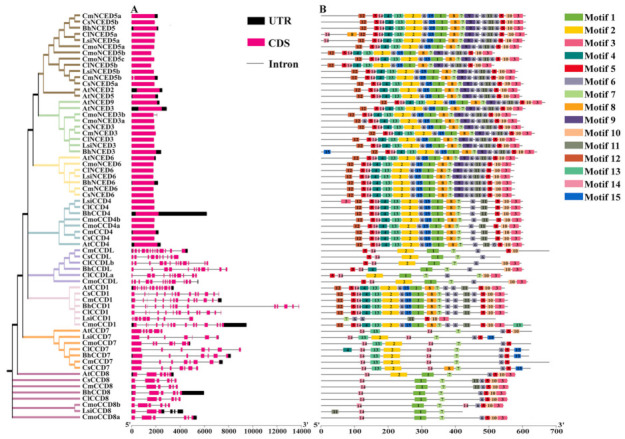
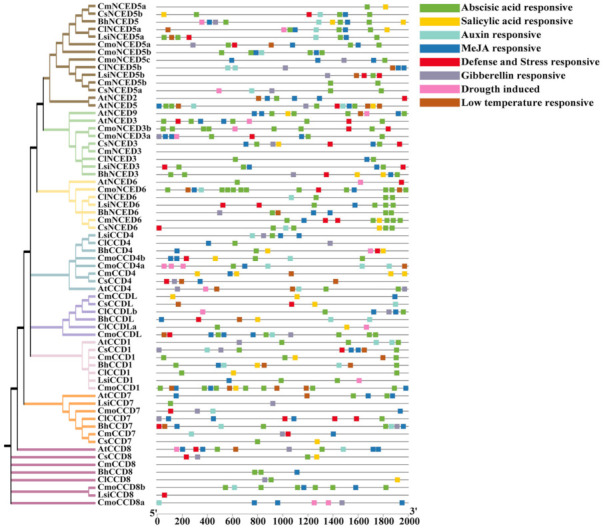
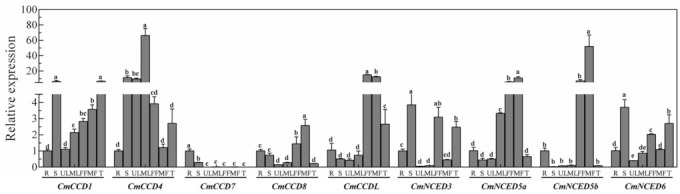
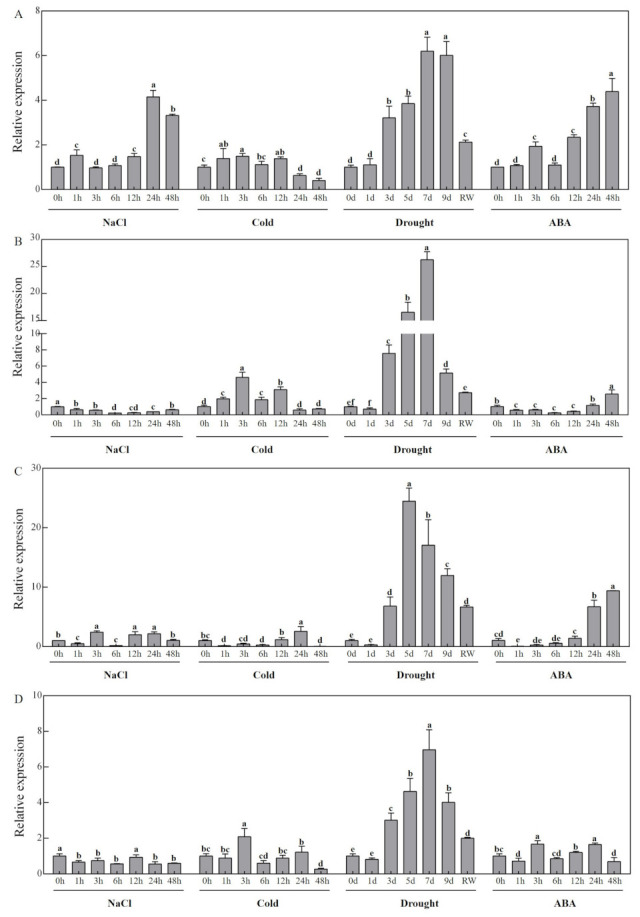
The carotenoid cleavage dioxygenase (CCD) gene family in plants comprises two subfamilies: CCD and 9-cis-epoxycarotenoid dioxygenase (NCED). Genes in the subfamily are mainly involved in plant responses to abiotic stresses such as salt, low temperature, and drought. Members of the subfamily are the most important rate-limiting enzymes in the biosynthesis of abscisic acid (ABA). In the present study, genome-wide analysis was performed to identify gene members in six Cucurbitaceae species, including watermelon (), melon (), cucumber (), pumpkin (), bottle gourd (), and wax gourd (). A total of 10, 9, 9, 13, 8, 8 genes were identified in the six species, respectively, and these genes were unevenly distributed in different chromosomes. Phylogenetic analysis showed that genes of the six species clustered into two subfamilies: and , with five and three independent clades, respectively. The number of exons ranged from 1 to 15, and the number of motifs were set to 15 at most. The cis-acting elements analysis showed that a lot of the cis-acting elements were implicated in stress and hormone response. Melon seedlings were treated with salt, low temperature, drought, and ABA, and then tissue-specific analysis of expression were performed on the root, stem, upper leaf, middle leaf, female flower, male flower, and tendril of melon. The results showed that genes in family exhibited various expression patterns. Different genes of melon showed different degrees of response to abiotic stress. This study presents a comprehensive analysis of gene family in six species of Cucurbitaceae, providing a strong foundation for future studies on specific genes in this family.
类胡萝卜素双加氧酶(CCD)基因家族在植物中包括两个亚家族:CCD 和 9-顺式-环氧类胡萝卜素双加氧酶(NCED)。亚家族中的基因主要参与植物对非生物胁迫的反应,如盐、低温和干旱。亚家族的成员是脱落酸(ABA)生物合成中最重要的限速酶。本研究对包括西瓜()、甜瓜()、黄瓜()、南瓜()、葫芦()和冬瓜()在内的 6 种葫芦科物种中的基因成员进行了全基因组分析。在这 6 个物种中,共鉴定出 10、9、9、13、8、8 个基因,这些基因在不同染色体上的分布不均匀。系统发育分析表明,这 6 个物种的基因聚为两个亚家族:和,分别有 5 个和 3 个独立的分支。外显子数范围为 1 到 15,基序数最多设定为 15。顺式作用元件分析表明,大量的顺式作用元件参与了胁迫和激素反应。用盐、低温、干旱和 ABA 处理甜瓜幼苗,然后对甜瓜根、茎、上叶、中叶、雌花、雄花和卷须进行组织特异性表达分析。结果表明,家族中的基因表现出不同的表达模式。甜瓜不同的基因对非生物胁迫有不同程度的响应。本研究对 6 种葫芦科物种的基因家族进行了全面分析,为该家族特定基因的进一步研究提供了坚实的基础。