Zheng Ruizhe, Zhuang Zhongwei, Zhao Changyi, Zhao Zhijie, Yang Xitao, Zhou Yue, Pan Shuming, Chen Kui, Li Keqin, Huang Qiong, Wang Yang, Ma Yanbin
Hospital Development Center, Shanghai 200041, China.
Department of Neurosurgery, Huashan Hospital, Fudan University, Shanghai 200040, China.
J Clin Med. 2022 Feb 13;11(4):974. doi: 10.3390/jcm11040974.
To develop and validate an admission warning strategy that incorporates the general emergency department indicators for predicting the hospital discharge outcome of patients with traumatic brain injury (TBI) in China.
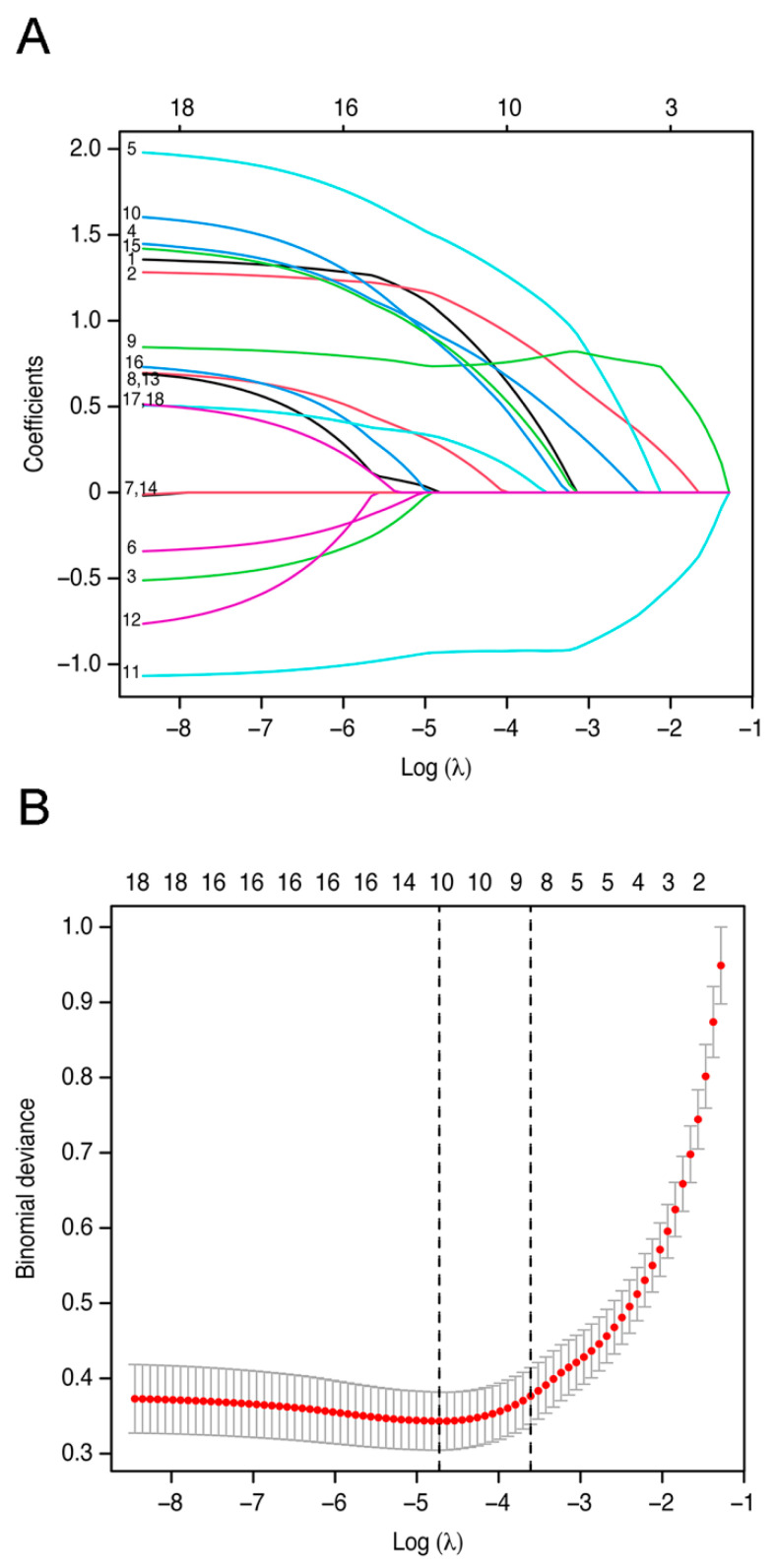
This admission warning strategy was developed in a primary cohort that consisted of 605 patients with TBI who were admitted within 6 h of injury. The least absolute shrinkage and selection operator and multivariable logistic regression analysis were used to develop the early warning strategy of selected indicators. Two sub-cohorts consisting of 180 and 107 patients with TBI were used for the external validation.
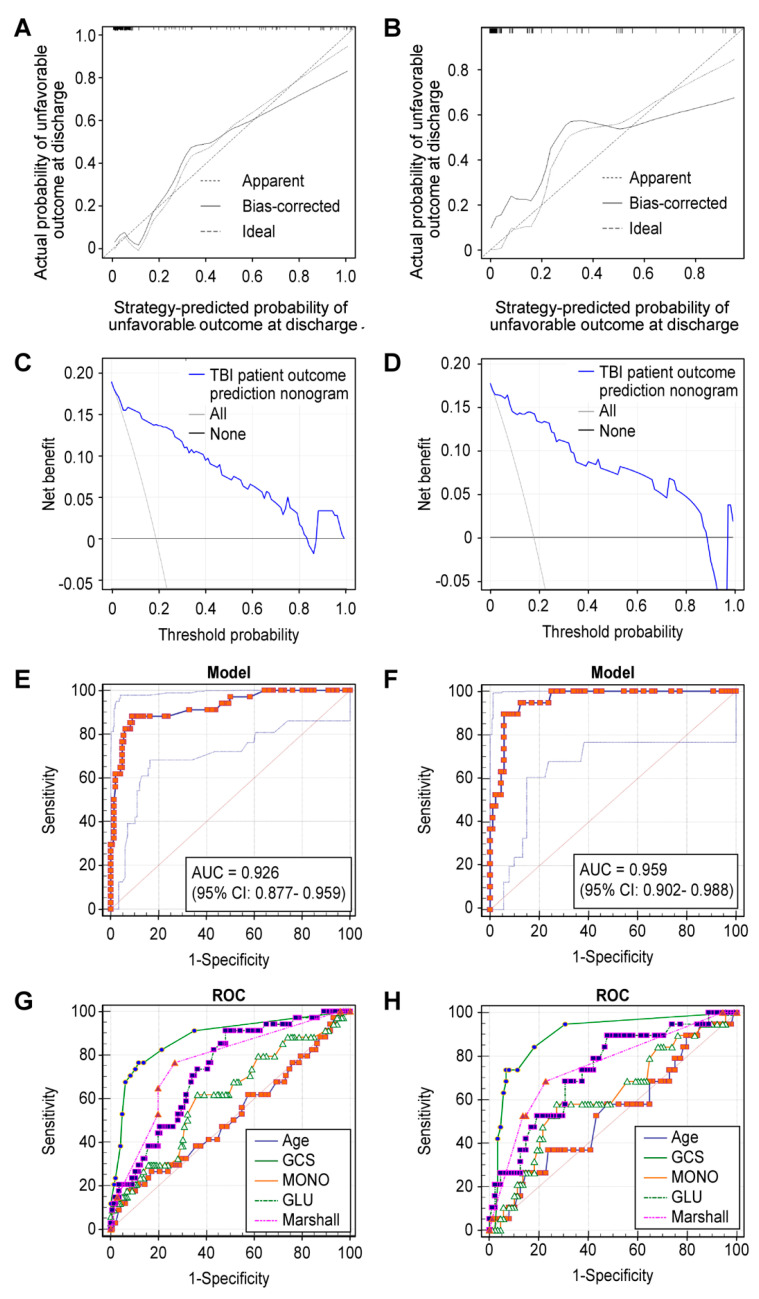
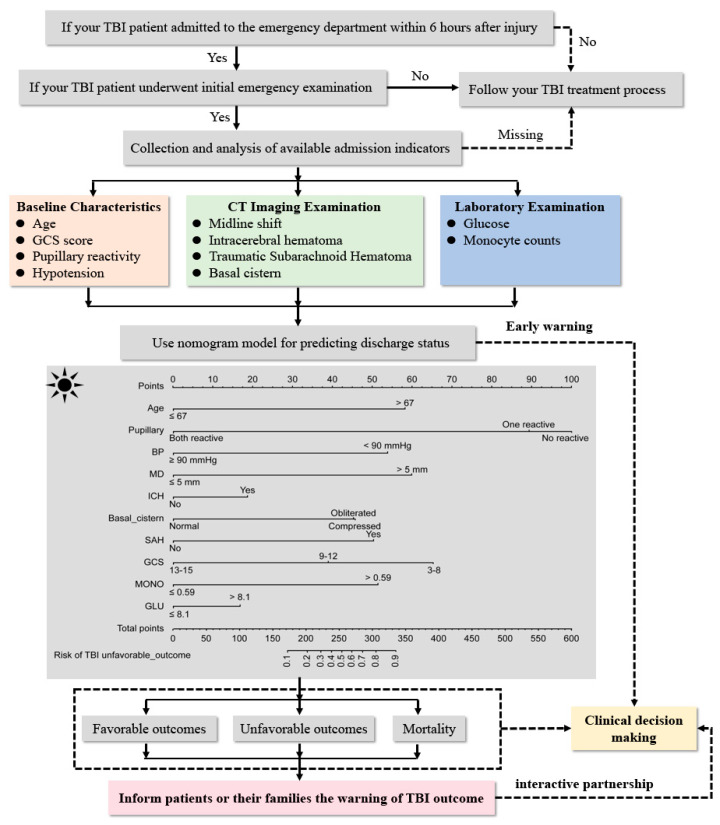
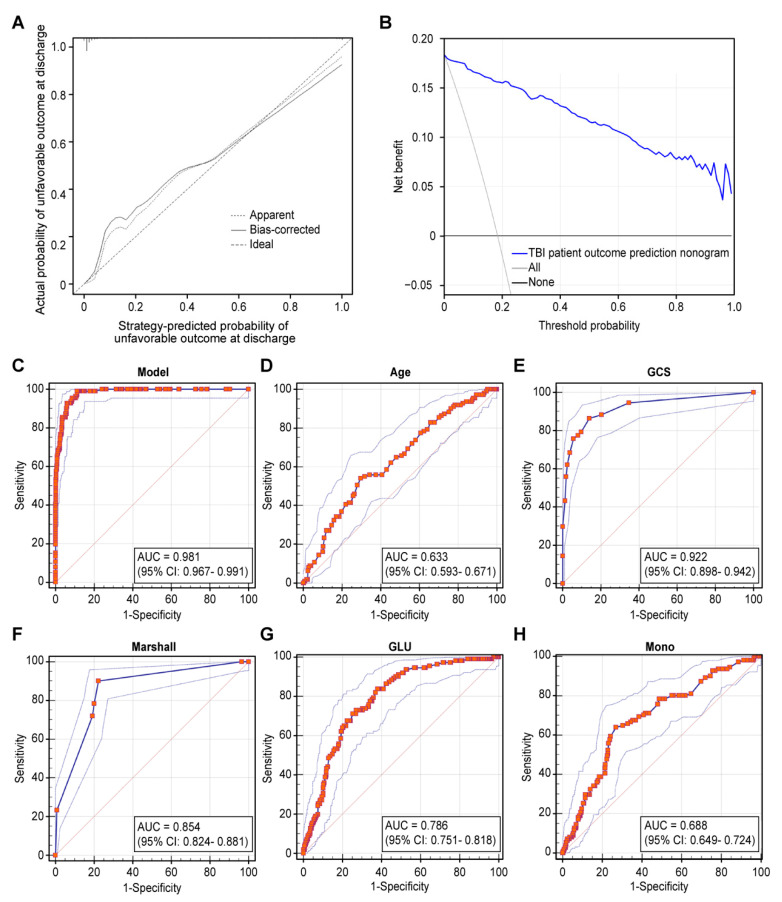
Indicators of the strategy included three categories: baseline characteristics, imaging and laboratory indicators. This strategy displayed good calibration and good discrimination. A high C-index was reached in the internal validation. The multicenter external validation cohort still showed good discrimination C-indices. Decision curve analysis (DCA) showed the actual needs of this strategy when the possibility threshold was 0.01 for the primary cohort, and at thresholds of 0.02-0.83 and 0.01-0.88 for the two sub-cohorts, respectively. In addition, this strategy exhibited a significant prognostic capacity compared to the traditional single predictors, and this optimization was also observed in two external validation cohorts.
We developed and validated an admission warning strategy that can be quickly deployed in the emergency department. This strategy can be used as an ideal tool for predicting hospital discharge outcomes and providing objective evidence for early informed consent of the hospital discharge outcome to the family members of TBI patients.
制定并验证一种入院预警策略,该策略纳入中国创伤性脑损伤(TBI)患者预测出院结局的一般急诊科指标。
在一个初始队列中制定该入院预警策略,该队列由605例受伤后6小时内入院的TBI患者组成。使用最小绝对收缩和选择算子以及多变量逻辑回归分析来制定所选指标的预警策略。两个分别由180例和107例TBI患者组成的子队列用于外部验证。
该策略的指标包括三类:基线特征、影像学和实验室指标。该策略显示出良好的校准和良好的区分度。内部验证中达到了较高的C指数。多中心外部验证队列仍显示出良好的区分度C指数。决策曲线分析(DCA)表明,对于初始队列,当可能性阈值为0.01时,以及对于两个子队列,分别在阈值为0.02 - 0.83和0.01 - 0.88时,该策略符合实际需求。此外,与传统单一预测指标相比,该策略具有显著的预后能力,并且在两个外部验证队列中也观察到了这种优化。
我们制定并验证了一种可在急诊科快速部署的入院预警策略。该策略可作为预测出院结局的理想工具,并为向TBI患者家属提供出院结局的早期知情同意提供客观依据。