Budhlakoti Neeraj, Kushwaha Amar Kant, Rai Anil, Chaturvedi K K, Kumar Anuj, Pradhan Anjan Kumar, Kumar Uttam, Kumar Rajeev Ranjan, Juliana Philomin, Mishra D C, Kumar Sundeep
ICAR- Indian Agricultural Statistics Research Institute, New Delhi, India.
ICAR- Central Institute for Subtropical Horticulture, Lucknow, India.
Front Genet. 2022 Feb 9;13:832153. doi: 10.3389/fgene.2022.832153. eCollection 2022.
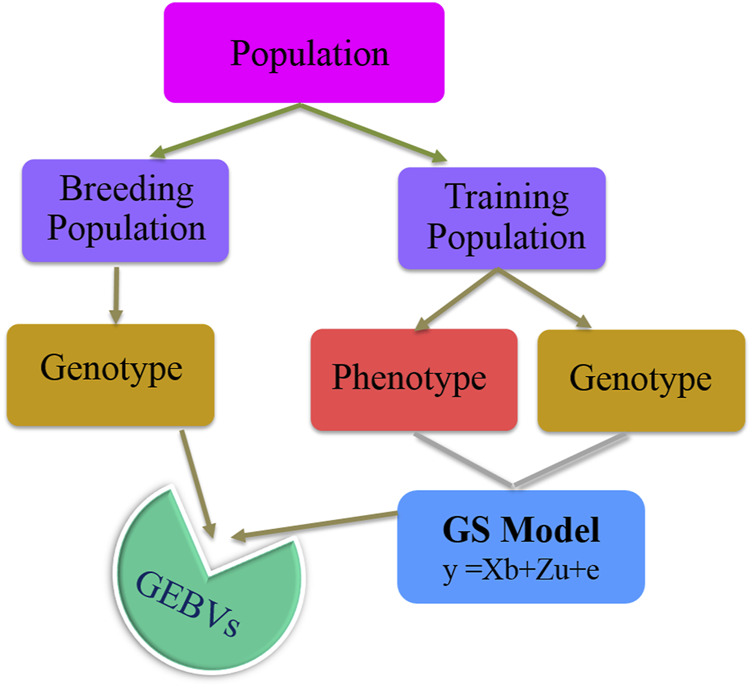
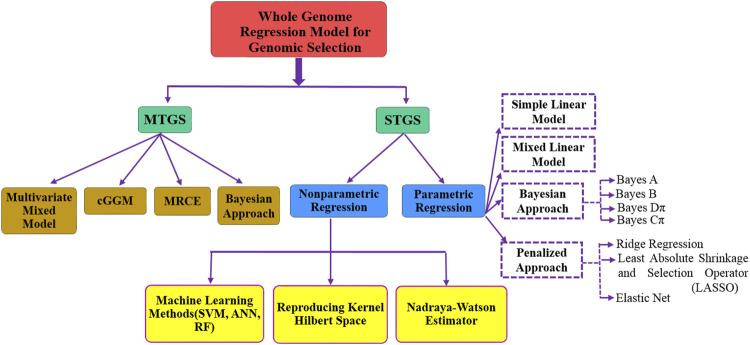
Since the inception of the theory and conceptual framework of genomic selection (GS), extensive research has been done on evaluating its efficiency for utilization in crop improvement. Though, the marker-assisted selection has proven its potential for improvement of qualitative traits controlled by one to few genes with large effects. Its role in improving quantitative traits controlled by several genes with small effects is limited. In this regard, GS that utilizes genomic-estimated breeding values of individuals obtained from genome-wide markers to choose candidates for the next breeding cycle is a powerful approach to improve quantitative traits. In the last two decades, GS has been widely adopted in animal breeding programs globally because of its potential to improve selection accuracy, minimize phenotyping, reduce cycle time, and increase genetic gains. In addition, given the promising initial evaluation outcomes of GS for the improvement of yield, biotic and abiotic stress tolerance, and quality in cereal crops like wheat, maize, and rice, prospects of integrating it in breeding crops are also being explored. Improved statistical models that leverage the genomic information to increase the prediction accuracies are critical for the effectiveness of GS-enabled breeding programs. Study on genetic architecture under drought and heat stress helps in developing production markers that can significantly accelerate the development of stress-resilient crop varieties through GS. This review focuses on the transition from traditional selection methods to GS, underlying statistical methods and tools used for this purpose, current status of GS studies in crop plants, and perspectives for its successful implementation in the development of climate-resilient crops.
自基因组选择(GS)的理论和概念框架诞生以来,已经开展了大量研究来评估其在作物改良中的应用效率。虽然标记辅助选择已证明其在改良由一到几个具有较大效应的基因控制的质量性状方面的潜力。但其在改良由几个具有较小效应的基因控制的数量性状方面的作用有限。在这方面,利用从全基因组标记获得的个体基因组估计育种值来选择下一个育种周期候选个体的基因组选择是改良数量性状的有力方法。在过去二十年中,基因组选择因其具有提高选择准确性、减少表型测定、缩短周期时间和增加遗传增益的潜力,已在全球动物育种计划中广泛采用。此外,鉴于基因组选择在提高小麦、玉米和水稻等谷类作物产量、生物和非生物胁迫耐受性及品质方面的初步评估结果很有前景,将其整合到作物育种中的前景也正在探索。利用基因组信息提高预测准确性的改进统计模型对于基于基因组选择的育种计划的有效性至关重要。对干旱和热胁迫下遗传结构的研究有助于开发生产标记,通过基因组选择显著加速抗逆作物品种的培育。本综述重点关注从传统选择方法向基因组选择的转变、用于此目的的基础统计方法和工具、作物植物基因组选择研究的现状以及在培育抗逆作物方面成功实施基因组选择的前景。